
How to Choose Nylon Glands in 2026?
Choosing Nylon Glands in 2026 requires more than matching a cable diameter to a catalogue chart. These components protect cable entries from dust, moisture, vibration, and accidental pulling. A gland that looks suitable on paper may loosen inside a vibrating control cabinet. Small details matter.
This guide examines the practical decisions behind a reliable selection. It considers cable range, thread type, IP protection, operating temperature, UV exposure, chemical contact, and strain relief. Installation quality also matters. A correctly sized Nylon Glands body can still perform poorly when the locknut is overtightened or the sealing insert is damaged. Technicians should check manufacturer torque guidance and verify compatibility with the enclosure material.
In 2026, responsible purchasing also means reviewing documentation. Look for tested ingress ratings, material information, dimensional drawings, and traceable production details. Recognized standards, such as IEC 62444, can provide useful reference points, but certification claims should be verified rather than assumed. Supplier consistency is important when hundreds of glands must be replaced during maintenance.
There is no universal best option.
Real installations are rarely perfect. Cable jackets vary slightly, thread tolerances can create surprises, and outdoor exposure may exceed the original estimate. A thoughtful choice leaves room for those uncertainties. This article offers a clear framework for comparing Nylon Glands, questioning convenient assumptions, and selecting components that remain dependable beyond the first inspection.
What Are Nylon Glands and Where Are They Used?
How to Choose Nylon Glands in 2026?
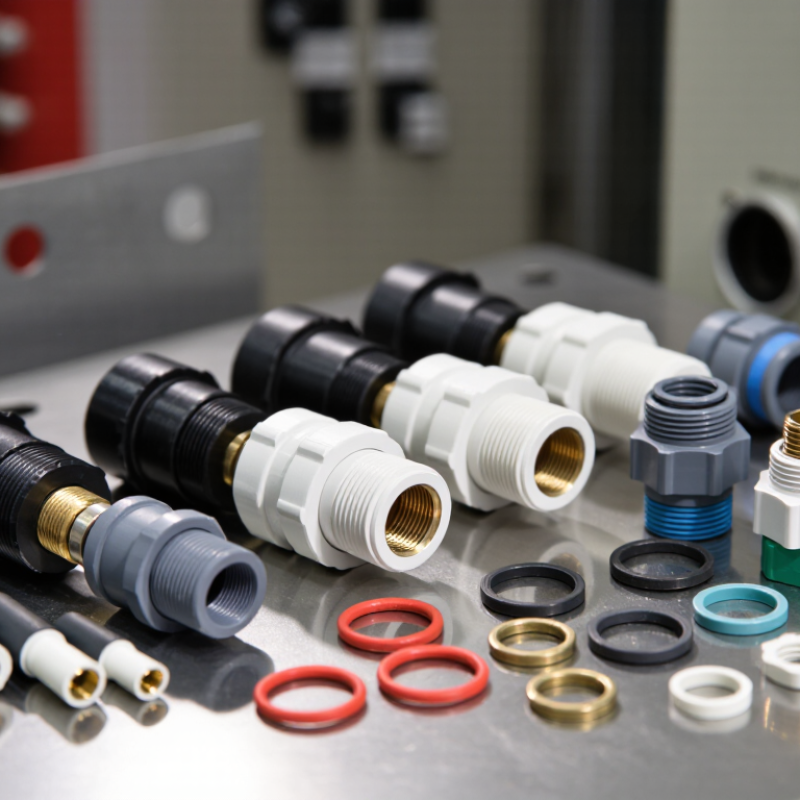
Nylon glands are cable entry fittings that secure and seal wires where they pass through an enclosure. They usually include a threaded body, compression nut, sealing ring, and strain-relief section. When tightened, the gland grips the cable jacket and limits movement, dust, and moisture entering the enclosure. Small details matter.
These fittings are common in control cabinets, junction boxes, lighting equipment, sensors, pumps, and light industrial machinery. Outdoor electrical boxes may also use them, but only when the gland and enclosure provide a suitable protection rating. A gland marked for water resistance cannot compensate for a damaged gasket or poorly cut entry hole. That mistake is easy to make.
Nylon is lightweight, corrosion-resistant, and generally easier to install than metal alternatives. It suits many indoor systems and moderate outdoor applications. Check the cable diameter range, thread type, panel thickness, temperature limits, UV resistance, and required IP rating before selection. Metric and NPT threads are not interchangeable. They may look similar.
For a reliable fit, measure the actual cable jacket, not the connector or inner conductors. Leave enough thread engagement inside the enclosure. Over-tightening can deform the seal, while under-tightening can allow cable movement. I would also inspect the gland after installation, especially near vibrating equipment. Nylon can perform well, but it is not automatically the best choice for heat, impact, or harsh chemical exposure. That deserves a closer review.
How to Choose Nylon Glands in 2026? — What Are Nylon Glands and Where Are They Used?
| Selection Dimension | Typical Nylon Gland Data | What It Means | Recommended Use or Decision Rule |
|---|---|---|---|
| Definition | A nylon cable gland is a mechanical cable-entry device made mainly from polyamide. It secures a cable, provides strain relief, and seals the entry point. | It helps prevent cable movement, dust, moisture, and accidental pull forces from reaching an enclosure or electrical connection. | Use it whenever a cable passes through an electrical enclosure, junction box, control cabinet, outdoor housing, or equipment panel. |
| Main Material | Common construction: polyamide body and locknut, elastomer sealing insert, and optional strain-relief components. | Polyamide is lightweight, electrically insulating, corrosion-resistant, and suitable for many general-purpose installations. | Choose nylon for lightweight, nonconductive, and corrosion-resistant cable entry. Consider metal glands where high mechanical strength, shielding continuity, or extreme heat resistance is required. |
| Cable Diameter Range | Typical individual gland ranges are approximately 3–6 mm, 5–10 mm, 9–17 mm, 13–21 mm, 18–25 mm, or 22–32 mm, depending on the design and thread size. | The cable outer diameter must fall within the gland’s specified clamping range. | Measure the actual finished cable diameter, including insulation and outer sheath. Do not select a gland based only on conductor size or nominal cable designation. |
| Thread Standards | Common thread options include metric threads such as M12, M16, M20, M25, M32, and M40; some installations use PG or NPT threads. | The gland thread must match the enclosure entry or be used with a suitable certified adapter. | Confirm thread type, nominal size, pitch, and available panel-hole diameter before ordering. Do not mix metric and non-metric threads without an approved adapter. |
| Ingress Protection | Many standard nylon cable glands are available with IP ratings such as IP54, IP65, IP66, or IP68 when correctly installed with the specified cable diameter and sealing components. | The IP rating indicates resistance to solids and water under defined test conditions. IP68 conditions may include a manufacturer-defined immersion depth and duration. | Use IP54 for limited dust and splash protection, IP65/IP66 for outdoor or washdown exposure, and IP68 only when the complete installation requirements are clearly defined and followed. |
| Operating Temperature | Typical general-purpose nylon gland ranges are approximately −30°C to +80°C. Some specialty polyamide products may cover wider ranges, such as about −40°C to +100°C. | Temperature performance depends on the polyamide grade, seal material, load, UV exposure, and installation conditions. | Check the product’s declared continuous-use temperature and short-term temperature limit. Avoid standard nylon glands near hot surfaces, ovens, engine compartments, or high-temperature process equipment unless specifically rated. |
| Flame Behavior | Flame-retardant polyamide grades may be tested to classifications such as UL 94 V-2 or V-0, depending on the exact material and thickness. | Flame classification describes material behavior in a specific test; it does not automatically mean the gland is fireproof or suitable for fire-rated barriers. | For control panels and industrial equipment, verify the required flame classification. For fire barriers, hazardous locations, or fire-resistant systems, use a product with the required application certification. |
| Electrical Properties | Nylon is normally electrically insulating and nonconductive. It does not provide a protective earth path or cable-screen bonding path. | A nylon gland can reduce the risk of an unintended conductive path, but it cannot replace grounding or bonding hardware. | Use nylon for ordinary insulated cable entries. For shielded cables requiring EMC bonding, select a gland specifically designed for screen termination or use a separate approved bonding method. |
| Mechanical Performance | Typical features include strain relief, cable retention, and resistance to vibration within the limits stated by the manufacturer. Performance varies by size and design. | Mechanical protection depends on correct tightening, proper cable support, and keeping the cable within the specified diameter range. | Use additional cable clamps or supports for heavy, rigid, suspended, or continuously moving cables. Do not rely on the gland alone to support excessive cable weight. |
| UV and Weather Resistance | Some nylon glands are stabilized for outdoor use, while general-purpose nylon may degrade more quickly under prolonged ultraviolet exposure. | UV exposure can cause discoloration, embrittlement, and loss of mechanical performance over time. | For outdoor installations, verify UV resistance and weathering suitability. Use protective covers or a more weather-resistant material when long-term direct sunlight exposure is expected. |
| Chemical Resistance | Nylon generally performs well against many oils, greases, and diluted chemicals, but resistance varies with concentration, temperature, and exposure time. | Strong acids, strong alkalis, some solvents, and certain cleaning chemicals may attack polyamide or its sealing material. | Review the chemical safety data and compatibility information for the actual environment, especially in chemical processing, food-production cleaning, and laboratory applications. |
| Seal Material | Common seal materials include nitrile rubber, EPDM, silicone, and other application-specific elastomers. | The seal often determines resistance to oil, weather, temperature, and chemical exposure more than the nylon body does. | Choose an oil-compatible seal for machinery, EPDM for many outdoor and water-based environments, and a high-temperature seal only when its temperature and chemical ratings match the application. |
| Installation Torque | Torque is size- and design-dependent. A typical small nylon gland may require approximately 2–5 N·m, while larger sizes may require higher values. | Insufficient tightening can reduce sealing and retention; excessive tightening can damage threads, deform the seal, or crack the enclosure. | Use the exact torque specified for the selected gland and enclosure material. If no value is available, obtain technical guidance rather than applying a universal torque. |
| Panel Thickness | Many standard nylon glands are suitable for thin sheet-metal, plastic, or control-box walls, but the allowable wall thickness depends on thread length and locknut design. | A short thread may not fully engage a thick enclosure, while a long thread may interfere with internal components. | Check available thread length, panel thickness, internal clearance, and locknut access before installation. |
| Cable Type | Suitable cable types may include single-core, multicore, control, instrumentation, flexible, and selected armored or shielded cables, depending on gland construction. | Standard nylon glands normally clamp the outer sheath and are not automatically suitable for armor termination or EMC bonding. | Use a dedicated design for armored cable, corrugated conduit, flat cable, braided cable, or high-flex applications where the cable shape differs from a standard round sheath. |
| Common Applications | Electrical control cabinets, automation equipment, lighting housings, solar equipment, telecommunications enclosures, HVAC systems, junction boxes, and general machinery. | These applications typically value low weight, electrical insulation, corrosion resistance, and straightforward installation. | Confirm environmental exposure, cable movement, IP requirement, temperature, UV exposure, and certification needs before final selection. |
| Applications Requiring Extra Care | Marine systems, explosive atmospheres, railway equipment, high-temperature machinery, severe chemical environments, fire-rated assemblies, and continuous-motion systems. | These environments may require specific material approvals, EMC performance, fire behavior, impact ratings, or hazardous-location certification. | Do not select a general-purpose nylon gland solely by size. Match the gland to the applicable installation standard and required certification. |
| Key 2026 Buying Checklist | Confirm cable diameter, thread standard, IP rating, temperature range, seal material, UV resistance, flame behavior, impact strength, certifications, and installation torque. | A correct fit is only one part of a reliable cable-entry system. | Prioritize environmental and regulatory requirements first, then select the smallest gland size that safely covers the measured cable diameter and required performance range. |
Note: Values shown are typical industry ranges for selection guidance, not universal specifications. Always verify the current technical datasheet, installation instructions, test conditions, and required certifications for the exact nylon gland design.
FAQS
It secures and seals a cable where it enters an electrical enclosure. It usually has a threaded body, compression nut, sealing ring, and strain relief. Small details matter.
They are used in control cabinets, junction boxes, lighting equipment, sensors, pumps, and light machinery. They can suit outdoor boxes when the complete assembly has the required protection rating. Outdoor use needs care.
Nylon is lightweight and resists corrosion in many environments. It is often easier to install and suitable for indoor systems. However, heat, impact, ultraviolet exposure, and chemicals may shorten its service life.
Measure the actual cable jacket with calipers. Do not measure the connector or inner conductors. Compare the result with the gland’s cable range. A middle-range fit usually provides more dependable compression.
No. A damaged gasket, poor hole, or loose cap can still allow water inside. Check the enclosure surface and entry hole carefully. A water-resistant marking is not a complete installation.
Confirm the thread standard, diameter, pitch, and length. Metric and pipe-style threads may look similar but are not interchangeable. Measure the enclosure hole and panel thickness. Nearly matching threads are a bad gamble.
Tighten the cap evenly according to the supplier’s torque guidance. Over-tightening may deform the seal. Under-tightening may allow cable movement or moisture entry. Hand-tight can look secure.
A split gland can fit around a cable with an attached connector. Its joint needs careful inspection because a visible gap may remain. A standard compression gland suits a round cable entering a clean, drilled hole.
Check the seal, thread engagement, cable movement, and enclosure contact. Inspect again near vibrating equipment. Photograph the finished cable entry for maintenance records. I would recheck it later, because the first inspection can miss small gaps.
Conclusion
Choosing the right Nylon Glands in 2026 requires more than selecting a basic cable entry component. Nylon Glands are used to secure cables, provide strain relief, and help protect electrical enclosures in applications such as automation, control systems, lighting, machinery, and outdoor equipment. Selection should begin with the operating environment and cable type, followed by careful consideration of material design, sealing structure, flexibility, and mechanical strength.
To ensure reliable performance, match the gland size and thread type to the enclosure opening and confirm that the cable diameter falls within the recommended clamping range. Evaluate protection ratings, temperature limits, resistance to moisture, dust, chemicals, vibration, and ultraviolet exposure according to the installation conditions. It is also important to compare installation methods, applicable technical standards, maintenance requirements, and expected service life. A well-matched Nylon Glands solution can simplify installation, improve safety and reliability, and provide better long-term value.
