
High-Performance Quick Disconnect Thermal Couplings
Explore precision-machined liquid cooling couplings featuring flat-face non-spill valving, friction-free blind mating, and extreme flow dynamics designed to mitigate pressure drop across high-wattage computing blocks.
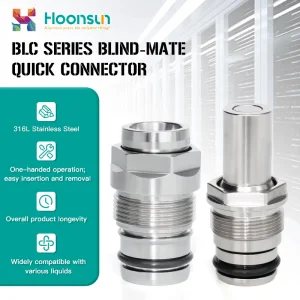
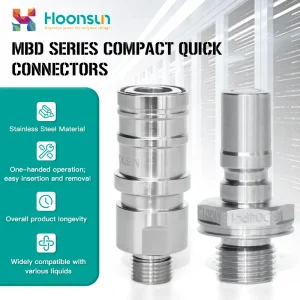
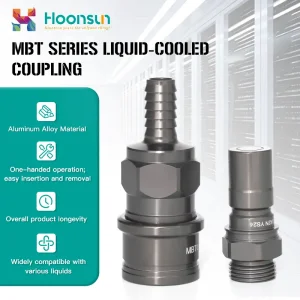
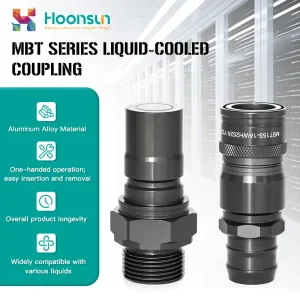
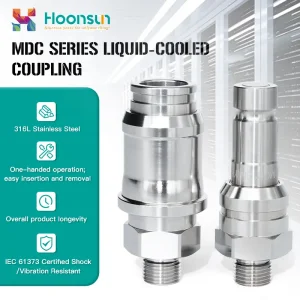
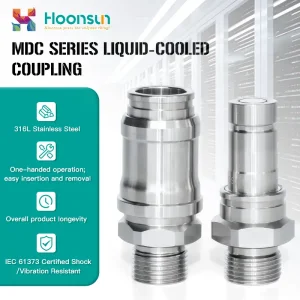
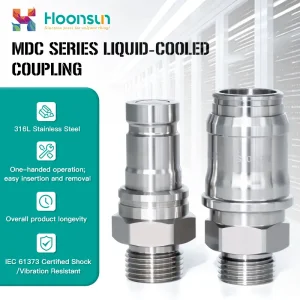
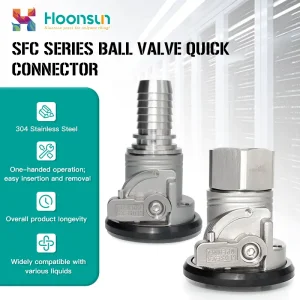
The Paradigm Shift: Mission-Critical Thermal Management in the AI Era
As compute infrastructure transitions past the physical limits of traditional forced-air convective cooling, liquid cooling has evolved from an exotic high-performance niche into the foundational pillar of modern thermal architecture. Accelerators and microprocessors exceeding 700W to 1200W Thermal Design Power (TDP)—such as next-generation GPU and ASIC topologies—generate localized heat fluxes that ambient air chillers simply cannot disperse without unsustainable pneumatic pressure drops and acoustic resonance issues.
In this high-density environment, fluid interconnects are the primary single point of failure (SPOF) across the entire thermodynamic dissipation loop. A sub-millimeter hydraulic leak or micro-droplet spillage during hot-swap maintenance inside an AI server rack can catastrophically short out high-voltage multi-rail power supplies, destroy compute blades, and generate six-figure downtime costs. Consequently, engineering criteria have shifted decisively toward dripless flat-face valve geometries, zero-inclusion blind mating mechanisms, and rigorous metallurgical passivation against galvanic corrosion.
Our enterprise-grade manufacturing facilities bridge the technical gap between stringent hydraulic specifications and scalable volume production. By integrating full-path design, multi-axis Swiss lathe precision machining, cryogenic deburring, automated cleanroom assembly, and helium mass spectrometry testing, we supply tier-1 server OEMs, hyper-scalers, and BESS integrators with liquid cooling connectors that deliver ultra-low flow resistance ($C_v$) while maintaining absolute zero-leak seal integrity under severe thermal-cycling conditions.
Optimized Fluid Dynamics & Low $\Delta P$
Streamlined internal flow geometry engineered through computational fluid dynamics (CFD) minimizes internal fluid turbulence, cavitation risks, and overall loop parasitic pumping overhead across high-flow coolant networks.
Flat-Face Non-Spill Valve Tech
Spring-actuated poppet valves meet flush before the fluid pathway opens, ensuring virtually zero spillage upon disconnect (<0.015 mL) and zero air or contaminant ingestion upon system reconnection.
Radical Chemical Compatibility
Custom vulcanized sealing formulations including peroxide-cured EPDM, fluorocarbon (FKM), and perfluoroelastomer (FFKM) validated against PGW25/40, EGW, dielectric oils, and synthetic hydrocarbons.
The Strategic Advantages of Sourcing from China's Precision Industrial Clusters
Liquid cooling connector fabrication demands an intricate convergence of high-precision metallurgical subtractive machining, advanced polymer engineering, tight-tolerance electroplating, and specialized cleanroom testing. Yueqing and the broader Zhejiang industrial corridor represent the world's most dense ecosystem for electromechanical connector fabrication and fluid handling hardware.
By leveraging our specialized, vertically integrated manufacturing campus in Zhejiang, global buyers eliminate the bloated lead times and excessive tooling markups typical of traditional Western fluid-connector suppliers. Our operational model combines domestic metallurgical raw material stockpiles (aerospace-grade aluminum 6061-T6, AISI 316L/304 stainless steel, and low-lead brass) with high-throughput automated Japanese CNC Swiss turning centers capable of holding dimensional runouts within ±0.005 mm.
Integrated Cluster Proximity
Raw metal extrusion, CNC machining, chemical surface passivation, elastomer moulding, and precision spring stamping are co-located within a 20 km radius, compressing prototype cycles from months to under 10 days.
Agile NRE & Customization
Our in-house CAD/CAM tooling department enables rapid non-recurring engineering (NRE) iterations for proprietary cold-plate spacing, tailored thread bosses (G, NPT, SAE, UNF), and bespoke manifold mounting profiles.
Class 10,000 Cleanroom Assembly
To eliminate microscopic particulate contamination that could clog fine micro-channel cooling fins, all final poppet insertion, ultrasonic degreasing, sealing placement, and vacuum packaging occur in ISO 7 cleanrooms.
35-50% Total Cost Efficiency
Automated multi-spindle machining cycles and direct supply contracts yield superior cost-performance ratios without sacrificing metallurgical fidelity or international quality conformance.
Factory Audit Note for International Procurement Teams
Every production batch shipped from our Zhejiang factory carries complete 3.1 Material Test Reports (MTRs), optical coordinate measuring machine (CMM) dimensional verification charts, and 100% individual pressurized gas-submersion and helium mass spectrometry leak test certification. Buyers are welcome to schedule third-party audits via SGS, TÜV, or direct factory tours.
Global Industry Evolution: OCP Standards, Direct-to-Chip & Immersion Cooling
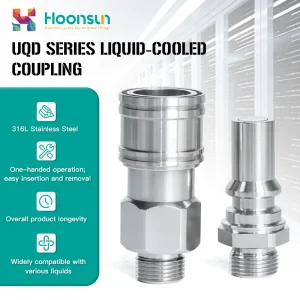
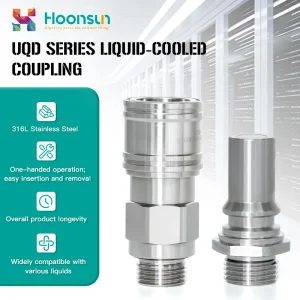
The liquid cooling hardware landscape is experiencing rapid standardization driven by consortiums like the Open Compute Project (OCP). The move toward open, interoperable architectures requires fluid coupling manufacturers to comply with universal standards such as OCP UQD (Universal Quick Disconnect) across nominal bore classifications.
Historically, fragmented proprietary quick disconnect designs tied data center operators to individual component vendors, forcing expensive vendor lock-in and high replacement friction. Today, standardization ensures hot-swappable interchangeability between server blades and power distribution manifolds, guaranteeing zero fluid leakage, predictable insertion force profiles, and repeatable hydraulic performance regardless of supplier source.
Universal Quick Disconnect (OCP UQD)
Full conformance with OCP UQD-02, UQD-04, and UQD-06 specifications. Standardized latching grooves, push-to-connect engagement, and unified external tolerances allow plug-and-play integration into Open Rack v3 (ORV3) architectures.
Direct-to-Chip (D2C) Cold Plate Loops
Micro-bore quick disconnects engineered specifically for compact 1U and 2U server chassis. High flow-to-diameter ratios maximize coolant delivery directly over silicon micro-channel heat sinks with sub-watt pressure loss.
Immersion Cooling & Dielectric Transport
Specialized fluid connectors constructed with perfluoroelastomers (FFKM) or fluorosilicone seals tested against single-phase and two-phase engineered fluorochemicals (3M Novec replacements) and polyalphaolefin (PAO) fluids.
High-Stakes Industrial Deployments: Where Failure Is Never an Option
Liquid cooling connectors function across vastly different mechanical and thermal environments—from stationary vibration-free server racks to shock-intensive railway inverters and weather-exposed EV charging terminals. Our design matrix isolates the unique environmental stressors of each vertical to ensure unbroken fluid loop reliability.
1. Hyperscale AI Server Clusters & Supercomputers
Modern AI superclusters packing 8 to 16 accelerator modules per blade generate massive mechanical routing challenges. Our blind-mate rack-level couplings feature radial floating mechanisms (up to ±1.5 mm radial misalignment tolerance) that compensate for dimensional stacking tolerances when compute trays are shoved into dense backplane manifolds.
2. Megawatt EV Ultra-Fast Charging (MCS)
Heavy commercial electric vehicles (Class 8 trucks, buses, mining haulers) require continuous 1MW+ charging rates at 1,000A+. At this current, charging cables and connector pins generate extreme Joule heating. Our ruggedized liquid cooling connectors route circulating dielectric glycol through cable jackets directly to terminal pins, keeping handling temperatures comfortable and safe.
3. Grid-Scale Battery Energy Storage Systems (BESS)
Large lithium iron phosphate (LFP) containerized battery energy storage systems rely on uniform cell-to-cell thermal stabilization to prevent localized thermal runaway. Our heavy-duty stainless steel and anodized aluminum connectors provide leak-free field couplings for liquid cold plates operating continuously outdoors under 10-to-20 year service lives.
4. Industrial Power Inverters & Traction Converters
High-voltage IGBT and silicon carbide (SiC) modules in high-speed rail, wind turbine nacelles, and heavy industrial motor drives encounter persistent sinusoidal vibration and thermal shock. Our dual-latching mechanical locking couplings prevent uncoupling under severe multi-axis mechanical resonant vibration.
Engineering Selection Guide: Dimensional, Hydraulic & Material Parameters
Selecting the ideal fluid connector requires balancing hydrodynamic parameters against chemical reactivity, mechanical envelopes, and operating pressure limits. Consult our baseline specification matrix below for enterprise-tier couplings.
| Series Class | Nominal Size | Body Metallurgy | Operating Pressure | Flow Rate ($C_v$) | Spill Volume | Primary Application |
|---|---|---|---|---|---|---|
| UQD-02 | 1/8" (DN03) | AISI 316L / Al 6061 Hard Anodized | 0 to 16 bar (232 psi) | 0.45 - 0.60 | <0.005 mL | Blade D2C Micro-loops |
| UQD-04 | 1/4" (DN06) | AISI 316L / Passivated Brass | 0 to 16 bar (232 psi) | 1.20 - 1.55 | <0.010 mL | GPU Server Racks |
| UQD-06 | 3/8" (DN10) | AISI 316L Stainless Steel | 0 to 16 bar (232 psi) | 2.80 - 3.40 | <0.020 mL | Manifold Distribution |
| UQD-08 | 1/2" (DN13) | AISI 316L / Electroless Nickel Brass | 0 to 20 bar (290 psi) | 5.20 - 6.10 | <0.035 mL | CDU Primary Loops |
| MDC High-Flow | 3/4" (DN19) | AISI 316L / Duplex 2205 | 0 to 25 bar (362 psi) | 9.50 - 11.2 | <0.050 mL | BESS & Inverter Coolers |
| SFC Megawatt | 1" to 1-1/4" | AISI 316L / Al-Bronze | 0 to 35 bar (507 psi) | 18.0 - 24.5 | <0.080 mL | MCS EV Charging |
Galvanic Corrosion Mitigation
A primary design consideration in mixed-metal cooling circuits (e.g., copper cold plates, aluminum radiators, and stainless steel manifolds) is galvanic isolation. When dissimilar metals touch in the presence of an electrically conductive aqueous electrolyte (such as aging water-glycol mixtures), accelerated anodic oxidation can dissolve metal surfaces and deposit sludge inside micro-fins.
Our factory engineers connectors utilizing premium AISI 316L stainless steel or specialized hard-anodized non-conductive boundary layers on aerospace aluminum to strictly avoid galvanic differentials, preserving fluid clarity and prolonging component life.
Elastomer Seal Chemistry & Tribology
The mechanical interface between moving poppets and external bodies relies entirely on custom vulcanized O-rings and backup rings. Standard nitrile (NBR) seals deteriorate quickly under elevated temperatures and glycol exposure.
We standardize on peroxide-cured EPDM with high cross-link density, ensuring low compression set (<15% after 1,000 hours at 100°C) and exceptionally low extraction of plasticizers into dielectric synthetic hydrocarbons.
Enterprise Due Diligence: 5-Stage Zero-Defect Manufacturing Protocol
For international enterprise procurement teams, product reliability is not an abstract promise—it is an auditable, quantifiable, statistical reality. We enforce an uncompromising 5-stage manufacturing and inspection protocol that ensures each quick disconnect coupling performs reliably from day one.
1. Spectrometric Raw Material Verification
Every bar of raw stainless steel, aluminum, or brass is verified via optical emission spectrometers to validate elemental chemical composition and mechanical tensile limits prior to CNC turning.
2. High-Precision Swiss Machining & CMM
Automated multi-axis CNC machines produce critical sealing grooves with surface finishes down to Ra 0.4 µm. Hexagon CMM coordinate machines automatically inspect 100% of mating dimensions.
3. Cryogenic Deburring & Ultrasonic Wash
Microscopic burrs can cut elastomer seals or dislodge into cooling channels. Liquid nitrogen cryogenic deburring and a multi-tank ultrasonic cleaning sequence ensure medical-grade component cleanliness.
4. Helium Mass Spectrometry Leak Testing
Far superior to simple air-under-water tests, 100% of finished connector assemblies are tested inside vacuum chambers using helium tracer gas to guarantee leak tightness below $1 \times 10^{-6} \text{ mbar}\cdot\text{L/s}$.
5. Multi-Cycle Endurance & Spillage Audit
Production samples undergo automated pneumatic cycling (5,000 to 10,000 mate/un-mate cycles) under active hydraulic fluid pressure, with micro-scale analytical balances measuring fluid spillage down to 0.001 mL.
Comprehensive Documentation Packs
All export consignments include RoHS, REACH, CE certificates of conformity, full dimensional inspection records, batch traceability stamps, and clean packaging tags.
Engineering Questions Answered by Thermal Interconnect Specialists
Key technical insights on fluid compatibility, pressure loss dynamics, and factory customization for system architects and procurement professionals.
What is the functional difference between OCP UQD and conventional quick disconnects?
OCP Universal Quick Disconnects (UQD) are specifically engineered for high-density electronic liquid cooling racks. Unlike standard industrial hydraulic couplers, UQDs utilize a standardized flat-face non-spill poppet valve that limits fluid spillage during disconnect to less than 0.015 mL, maintains low insertion force under pressure, and offers universal physical interchangeability across suppliers compliant with Open Rack v3 specifications.
How does internal connector geometry influence overall pumping power consumption?
Every restriction, directional turn, and spring cavity in a fluid connector introduces localized pressure drop ($\Delta P$), governed by the formula $\Delta P = \frac{Q^2}{C_v^2}$. High $\Delta P$ forces the Coolant Distribution Unit (CDU) pumps to run at higher RPM, generating heat, acoustic noise, and consuming up to 5-10% more rack electrical power. Our computational fluid-optimized contours yield higher flow coefficients ($C_v$), lowering parasitic pumping losses.
Which seal material should be selected for Propylene Glycol vs Synthetic Dielectrics?
For water-glycol mixtures (PGW or EGW), peroxide-cured EPDM is the global gold standard because it resists swelling, hardening, and plasticizer leaching across -30°C to +125°C. For synthetic hydrocarbons, fluorinated fluids, or immersion cooling dielectric liquids (such as synthetic PAO oils), Fluorocarbon (FKM) or Perfluoroelastomer (FFKM) seals are strictly required to avoid rapid polymer degradation and swelling.
Can your factory produce custom manifold blocks with integrated connector bodies?
Yes. Beyond discrete screw-in and quick-disconnect fittings, we engineer turnkey custom liquid distribution manifolds (both extruded aluminum and welded 316L stainless steel) where the connector female receiver shells are directly integrated or friction-stir welded into the manifold rail. This reduces fitting count, eliminates secondary leak points, and saves crucial millimeters inside server racks.
What mechanical provisions accommodate blind-mate misalignment in compute chassis?
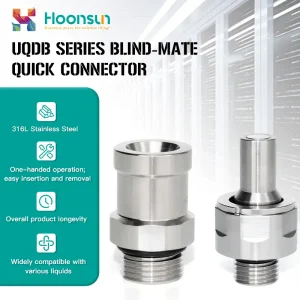
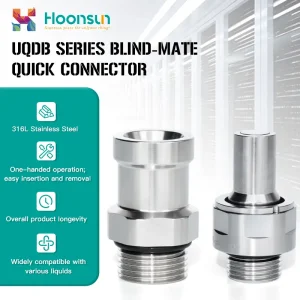
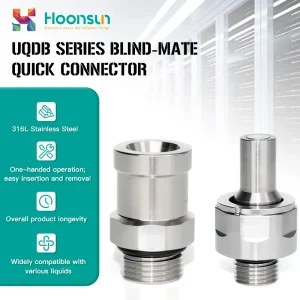
Blind-mate installations require thermal connectors to engage reliably without human line-of-sight during blade insertion. Our blind-mate couplings integrate radial compliance float mechanisms with internal centering springs, accommodating up to ±1.5 mm of radial misalignment and up to 2° of angular misalignment without galling the sealing surfaces or pinching O-rings.
What is the standard lead time for custom tooling and high-volume OEM delivery?
Because our Yueqing factory controls raw material sourcing, mold-making, multi-axis machining, and automated helium testing in-house, initial rapid-prototype samples (with custom threads or flow passages) ship within 7 to 10 days. Scaled production runs of 5,000 to 50,000 units are routinely completed and pre-packaged for export within 3 to 4 weeks.
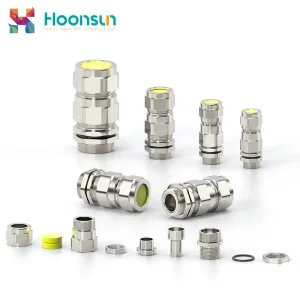
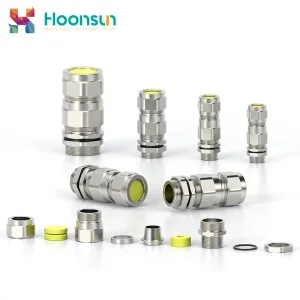
Advanced Liquid Cooling Connectors & Harsh-Environment Joint Solutions
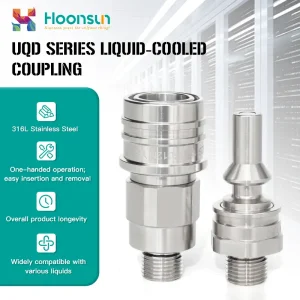
Explore our extended series of blind-mate UQDs, miniature hydraulic interconnects, and heavy-duty IP68 hazardous-location sealing joints engineered for mission-critical industrial stability.
Accelerate Your Thermal Architecture with Factory-Direct Engineering
Send your CAD boundary envelope, required flow rate ($C_v$), target working fluid, and operating pressure limits. Our hydraulic engineering specialists will return custom STEP models, full CFD pressure drop plots, and volume manufacturing quotations within 24 hours.
Connect with a Thermal Application Engineer