
IP68 / UL
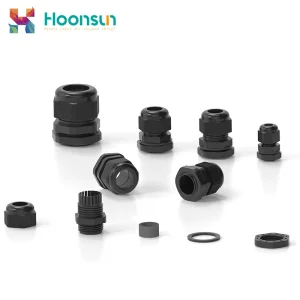
Direct-from-factory solutions featuring robust strain relief, anti-vibration ratchets, and superior ingress protection for critical enclosures.
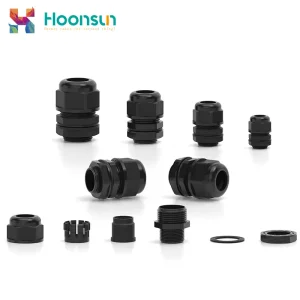
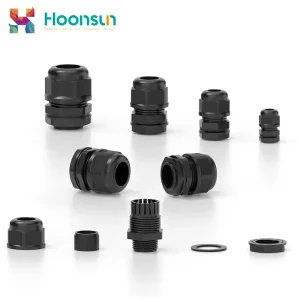
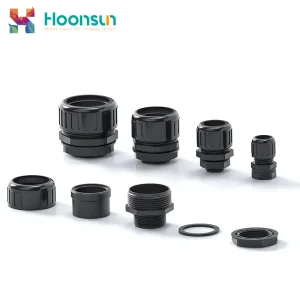
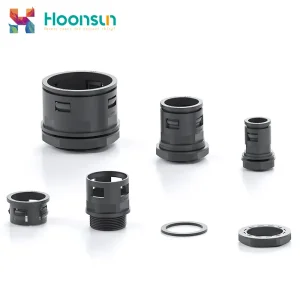
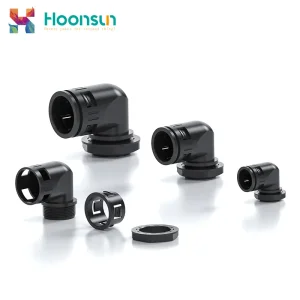
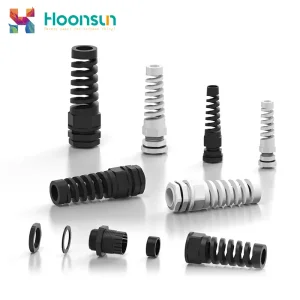
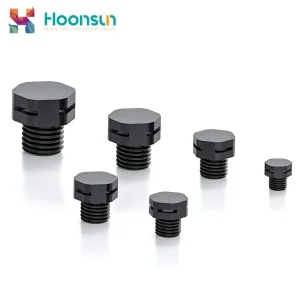
Evaluating thermoplastic behavior, flammability retardance, and elastomeric compression physics for severe industrial enclosure interfaces.
In modern electrical enclosure architecture, cable pass-throughs represent the primary point of physical failure if not correctly specified. As electrical assemblies migrate to higher power densities and encounter volatile climatic variations, the selection of nylon cable glands (specifically high-grade Polyamide 66) has surpassed conventional metallic options in over 65% of light-to-medium industrial applications. Virgin PA66 exhibits an exceptional combination of tensile strength (85 MPa at yield), high dielectric withstand voltage (>25 kV/mm), and self-lubricating thread properties that prevent galling during automated high-speed torque installation.
However, raw resin specification dictates long-term lifecycle durability. While commercial commodity polymers suffer from hydrolytic degradation and ultraviolet embrittlement, premium non-metallic cable glands manufactured by tier-one Chinese facilities incorporate specialized organosilane heat stabilizers, phosphorus-free flame retardants, and carbon black UV screening agents. Under accelerated weathering standards (UL 746C F1 requirements), properly compounded PA66 retains over 85% of its initial flexural and tensile impact capabilities after 1,000 hours of continuous xenon-arc UV radiation and immersion cycles.
Standard nylon glands carry UL 94 V-2 ratings (flaming drips allowed). Our heavy-duty series utilize halogen-free, non-dripping flame retardants achieving UL 94 V-0 rating, extinguishing open flame within 10 seconds without combusting underlying cotton.
Formulated for extreme outdoor photovoltaic and telecom deployments. Certified outdoor suitability per UL 746C f1 mandates minimal property degradation under simultaneous long-wave UV radiation and cyclic water immersion.
Continuous dynamic operating temperature threshold spanning -40°C to +100°C (-40°F to +212°F), with transient intermittent thermal peaks of up to +120°C without creep or torque relaxation across the gland cap nut.
Equipped with optimized Nitrile Butadiene Rubber (NBR) or high-grade EPDM compression inserts. Radial geometry generates uniform 360-degree contact pressure preventing jacket nicking while maintaining 5 bar hydraulic seal tightness.
How localized material clusters, precision multi-cavity tooling, and high-speed robotic automation establish unrivaled lead-time reliability and competitive pricing.
Procurement leaders navigating international component sourcing continuously balance cost, quality consistency, and supply predictability. Zhejiang Hongxiang Connector Co., Ltd. (operating in Liushi, Yueqing, known globally as China’s electrical apparatus epicenter) delivers structural supply-chain advantages impossible to replicate in fragmented Western workshops. The local Liushi industrial ecosystem clusters polymer compounding, tool fabrication, precision mold-base milling, spring steel stamping, and automated packaging within a 15-kilometer radius.
This geographical concentration shortens new tooling iteration cycles from the European standard of 12–16 weeks down to a rapid 14 to 21 working days. By leveraging internal high-speed multi-cavity injection molding equipment (operating 32-cavity and 64-cavity hot-runner systems with real-time pressure transducers), our plant achieves daily output capacities exceeding 300,000 units. Critical dimensional tolerances on entry threads (Metric ISO 965-1, German DIN 40430 PG, and American ANSI/ASME B1.20.1 NPT) are held consistently within ±0.04 mm, guaranteeing effortless manual alignment and flawless automated thread engagement on client assembly floors.
From virgin resin desiccant drying to robotic multi-axis parts harvesting, centralized closed-loop processing prevents ambient moisture contamination, ensuring zero structural porosity inside thick molded walls.
Every batch passes through automated Optical Sorting Machines (AOI) evaluating flash formation, thread pitch pitch-line diameter, and sealing ring seating, eliminating line-stopping human sorting errors.
Bypassing multi-tier overseas re-sellers and brand labeling surcharges. Global OEMs receive direct tier-1 manufacturer FOB/CIF terms that protect bill-of-materials (BOM) margins while preserving genuine UL/CE certification.
Over 5,000,000 standard parts (M12–M63, PG7–PG48, NPT 3/8"–NPT 1-1/2") maintained in high-density automated racking for 48-hour container dispatch, mitigating global supply-chain shocks.
Ensuring full conformity with European, North American, and Asia-Pacific directives through accredited third-party validation.
Compliance is not merely a logo on packaging; it is an empirical legal and operational safeguard. Industrial equipment deployed in regulated sectors across North America and the European Economic Area faces strict enforcement. A faulty cable gland resulting in moisture ingress or flammability non-compliance can void machine UL listings, invalidate CE declarations of conformity, and trigger massive product recall liability.
Our manufacturing protocol complies with UL 514B (Standard for Conduit, Tubing, and Cable Fittings), CSA C22.2 No. 18.3, and the unified harmonized European standard EN 62444 (Cable glands for electrical installations). Compliance parameters are documented per individual SKU batch, giving tier-1 EPC contractors and global equipment engineers clean, verifiable technical documentation during vendor qualification audits.
Verified according to IEC 60529. Continuous submersion rating at 5 bar pressure (50 meters equivalent water depth) for 72 hours, alongside DIN 40050-9 IP69K high-pressure (100 bar) high-temperature (80°C) washdown jets.
Certified free of restricted hazardous substances per EU Directive 2011/65/EU and amendment 2015/863. Full conformity with REACH Regulation (EC) 1907/2006 covering all Substances of Very High Concern (<0.1% w/w).
Tested and certified for Cable Retention Type A, ensuring that the clamped cable withstands repetitive mechanical axial tension and torsional twisting without compromising IP integrity or outer jacket shielding.
PA66 formulation contains zero chlorine, bromine, or iodine compounds (DIN VDE 0472 Part 815). In the event of catastrophic enclosure fire, non-toxic smoke opacity prevents toxic acid gas inhalation in confined areas.
Direct technical correlation between ISO Metric, German PG, American NPT, and British Gas (G/BSPP) threads, clamping ranges, and installation torque specs.
Selecting the ideal nylon cable gland requires matching cable outer diameter (OD) tolerance ranges to internal seal deformation limits while respecting enclosure wall thickness. Undersizing causes excessive radial necking and internal conductor shear; oversizing prevents the collet claw from generating sufficient contact pressure for IP68 watertight integrity. Consult the engineering table below for standardized cross-thread specification:
| Thread Standard | Designation Size | Thread O.D. (mm) | Cable Clamping Range (mm) | Panel Clearance Hole (mm) | Recommended Torque (N·m) | Typical Application Sector |
|---|---|---|---|---|---|---|
| Metric ISO | M12 × 1.5 | 12.0 | 3.0 – 6.5 | 12.3 ± 0.2 | 2.0 – 3.0 | Sensors, M12 I/O Field Boxes, LED Modules |
| Metric ISO | M16 × 1.5 | 16.0 | 4.0 – 8.0 | 16.3 ± 0.2 | 3.0 – 4.0 | Industrial Control Switches, Solar Trackers |
| Metric ISO | M20 × 1.5 | 20.0 | 6.0 – 12.0 | 20.4 ± 0.2 | 4.0 – 5.5 | VFD Power Feeds, Servo Motor Drives |
| Metric ISO | M25 × 1.5 | 25.0 | 9.0 – 16.0 | 25.4 ± 0.2 | 5.0 – 6.5 | Commercial HVAC Panels, Inverter Terminals |
| Metric ISO | M32 × 1.5 | 32.0 | 14.0 – 21.0 | 32.5 ± 0.3 | 7.0 – 9.0 | Main Distribution Boards, Industrial Pumps |
| German PG | PG 7 | 12.5 | 3.0 – 6.5 | 12.8 ± 0.2 | 2.0 – 2.5 | Legacy European Machine Tooling, Solenoids |
| German PG | PG 9 | 15.2 | 4.0 – 8.0 | 15.5 ± 0.2 | 2.5 – 3.5 | Pneumatic Valves, Process Instrumentation |
| German PG | PG 13.5 | 20.4 | 6.0 – 12.0 | 20.8 ± 0.2 | 4.0 – 5.0 | DIN Standard Pushbutton Stations |
| German PG | PG 21 | 28.3 | 13.0 – 18.0 | 28.7 ± 0.3 | 6.0 – 7.5 | Heavy Automation Panels, Conveyor Controls |
| American NPT | NPT 3/8" | 17.1 | 5.0 – 10.0 | 17.5 ± 0.2 | 3.5 – 4.5 | North American Machinery, J-Boxes (UL 514B) |
| American NPT | NPT 1/2" | 21.3 | 6.0 – 12.0 | 21.8 ± 0.2 | 4.5 – 6.0 | ANSI Motor Junction Enclosures, Lighting |
| American NPT | NPT 3/4" | 26.7 | 13.0 – 18.0 | 27.2 ± 0.3 | 6.5 – 8.0 | Heavy Utility Feeders, Solar Combiner Enclosures |
* Note: Metric thread pitch standard is 1.5mm. Custom thread lengths (15mm to 25mm extended body) available upon request for thick-walled cast aluminum or polymer enclosures.
A structured engineering checklist for procurement managers and supply chain directors auditing Chinese cable accessory manufacturers.
For seasoned procurement teams at multinational engineering firms, component acquisition involves much more than calculating nominal unit purchase cost. When assessing nylon cable gland manufacturers, the Total Cost of Ownership (TCO) equation must account for assembly line cycle efficiency, cross-batch scrap rates, warranty reserve allocations, and regulatory re-certification liabilities. An inferior nylon cable gland costing $0.05 less at initial purchase can induce $5,000 in operational losses if the cap nut shears under automated torque screwdrivers or if seal plasticizers leach under high thermal stress.
Every delivery run must be accompanied by an authentic Certificate of Analysis (CoA) demonstrating 100% virgin polyamide use without contaminated post-industrial regrind, guaranteeing tensile integrity.
Tier-1 automotive and renewable clients require Production Part Approval Process (PPAP) Level 3 documentation, including dimensional control plans, FMEA risk assessments, and MSA gauge repeatability studies.
Molds experience natural abrasion. Our in-house toolroom executes scheduled cavity re-polishing and core-pin replacement every 150,000 cycles to preserve crisp thread crests and zero flash lines.
Complete private-label custom laser etching, customized thread color variants (RAL 7035 Light Grey, RAL 9005 Jet Black, RAL 7001 Silver Grey), barcoded blister retail packaging, and bulk kit assembly.
Engineered to excel across severe environmental extremes from solar farms to automated robotics.
Deployed in utility-scale solar string inverters, tracker control boxes, and battery energy storage container units. Unaltered resilience against desert thermal cycling (+50°C daytime surface heating to sub-zero night cooling) combined with UV F1 weather-resistant chemistry preventing seal cracking and dust penetration over 25-year design lifetimes.
Protecting high-voltage auxiliary wiring, dynamic liquid cooling connections, and payment interface modules on DC ultra-fast charging stations. UL 94 V-0 flame-retardant grade nylon ensures safety in public areas, resisting vandalism, oil spatter, and aggressive salt de-icing slush from adjacent vehicle roadways.
Anti-bending spiral flex cable glands applied to articulated 6-axis robot joints, pick-and-place gantry heads, and automated guided vehicles (AGVs). The extended spiral tail relieves localized bending radius stresses on dynamic flexible cables, eliminating internal wire core fatigue and insulation wear.
Submersible lift station telemetry, aerator motor terminations, and chemical dosing pumps. Resistant to continuous hydrogen sulfide (H2S) gas off-gassing, caustic soda splashing, and dynamic hydrostatic pressure heads that corrode nickel-plated brass or standard grade aluminum gland alternatives.
Installed across quayside cargo cranes, marina power distribution pedestals, and naval auxiliary topside junction housings. Unlike metal connectors vulnerable to galvanic salt spray corrosion, non-conductive PA66 remains immune to pitting and galvanic potential differences.
Pole-mounted microcell base stations, smart meter clusters, and overhead transmission line fault indicators. Integrated nylon breathable vent plugs equalize enclosure internal and external barometric pressure differences, preventing vacuum condensation while maintaining IP68 dust and water barriers.
Examining circular polymer formulations, smart condition-monitoring integrations, and modular split configurations.
In alignment with the European Union's Corporate Sustainability Due Diligence Directive (CSDDD), R&D is transitioning toward mass-balanced bio-polyamides derived from castor oil alongside chemically depolymerized PA66. These advanced polymers achieve complete functional parity in tensile strength and dielectric rating while cutting Scope 3 embedded carbon emissions by up to 45%.
Bridging mechanical pass-throughs with Internet of Things (IoT) connectivity. New generation cable entry units integrate micro-MEMS relative humidity sensors and fiber-optic strain transducers within the sealing grommet, broadcasting real-time data on seal degradation or cap nut vibration backing-off directly to supervisory SCADA platforms.
The expansion of pre-terminated industrial patch cables (M12 Ethernet, RJ45, USB-C, pre-wired multi-pin sensors) has accelerated adoption of split-frame nylon glands. These multi-component clamping designs allow pre-connectorized harness feeding without wire cutting or field re-crimping, cutting on-site installation labor hours by over 60%.
Direct engineering clarity on thread selection, flammability performance, and procurement protocols.
Expanding beyond standard nylon into specialized anti-bending, liquid cooling quick-couplings, and double-sealed explosion-proof armored glands.
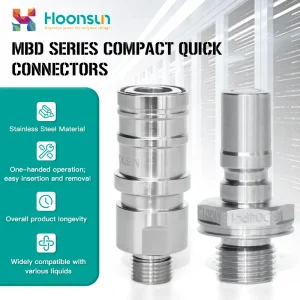
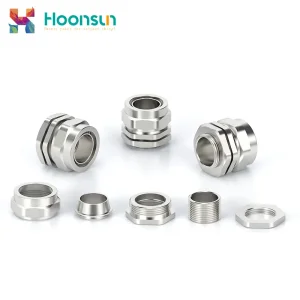
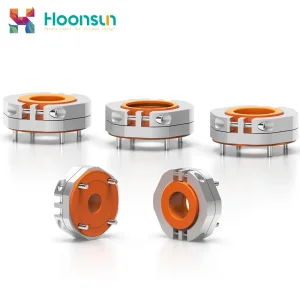
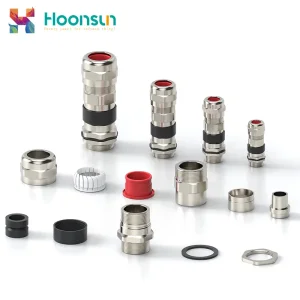
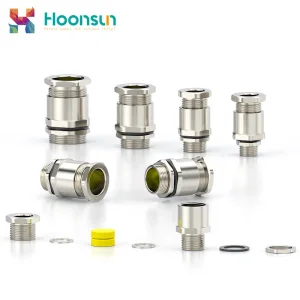
Request our complete technical white paper catalog, 3D STEP/CAD models, and full regulatory test reports. Our bilingual engineering sales staff provides direct factory quotes, custom tool development, and free evaluation sample packages within 24 hours.