
Why Choose M12 Cable Glands for Global Sourcing?
Table of Contents
- M12 Cable Glands Defined: 12 mm Thread and M12×1.5 Pitch
- IP67 Protection Explained: 1 m Immersion for 30 Minutes
- IEC 62444 Compliance: Pull-Out Strength and Sealing Requirements
- Global Compliance: RoHS, REACH, and UL 94 V-0 Material Options
- Sourcing Economics: Cable Diameter Range, MOQ, and Inspection Metrics
- FAQS
- Conclusion
- Related Posts
Global sourcing demands more than a low unit price. It requires dependable performance across factories, climates, and installation practices. The M12 Cable Gland offers a practical connection point for compact industrial equipment. It can support cable retention, sealing, and controlled strain relief when correctly specified.
In real projects, engineers examine thread compatibility, cable diameter, sealing materials, and enclosure requirements. They also review IP test evidence, dimensional drawings, production samples, and batch traceability. Small details matter. A poorly matched seal may admit dust or moisture around the cable jacket. A weak locking component may loosen under vibration, especially near motors or automated machinery. Experienced buyers therefore compare suppliers by process control, not catalog claims alone.
Reliable manufacturers should explain material selection clearly. Nylon, brass, stainless steel, and specialized elastomers can serve different operating conditions. Temperature, chemicals, UV exposure, and repeated movement all influence service life. Certification documents should be current, verifiable, and linked to the supplied product. Regional thread conventions and import documentation also deserve careful review.
No sourcing plan is perfect. A polished spreadsheet can still hide inconsistent molding quality. Samples can pass inspection while later batches drift. That risk deserves honest attention. Clear acceptance criteria, supplier audits, and inspection records create stronger control. They also make communication easier across languages and time zones.
For global buyers, choosing an M12 Cable Gland is therefore a technical and commercial decision. The best option balances fit, protection, consistency, lead time, and accountable support. Performance should be proven before volume purchasing begins. That discipline protects equipment and long-term project reliability.
M12 Cable Glands Defined: 12 mm Thread and M12×1.5 Pitch
Why Choose M12 Cable Glands for Global Sourcing?
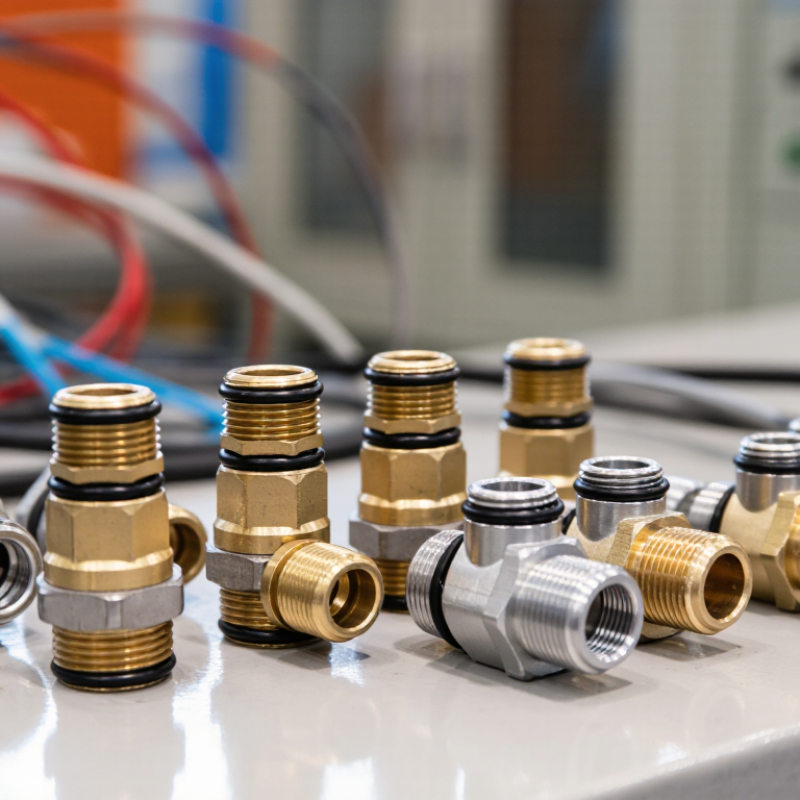
M12 cable glands use a metric thread with a 12 mm nominal diameter. The common specification is M12×1.5, meaning a 1.5 mm thread pitch. This detail matters during international sourcing. A matching nut, panel opening, and sealing washer must share the same thread geometry. ISO 261 and ISO 965 provide the reference framework for metric thread dimensions and tolerances.
M12×1.5 is compact, repeatable, and widely understood by industrial suppliers. HMS Networks’ 2024 industrial network analysis reported Industrial Ethernet at 71% of new factory automation installations. More connected equipment increases the need for protected cable entries near sensors, actuators, and control cabinets. IEC 60529 remains the key reference for IP protection ratings, but the gland’s actual performance depends on cable diameter, assembly torque, and sealing compression. A report from MarketsandMarkets projected the Industrial Ethernet market to grow from about USD 9.2 billion in 2023 to USD 15.9 billion by 2028. That growth supports demand for standardized interfaces, although it does not guarantee every M12 gland fits every application.
A practical sourcing mistake is treating “M12” as a complete specification. It is not. Buyers should confirm thread length, panel thickness, sealing range, material, temperature limits, and test documentation. One overlooked point is cable outer diameter. Even a correct M12×1.5 thread can leak when the cable seal is poorly matched. Specification sheets can look precise, yet field installation still deserves careful review.
IP67 Protection Explained: 1 m Immersion for 30 Minutes
Why Choose M12 Cable Glands for Global Sourcing?
For global sourcing, M12 cable glands offer a compact and widely recognized connection format. Their small size suits sensors, control cabinets, and outdoor instrumentation where enclosure space is limited. IP67 protection means the assembled entry is dust-tight and can resist immersion in one meter of water for up to 30 minutes under laboratory conditions. That matters.
In practical installation, the seal must grip the cable evenly, while the gland body must sit firmly against the enclosure wall. A loose locknut, damaged gasket, or incorrect cable diameter can reduce protection quickly. Fit matters. Reliable suppliers should provide dimensional drawings, material data, torque guidance, and test evidence linked to IEC 60529 methods. I would also check whether testing used the actual cable type, because a housing can pass while a poor cable fit fails. This detail is easy to overlook.
IP67 does not automatically confirm resistance to high-pressure washing, salt spray, oils, or repeated immersion. Those conditions require separate verification. During inspection, technicians can look for cracked seals, uneven compression, and moisture inside the enclosure after a controlled test. M12 cable glands remain practical for international procurement, but only when size, thread form, sealing range, and environmental demands match the application. One caution remains: field installation is often less perfect than the test bench.
Why Choose M12 Cable Glands for Global Sourcing?
IP67 Protection Explained: The IP67 rating combines the highest dust-protection level, IP6X, with IPX7 temporary immersion protection. Under IEC 60529 test conditions, IPX7 equipment withstands immersion in water up to 1 metre deep for up to 30 minutes.
This protection applies only when the complete cable-entry assembly is correctly selected, installed, and sealed. IP67 does not automatically indicate protection against high-pressure or high-temperature water jets.
IEC 62444 Compliance: Pull-Out Strength and Sealing Requirements
Why Choose M12 Cable Glands for Global Sourcing?
IEC 62444 compliance gives M12 cable glands a practical benchmark for international sourcing. The standard addresses mechanical retention and sealing performance. These properties matter when cables face vibration, pulling, moisture, or repeated movement. A compliant gland should resist cable pull-out without damaging the jacket. Its sealing system should also close firmly around the cable’s actual diameter.
The details matter. An M12 thread alone does not prove compliance. Buyers should review test records, material specifications, and installation instructions. Pull-out testing normally applies a controlled axial force to the assembled gland and cable. Inspectors then check for movement, slippage, or structural failure. Sealing evaluations examine whether the entry remains protected after assembly and mechanical stress.
In production, I would verify the cable range with a caliper before ordering large quantities. Too much clearance can weaken sealing. Excessive compression may deform softer cable jackets. Small errors become expensive across global shipments. A calibrated torque tool also supports repeatable installation, although torque values must follow the approved assembly data. This is often overlooked. Some specifications appear complete but lack clear test conditions or sample details. That should invite questions, not assumptions. For dependable sourcing, request traceable inspection records and confirm that the tested configuration matches the final cable, thread, and enclosure.
Global Compliance: RoHS, REACH, and UL 94 V-0 Material Options
Why Choose M12 Cable Glands for Global Sourcing?
M12 cable glands simplify international sourcing when compliance evidence travels with the part. The European Commission’s RoHS documentation identifies ten restricted substances, including lead, mercury, and certain phthalates. A compliant gland should include a current declaration, material composition, and controlled production records. “RoHS compliant” alone is too thin. Buyers need traceable evidence.
REACH adds another practical checkpoint. ECHA guidance requires communication when an article contains a substance of very high concern above 0.1% by weight. This matters for plastic bodies, seals, and flame-retardant additives. I would request a REACH statement for every material family, not only the finished cable gland. Supplier paperwork can be incomplete. That risk is easy to underestimate.
For equipment exposed to heat or ignition sources, UL 94 V-0 material options provide a clearer performance benchmark. The UL 94 test method requires limited afterflame times and prohibits flaming drops from igniting the indicator material. A well-documented M12 gland should link this rating to a specific resin grade and test report. It should also preserve performance after storage and assembly. Real projects are less perfect than laboratory tests. Moisture, incorrect torque, and mixed batches still deserve inspection. These details support safer global qualification across control cabinets, sensors, and outdoor junction boxes.
Why Choose M12 Cable Glands for Global Sourcing? - Global Compliance: RoHS, REACH, and UL 94 V-0 Material Options
| Sourcing Dimension | M12 Cable Gland Option | Relevant Technical or Regulatory Reference | Typical Global-Sourcing Value | Verification Documents to Request |
|---|---|---|---|---|
| Standard Metric Interface | M12 × 1.5 metric thread | Metric cable-entry format commonly used in industrial equipment and control enclosures. Thread dimensions and tolerances should be confirmed on the supplier drawing. | Supports repeatable enclosure integration and simplifies cross-border specification when the same thread and sealing dimensions are maintained. | Approved dimensional drawing, thread specification, inspection report, and sample approval record. |
| RoHS Compliance | Compliance option available Halogenated or halogen-free material selections may be specified separately. |
Directive 2011/65/EU and Commission Delegated Directive (EU) 2015/863 restrict specified hazardous substances in electrical and electronic equipment, including lead, mercury, cadmium, hexavalent chromium, PBBs, PBDEs, and four phthalates. | Helps support electrical and electronic equipment supply chains serving the European Economic Area and other markets that request RoHS evidence. | Supplier declaration, material composition statement, and test report from a qualified laboratory where required. |
| REACH Status | Material and plating data should be reviewed by batch or revision. | Regulation (EC) No. 1907/2006 covers chemical registration, evaluation, authorisation, and restriction. Article 33 communication may apply when a Candidate List substance exceeds 0.1% w/w in an article. | Improves chemical-transparency management for importers, distributors, and downstream users operating in or supplying the European market. | REACH declaration, current SVHC statement, plating or coating composition, and revision-controlled material declaration. |
| Flame-Retardant Plastic | Polyamide body with UL 94 V-0-rated resin option | UL 94 V-0 is a vertical flame classification based on specified laboratory test conditions. The rating applies to the tested material thickness and formulation, not automatically to every finished assembly. | Provides a documented flame-performance option for control panels, automation equipment, and electrical enclosures where a V-0 material requirement is specified. | UL 94 test report or recognized certification record identifying resin grade, color, thickness, and manufacturer of the material. |
| Metal Construction | Nickel-plated brass or stainless-steel body | Metal versions provide higher mechanical robustness than polymer bodies. Corrosion performance depends on base metal, plating, environment, and assembly design. | Offers alternative material choices for outdoor, vibration-prone, industrial, or higher-temperature applications. | Material certificate, plating specification, salt-spray or corrosion test data where applicable, and dimensional inspection report. |
| Sealing Material | NBR, EPDM, silicone, or other specified elastomer | Elastomer selection affects temperature range, chemical resistance, weathering performance, and compatibility with the cable jacket and enclosure. | Enables the same M12 entry format to be adapted for indoor, outdoor, low-temperature, or chemically exposed applications. | Elastomer grade, temperature range, chemical-compatibility data, and product drawing showing the sealing interface. |
| Ingress Protection | Commonly specified as IP65, IP66, IP67, or IP68, depending on design and installation | IEC 60529 defines IP degree classifications. The achieved rating depends on the complete cable gland, cable diameter, enclosure interface, tightening torque, and installation quality. | Supports consistent enclosure protection requirements across international projects when the test configuration matches the intended installation. | IP test report identifying the exact model, cable range, thread size, tightening conditions, and test configuration. |
| Operating Temperature | Typical product ranges vary by material and seal; example specifications may include approximately −40°C to +100°C for selected configurations. | Temperature limits are product-specific and must account for the body material, seal compound, cable jacket, and environmental exposure. | Allows procurement teams to select a suitable configuration rather than applying one temperature claim to every M12 cable gland. | Technical datasheet, temperature test data, and clearly stated continuous and intermittent temperature limits. |
| Cable Diameter Range | Often supplied in several clamp ranges, for example approximately 3–6 mm or 4–8 mm, depending on the sealing insert. | Actual sealing performance depends on matching the cable outside diameter to the specified clamp range and tightening procedure. | Multiple inserts or size variants can reduce design changes while supporting different cable constructions in global projects. | Dimension drawing, cable-range table, recommended tightening torque, and sample validation record. |
| Electrical Bonding | Metal glands may be used with bonding accessories; plastic glands generally do not provide metallic continuity. | Protective bonding and electromagnetic compatibility requirements depend on the enclosure, cable shield, locknut, earth tag, and installation method. | Provides a choice between insulated cable entry and conductive cable-entry systems for different equipment architectures. | Electrical continuity test method, resistance data, accessory compatibility list, and installation instructions. |
| Documentation for Global Import | Revision-controlled technical file | Product identification should remain consistent across drawings, declarations, test reports, packaging labels, and purchase orders. | Reduces customs, quality-control, and supplier-change risks when sourcing from multiple production locations or serving multiple regions. | Datasheet, drawing, bill of materials, compliance declarations, test reports, packaging specification, and change-notification procedure. |
Compliance and performance claims should be confirmed for the exact M12 cable gland configuration, material grade, cable diameter, installation method, and production revision. RoHS, REACH, UL 94, and IP evidence are not interchangeable and should be evaluated using the applicable document for each requirement.
Sourcing Economics: Cable Diameter Range, MOQ, and Inspection Metrics
Why Choose M12 Cable Glands for Global Sourcing?
M12 cable glands can simplify purchasing when cable diameter ranges are clearly matched. Common sealing inserts cover cables around 3–7 mm, 4–8 mm, or 6–12 mm. Actual coverage depends on the insert design. Do not trust the nominal size alone. A 5 mm cable may seal poorly inside a 6–12 mm insert. That small mismatch can create leakage, movement, and rework.
MOQ directly affects sourcing economics. A supplier may quote a lower unit price at 1,000 pieces, but your project may require only 300. Holding excess inventory adds storage cost and ties up cash. I have found that mixed-size orders sometimes reduce waste, although they can increase inspection effort. Ask for tiered pricing at 100, 500, and 1,000 pieces. The cheapest bracket is not always the cheapest decision.
Inspection should connect with field performance. Check thread dimensions with calibrated gauges, not visual judgment. Measure sealing diameter, nut torque, and pull-out resistance from recorded samples. Confirm the stated IP level through a documented water or dust test. Review material certificates and temperature data when outdoor use is expected. Sampling plans should define batch size, acceptance limits, and defect classification. Keep records. One weakness remains: visual inspection may miss gradual seal compression, so periodic fit testing is worth the extra cost.
FAQS
It indicates tested mechanical retention and sealing performance. The gland should resist cable pull-out, vibration, moisture, and repeated movement. An M12 thread alone does not prove compliance.
A controlled axial force is applied to the assembled gland and cable. Inspectors check for movement, slippage, jacket damage, or structural failure. Test records should identify the cable and assembly conditions.
The insert must close firmly around the cable’s actual diameter. Too much clearance may cause leakage and cable movement. Excessive compression can deform a soft jacket. Small mismatches matter.
Typical ranges include 3–7 mm, 4–8 mm, and 6–12 mm. Coverage depends on the insert design. A 5 mm cable may seal poorly in a 6–12 mm insert.
Measure the cable with a caliper before ordering large quantities. Use a calibrated torque tool during assembly. Follow the approved torque data, because excessive force may damage the seal.
Request traceable pull-out results, sealing tests, material certificates, and temperature data. Confirm the tested thread, cable, insert, and enclosure match the final configuration. Otherwise, compliance claims remain uncertain.
Compare pricing at 100, 500, and 1,000 pieces. A lower unit price may create excess inventory and storage costs. Mixed-size orders can reduce waste, but they may require more inspection.
Check thread dimensions with calibrated gauges, not visual judgment. Record sealing diameter, nut torque, and pull-out resistance. Review documented water or dust testing for the stated protection level.
No. Visual checks may miss gradual seal compression or poor cable fit. Periodic fit testing adds cost, but it can reveal hidden weaknesses. This is easy to overlook.
Conclusion
An M12 Cable Gland is a compact cable-entry solution defined by its 12 mm thread diameter and commonly used M12×1.5 pitch. It provides a secure connection between a cable and an enclosure while helping protect internal components from dust and moisture. With an IP67 rating, the gland is designed to prevent dust ingress and withstand immersion in up to 1 meter of water for 30 minutes under specified test conditions. Compliance with IEC 62444 also supports reliable pull-out strength and effective sealing performance when the correct cable size and installation method are used.
For global sourcing, material and documentation choices are equally important. Options supporting RoHS and REACH requirements, along with UL 94 V-0-rated materials, can simplify product qualification for different markets. Buyers should also compare compatible cable diameter ranges, minimum order quantities, lead times, and inspection metrics such as thread accuracy, sealing performance, material consistency, and dimensional tolerances. Evaluating these factors together helps balance purchase cost, quality assurance, and long-term supply stability.

Blog Tags: