
High-Demand Cable Containment for Boston Projects
Pre-engineered, factory-audited cable gland components serving Massachusetts industrial automation, naval engineering, and precision control assemblies.
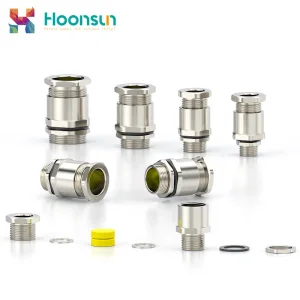
Boston Explosion-Proof Marine Cable Gland EX4 (IP68, UL Certified)
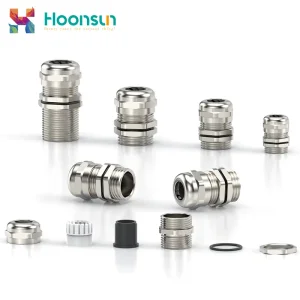
Boston Heavy-Duty Metal Cable Gland (Extended Length Type, Waterproof)
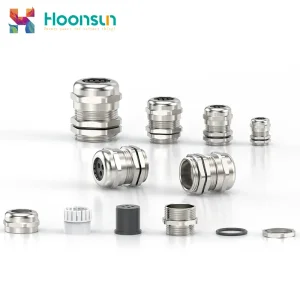
Boston Multi-Hole Metal Cable Gland for High-Density Harnesses
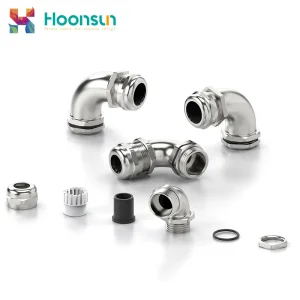
Boston Right Angle 90° Metal Cable Gland (IP68 Space-Constrained Routing)
Boston & New England Industrial Demands
A precision-driven ecosystem demanding high-performance electrical ingress protection, fail-safe strain relief, and stringent compliance frameworks.
Route 128 & Boston Robotics Cluster
Greater Boston is recognized globally as the capital of advanced robotics, automated mobile robots (AMRs), and cobots. From Waltham to the Seaport Innovation District, OEMs design dynamic robotic arms and subsea exploration drones requiring:
- Continuous flexing vibration absorption without clamping fatigue
- Shielded 360° EMC/RFI termination preventing servo signal interference
- Ultra-compact footprints (90° and short-thread M12 to M32 geometries)
Boston Harbor Marine & Offshore Wind
With major developments expanding out of Boston Harbor, Charlestown Navy Yard refits, and New Bedford's offshore wind staging terminals, coastal Massachusetts infrastructure confronts aggressive saline corrosion:
- C3-C5 marine corrosive classifications requiring SS316L / CuZn39Pb3
- IP68 immersion sealing rated to 5-10 bar (continuous submersion)
- Dual-seal armored cable glands for marine power distributions
Biopharma Cleanrooms & Medical Tech
Cambridge and Kendall Square house the world’s dense concentration of pharmaceutical manufacturing and cleanrooms. Precision fluidics, bioreactors, and cleanroom air handlers demand:
- FDA-compliant silicone and Viton seals resistant to CIP washdowns
- Crevice-free hygienic cable glands preventing bacterial colonization
- UL 94V-0 halogen-free, self-extinguishing polyamide options
Global Sourcing Strategy for Boston Engineering Teams
Overcoming supply chain fragility through factory-direct precision manufacturing, dual-certification standards, and rapid prototyping workflows.
Solving the Tier-1 Sourcing Bottleneck in New England
Industrial procurement directors across Boston’s high-tech manufacturing belt face a persistent challenge: traditional domestic distributor channels often introduce extensive markups (often exceeding 300%) while extending lead times on specialized explosion-proof, EMC-shielded, and metric-threaded cable glands to 12–16 weeks. When regional projects—such as automated warehouse installations in Worcester or maritime defense assemblies along the coast—demand immediate scalability, relying on fragmented regional middlemen threatens delivery schedules.
Direct alignment with established manufacturing plants like HOONSUN (Zhejiang Hongxiang Connector) bridges this gap. Operating from Liushi, the world's premier electrical hardware capital, direct factory procurement delivers custom CNC-machined thread runs (NPT, Metric, PG, G), pre-assembled elastomeric grommets, and certified explosion-proof terminations directly to Boston docks, cut to exact OEM Bill of Materials (BOM) specifications.
Compliance Harmonization: Bridging North American NEC and European IEC Standards
Because Boston engineering firms frequently design systems intended for worldwide export—such as bio-processing skids shipped to Europe or subsea ROVs deployed across the Asia-Pacific—procurement cannot afford dual-inventory complexity. Cable entries must satisfy both North American NEC (National Electrical Code) Articles 500-505 and international IECEx/ATEX paradigms.
By sourcing cable glands featuring dual UL 514B listings alongside CE, RoHS, and IECEx certifications, engineering firms eliminate redesign cycles. Standardizing on dual-certified nickel-plated brass and 316L stainless steel cable connectors enables New England OEMs to use identical enclosure punch-out patterns and terminal layouts globally.
Material Science & Mechanical Performance Benchmark
Comprehensive engineering specification table to assist system integrators in matching enclosure ratings with real-world operating environments.
| Classification | Material Core | Ingress Rating | Thread Compatibility | Primary Industrial Use-Case | Environmental Tolerance |
|---|---|---|---|---|---|
| Marine Explosion-Proof (EX4) | CW614N Nickel-Plated Brass / 316L SS | IP68 (10 Bar) | NPT 1/2" to 3", Metric M16-M75 | Boston Harbor Vessel Decks, Offshore Wind Sub-stations | Salt fog ASTM B117 >1000h, Ex d IIC Gb |
| EMC Shielded Metal | Electroless Nickel Brass / BeCu Springs | IP68 / NEMA 6P | M12 to M63, PG7 to PG48 | Route 128 Robotics Drives, Variable Frequency Inverters | 360° low-impedance contact, -40°C to +120°C |
| Armored Double-Seal (CW) | Naval Brass / Stainless Steel 304/316 | IP66 / IP68 | NPT, Metric, G (BSPP) | Heavy Industrial Power Feed, Petrochemical, Defense | Armor clamping tensile load >450N, Gas Group IIA-IIC |
| Polyamide PA66 Standard | UL 94V-2 / V-0 Virgin Nylon PA66 | IP68 | Metric, PG, NPT Threads | Kendall Square Cleanroom HVAC, Solar Inverters, Junction Boxes | Weak acid/alkali resistance, UV stabilized option |
| High-Temperature Resistant | Nickel Brass with Fluororubber (FKM) | IP68 | Metric M16 to M63 | Injection Molding, Engine Test Cells, Industrial Furnaces | Continuous operation up to +180°C (+220°C peak) |
| Liquid Cooling Connectors | Hard Anodized Aluminum / Brass Nickel | Zero Drip Flat-Face | G Thread, Quick-Disconnect NPT | AI High-Performance Computing, EV Battery Thermal Loops | Coolant glycol compatibility, burst pressure >25 Bar |
Technological Frontiers in Industrial Sealing & Connectivity
Anticipating the converging demands of high-density computing, harsh environment IoT, and green marine power.
AI Data Center Liquid Cooling Couplings
As generative AI workloads expand data center thermal dissipation limits in New England, liquid-to-chip architecture is displacing air chillers. Our research and manufacturing pipeline incorporates dry-break non-spill quick disconnect connectors engineered for low viscosities, fluorinated coolants, and pure water-glycol mixtures.
Next-Gen Fluoroelastomer Compound Sealing
Standard nitrile (NBR) and neoprene fail rapidly when exposed to modern synthetic bio-lubricants, hydraulic oils, and extreme marine salt cycles. The rollout of advanced fluorocarbon (Viton) and hydrogenated nitrile (HNBR) internal seals guarantees zero micro-cracking across temperature excursions spanning -50°C to +200°C.
Hybrid Optical & Power Cable Management
With the rapid rise of distributed fiber sensors in marine monitoring and robotic edge controllers, multi-port cable entries are evolving. Hybrid glands capable of concurrently clamping ruggedized multi-core 480V power cabling alongside fragile single-mode optical fibers without signal micro-bending loss are now in volume production.
Heavy-Duty Glands & Cable Connectors for Greater Boston Projects
Manufactured under strict ISO 9001 precision machining tolerances. Complete continuity of UL listed, IP68, and explosion-proof series.
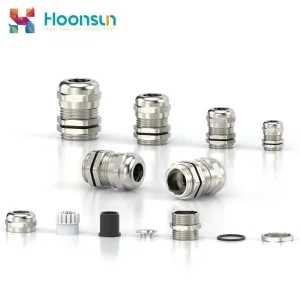
Boston EMC Shielded Waterproof Cable Joint (High RFI Attenuation)
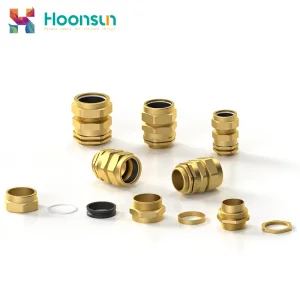
Boston Explosion-Proof Cable Clamp Sealing Joint CW (IP68, Ex d)
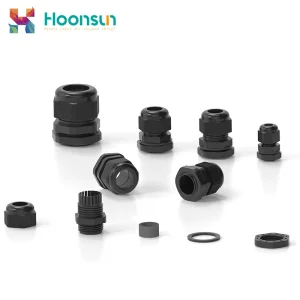
Boston Nylon Industrial Cable Gland (IP68 Factory Automation Sealed)
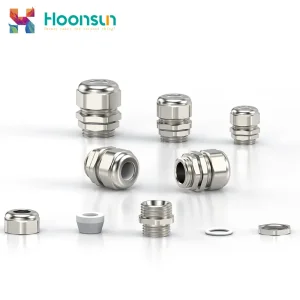
Boston High-Temperature Resistant Metal Cable Gland (UL, IP68)
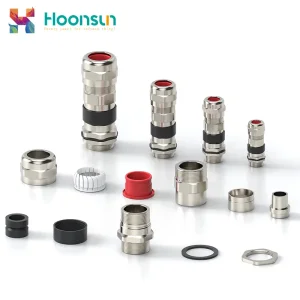
Boston Double-Sealed Armored Explosion-Proof Gland (Heavy Marine)
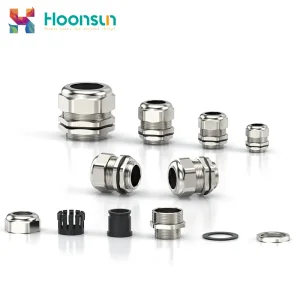
Boston Strengthened Metal Cable Gland (Ruggedized Mechanical Body)
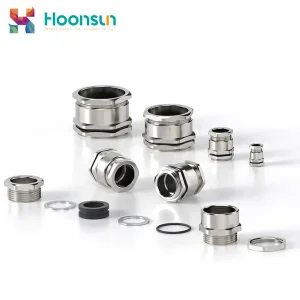
Boston Single Compression Industrial Cable Gland (Waterproof IP68)
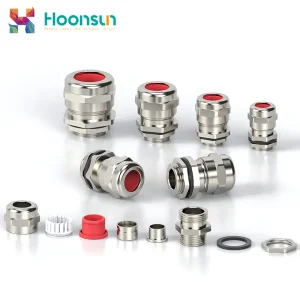
Boston Simple Armored Cable Gland (Dual IP68 & UL Certified)
Engineering Compliance & Quality Verification Standards
Validating every cable entry against harsh operational realities before dispatch.
UL 514B Pullout & Torque Test
Every cable gland diameter configuration is mechanically tested to meet or surpass UL 514B pull-out force criteria (up to 200+ lbs depending on cable size) without jacket slip, insulation crimping, or seal breakdown under dynamic mechanical vibration.
IP68 Continuous Hydrostatic Chamber
Testing seals at 1.0 MPa (100 meters water column equivalent) for 72 hours continuously. Cable entry grommets undergo cycling pressure variations to mirror deep harbor tides, oceanic subsea exploration, and high-pressure hose-down procedures.
Material Traceability & Mill Certs
Full 3.1 Material Test Reports (MTR) provided with each batch. Spectroscopy confirms brass lead content compliant with EU RoHS and REACH limits, while stainless steel options undergo ASTM A262 Intergranular Corrosion acid validation.
Frequently Asked Questions: Cable Glands in Boston
Authoritative technical answers to common questions posed by electrical contractors, systems engineers, and supply chain managers.
What is the difference between NPT, Metric, and PG thread standards for Boston equipment?
NPT (National Pipe Taper) threads are standard in North American industrial plants (defined by ANSI/ASME B1.20.1), creating a seal along the taper. Metric (M) threads (ISO 68-1) and German PG (DIN 40430) threads are straight parallel threads that require an O-ring or sealing washer under the hex shoulder to attain IP68/NEMA 4X ingress. When building machinery for export from Boston to Europe, Metric is required; for domestic installations, NPT threads are dominant. We supply both with identical IP68 ratings.
Why is 360° EMC shielding essential for robotics clusters along Route 128?
Variable Frequency Drives (VFDs) and high-speed servo motors emit significant electromagnetic noise (EMI) along shielded cabling. Standard pigtail groundings cause high RF impedance and antennas that disrupt delicate sensor telemetry. Our EMC cable glands incorporate a circumferential beryllium copper or brass spring finger cage that connects the cable braid to the metal enclosure wall at low impedance, delivering 60 dB to >80 dB attenuation at 100 MHz.
How do marine cable glands resist galvanic corrosion in Boston Harbor salt air?
Coastal marine environments contain airborne sodium chloride that corrodes untreated aluminum or low-grade brass. Our marine cable glands use CuZn39Pb3 brass electroplated with a heavy electroless nickel layer (>12 microns) or surgical-grade 316L stainless steel (containing 2-3% molybdenum). This chemistry resists pitting corrosion and micro-galvanic cell creation when mounted to aluminum enclosures or steel ship hulls.
Can HOONSUN manufacture customized thread lengths for thick enclosure walls?
Yes. Cast iron explosion-proof junction boxes or double-walled cleanroom enclosures often require thread lengths exceeding the standard 10–12 mm. Our in-house CNC machining centers custom-turn extended shank lengths up to 30 mm or 50 mm in NPT, Metric, or PG profiles on order, accommodating custom panel thicknesses without adapters.
What documentation accompanies factory-direct bulk shipments to Boston?
Every OEM export consignment includes comprehensive compliance dossiers: Certificate of Origin, Certificate of Conformity (CE, RoHS, REACH), UL Listing reference numbers, 3.1 Material Test Reports (MTR) confirming chemical analysis, and lot-specific IP68 immersion hydro-test certificates.
How does an armored cable gland handle steel wire armor (SWA) vs braid?
Armored cables used in heavy infrastructure feature either Steel Wire Armor (SWA) or Steel/Bronze Braid (SWB). Our double-sealed CW and EX series use a dual-cone clamping ring mechanism. As the outer nut tightens, the cone locks the armor mechanically, providing >450N pullout retention and an earth-bonding electrical path while the inner elastomer seals against the inner cable bedding.
Accelerate Your Boston Industrial Connectivity Project
Connect directly with our senior application engineers. Receive CAD models, tailored volume pricing, custom thread machining, and free evaluation samples dispatched to your Boston, Cambridge, or New England engineering facility within 48 hours.