
Industrial Portfolios
Featured Cable Ingress & Marine Assemblies
Factory-direct, engineered stainless steel and high-grade alloy connectors with certified IP68 ingress protection and mechanical clamping.
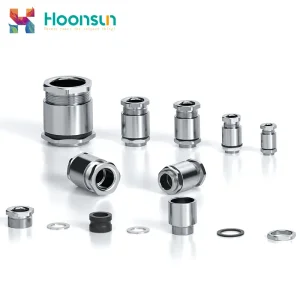
China IP68 and UL Certified Marine Cable Gland TJ Clamping Type
Technical Specs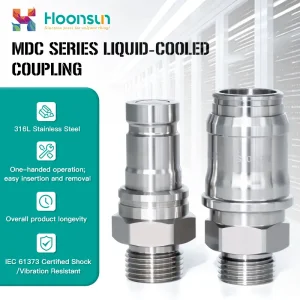
China MDC09S-15MG052N Quick Disconnect Couplings Liquid Cooling
Technical Specs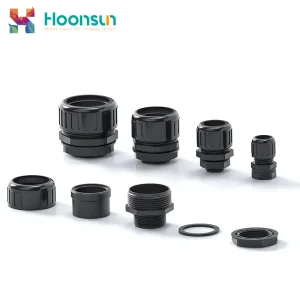
China Nylon Corrugated Cable Gland IP68 Certified
Technical Specs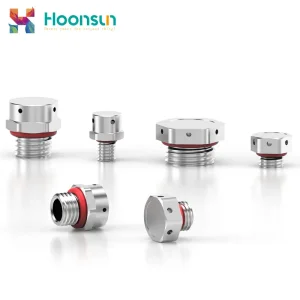
China Stainless Steel Vent Plug Factory - IP68 Waterproof
Technical Specs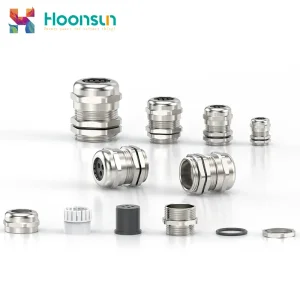
China Metal Multi-Hole Cable Gland Suppliers - IP68 Durable
Technical Specs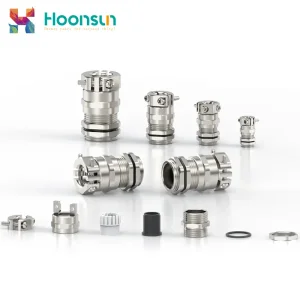
China Metal Cable Gland Double Lock Type IP68 Industrial
Technical Specs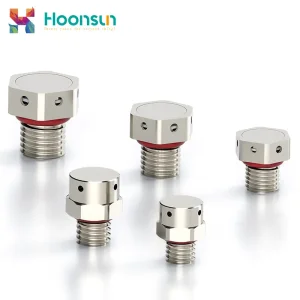
China IP68 and UL Certified Metal Vent Plug Factories
Technical Specs
Technical Whitepaper
The Engineering Architecture of No. 1 Stainless Steel Cable Glands
Understanding metallurgy, elastomeric seal kinetics, galvanic decoupling, and thread profile optimization in harsh, aggressive operating envelopes.
Austenitic 316L vs. 304 Alloy Integrity
For true chemical plant and offshore survival, our 316L (UNS S31603) glands utilize low-carbon steel with 2.0-3.0% Molybdenum content, delivering a Pitting Resistance Equivalent Number (PREN) > 25. This prevents localized chloride stress corrosion cracking where lower-tier 304 glands catastrophically fail.
Dynamic Elastomer Ingress Dynamics
Ingress protection relies on molecular compression dynamics. We employ high-performance Fluorocarbon (FKM/Viton) and Ethylene Propylene Diene Monomer (EPDM) seals tested against thermal aging from -40°C to +180°C. They maintain constant compression force against dynamic thermal expansion without permanent deformation.
EMC 360° Shielding Continuity
In automated robotics and power conversion grids, electromagnetic interference (EMI) degrades signals. Our integrated EMC stainless gland systems deploy circumferential iris-type metallic springs, delivering end-to-end electrical resistance under 5 mΩ from cable braided shielding to ground chassis.
Comparative Matrix
Engineering Material Selection & Specification Guide
Quantifiable metallurgical benchmarks across harsh industrial, corrosive coastal, hygienic, and explosive environments.
| Alloy / Specification | Yield Strength (MPa) | PREN Rating | Ingress Rating | Certifications | Target Deployments |
|---|---|---|---|---|---|
| AISI 316L (1.4404) | ≥ 220 | 23.5 - 26.0 | IP68 / IP69K | UL, CE, RoHS, REACH | Offshore rigs, marine propulsion, chemical process skids |
| AISI 304 (1.4301) | ≥ 205 | 18.0 - 20.0 | IP68 | UL, CE, RoHS | Industrial automation, food & beverage packaging, cleanrooms |
| Nickel-Plated Brass (HPb59-1) | ≥ 180 | N/A | IP68 | UL, CE | General machinery, electrical enclosures, standard switchgear |
| Polyamide PA66 (UL 94 V-0) | ≥ 75 | N/A | IP68 | UL, CE, UV-Stabilized | Photovoltaic arrays, junction boxes, commercial HVAC |
Smart Manufacturing
China Factory 4.0: Supply Chain Resilience & Precision
How our Liushi, Yueqing facility leverages robotic machining lines, computerized traceability, and automated optical inspection for zero-defect production.
Multi-Axis High-Precision Swiss CNC
We process raw austenitic stainless steel bar stocks on advanced multi-axis CNC turn-mill centers. This achieves thread pitch tolerances within ±0.01mm, eliminating thread galling during installation and delivering fluid-tight engagement across Metric, NPT, PG, and BSPP profiles.
AI Optical Dimensional Sorting
Every manufactured batch undergoes 100% automated optical inspection (AOI) to verify internal bore concentricity, chamfer integrity, and knurling accuracy. Defective pieces are isolated automatically before packaging, ensuring that international OEM delivery commitments remain uncompromised.
End-to-End Vertical Integration
Located in China's electrical capital, we integrate raw material sourcing, molding, tooling fabrication, precision machining, vulcanization, and cleanroom assembly in a unified manufacturing cycle. This guarantees high capacity buffers, rapid prototyping, and minimized lead times.
Applications
Global Industry Solutions & System Integration
Deploying robust 1 Stainless Steel Cable Glands to safeguard critical power, control, and optical links across severe environments.
Marine & Offshore Platforms
Engineered to resist constant saltwater spray and hydro-static pressure. Clamping glands provide high mechanical retention to prevent marine cable pulling caused by oceanic turbulence and hull vibrations.
EV & Liquid Cooling Data Centers
High-voltage battery packs and GPU compute clusters rely on our stainless fluid couplings and high-seal glands to manage thermal cooling loops and prevent electrical short circuits.
Food, Beverage & Pharma
Crevice-free stainless designs with smooth surface finishes (Ra < 0.8 μm) allow complete clean-in-place (CIP) and steam-in-place (SIP) washdowns without bacterial retention or corrosion.
Hazardous & Petrochemical
Compliant with explosive atmosphere containment requirements. Heavy-duty flamepath threads suppress internal arc propagation in refinery, gas compression, and chemical handling environments.
Procurement Excellence
Meeting Global Procurement Requirements & Compliance
Streamlined international sourcing with full regulatory transparency, batch traceability, and rapid engineering design customization.
EN 10204 3.1 Material Certification
Every shipment of stainless steel cable glands is accompanied by full 3.1 mill test certificates, documenting chemical spectrum analysis, tensile yield, elongation, and Charpy impact values for audit defense.
Localized Engineering Liaison
Our dedicated bilingual application engineers provide 24-hour turnaround on CAD drawings, 3D STEP models, and custom torque/cable-pull simulation data to support engineering design workflows.
Inventory Buffers & Consignment
We work with global distributors and key OEMs through customized safety stocking programs, Kanban supply models, and expedited international air-freight corridors to minimize lead times on production runs.
Precision Portfolio
Engineered Waterproof & Explosion-Proof Range
High-retention, pressure-balancing, and angle-adjustable termination hardware built to exceed global standards.
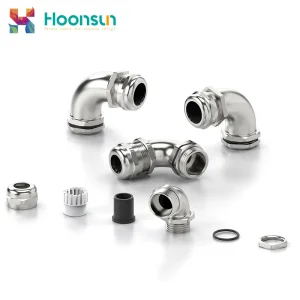
China IP68 UL Right Angle 90° Cable Gland Suppliers
Technical Specs
China Suppliers IP68 & UL Metal Vent Plug Factory
Technical Specs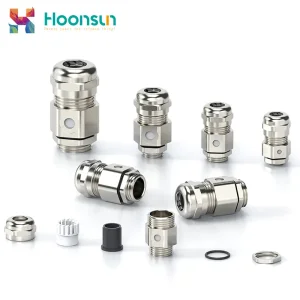
China Breathable Cable Gland Type IP68 & REACH Certified
Technical Specs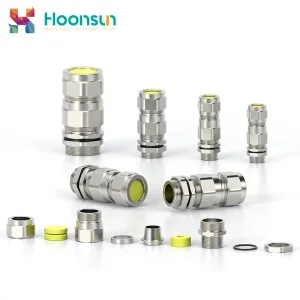
China Explosion-Proof Cable Clamp Joint EX5 | IP68 & UL
Technical Specs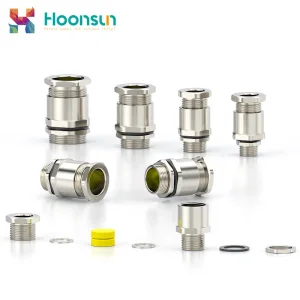
China EX4 Explosion-Proof Marine Cable Gland IP68 UL Listed
Technical Specs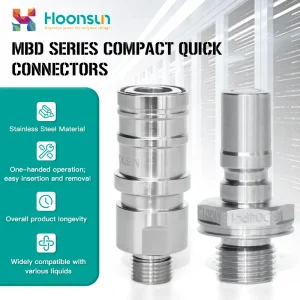
China MBD04S-1SMG012N Fluid Quick Coupling Connectors
Technical Specs
China Stainless Steel Vent Plug - IP68 Pressure Balance
Technical Specs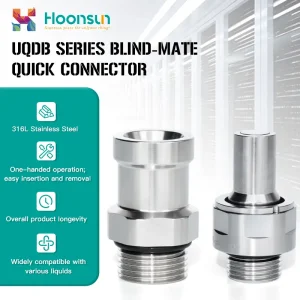
China UQDB06S-1SMU102N-UQDB06P1SMU082N Quick Couplings
Technical Specs
Future Vision
Technology Roadmap & Future Outlook
Anticipating the convergence of industrial IoT, ultra-high voltage grids, and extreme-environment engineering.
Smart Sensorized Cable Glands
Developing integrated micro-piezoelectric and thermal telemetry sensors inside the gland housing. These monitor clamping force, seal degradation, and localized overheating in real-time, feeding predictive maintenance alerts directly to SCADA systems.
Super Duplex (2507) & Exotic Alloys
Expanding manufacturing lines to process UNS S32750 Super Duplex and Hastelloy C-276. Designed to deliver PREN > 42 for subsea hydrocarbon manifolds and aggressive flue gas desulfurization systems where conventional 316L meets corrosion limits.
Cryogenic & Liquid Hydrogen Sealing
Formulating fluoroplastic-graphene hybrid seal rings capable of maintaining elasticity down to -196°C. Designed for liquid natural gas (LNG) bunkering systems and emerging liquid hydrogen energy transportation infrastructures.
Knowledge Base
Frequently Asked Technical Questions
Authoritative guidance on gland specification, galvanic isolation, threading standards, and installation compliance.
Why choose Stainless Steel 316L cable glands over Nickel-Plated Brass?
While nickel-plated brass offers adequate corrosion protection in benign indoor or standard machinery applications, plating can micro-crack under vibration, thermal expansion, or mechanical tool impact. Once the underlying brass is exposed to marine salt spray, hydrogen sulfide, or chemical washdowns, dezincification and rapid galvanic pitting occur. Stainless steel 316L contains 2-3% Molybdenum and provides structural corrosion resistance throughout the body, surviving decades in aggressive coastal, marine, and chemical atmospheres without protective coating breakdown.
How do you mitigate galvanic corrosion when installing stainless glands on aluminum enclosures?
Direct metal-to-metal contact between austenitic stainless steel (cathodic) and aluminum alloys (anodic) creates a galvanic cell in the presence of an electrolyte, leading to rapid sacrificial corrosion of the aluminum enclosure wall. To mitigate this risk, our engineering team supplies dedicated dielectric insulating washers (such as PA66, PTFE, or high-density chloroprene) together with non-conductive locknuts or thread isolation films to decouple electrochemical potential differences.
What is the technical distinction between IP68 and IP69K for cable glands?
IP68 verifies continuous submersion in water under specified hydrostatic pressures (such as 5 bar for 30 minutes or custom client depths up to 100 meters). IP69K (DIN 40050-9 / ISO 20653) evaluates resistance to high-pressure, high-temperature washdowns: specifically water jets projected at 80-100 bar with temperatures up to +80°C from four distinct angles. Our specialized hygienic stainless steel glands meet both ratings, maintaining seal compression against pressure wash cycles in hygienic processing plants.
How does thread choice (Metric, NPT, PG) affect field certification and mechanical sealing?
Metric (ISO 68-1) and PG threads are parallel threads that rely on an elastomeric O-ring or flat sealing washer against the enclosure face to achieve IP68 ingress protection. NPT (National Pipe Taper - ANSI/ASME B1.20.1) threads feature a 1° 47' taper that seals via metal-to-metal flank wedging, making them the standard choice for North American hazardous location conduits and explosion-proof enclosures. Selecting the correct thread format ensures compliance with regional installation codes (NEC/CEC vs. IEC/CENELEC) while maintaining mechanical retention under pull-out loads.