
High-Integrity Armoured Cable Glands & Specialized Assemblies
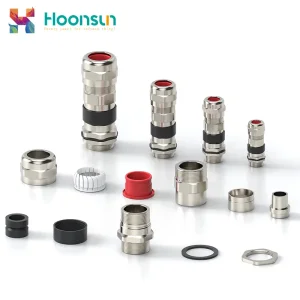
Engineered for Steel Wire Armoured (SWA), Aluminium Wire Armoured (AWA), and metallic flexible conduit systems requiring strict mechanical pull-out retention, earth continuity, and environmental hermetic sealing.
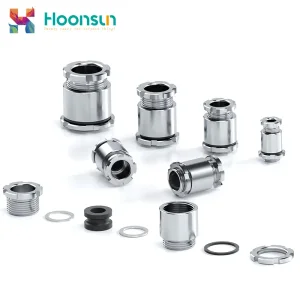
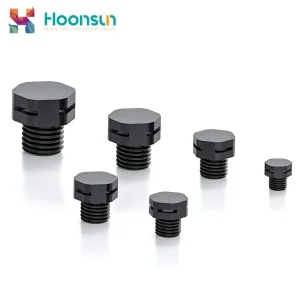
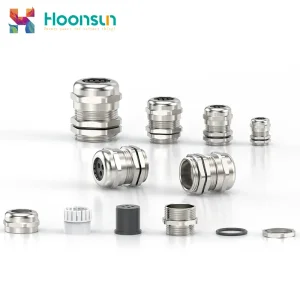
Engineering Architecture: Fitting Armoured Cable Glands
A rigorous examination of electrical continuity, cold-flow mitigation, mechanical tensile anchoring, and hazardous gas barrier protection across demanding global projects.
Dual-Displacement Sealing
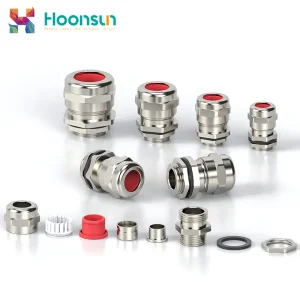
Unlike basic industrial glands that apply uncalibrated radial pressure directly onto external jacketing, our precision-machined armoured fittings incorporate dual elastomer displacement seals. An inner diaphragm forms a gas-tight seal on the inner bedding before armour termination, preventing gas migration through cable interstices.
- Zero cable jacket cold-flow cold deformation
- Submersible IP68 rating tested at 5 bar (50m)
- Chloroprene, Silicone, and Viton compound options
360° Cone-and-Ring Clamping
Armour mechanical termination is the critical barrier against cable slippage under thermal cycling or dynamic tensile loads. Our universal clamping cone and reversible clamping ring lock Steel Wire Armour (SWA), Steel Tape Armour (STA), and braided screens without pinching or shearing individual wires.
- Fault-current bonding tested to IEC 62444 Cat. B
- Tensile pull-out withstand exceeding 2,500 N
- Low earth-path resistance under short circuits
Explosion Flamepath Containment
Certified for Zone 1, Zone 2, Zone 21, and Zone 22 hazardous locations. CNC-machined cylindrical threads with tight lead tolerance act as calibrated quenching flamepaths, de-energizing hot burning gases below the ignition temperature of atmospheric hydrocarbons before they escape the enclosure.
- Ex d (Flameproof) & Ex e (Increased Safety)
- Ex ta dust explosion ignition protection
- Complies with ATEX Directive 2014/34/EU
The Global Armoured Gland Market: Supply Chain Realities
How Tier-1 engineering procurement contractors (EPCs) balance compliance risk, tariff structures, lead times, and metallurgical integrity when procuring from Chinese manufacturing clusters.
The Shift Toward Integrated OEM Manufacturing
Over the past decade, global EPC contractors have transitioned away from intermediate Western trading houses to partner directly with advanced Chinese precision manufacturing facilities in Yueqing and Ningbo. The escalating complexity of offshore floating wind, modular data centers, and massive LNG export terminals requires agile customisation: non-standard entry thread lengths, exotic metric/NPT thread hybrids, and specialized silicone compounding capable of continuous operation from -60°C to +180°C.
Operating our own automated CNC lathes, multi-spindle automatic bar turners, and cleanroom vulcanization lines enables HOONSUN to maintain dimensional consistency within ±0.02mm, while compressing tooling and pre-production lead times from 16 weeks down to under 15 days.
Total Cost of Ownership (TCO) vs. Premature Field Failure
In heavy industrial installations, the initial purchase price of an armoured cable gland represents less than 1.5% of total termination expenditure, yet a single gland failure can result in catastrophic switchgear flashovers, corrosive seawater flooding into VFD enclosures, or multi-million-dollar production halts in hazardous plants. Low-grade commercial zinc die-castings suffer from intergranular corrosion and stress-cracking in saline marine atmospheres.
By exclusively standardizing on high-purity CW614N/CW617N extruded brass (electroless nickel-plated to ≥12μm thickness) and marine-grade AISI 316L stainless steel, our fittings deliver verified 30-year operational design lifespans in aggressive C5-M marine and chemical processing environments.
Localized Support & International Compliance Assurance
A transparent breakdown of worldwide mechanical, environmental, and electrical test regimes validated by accredited bodies.
| Standard / Directive | Scope & Test Parameters | Engineering Significance | Compliance Status |
|---|---|---|---|
| IEC / EN 62444 | Mechanical cable retention, electrical bond continuity, dynamic impact testing (up to 20J) | Guarantees cable cannot pull loose under thermal vibration; satisfies European low-voltage directives. | Fully Certified |
| UL 514B / CSA C22.2 | Conduit, tubing, and cable fittings; rigorous water-spray, pull-out, and flame exposure | Essential passport for OEM equipment entering North American (NEC / CEC) commercial and industrial projects. | Listed File |
| ATEX / IECEx (Ex d / Ex e) | Flameproof containment (EN 60079-1), Increased safety (EN 60079-7), Dust ignition (EN 60079-31) | Mandatory for petrochemical refineries, LNG carriers, pharmaceutical cleanrooms, and grain processing. | Zone 1 / 21 Certified |
| IEC 60529 (IP68/IP69K) | Continuous submersion (50m, 30 days) and high-pressure steam-jet washdown (100 bar at 80°C) | Ensures zero moisture ingress in washdown food processing, marine decks, and outdoor switchgear. | IP68 / IP69K Verified |
| RoHS 2011/65/EU & REACH | Hazardous substances screening; restriction of lead, mercury, cadmium, and SVHC chemical plasticizers | Non-toxic compliance for green building certifications, renewable energy facilities, and EV platforms. | RoHS / REACH Pass |
Mission-Critical Industrial Applications
Engineered to resolve real-world environmental stress points across global heavy industries.
Marine & Offshore Energy
Drilling rigs, FPSOs, and offshore transformer substations face unrelenting salt fog, wave wash, and mechanical vibration. Our JIS Standard TJ clamping marine glands deliver impenetrable saltwater barriers with marine brass and 316L stainless steel hardware.
AI Data Centers & EV Megawatt Hubs
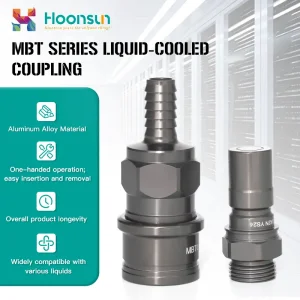
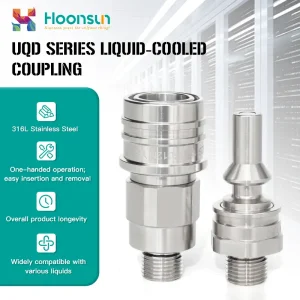
Modern hyperscale computing clusters and EV battery energy storage systems (BESS) require heavy-gauge power feeds with high EMC suppression to eliminate harmonic distortion, along with high-integrity liquid-cooled couplings for thermal regulation.
Rail Transit & Rolling Stock
Tunnels, catenary substations, and onboard bogie electrical enclosures experience continuous shock, oscillation, and aggressive brake dust. Specialized metal-hose unions and armoured glands ensure uninterrupted signal and motor traction power.
Petrochemical & Hazardous Mining
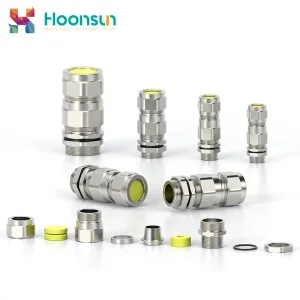
Hydrocarbon gas vapor, coal dust, and chemical vapours require certified explosion-proof flamepath containment. Our Ex-rated double-sealed armoured connectors eliminate explosive flashovers from breaching external hazardous atmospheres.
Material Selection & Environmental Suitability Matrix
A reference guide to optimize physical longevity, galvanic compatibility, and procurement budgets.
| Alloy / Polymer | Yield Strength (MPa) | Corrosion Resistance | Operating Temp Range | Primary Industrial Use-Case |
|---|---|---|---|---|
| Nickel-Plated Brass (CW614N) | ≥ 350 MPa | High (Salt spray > 96h) | -40°C to +120°C | General heavy industry, industrial automation, marine engine rooms, switchgear panels. |
| Stainless Steel 316L (1.4404) | ≥ 480 MPa | Superior (PREN ≥ 23) | -60°C to +200°C | Offshore splash zones, chemical injection skids, subsea manifolds, food washdown. |
| Stainless Steel 304 (1.4301) | ≥ 420 MPa | Moderate to High | -40°C to +140°C | Water treatment, pharmaceutical production lines, outdoor solar inverter stations. |
| Polyamide PA66 (UL 94 V-0) | ≥ 85 MPa | Inert to weak acids/alkalis | -40°C to +100°C | Cost-effective non-armoured junction boxes, telecom shelters, solar PV arrays. |
| High-Grade Aluminum (6061-T6) | ≥ 275 MPa | Anodized passivated | -40°C to +110°C | Lightweight aerospace, transit rolling stock where mass reduction is critical. |
Engineering Roadmap 2026–2035: Smart Connectivity
Pioneering the evolution from passive mechanical seals to intelligent, monitored industrial cable termination systems.
Integrated IoT Condition Monitoring
Emerging gigawatt wind turbines and remote subsea pump stations cannot tolerate manual physical inspections. HOONSUN is developing miniature wireless SAW (Surface Acoustic Wave) temperature and moisture detection chips embedded directly within the gland's elastomeric seal ring. Real-time thermal anomalies or seal degradation trigger predictive maintenance alerts before phase-to-ground flashovers occur.
Advanced Ceramic & Nano-Coatings
To overcome the environmental limitations of standard electroplated nickel in extreme acidic, hydrogen sulfide (H2S), and amine environments, our metallurgical laboratory is qualifying micro-arc oxidation (MAO) and diamond-like carbon (DLC) nanocoatings. These surface treatments boost surface hardness above 1200 HV and withstand salt-spray exposure exceeding 2,000 continuous hours without pitting.
Immersion & Direct-to-Chip Thermal Hybrids
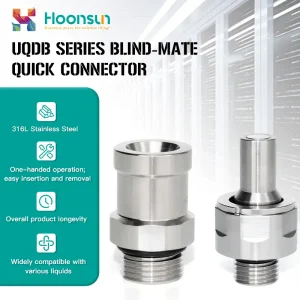
As AI model training clusters surpass 100 kW per rack, electrical cable entry and dielectric fluid cooling can no longer operate as disconnected systems. HOONSUN's R&D is engineering unified blind-mate gland manifolds that integrate high-voltage three-phase armoured conductor entries directly alongside dripless liquid-cooling quick disconnects into a single hermetic module.
Frequently Asked Questions: Armoured Gland Engineering
In-depth technical answers addressing sizing, earth-bonding, flamepath preservation, and international certification.
How does an armoured cable gland maintain earth continuity?
Earth fault path continuity is established through the internal brass cone and clamping ring mechanism. When tightened to the manufacturer's specified installation torque, the cone bites into the steel or aluminum armour wire strands, creating an electrical bonding path compliant with IEC 62444 Category B fault current parameters, directing lightning surges and fault currents to the enclosure frame via an earth tag.
What is the difference between single-seal and double-seal armoured glands?
A single-seal armoured gland (such as a standard CW type) seals solely against the outer cable sheath to prevent environmental ingress into the armour termination zone. A double-seal gland (such as an E1FW type) incorporates both an outer environmental seal and an inner displacement seal directly over the cable's inner core bedding, providing explosion-proof containment (Ex d) and preventing gas/liquid migration through cable gaps.
How do you calculate proper tightening torque for armoured cable glands?
Tightening torque is determined by thread pitch diameter, entry material, and the compressibility of the elastomeric seal. Over-tightening can pinch or damage the inner conductors (inducing cable cold-flow), while under-tightening compromises the IP68 seal and mechanical pull-out strength. Refer to our published engineering catalog: for example, an M25 brass fitting typically requires 32.5 Nm on the body entry and 25 Nm on the outer compression nut.
Can brass cable glands be directly installed into aluminum enclosures?
Direct contact between standard unplated brass and aluminum triggers aggressive galvanic corrosion in humid or coastal environments due to the 0.60V electrochemical potential difference. To prevent this, always specify nickel-plated brass (minimum 12μm plating) or stainless steel, paired with non-conductive nylon/PTFE sealing washers and IP-rated thread sealants to insulate the dissimilar metals.
What is the advantage of NPT threads over Metric threads?
Metric (ISO 965 M-series) threads feature parallel 60° flanks and rely on an elastomeric O-ring or flat washer under the shoulder to achieve hermetic ingress protection. NPT (ANSI/ASME B1.20.1) threads feature a 1:16 taper where the mating threads deform and wedge together during wrench makeup, forming a mechanical pressure seal along the thread crests, which is preferred across North American oil and gas infrastructures.
What does "Cold Flow" mean in cable termination, and how is it prevented?
Cold flow is the continuous, non-reversible deformation of cable jacketing materials (such as PVC or XLPE) under continuous compressive stress applied by a gland seal. Over months of thermal cycling, the seal loosens, creating water ingress paths. Our engineered displacement seals apply progressive, radial compression across an extended axial contact zone, distributing load evenly without exceeding the polymer's yield limit.
What testing is required to validate IP69K high-pressure washdown?
Under ISO 20653 / DIN 40050-9, IP69K testing subjects the cable gland assembly to a rotating spray turntable (5±1 RPM) at angles of 0°, 30°, 60°, and 90°. Water is blasted at a high pressure of 80 to 100 bar (1,160 to 1,450 PSI) at an elevated temperature of 80°C from a distance of 100 to 150 mm, with flow rates between 14 and 16 L/min. Zero water ingress must occur after 30 seconds per angle.
How does SWA termination differ from Braided (CY / SY) cable termination?
Steel Wire Armour (SWA) consists of heavy, rigid longitudinal galvanized steel wires requiring a robust clamping cone and ring capable of resisting substantial axial pull. Braided cables (screened data or flexible control cables) utilize fine tinned copper wire weaves; using a heavy SWA cone can shear the fine braid. For braided cables, HOONSUN provides dedicated conical clamping sleeves or 360° spring-loaded EMC grounding rings.
Can HOONSUN manufacture customized thread lengths and thread pitches?
Yes. As a direct manufacturer established in 2006, HOONSUN operates automated multi-axis CNC Swiss turn-mill centers. We regularly produce custom long entry threads (up to 50mm) to accommodate thick cast explosion-proof enclosures, double-walled vessels, or metric-to-PG thread conversion adapters with lead times tailored for global OEM production cycles.
What quality documentation is provided with project consignments?
Every commercial production batch is accompanied by comprehensive quality records: EN 10204 Type 3.1 Material Test Reports (MTR) confirming chemical spectrometry and mechanical tensile properties, salt spray test certificates, dimensional CMM inspection reports, and official third-party certificates of conformity (CE, UL, ATEX, IECEx).
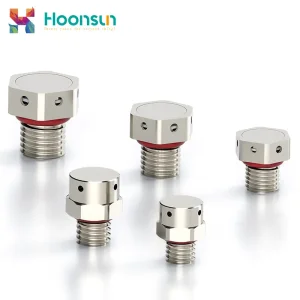
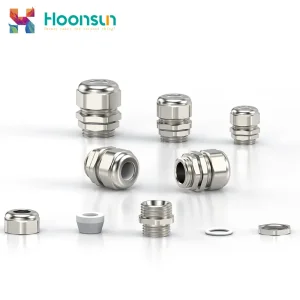
Precision Assemblies, Unions & Hazardous Location Glands
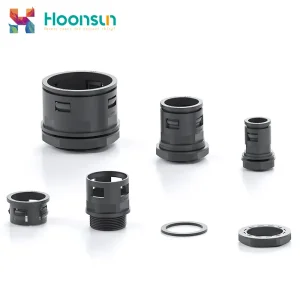
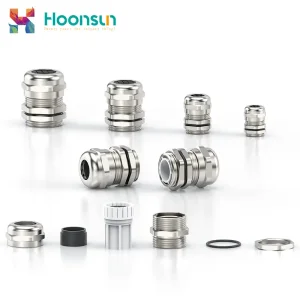
Explore our complete production line of conduit unions, explosion-proof joints, high-temperature glands, and quick couplings.
Specify Armoured Cable Glands with In-House Engineering Authority
Whether you require custom entry thread lengths, certified flameproof barrier glands, or specialized high-vibration unions for rolling stock or offshore platforms, our engineering team in Liushi, Yueqing delivers full CAD drawings, sample validation, and certified test reports within 24 hours.