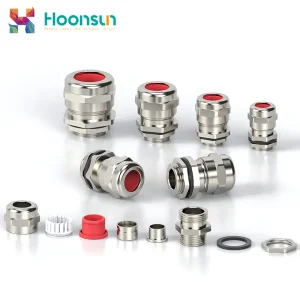
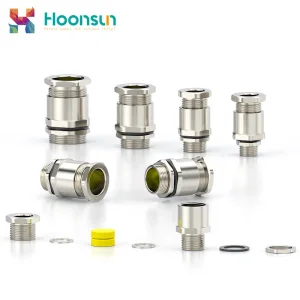
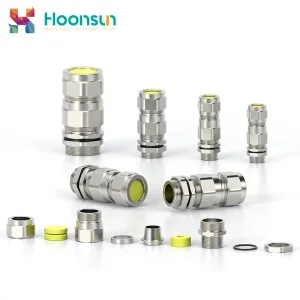
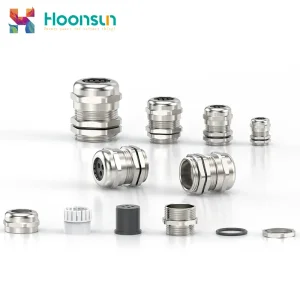
Featured Industrial Cable Glands & Ingress Assemblies
Engineered for extreme ingress protection, continuous strain relief, and chemical shielding across industrial machinery, renewable substations, and marine automation.
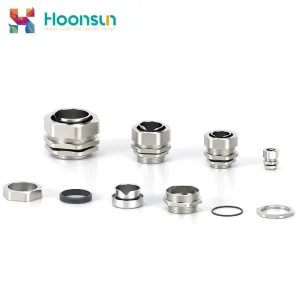
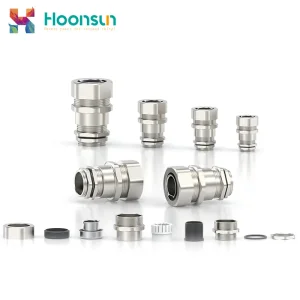
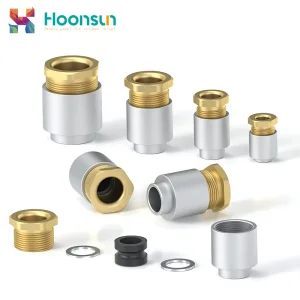
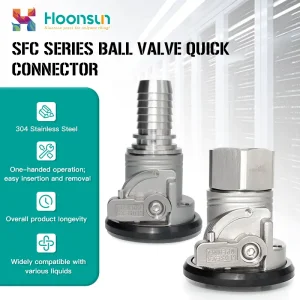
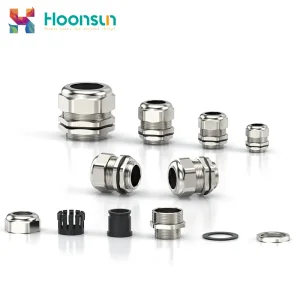
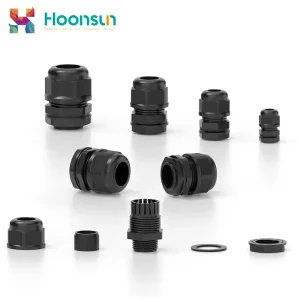
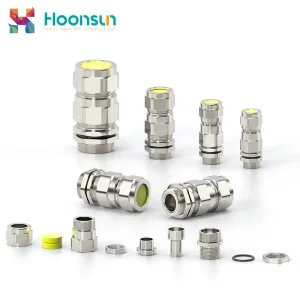
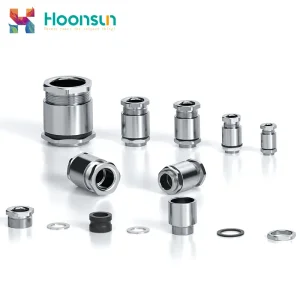
Engineering Architecture of the 16mm Nylon Cable Gland
In modern industrial power distribution, distributed automation, and renewable infrastructure, the 16mm nominal diameter nylon cable gland (encompassing standard Metric M16×1.5 as well as PG9 and PG11 configurations) represents the most critical mechanical juncture for signal and low-voltage cable terminations. Engineering a durable seal requires examining molecular polymer behavior, clamping claw geometry, and dynamic elastomeric compression under continuous environmental stress.
Polymer Formulation (PA66)
Our standard 16mm glands utilize high-crystallinity Polyamide 66 (PA66) modified with thermal stabilizers. Unlike cheaper recycled PA6 polyamides that suffer from hygroscopic swelling and plasticizer migration, virgin PA66 delivers a high tensile modulus (2,800 to 3,200 MPa) and a continuous operational thermal window spanning -40°C to +100°C (intermittent peak +120°C).
- Flame Retardancy: UL 94 V-2 standard; V-0 halogen-free optional
- Dielectric Strength: ≥ 50 kV/mm (ASTM D149)
- Hydrolytic Resistance: Immersion stable; zero dimensional warping
Radial Compression Clamping
The patented finger-claw geometry utilizes a multi-segment staggered collet system. When the cap nut is torqued, axial travel is converted into uniform radial inward vectors. This prevents concentric shearing of soft outer jackets (e.g., PVC, PUR, TPE) while exceeding EN 62444 Class A and B cable retention thresholds (>100 N pull-out resistance).
- Clamping Range: 4.0 mm to 8.0 mm (Extended: 2.0 to 6.0 mm)
- Ratchet Locking: Anti-vibration internal detent ring
- Torque Spec: 2.5 to 3.5 N·m installation torque
Elastomeric Sealing Mechanics
Achieving true IP68 continuous immersion (5 bar for 30 minutes) depends on the vulcanized sealing insert. We deploy high-grade Nitrile Butadiene Rubber (NBR) or UV-cured Ethylene Propylene Diene Monomer (EPDM) engineered to 70±5 Shore A hardness, ensuring minimal compression set under sustained thermal cycling.
- Standard Insert: NBR (Petrochemical/oil resistant)
- Extreme Environment: EPDM / Silicone (-50°C to +150°C)
- Washer Interface: Flat nitrile or integrated O-ring groove
| Dimensional Metric | M16 × 1.5 Standard | M16 × 1.5 Long Thread | PG9 Industrial | PG11 Utility |
|---|---|---|---|---|
| Thread Outer Diameter (OD) | 16.0 mm | 16.0 mm | 15.2 mm | 18.6 mm |
| Thread Pitch / TPI | 1.5 mm metric pitch | 1.5 mm metric pitch | 18 TPI (80° flank angle) | 18 TPI (80° flank angle) |
| Standard Thread Length (L) | 8.0 mm | 15.0 mm | 8.0 mm | 8.5 mm |
| Standard Cable Range | 4.0 – 8.0 mm | 4.0 – 8.0 mm | 4.0 – 8.0 mm | 5.0 – 10.0 mm |
| Enclosure Panel Hole Dia. | 16.2 (+0.2/-0.0) mm | 16.2 (+0.2/-0.0) mm | 15.5 (+0.2/-0.0) mm | 19.0 (+0.2/-0.0) mm |
| Wrench Hex Size (Body/Nut) | 22 mm / 22 mm | 22 mm / 22 mm | 22 mm / 22 mm | 24 mm / 24 mm |
| Certified Ingress Rating | IP68 (5 Bar) | IP68 / IP69K | IP68 | IP68 |
Why China’s Yueqing Cluster Leads the Global Cable Gland Supply Chain
Over 65% of the global supply of precision polyamide cable glands originates within the Yueqing and Ningbo industrial corridor in Zhejiang, China. Understanding the structural advantages of our in-house manufacturing ecosystem clarifies why international OEMs trust us for both rapid scaling and stringent quality control.
Vertical Tooling & Mold Mastery
We maintain dedicated high-speed CNC EDM toolrooms on-site. By controlling multi-cavity hot-runner mold fabrication internally, we minimize cycle time and eliminate flash defects along critical thread pitches. Modifications to thread lengths, seal diameters, or knurling profiles are completed in as little as 10 to 14 days.
Direct Upstream Polymer Sourcing
Direct supply contracts with top-tier resin producers (BASF, DuPont, and Sinopec) guarantee steady raw material costs and batch-to-batch polymer melt flow index (MFI) consistency. Every pellet shipment is certified with differential scanning calorimetry (DSC) reports to ensure uniform crystallization and mechanical toughness.
Automated AOI & Assembly Cells
Automated assembly lines eliminate human assembly variance. Robotic arms insert the vulcanized NBR gasket and screw the locking cap to an initial index mark, while automated optical inspection (AOI) cameras check thread integrity, surface parting lines, and gasket alignment at a throughput exceeding 3,600 pieces per hour.
How Global Enterprises Evaluate 16mm Cable Gland Procurement
For Tier-1 electrical equipment manufacturers and EPC contractors, purchasing cable glands is not merely a component transaction. A single ingress failure in a utility solar inverter or railway junction box can cause catastrophic short-circuit downtime and warranty claims that outstrip the component cost by orders of magnitude.
Total Cost of Ownership (TCO)
Initial purchase price represents less than 15% of a gland’s lifecycle cost. The balance is governed by field assembly velocity, torque repeatability, and freedom from environmental cracking. Our ergonomic body hex and rapid lead-in threads cut installer labor by 20% on high-density control panels.
Supply Chain Resiliency
Global supply disruptions necessitate multi-port shipping redundancy (Ningbo and Shanghai ports) and buffer inventory programs. We support vendor-managed inventory (VMI) agreements and scheduled blanket orders to buffer against raw material and logistics volatility.
Lot Traceability & Auditing
Every standard carton and inner master pack features thermal-printed 2D QR codes linked to raw material heat numbers, injection press telemetry, and QA sign-off records. We routinely facilitate remote and on-site factory audits in accordance with ISO 9001:2015 and IATF 16949 quality protocols.
Comprehensive Documentation
Speed up your agency certifications with full PPAP Level 3 documentation, 3D STEP CAD models for CAD enclosure layout integration, REACH SVHC declarations, and UL file verification datasheets available on request.
Emerging Technical & Sustainability Trends in Cable Termination
The industrial connector sector is experiencing rapid technological evolution driven by decarbonization mandates, severe outdoor deployment conditions, and higher operating voltages in distributed power grids.
Circular & Bio-Based Polyamides
Addressing Scope 3 carbon targets, HOONSUN has developed trial batches utilizing chemically recycled post-industrial PA66 and bio-derived polyamides from castor oil feedstock. These polymers achieve identical mechanical yield strengths (85 MPa) and dielectric metrics without increasing the environmental footprint.
Smart Breather Membrane Integration
In high-humidity, diurnal environments, internal enclosure pressure drops during cool night cycles, sucking moisture past standard seals. We offer integrated breathable 16mm nylon cable glands featuring hydrophobic/oleophobic ePTFE microporous membranes, ensuring equalized internal barometric pressure while maintaining an IP68 barrier.
Railway Non-Toxic Flame Retardants
Meeting EN 45545-2 (R22/R23 HL2/HL3 hazard levels), our low-smoke, zero-halogen (LSZH) nylon blends substitute harmful red phosphorus and halogenated compounds with organophosphorus and metal hydrate flame retardants, ensuring low toxicity and low optical smoke density in mass transit tunnels.
Mission-Critical Deployment Scenarios for 16mm Nylon Glands
Engineered nylon glands are increasingly selected over unplated brass and zinc alloys in aggressive chemical, saline, and coastal washdown installations due to their complete immunity to galvanic and electrolytic oxidation.
Solar PV Inverters & Tracking Systems
Utility-scale solar arrays subject connectors to intense UV index ratings (>11) and sand abrasion. Our UV-stabilized carbon-black enriched PA66 glands endure 1,000 hours of accelerated Xenon arc weathering (ASTM G155) without embrittlement, protecting RS485 communication lines and string sensor leads.
EV Charging Infrastructure
Commercial DC Fast Chargers and residential Level 2 wallboxes require IK08 impact-resistant enclosures. The 16mm nylon gland provides a strain-relieved entry for thermal sensing lines, auxiliary logic harnesses, and emergency shutoff loops, passing UL 514B pull-out tests.
5G Small Cells & Telecom Nodes
Outdoor mast-mounted base stations demand compact, non-conductive cable entry. The compact M16 envelope fits within tight connector matrices on aluminum enclosures, offering complete RF isolation and preventing stray current galvanic degradation.
Global Compliance & Regional Regulatory Frameworks
Industrial supply chain success depends on navigating regional technical mandates seamlessly. Our engineering files and test reports ensure our 16mm nylon glands integrate smoothly into equipment worldwide.
North American Compliance
Certified under UL 514B (Standard for Conduit, Tubing, and Cable Fittings) and compliant with CSA C22.2 No. 18.3. For NEMA 4, 4X, and 6P enclosure ratings, we supply matching M16-to-NPT adapter solutions and neoprene sealing washers that meet NEC Article 314 entrance requirements.
European Union & UKCA
Full conformance with EN 62444:2013 (Cable glands for electrical installations). CE and UKCA marked under the Low Voltage Directive (LVD) 2014/35/EU. Material compositions meet RoHS Directive 2011/65/EU (and amendment 2015/863) and REACH Regulation (EC) No 1907/2006 SVHC screening.
APAC & Middle East (IEC / SASO)
Tested in accredited third-party laboratories to IEC 60529 standards. Approved for SASO SABER platform entry for Saudi Arabian electrical distribution contracts, along with Gulf Conformity Marking (G-Mark) and damp heat tropicalization tests for Southeast Asian operations.
Frequently Asked Engineering & Sourcing Questions
Clear, technically accurate answers to the questions most commonly raised by OEM design engineers and procurement directors during factory qualification.
How does a 16mm nylon cable gland compare mechanically and thermally to nickel-plated brass?
What is the precise clamping range of your M16 nylon gland, and how is seal extrusion prevented?
How do your factories ensure long-term UV resistance for outdoor solar and telecom deployments?
What is the technical difference between IP67, IP68, and IP69K ratings for these glands?
What tightening torque is required, and what happens if installers overtighten or undertighten?
What are the lead times and minimum order quantities (MOQ) for custom colors or thread lengths?
How do you support automated optical sorting to achieve <50 PPM defect rates for automotive/EV lines?
What international export packaging and moisture conditioning standards do you follow?
Heavy-Duty, Armored & Explosion-Proof Solutions
Explore our complementary engineered product series, including stainless steel glands, armored explosion-proof seals, and flexible conduit couplings.