
Engineered 20mm Industrial Cable Gland Range • Series 01
High-integrity mechanical cable terminations precision-crafted to ISO metric standards, offering comprehensive IP68 immersion protection, extended temperature ratings, and rugged vibration mitigation.
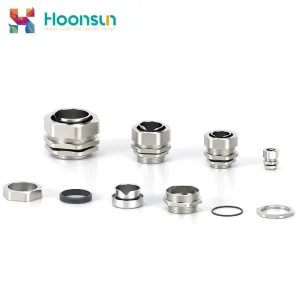
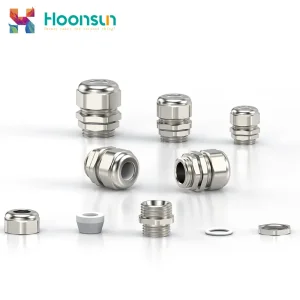
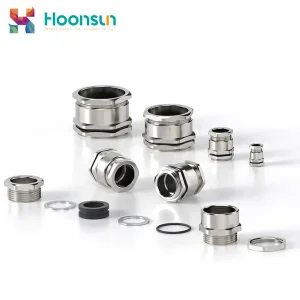
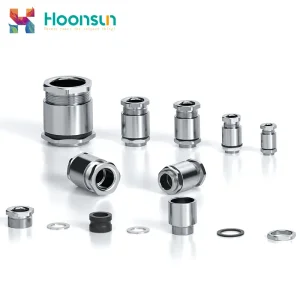
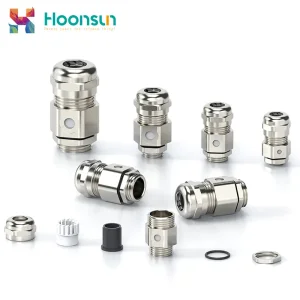
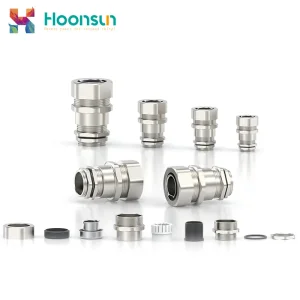
The 20 mm Cable Gland Standard: The Core Anchor of Industrial Enclosures
Across global mechanical, electrical, and control engineering, the 20 mm nominal diameter (most frequently specified as ISO Metric M20 × 1.5, with functional crossover to PG13.5 and 1/2" NPT) constitutes the single most widely deployed cable entry envelope in modern automation and power distribution. This dimension strikes the optimum balance between structural wall integrity, enclosure volumetric density, and conductor cross-sectional capacity.
Universal Clamping Envelope
The M20 architecture accommodates standard cable external diameters (OD) spanning 6.0 mm to 14.0 mm across split-gasket arrangements. This envelope encompasses 3-core to 5-core control lines, multi-conductor industrial Ethernet, instrumentation pairings, and moderate motor power supplies without necessitating oversize gland plates.
Mechanical Torque & Ingress Retention
M20x1.5 metric thread pitches deliver the optimum mechanical advantage during assembly. Controlled tightening torque (typically 7.5 to 10.0 Nm for brass, 5.0 to 7.0 Nm for technical polymers) provides radial compressive force on the elastomeric seal without inducing irreversible cold-flow deformation of cable sheaths.
Hermetic Seal Engineering
Engineered dual-elastomer chambers (NBR, EPDM, or High-Temp Fluorosilicone) achieve true IP68 (5 bar continuous, 30m depth for 72 hours) and IP69K high-pressure thermal washdown resilience, counteracting thermal-cycling vapor draw within sealed electrical enclosures.
China Factory 4.0: Manufacturing Prowess & Clustered Agility
The procurement of 20 mm cable glands has shifted from simple catalog sourcing to multi-tiered supply chain risk mitigation. Centered in Liushi, Yueqing (the epicenter of electrical apparatus manufacturing in China), our smart manufacturing clusters integrate billet extrusion, automated Swiss-type sliding head lathes, surface plating, and high-precision polymer vulcanization within a contiguous 15-kilometer operational radius.
Vertical Integration & Raw Material Security
By securing direct billet contracts for lead-compliant CW614N/CW617N brass and AISI 304/316L bar stock, China's Tier-1 cable gland facilities insulate international buyers from speculative spot-market volatility. On-site optical emission spectrometry ensures complete chemical batch traceability before chip cutting commences.
Automated Micro-Turning & Thread Rolling
Multi-axis computerized numeric lathes run multi-spindle synchronized cycles, executing threading, internal chamfering, and parting off in under 18 seconds per gland body. Rolled metric threads produce a burnished surface flank (Ra < 0.8 μm) superior to cut threads, radically diminishing galling risks during high-volume field assembly.
High-Precision Clamping Finger Molding
Injection tooling utilizing hot-runner systems crafts polyamide PA66 clamping cages engineered with specific elasticity memory. When the outer compression nut advances, radial stress is distributed equiaxially 360 degrees around the outer cable jacket without puncturing or grooving the polymer insulation.
Enterprise Sourcing Criteria: Navigating Total Cost of Ownership (TCO)
Procurement directors and systems integrators often face substantial risks when treating cable glands as generic C-part commodities. An ingress failure on a utility-scale 1500V solar inverter or deep-sea crane junction box can trigger tens of thousands of dollars in unscheduled downtime. Selecting the right 20 mm gland requires stringent auditing across four technical pillars.
1. Pull-Out & Retention (EN 62444)
Verification that the gland passes Type A or Type B cable retention criteria according to IEC/EN 62444. For a 20mm gland clamping a 12mm cable, pull-out resistance must exceed 200 N without sheath slippage greater than 2 mm under prolonged mechanical strain.
2. Polymer Degradation (UV & Thermal)
Exposing PA66 or elastomer components to direct sunlight or cyclic temperatures requires compliance with UL 746C (f1 outdoor suitability) and ISO 4892-2 xenon-arc weathering. Sub-tier nylon lacking stabilization embrittles within 18 months, destroying IP integrity.
3. Continuous EMC Shield Continuity
Variable frequency drive (VFD) cabling requires low-impedance 360° screen grounding. Standard serrated washers are insufficient; high-performance M20 metal glands utilize radial beryllium-copper spring fingers to provide >65 dB attenuation across the 100 kHz to 1 GHz band.
4. Dynamic Internal Enclosure Pressure
Rapid thermal shifts cause pressure imbalances inside sealed enclosures, sucking moisture across threads. The integration of hydrophobic, oleophobic ePTFE breathable membranes into 20 mm gland bodies balances enclosure air pressure while maintaining IP68 hermetic barrier sealing.
Localized Industrial Application Archetypes
Different deployment environments place unique stresses on 20 mm cable gland assemblies. Below is how our engineering designs resolve mechanical, chemical, and atmospheric stress vectors across five core operating sectors.
Solar PV & BESS Systems
Engineered for string combiners and utility battery packs. UV-stabilized PA66 or marine brass glands resist ozone degradation and maintain sealing across desert operating extremes (-40°C to +105°C).
Marine & Offshore Exploration
Deploying 316L stainless steel or dense nickel-plated CW614N brass with TJ double-clamping architecture. Completely resists intergranular chloride corrosion, splashing brine, and marine diesel fuels.
Robotics & Drag Chains
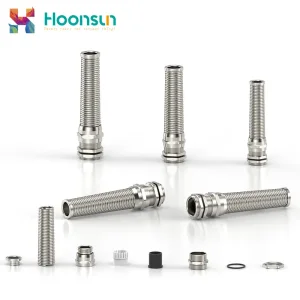
Designed with anti-flex spiral strain relief and flexible metal hose conduits. Dampens high-frequency cyclical bending forces, protecting inner conductors against repetitive flex fatigue and premature copper severance.
Rail Rolling Stock (EN 45545-2)
Low-smoke, zero-halogen (LSZH) silicone sealing rings compliant with railway fire-safety classifications. Immune to heavy chassis bogie vibration, ballast impact, and high kinetic crosswinds.
Hazardous Areas (ATEX/IECEx)
Explosion-proof barrier and flameproof Ex d / Ex e certified 20 mm gland iterations. Features mechanical internal compound resin dams or certified silicone seals preventing ignited gases from propagating through conduits.
Technical Specification Matrix: 20 mm Cable Gland Material Variants
Direct comparative parameters to assist design engineers and procurement panels in determining exact model suitability, thread dimensional standards, and protection classifications.
| Material Class | Standard Thread | Cable Clamping Range | Operating Temp | Ingress Rating | Best Suited Industrial Domain |
|---|---|---|---|---|---|
| Nickel-Plated Brass | M20 × 1.5 / PG13.5 | 6.0 mm – 12.0 mm (Std) 9.0 mm – 14.0 mm (Ext) |
-40°C to +110°C | IP68 (5 Bar) | Industrial machinery, factory automation, robotics, power distribution switchboards. |
| Stainless Steel 316L | M20 × 1.5 / 1/2" NPT | 6.0 mm – 12.5 mm | -50°C to +150°C | IP68 / IP69K | Food & pharmaceutical processing, offshore drilling, petrochemicals, coastal infrastructure. |
| Engineered Nylon PA66 | M20 × 1.5 / PG13.5 | 5.0 mm – 12.0 mm | -40°C to +100°C (UL94-V0) | IP68 | Solar PV combiner boxes, telecommunications antennas, LED lighting, HVAC equipment. |
| High-Temp Metal Gland | M20 × 1.5 Metric | 7.0 mm – 13.0 mm | -60°C to +200°C | IP68 | Foundry sensors, kiln monitoring, metallurgical processing, high-heat furnace systems. |
| Anti-Bending Spiral Gland | M20 × 1.5 / PG16 | 6.0 mm – 11.0 mm | -40°C to +100°C | IP68 | Portable equipment, machine tool hand pendants, dynamic gantry arms, material handling. |
| Breathable Venting Metal | M20 × 1.5 Metric | 6.0 mm – 10.5 mm | -40°C to +120°C | IP67 / IP68 | Outdoor solar inverters, marine lighting, high-pressure washing zones, coastal telecoms. |
Frequently Asked Technical & Sourcing Questions (FAQ)
Clear, engineer-level responses addressing critical specifications, compliance requirements, installation tolerances, and export supply mechanics.
What are the key thread equivalencies between M20, PG13.5, and 1/2" NPT?
How does your factory ensure IP68 performance remains reliable over long periods?
Can 20 mm metal glands provide certified EMC / RFI shielding protection?
What is the difference between single compression and double compression 20mm glands?
When should 316L stainless steel be chosen over nickel-plated brass?
What are the minimum order quantities (MOQ) and lead times for OEM private label orders?
How does the breathable venting cable gland protect solar inverters from failure?
What documentation and certification packs accompany export shipments?
Engineered 20mm Industrial Cable Gland Range • Series 02
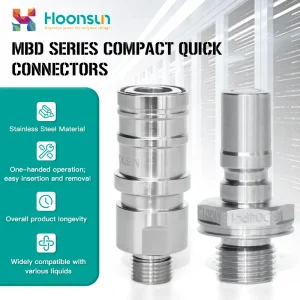
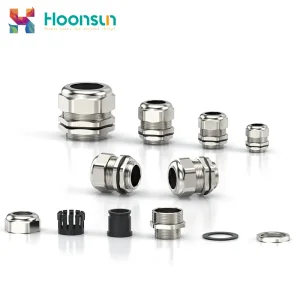
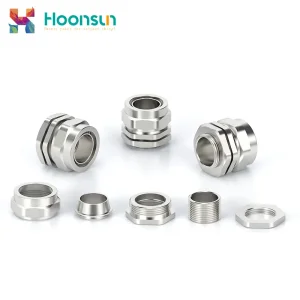
Heavy-duty configurations including EMI/RFI shielded joints, strengthened mechanical assemblies, explosion-proof barriers, and quick-disconnect couplings engineered for severe duty.
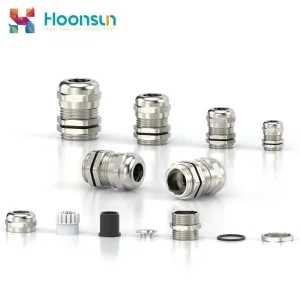
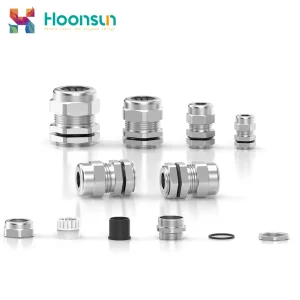
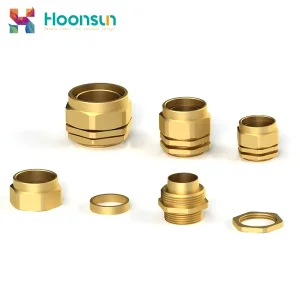
OEM / ODM Custom Engineering & Strategic Sourcing Roadmap
We partner directly with multinational enclosure builders, electrical wholesalers, and robotics engineering teams. Our vertically unified factory workflow eliminates transactional friction, speeding up project cycles from drawing to container dispatch.
1. Application Review
Provide your cable diameter profile, enclosure thickness, chemical exposure hazards, and certification requirements. Our senior application engineers respond within 24 hours with exact CAD drawings, thread parameters, and torque specifications.
2. Rapid Prototyping
Tooling and rapid CNC turning prototypes for custom thread lengths (e.g., 15mm extra-long threads for thick cast-aluminum wall boxes) are machined, sealed, and dispatched via air courier within 3 to 5 business days for assembly fitment validation.
3. Production & QA
Full-volume automated production runs under continuous statistical process control (SPC). Key dimensional metrics and thread pitch diameters are verified via automated laser gauging, accompanied by hydrostatic pressure retention testing per production lot.
4. Global Logistics
Shipments are palletized, moisture-barrier wrapped, and packed into heavy-duty corrugated export cartons marked with custom barcodes and private-label packaging. We deliver seamless FOB, CIF, or DDP logistics coordination direct to your regional distribution centers.