
High-Integrity Marine & Industrial Penetration Glands
Explore Tier-1 marine cable connectors engineered for extreme hydrostatic pressures, mechanical strain relief, and chemical saline resistance. Direct from certified Chinese production hubs.
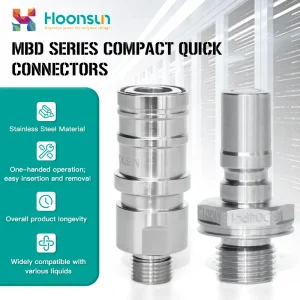
China China MBD04S-1SMG012N Quick Connectors - High-Performance Fluid Coupling
View Technical Specs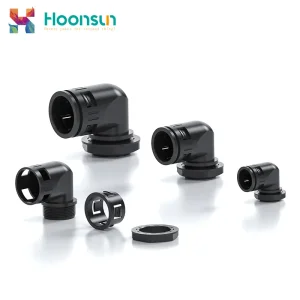
China Right Angle Union for Flexible Pipe - UL Certified, IP68 Protection
View Technical Specs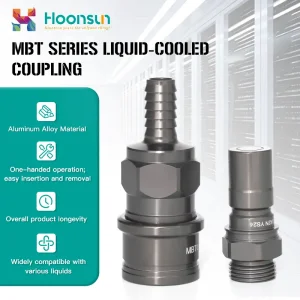
China MBT08S-1AWH102N-MBT08P-1AMG042N Manufacturer, Factories
View Technical Specs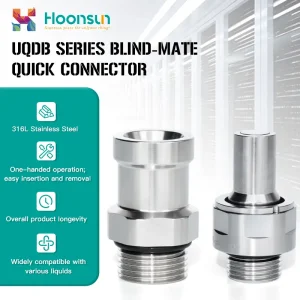
China UQDB06S-1SMU102N-UQDB06P1SMU082N Factories, Factory Direct
View Technical Specs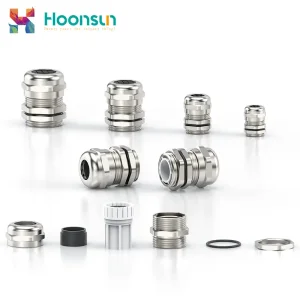
China Metal Cable Gland Direct Type Suppliers - IP68 Rated with UL Certification
View Technical Specs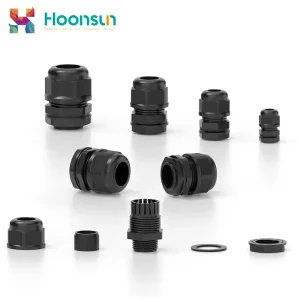
China Nylon Reinforced Cable Gland with UL and IP68 Supplier, Suppliers
View Technical Specs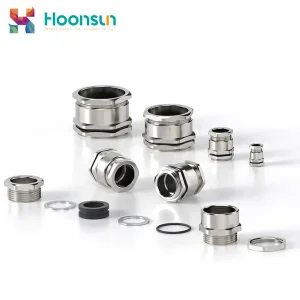
China Single Compression Type Cable Gland IP68 Rated - Durable Waterproof Solution
View Technical Specs
China Nylon Reinforced Cable Gland IP68 - UL Certified Flame-Retardant
View Technical SpecsThe Global Marine Cable Gland Landscape: Industrial Context & Operational Demands
From Ultra-Large Container Vessels (ULCVs) and Floating Production Storage and Offloading (FPSO) units to offshore substation platforms, electrical penetrations represent critical risk barriers against devastating flooding, gas migration, and galvanic failures.
Aggressive Saline & Chemical Environments
Marine atmospheric conditions involve continuous NaCl fog deposition combined with high UV irradiation and airborne hydrocarbons. Standard electrical enclosures rapidly degrade if cable glands lack adequate passivation or utilize sub-standard base alloys. Sealing elements must endure cyclic salt-spray immersion while maintaining elasticity over multi-decade maintenance schedules.
Severe Mechanical & Hydrodynamic Strain
Naval architecture demands that cable glands withstand axial pullout forces under high vibration harmonics generated by diesel-electric propulsion systems, bow thrusters, and green water deck slamming. Glands must conform strictly to IEC 62444 Retention Classes A and B, ensuring zero displacement of inner conductors under extreme dynamic wave action.
Stringent Classification & ATEX Directives
Global offshore engineering mandates compliance with major classification societies (DNV, American Bureau of Shipping ABS, Lloyd's Register LR, China Classification Society CCS). In hazardous Zone 1 and Zone 2 areas aboard LNG carriers and drilling rigs, flameproof (Ex d) and increased safety (Ex e) certifications are non-negotiable legal imperatives.
Engineering Information Gain: The Deluge Test (DTS01) Challenge
In offshore oil & gas installations, standard IP68 submersion testing is insufficient. High-pressure firewater deluge systems can blast salt water at extreme velocities across bulkhead panels. Chinese advanced factories engineer dual-seal compression cable glands verified against DTS01 deluge protocols, preventing capillary moisture ingress along braided armor under simultaneous thermal shock.
The Chinese Manufacturing Paradigm: Scale, Precision & The Yueqing Industrial Hub
How the Liushi/Yueqing industrial cluster in Zhejiang has evolved from low-voltage components to leading global engineering for high-tolerance CNC-machined marine connection hardware.
Vertical Supply Chain Integration
Yueqing concentrates copper billet smelting, precision bar-drawing, computerized multi-axis turning, and specialized elastomer compounding within a 15-kilometer radius. This hyper-localized ecosystem eliminates transit latencies, reduces billet-to-finished-product lead times by 65% relative to European peers, and cushions global supply chains from geopolitical volatility.
Automated High-Precision CNC Turning
Leading Chinese factories operate advanced Swiss-type CNC lathes and multi-spindle machining centers. Thread crest profiles (Metric ISO 965, NPT ANSI B1.20.1, PG DIN 40430) achieve class 6g/6H tolerances consistently across batch runs of 100,000+ units, eradicating micro-burrs that rupture cable outer jackets during torquing.
Stringent In-House QC & Spectrometry
Quality reliability is anchored by optical emission spectrometers checking brass and stainless billet chemistry prior to cutting. In-line laser micrometers, automated seal-presence optical sensors, and hydrostatic water-tank verification up to 15 bar ensure zero defect escape to international shipyards.
Technical Deep-Dive: Marine Cable Gland Anatomy & Material Selection Matrix
Selecting the optimal entry gland configuration requires matching cable architecture (unarmored, steel wire armor SWA, wire braid SWB, marine aluminum tape) against ambient chemical exposures.
| Gland Series & Architecture | Material Composition | Clamping Type | Ingress Rating | EMC Shielding | Primary Marine Target Application |
|---|---|---|---|---|---|
| CW Series (Double Compression) | CW614N Nickel-Plated Brass / AISI 316L | Armor Clamping Cone & Outer Sheath Seal | IP66 / IP68 (10 bar) | High (360° Armor Cone) | Deck machinery, thruster control, armored marine instrumentation cables. |
| E1FW Series (Explosion-Proof) | Marine Brass CuZn39Pb3 / SS316 | Inner & Outer Seal + Mechanical Armor Clamp | Ex d / Ex e IIC / IP68 | Full 360° Continuity | Zone 1 & Zone 2 Hazardous areas, offshore drilling platforms, LNG fuel storage. |
| TJ Marine Clamping Type | Marine Grade Brass / High Purity Bronze | External Clamp Plates with Interlocking Teeth | IP67 / IP68 | Moderate | Bulkhead distribution panels, naval surface ships, engine room switchboards. |
| A2 Industrial Direct Type | Nickel-Plated Brass / PA66 Polyamide | Single Compression on Cable Outer Jacket | IP68 / UL94 V-0 | Standard | Internal bridge consoles, marine lighting, accommodation modules, unarmored lines. |
| Barrier Compound Type | AISI 316L Stainless Steel | Resin Compound Interstice Sealing | Ex d IIC / IP68 (30 bar) | Critical Military EMC | Submersible equipment, pressure hulls, hazardous gas barrier penetrations. |
Metallurgical Chemistry Comparison
CuZn39Pb3 (CW614N): High tensile machinability alloy with dense grain structure. Finished with a 10–15µm electrolytic nickel coating to prevent dezincification in sea water.
AISI 316L (EN 1.4404): Low-carbon austenitic stainless steel with 2.0–2.5% Molybdenum. Yields a Pitting Resistance Equivalent Number (PREN) > 24, essential for splash-zone deck hardware.
Elastomer Sealing Formulations
Chloroprene (Neoprene): General marine operating range from -40°C to +100°C; outstanding elastic recovery against round cables.
Silicone Rubber: Cryogenic to extreme heat resistance (-60°C to +180°C), ideal for Arctic LNG transport vessels.
Viton (FKM): Unmatched defense against marine heavy fuels, synthetic lubrication oils, and high-concentration ozone.
EMC 360° Shielding Architecture
Variable frequency drives (VFD) in modern electric propulsion produce intense electromagnetic interference (EMI). Specialized marine glands incorporate an integral grounding cone or low-resistance stainless steel spring washer, creating low-impedance 360-degree bonding between the cable's copper braid shield and the enclosure chassis.
Critical Application Scenarios: Offshore, Marine & Renewable Energy
Field-proven deployments demonstrating high-consequence cable entry protection across international commercial maritime operations.
Commercial Shipbuilding
Integrated into container ship engine rooms, bridge control desks, and steering gear compartments. Resistant to persistent diesel exhaust soot, cleaning chemicals, and high-amplitude mechanical vibration.
Offshore Wind Turbines (OWTs)
Installed inside nacelle yaw drives and external transition pieces. Heavy humidity and constant salt spray demand stainless steel AISI 316L cable entries with IP68/IP69K dual water-tight seals.
FPSO & FLNG Modules
Processing explosive hydrocarbons in mid-ocean environments. Heavy-duty explosion-proof (Ex d) barrier glands prevent flammable vapor transmission across compartmental fire zones.
Port Shore Power (Cold Ironing)
High-voltage cable penetration units for shore-to-ship power connection systems. Requires heavy-gauge clamping mechanisms with robust mechanical strain relief during vessel tide fluctuations.
Global Manufacturing Benchmarks: The HOONSUN Factory Scale
Tangible performance metrics and engineering audit data demonstrating tier-one industrial capability.
Future Trends: Digitalization, Decarbonization & Advanced Materials
Anticipating the evolving compliance and operational landscape governing next-generation marine electrical connections.
Lead-Free Brass Formulations
With EU RoHS exemption 6(c) sunset reviews progressing, global shipyards are requiring brass alloys with <0.1% lead content. Chinese advanced metallurgical factories have engineered lead-free, bismuth- or silicon-doped brass variants that match traditional CW614N machinability while exceeding green maritime mandates.
Integrated Thermal & Condition Monitoring
High-voltage marine power feeds for battery electric propulsion generate significant thermal loads. Smart gland designs incorporate miniature embedded thermocouple sensors or fiber-optic Bragg gratings (FBG) to monitor cable insulation temperature and gland tightness in real-time, preventing thermal runaway.
Liquid Cooling & Power Hybrid Penetrations
Megawatt-level fast shore charging and marine Battery Energy Storage Systems (BESS) require combined cable ingress and liquid-cooling fluid quick connectors (such as HOONSUN MBD/UQDB series) to maintain battery temperature stability during high-C-rate charging cycles.
EPC & Shipyard Sourcing Framework: 6-Step Technical Audit Checklist
Critical procurement criteria for marine electrical engineering teams evaluating Chinese factory-direct cable gland suppliers.
1. Material Test Reports (MTR / EN 10204 3.1)
Demand full metallurgical traceability verifying copper, zinc, and nickel plating thickness (minimum 10µm) or austenitic 316L chemical composition (PREN > 24) to avoid counterfeit scrap scrap alloys.
2. Torque-to-Sealing Validation Curves
Ensure the manufacturer supplies verified torque specifications per cable outer diameter range. Over-torquing crushes internal conductors; under-torquing forfeits IP68 sealing integrity.
3. Marine Classification Society Approvals
Confirm the gland series maintains valid Type Approval Certificates (TAC) from DNV, ABS, CCS, or Bureau Veritas for installation on classed commercial vessels and offshore assets.
4. Thread Compliance & Chamfer Quality
Verify thread geometry matches enclosure tapping (Metric ISO, NPT, or PG). Inspect entry threads for radius chamfering to prevent severing thin insulation layers during tight cable pulls.
5. Clamping Mechanism Integrity Under Pullout
Cross-examine mechanical retention test reports according to IEC 62444. Ensure armored cable glands utilize a dedicated conical armor clamping ring rather than relying purely on rubber friction.
6. In-House Salt Spray & Hydrostatic Chambers
Audit whether the supplier possesses certified in-house ASTM B117 salt spray chambers (1,000+ hour rating) and hydrostatic pressure test vessels, or relies merely on unverified third-party paper certs.
Technical & Sourcing FAQ: Expert Marine Engineering Answers
Authoritative technical guidance covering ingress testing, material differentiation, and code compliance.
What constitutes the primary technical difference between CW and E1FW marine cable glands?
The primary distinction lies in sealing architecture and explosion-proof hazard classification. The CW series is a single-seal outer compression gland designed to mechanically grip the steel wire armor (SWA) or braid while sealing exclusively on the cable's outer jacket. It is typically deployed for industrial IP66/IP68 marine areas. In contrast, the E1FW is a dual-compression explosion-proof (Ex d / Ex e) gland that compresses an internal elastomeric seal directly onto the cable's inner sheath, clamps the armor cone with 360-degree contact for electrical fault-current continuity, and subsequently provides a second environmental seal on the outer jacket. E1FW is mandatory for hazardous Zone 1/2 gas-risk marine compartments.
Why is Nickel-Plated Brass preferred over bare brass in oceanic installations?
Bare brass contains copper and zinc. In marine electrolytes (sea water and salt fog), unplated brass experiences "dezincification"—a corrosive phenomenon where zinc is selectively leached out of the alloy matrix, leaving a porous, structurally brittle copper mass prone to catastrophic cracking under vibration. An electrolytic nickel plating layer (typically 8–15 microns) forms an impenetrable barrier that isolates the base brass from chloride ions, extending functional field life by more than 400% in marine environments.
How do Chinese manufacturers guarantee consistent IP68 ratings under deep continuous submersion?
Under IEC 60529, an IP68 rating is an open standard requiring agreement between manufacturer and user regarding submersion depth and duration. Top Chinese manufacturers like HOONSUN perform pressurized cyclic hydrostatic validation inside dedicated pressure vessels at pressures up to 10–15 bar (simulating 100–150 meters submersion). Reliable sealing depends upon precise rubber compression ratio calculations (typically 25–30% radial deformation against the cable sheath) using premium non-aging elastomers such as high-density Chloroprene or Viton, backed by precision CNC-turned sealing cones.
Can nylon PA66 cable glands be deployed on ocean-going vessels, or must metal glands be used?
Engineered nylon PA66 cable glands (UL94 V-0 flame retardant) can be deployed in specific non-hazardous, low-mechanical-risk marine applications—such as indoor accommodation junction boxes, LED lighting systems, and navigation bridge instrumentation consoles. However, for external weather decks, cargo holds, machinery spaces, explosive hazardous areas, or penetrations involving steel wire armored (SWA) power cabling, metal glands (Nickel-Plated Brass or AISI 316L Stainless Steel) are mandatory under classification society regulations to guarantee fire endurance, mechanical armor earth continuity, and impact resistance.
What thread types are predominantly utilized in international marine cable penetration hardware?
The three dominant thread geometries are Metric (ISO 965 M12 to M100 with standard 1.5mm pitch), NPT (American National Pipe Taper ANSI B1.20.1 from 3/8" to 4"), and PG (Panzergewinde DIN 40430 PG7 to PG48). Modern European and Asian commercial shipbuilding predominantly specifies Metric threads with an elastomeric O-ring at the entry interface. Offshore rigs and Americas-based installations utilize tapered NPT threads that create an inherent metal-to-metal thread seal. Chinese factories routinely machine all three thread systems across both standard and custom extended lengths.
Advanced Marine, Armored & Explosion-Proof Cable Ingress Products
Explore heavy-duty armored glands, anti-bending entry joints, and hazardous area sealing terminations manufactured to international CE and UL criteria.
China Single Compression Type Cable Gland IP68 Rated for Marine Applications
View Technical Specs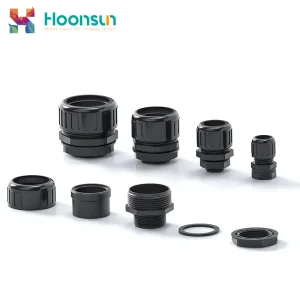
China Nylon Corrugated Cable Gland - UL & IP68 Certified Electrical Solutions
View Technical Specs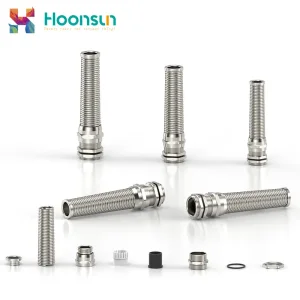
China Suppliers Factory Metal Anti-Bending Cable Gland IP68 UL Certified
View Technical Specs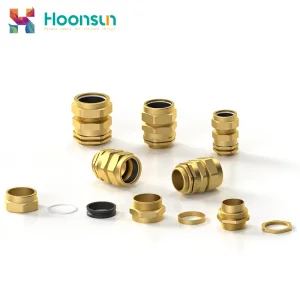
China Explosion-Proof Cable Clamp Sealing Joint CW - IP68, UL Certified
View Technical Specs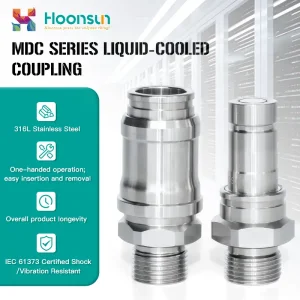
China MDC06S-1SMG042N-MDC06P-1SMG042N Manufacturer, Manufacturers
View Technical Specs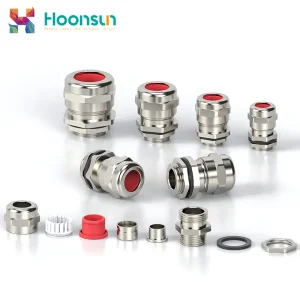
China Simple Armored Cable Gland - Dual IP68 & UL Certified Protection
View Technical Specs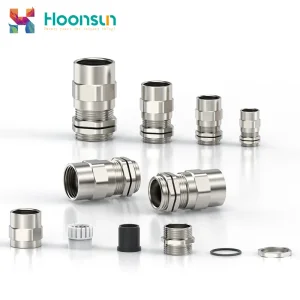
China IP68 Metal Tubular Cable Gland - UL Listed Waterproof Protection
View Technical Specs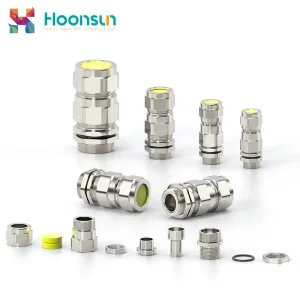
China Explosion-Proof Cable Clamp Sealing Joint EX3 - IP68, UL Certified
View Technical SpecsPartner with Zhejiang Hongxiang Connector (HOONSUN)
Direct Engineering Collaboration, Custom Thread Tooling, and Rapid OEM Batch Prototyping for Marine & Offshore EPC Contractors.
Custom Tailored Engineering
From custom entry thread lengths tailored to reinforced naval bulkheads to specialized fluorosilicone O-rings for arctic ice-breakers, our engineering team configures exact parametric drawings within 24 hours.
Rigorous Compliance Dossiers
Shipments are accompanied by complete quality compliance dossiers, including 3.1 Material Inspection Certificates, salt-spray immersion test logs, and third-party CE/UL/IP68 declarations of conformity for classification audits.
Global Logistics Readiness
Located within proximate shipping corridors to Ningbo-Zhoushan and Shanghai Ports, HOONSUN provides seaworthy export packaging, serialized barcode labeling, and consolidated consignment warehousing for global shipyard deliveries.