
China Nylon Cable Gland IP68 Certified - Reliable Sealing Solutions
View Specifications
Engineered for electrical panels, hazardous plant machinery, marine junctions, and renewable power infrastructure.
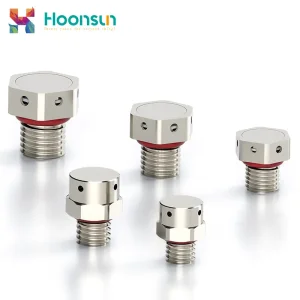
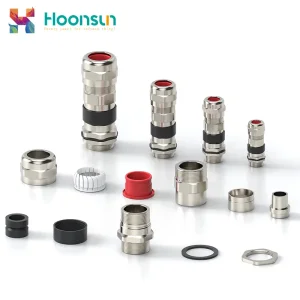
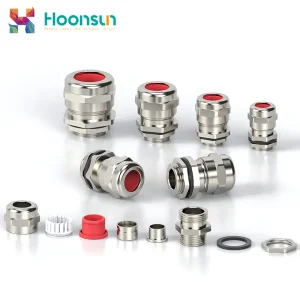
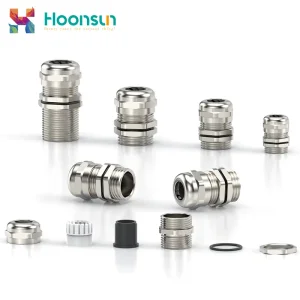
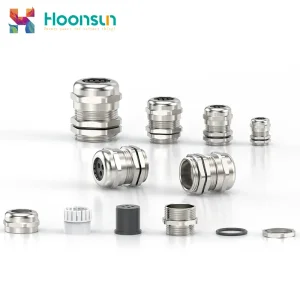
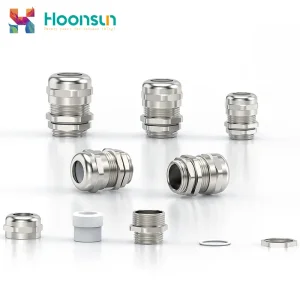
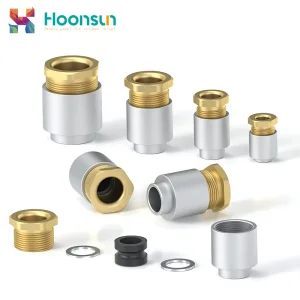
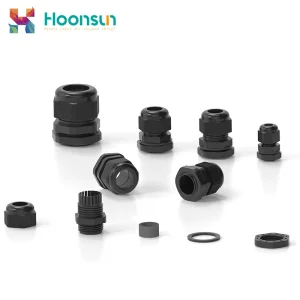
A single compression cable gland is a precision mechanical entry fitting engineered to secure, seal, and provide strain relief to unarmored or flexible continuous-sheathed cables entering an electrical or instrument enclosure. Unlike double-compression architectures that engage both internal and external jacketing layers around an intermediary metallic armor wire or tape layer, a single compression gland concentrates its entire radial compressive force directly onto the cable’s outer sheath.
When the compression cap nut is torqued onto the gland body, it travels axially along precision threads (such as ISO Metric, DIN PG, or ANSI NPT). This axial displacement forces an internal elastomeric sealing grommet (typically fabricated from nitrile butadiene rubber [NBR], ethylene propylene diene monomer [EPDM], or fluorocarbon elastomer [FKM]) against a conical internal shoulder or an integrated polymer claw mechanism. The resulting mechanical reaction converts axial force into uniform, radial elastomeric deformation.
Controlled radial displacement eliminates micro-voids along the cable sheath perimeter, forming a continuous barrier capable of withstanding hydrostatic heads exceeding 5 bar (50 meters of water column immersion) for extended intervals.
By integrating multi-finger split collet or progressive gripping cages, the assembly distributes mechanical retention forces without inducing localized cold-flow deformation or conductor insulation thinning, achieving Type A and B pullout resistance.
Specialized metal variants employ 360-degree radial grounding springs or phosphor bronze contact rings that contact cable braiding, providing low-impedance pathways for electromagnetic interference (EMI) dissipation directly to chassis ground.
The global sourcing landscape for mechanical electrical components has evolved past pure labor-arbitrage manufacturing. Leading Chinese suppliers centered in specialized clusters such as Liushi, Yueqing (Zhejiang Province) have re-architected their production facilities through extensive capital reinvestment, deploying smart Industry 4.0 machining cells, closed-loop electroplating plants, and optical inline metrology.
Modern single compression gland fabrication begins with strict metallurgical validation. Chinese top-tier mills process virgin brass billets (HPb59-1, CW614N, or CuZn39Pb3 compliant with European RoHS thresholds under Directive 2011/65/EU and 2015/863 Annex III lead allowances) and austenitic stainless steels (AISI 304 / 316L). Raw brass bars undergo automated ultrasonic testing to verify zero core porosity, micro-cracking, or zinc segregation prior to entering multi-spindle Swiss-type CNC automatic lathes.
Continuous robotic bar-feeding operations run uninterrupted 24/7 cycles, machining complex external threads, chamfers, and sealing steps in a single operational clamp to eliminate concentricity runout errors.
Automated electroplating lines apply a uniform 5μm to 12μm nickel barrier layer, maximizing thread lubricity (reducing gauling during field torque application) and elevating atmospheric sulfur resistance.
Nylon components (PA66 engineered with 25% glass fiber reinforcement) are molded within temperature-controlled runner tooling to safeguard dimensional stability and prevent moisture-induced embrittlement.
Each production batch receives a unique optical lot-code laser-etched directly onto the gland body, tying the component back to its raw material chemical assay certificate and machine run data.
A standard off-the-shelf single compression cable gland cannot survive every operating theater. Cable entries are systematically exposed to corrosive industrial atmospheres, high-amplitude mechanical vibration, rapid thermal cycling, and aggressive chemical reagents. Chinese specialist factories formulate custom configurations tailored to sector-specific demands.
String inverters and utility battery enclosures endure continuous solar UV exposure, temperature differentials spanning -40°C to +105°C, and internal cabinet condensation. UV-stabilized PA66 or marine brass single compression glands incorporate specialized breathable ePTFE membrane vent plugs, equalizing internal pressure differentials while maintaining a strict IP68 liquid barrier.
Multi-axis articulated robotic arms subject continuous-flex cabling to dynamic torsional moments and recurring bending cycles. Spiral anti-bending single compression glands equipped with integrated flex-limiting sleeves spread mechanical deflection radii across a calculated arc, preventing inner conductor rupture and jacket fatigue failure at panel entry interfaces.
Salty ocean spray, high humidity, and airborne chlorides trigger swift galvanic attack on substandard metallic hardware. Chinese marine-certified glands rely on ASTM 316L austenitic stainless steel or custom de-zincification-resistant (DZR) naval brass with heavy nickel electro-deposition, complemented by high-density neoprene or silicone seals resistant to salt crystallization.
Undercarriage traction converters and bogie junction boxes demand compliance with fire, smoke, and toxicity protocols (EN 45545-2 / NFPA 130). Single compression glands deployed here utilize zero-halogen, low-toxicity silicone rubber elastomeric inserts tested to withstand constant high-frequency vibration profiles adhering to IEC 61373 Category 1 Class B standards.
Selecting the precise gland design requires balancing installation speed, enclosure type, atmospheric classification, and lifecycle mechanical risk.
| Evaluation Parameter | Single Compression Gland | Double Compression Gland | Barrier / Resin Gland |
|---|---|---|---|
| Primary Sealing Point | Outer cable sheath exclusively | Dual: Inner sheath & outer jacket | Compound resin barrier around individual cores |
| Cable Armor Compatibility | Unarmored, screened, or flexible conduit | SWA, STA, braided wire, or steel tape | Armored or unarmored in high-risk gas groups |
| Ingress Protection Capability | IP66 / IP68 (5–10 bar) | IP66 / IP67 / IP68 | IP66 / IP68 / NEMA 4X |
| Explosion Proof Rating | Ex e (Increased Safety) / Ex t (Dust) | Ex d (Flameproof) / Ex e / Ex tb | Ex d IIC Flameproof (Zones 1, 2, 21, 22) |
| Installation Velocity | Ultra-Fast (<60 Seconds) | Moderate (3–5 Minutes) | Slow (Requires 4–24 hr curing resin) |
| Relative Unit Cost Index | Baseline (1.0x - Most Cost-Efficient) | 2.2x to 3.5x Baseline | 4.5x to 7.0x Baseline |
| Ideal Application Focus | OEM Machinery, Solar, Cabinets, Automation | Oil & Gas Skids, Petrochemical Refineries | Hydrogen Refueling, Gas Turbines, Mining |
For global EPC contractors, cabinet builders, and electrical distributors, vetting a Chinese manufacturing partner requires thorough audit procedures beyond standard quotation sheets. True factory reliability is manifested in raw material verification, geometric consistency, and certified metallurgical documentation.
Demand EN 10204 Type 3.1 Mill Test Certificates for every shipment. Verify that lead (Pb) alloy content in brass parts strictly remains within RoHS exemption limits and that stainless 316L contains an authentic molybdenum fraction (>2.0%) to prevent pitting.
Qualified Chinese producers implement dual-method thread testing: Go/No-Go calibrated thread plug gauges on the shop floor paired with periodic 3D optical profile projector analysis to verify pitch angle, crest clearance, and root radius precision.
The sealing insert is the primary failure point over an installation’s 20-year lifespan. Request ASTM D395 Method B test records demonstrating less than 20% permanent deformation after prolonged exposure to +100°C operating temperatures.
Inspect factory testing rigs measuring mechanical pullout tension under IEC 62444. Ensure test protocols specify tightening torque figures on specific jacket compounds (such as PVC, XLPE, and PUR) to avoid over-tightening during installation.
Verify third-party lab documentation covering 240, 480, or 1000-hour continuous salt spray (ASTM B117) exposure without substrate red-rust or heavy zinc white-rusting, particularly for nickel-plated brass product lines.
Tier-1 automotive and renewable OEMs should insist on PPAP Level 3 documentation, complete with Failure Mode and Effects Analysis (FMEA), Process Flow Diagrams, and comprehensive Dimensional Results.
Ensuring dimensional compatibility and safety adherence across disparate regional standards is essential for multi-market electrical equipment.
Governed by ISO 965-1 & IEC 62444 with a 1.5mm pitch across widespread industrial automation and global machinery markets. Sizes range from M12×1.5 up to M63×1.5.
Complies with DIN 40430 with an 80-degree thread flank angle. Common across legacy European infrastructure, retrofits, and electrical cabinets (PG7 through PG48).
Manufactured to ANSI/ASME B1.20.1 standards with a 1-in-16 taper ratio. Seals tightly on the thread flanks for North American UL 514B industrial control enclosures.
Constructed per ISO 228-1 with a 55-degree Whitworth form. Frequently deployed across maritime engineering, fluid skid systems, and Commonwealth industrial plants.
| Directive / Standard | Scope & Enforcement Agency | Practical Impact on Single Compression Cable Glands |
|---|---|---|
| IEC 62444 | International Electrotechnical Commission | Defines axial pullout resistance classifications, impact withstand testing, and IP ingress requirements. |
| UL 514B / CSA C22.2 | Underwriters Laboratories (North America) | Demands rigorous pullout, liquid-tight verification, flame spread tests, and environmental chamber conditioning. |
| RoHS 3 (2015/863/EU) | European Union Environmental Directive | Restricts hazardous substances: ensures lead compliance (<4% in brass alloys under 6c exemption) and zero phthalates in rubber. |
| ATEX (2014/34/EU) / IECEx | Explosive Atmospheres Global Directives | Mandatory for Ex e / Ex tb single compression hardware installed in dust or increased-safety gas zones. |
In-depth solutions addressing common engineering, sourcing, and on-site assembly challenges.
Explore our complete catalog of metallic, polymer, anti-bending, and marine-certified termination fittings.
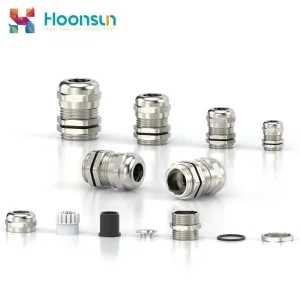
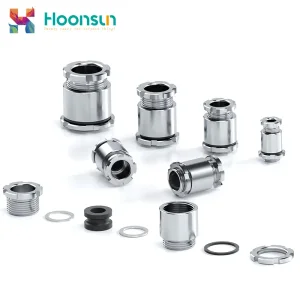
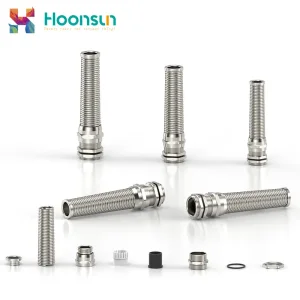
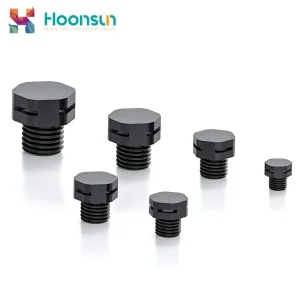
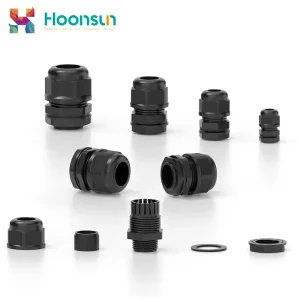
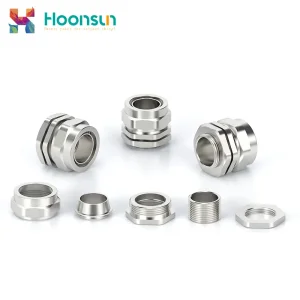
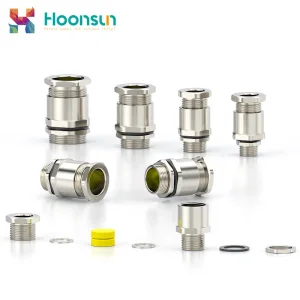
Whether you require custom entry thread lengths, specialized fluoroelastomer compounds for chemical skids, or rapid sample validation for UL audits, our technical factory engineering team provides comprehensive design support within 24 hours.