
Factory Precision-Engineered Cable Sealing Systems
Explore our core manufactured electrical pass-throughs, metal hose glands, and IP68 continuous-immersion connectors shipped directly from our Yueqing precision manufacturing center.
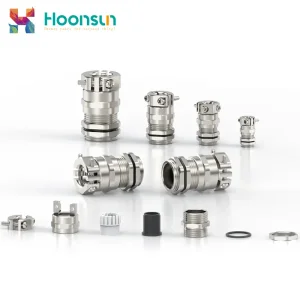
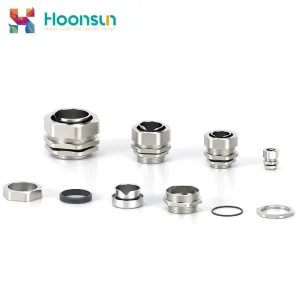
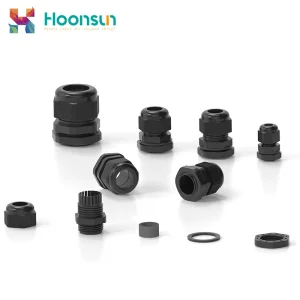
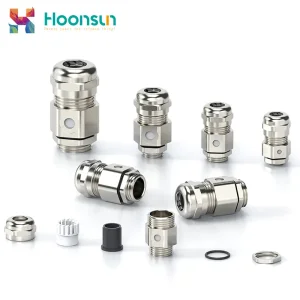
Macro Industrial Solutions & Mechanical Integrity in Modern Cabling
In global infrastructure, renewable microgrids, heavy petrochemistry, and offshore transmission, cable glands are not passive commodities—they are vital mechanical strain-relief, environmental ingress barriers, and electrical fault-clearing paths.
The Dynamic Evolution of Armoured Cable Gland Architecture
Modern electrical engineering projects mandate uncompromising cable protection against mechanical crush forces, severe axial tensile stress, torsional shear, and aggressive corrosive reagents. Armoured cables—including Steel Wire Armoured (SWA), Aluminium Wire Armoured (AWA), and Steel Tape Armoured (STA) configurations—require termination solutions that achieve two contradictory mechanical goals simultaneously: clamping high-tensile metallic armour without crushing delicate signal/optical cores, while applying hydrostatic radial pressure on the inner bedding to stop pressurized moisture ingress.
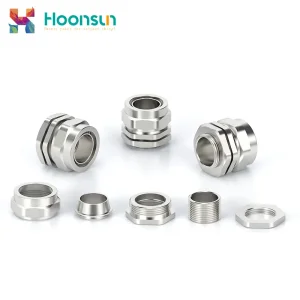
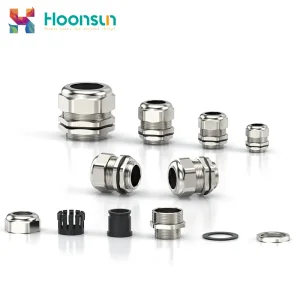
As a leading Chinese manufacturer, our Yueqing production complexes integrate high-precision CNC multi-spindle turning centers to produce BW (indoor single seal), CW (outdoor single seal with external environmental sheath sealing), and E1W/E1WF (flameproof double seal with continuous inner bedding barrier and dedicated deluge testing boot). Utilizing verified metallurgical compositions (CuZn39Pb3 / CW614N Brass and marine-grade 316L Stainless Steel), these units eliminate galvanic decay when clamped against diverse armour metallurgy.
Global Certification & Cross-Border Compliance
Navigating global electrical codes requires a multi-jurisdictional approach to cable gland engineering. While the British Standard BS 6121 established traditional taxonomy (BW, CW, E1W), the harmonized standard IEC / EN 62444 dictates mandatory mechanical impact levels (Category 1 to 8), retention clamping loads up to Class B (exceeding 0.25 kN/mm² of conductor), and short-circuit withstand capabilities.
For North American hazardous projects, compliance pivots to UL 514B and NEC Articles 500-505. Our manufacturing workflows supply dual-certified Metric (ISO 965 M16 to M100) and NPT (ANSI B1.20.1 1/2" to 4") cable entry components validated across ATEX/IECEx Ex d (Flameproof), Ex e (Increased Safety), and Ex ta (Dust Ignition Protection) zones.
Earth Fault Loop Low-Impedance Bonding
In high-voltage substations and heavy industrial switchgear, the metallic armour serves as a critical protective earth (PE) path during catastrophic line-to-earth fault short circuits. Gland assemblies must guarantee sub-milliohm electrical contact between the armour clamping cone and the enclosure wall.
Our heavy-duty brass earthing rings (earth tags) and integral armour cones are mechanically cycle-tested to handle short-circuit currents up to 43.1 kA for 1.0 second, guaranteeing the prompt activation of overcurrent protective relays without thermal erosion or joint sintering.
Deluge Protection & DTS-01 Dynamic Sealing Resilience
Standard IP66/IP68 submersible static pressure ratings do not account for thermal contraction under cold-water spray. When an enclosed electrical motor operates at +90°C and is subjected to emergency salt-water deluge or tropical rain bursts, internal air contracts, creating negative differential pressure that vacuums water across sealing interfaces.
Our CW and E1W gland ranges feature specialized zero-halogen, elastomer seal profiles tested to Shell DTS-01 specifications. The continuous inner sealing ring compresses uniformly onto the inner cable bedding, while the outer seal ring incorporates hydrophobic wiper geometry that deflects high-pressure fluid jets under dynamic vacuum situations.
China Armoured Cable Gland Size Chart PDF Engineering Reference
Engineered for electrical contractors, switchgear draftsmen, and EPC procurement leads. Use this dimensional specification table to match SWA/AWA cable diameters with Metric / NPT thread pitches and torque requirements.
| Gland Reference | Metric Entry Thread (D1) | Alternative NPT Thread | Under Armour Bedding (A) Min - Max | Armour Wire Dia. Range (SWA) | Overall Cable Outer Dia. (B) Min - Max | Clearance Hole (mm) | Tightening Torque (Nm) |
|---|---|---|---|---|---|---|---|
| CW / E1W 20S | M20 x 1.5 | 1/2" NPT | 8.0 – 11.7 mm | 0.90 – 1.25 mm | 11.5 – 16.0 mm | 20.5 mm | 32.5 Nm |
| CW / E1W 20 | M20 x 1.5 | 1/2" NPT | 11.0 – 14.0 mm | 0.90 – 1.25 mm | 15.5 – 21.1 mm | 20.5 mm | 40.0 Nm |
| CW / E1W 25 | M25 x 1.5 | 3/4" NPT | 13.0 – 20.0 mm | 1.25 – 1.60 mm | 20.3 – 27.4 mm | 25.5 mm | 55.0 Nm |
| CW / E1W 32 | M32 x 1.5 | 1" NPT | 19.5 – 26.3 mm | 1.60 – 2.00 mm | 26.7 – 34.0 mm | 32.5 mm | 70.0 Nm |
| CW / E1W 40 | M40 x 1.5 | 1-1/4" NPT | 25.5 – 32.2 mm | 1.60 – 2.00 mm | 33.0 – 40.6 mm | 40.5 mm | 95.0 Nm |
| CW / E1W 50S | M50 x 1.5 | 1-1/2" NPT | 31.5 – 38.2 mm | 2.00 – 2.50 mm | 39.4 – 46.7 mm | 50.5 mm | 120.0 Nm |
| CW / E1W 50 | M50 x 1.5 | 2" NPT | 36.5 – 44.1 mm | 2.00 – 2.50 mm | 45.7 – 53.2 mm | 50.5 mm | 135.0 Nm |
| CW / E1W 63S | M63 x 1.5 | 2" NPT | 42.5 – 50.0 mm | 2.50 mm | 52.1 – 59.5 mm | 63.5 mm | 160.0 Nm |
| CW / E1W 63 | M63 x 1.5 | 2-1/2" NPT | 49.5 – 56.0 mm | 2.50 mm | 58.4 – 65.8 mm | 63.5 mm | 175.0 Nm |
| CW / E1W 75S | M75 x 1.5 | 2-1/2" NPT | 54.5 – 62.0 mm | 2.50 mm | 64.8 – 72.2 mm | 75.5 mm | 210.0 Nm |
| CW / E1W 75 | M75 x 1.5 | 3" NPT | 60.5 – 68.0 mm | 2.50 – 3.15 mm | 71.1 – 78.5 mm | 75.5 mm | 230.0 Nm |
| CW / E1W 90 | M90 x 2.0 | 3-1/2" NPT | 67.0 – 79.5 mm | 3.15 mm | 77.0 – 90.0 mm | 90.5 mm | 280.0 Nm |
Critical Sizing Note for Steel Wire Armoured (SWA) vs. Steel Tape Armoured (STA) Cables:
Steel Wire Armoured cables employ longitudinal galvanized steel wires that clamp effectively via standardized two-part conical clamping rings. However, Steel Tape Armoured (STA) cables feature overlapping metal bands that will shear if clamped using standard single-taper cones. For STA cables, specify our Universal Reversible Armour Cone (RAC) variant, which provides a flat-face clamping shoulder engineered to retain wrapped tape without point-loading stress.
Metallurgical Formulations, Anti-Corrosion Plating & Factory Audits
Why Tier-1 global EPC contractors source directly from our Yueqing manufacturing hub: complete raw material heat traceability, automated electroplating controls, and 100% thread gauge verification.
Alloy Selection: CW614N Brass & SS316L
We forge and machine from certified CW614N (CZ121) low-lead structural brass billets with high tensile toughness (Rm > 420 MPa). This prevents neck shear during high-torque tightening onto oversized SWA armour bundles.
For aggressive marine or chlor-alkali atmospheres, we produce directly in Austenitic AISI 316L (UNS S31603) with a Pitting Resistance Equivalent Number (PREN) ≥ 25, guaranteeing complete immunity to stress-corrosion cracking.
Electro-Plating Precision (12-15 Micron)
Bare brass oxidizes and suffers galvanic corrosion when mated with aluminum junction boxes or galvanized armour wires. Our automated barrel-electroplating lines deposit 12–15 µm of high-purity electrolytic nickel.
This barrier exceeds the 1,000-hour ASTM B117 neutral salt spray test benchmark without surface pitting or base-metal bleed-through, ensuring field longevity in salty coastal environments.
Elastomeric Compounding: LSOH & FKM
Sealing failure is cable failure. Our sealing elements utilize high-recovery thermoset polymers. Standard runs use Low Smoke Zero Halogen (LSOH) silicone that maintains elastic memory from -60°C to +180°C.
For petrochemical refining applications with diesel, benzene, or sour crude oil exposure, we mold custom sealing inserts in genuine Viton / FKM fluoropolymer to prevent hydrocarbon softening or volume expansion.
Localized Application Scenarios: Where Failure Is Never an Option
Across mega-scale renewable generation, offshore drilling, and transport networks, our armoured cable glands provide the vital mechanical link ensuring operational continuity.
FPSO Vessels & Offshore Wind Substations
Vessel hull vibrations and continuous sea-spray accelerate mechanical loosening in conventional connectors. Our CW and E1W cable glands incorporate patented anti-vibration detent locknuts and marine bronze sealing bodies. In North Sea wind farm transformer decks, these units safeguard medium-voltage (33kV to 66kV) inter-array cable terminations against salt-fog corrosion and subsea dynamic movement.
Utility-Scale Photovoltaics & BESS Systems
Utility-scale Battery Energy Storage Systems (BESS) experience massive diurnal thermal cycling, which causes standard cable jackets to creep and crack. Our strengthened armoured gland lines incorporate cold-flow compensating compression seals, eliminating thermal hysteresis leaks while grounding aluminium wire armoured (AWA) single-core DC feeders to eliminate magnetic eddy currents.
Hydrogen Electrolyzers & Chemical Plants
Hydrogen molecules penetrate standard polymers, causing micro-void blister embrittlement. For emerging green hydrogen facilities, our specialized ATEX/IECEx Ex d barrier cable glands utilize high-density epoxy compound potting chambers, sealing each individual insulated core and completely stopping flammable gas migration between hazardous Zone 1 and non-hazardous control spaces.
Technical Roadmap & Next-Generation Connection Architecture
As industrial systems become digital, distributed, and electrified, cable entry components are evolving from passive mechanical seals into intelligent, monitored industrial nodes.
Lead-Free Eco-Brass Alloys
Complying with upcoming European RoHS and REACH lead-limit revisions by converting production to CuZn42 zero-lead brass matrices while preserving high-speed machining chip breakers and tensile strength.
Integrated IoT Condition Monitoring
Embedding passive RFID and miniature surface-acoustic-wave (SAW) temperature sensors directly into the internal gland clamping cone, alerting engineers to localized joint overheating before an arc flash occurs.
Liquid Cooling Hybridization
Engineering co-axial cable glands for ultra-fast EV megawatt chargers (MCS), sealing multi-conductor power lines and internal ethylene-glycol cooling channels simultaneously in one housing.
Hermetic Glass-to-Metal Bonding
Developing subsea deep-water glands capable of withstanding 600 bar external hydrostatic pressures using matched-expansion borosilicate glass seals fused to super-duplex stainless bodies.
Frequently Asked Questions on Armoured Cable Gland Specification
Expert clarifications straight from our Yueqing factory floor on thread clearances, explosion-proof classes, armour types, and torque application.
What is the fundamental difference between BW, CW, and E1W cable glands?
The distinction lies in sealing architecture and environmental protection: BW glands provide mechanical armour clamping only, with no environmental seals, making them suitable only for dry indoor control panels. CW glands incorporate an elastomeric seal on the cable's outer sheath, delivering IP66 weatherproofing for outdoor industrial enclosures. E1W glands are double-seal units: they clamp the armour while compressing an inner elastomer seal directly onto the inner cable bedding and an outer seal onto the external jacket, providing full explosion-proof gas containment, IP68 immersion protection, and DTS-01 deluge resistance.
Why must Aluminium Wire Armoured (AWA) cables never use standard brass cable glands?
Aluminium Wire Armoured (AWA) cables are single-core power feeders carrying heavy alternating currents (AC). When single-core conductors pass through ferrous or magnetic brass structures, magnetic hysteresis and circulating eddy currents generate rapid inductive heating, which can melt the cable insulation. For single-core AWA cables, you must specify non-magnetic Aluminum cable glands or nickel-plated brass units fitted with dedicated non-magnetic isolating plates and aluminum earth tags to eliminate closed magnetic loops.
How do I determine the correct entry thread pitch: Metric vs. NPT vs. PG?
Thread selection depends on enclosure wall thickness and regional design codes. Metric threads (ISO 965) use parallel 1.5mm pitch geometries, sealing via a flat face O-ring or IP sealing washer secured by an internal locknut. NPT threads (ANSI B1.20.1) feature a 1° 47' taper that seals through mechanical thread flank interference, requiring a minimum of 5 full engaged threads for Ex d flameproof containment without additional gaskets. PG threads (DIN 40430) have shallower thread depths and are primarily used in European legacy machinery installations.
Can HOONSUN supply full custom dimensions and private-label OEM markings?
Yes. As a direct-from-source manufacturer established in 2006 with extensive CNC machining, tooling, and cleanroom assembly operations in Yueqing, we engineer custom extended entry threads (up to 50mm length for thick-walled cast enclosures), non-standard clamping spans for specialized offshore umbilical cables, and high-temperature fluorosilicone seals. We also provide laser-engraved private labeling, custom thread badges, and customer-specific packaging for global distributors.
Where can I download the complete Armoured Cable Gland Size Chart PDF?
Our complete 48-page technical engineering brochure—including CAD dimensional schematics, armour clamping ranges, inner/outer sheath limits, thread pitch matrices, tightening torques, and IECEx/UL certificate copies—can be requested directly below or accessed via our digital product catalog download system.
Specialized Cable Termination, Quick Couplings & Venting Programs
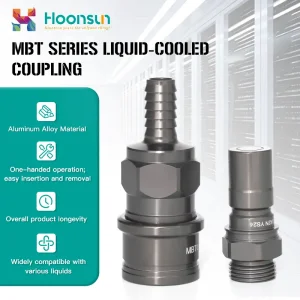
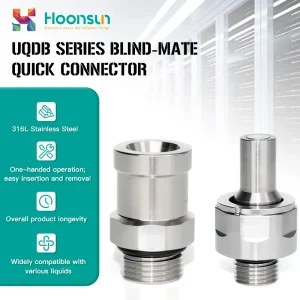
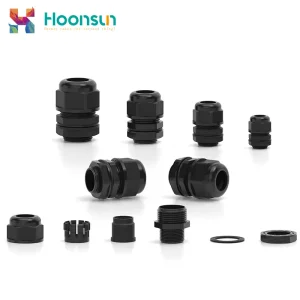
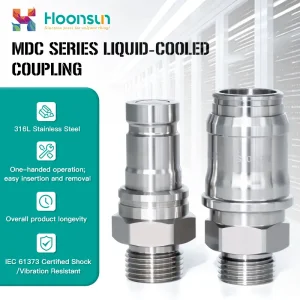
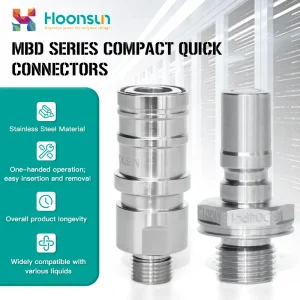
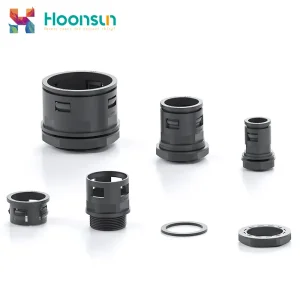
Complete your plant installation with our UL-certified nylon lines, quick-disconnect fluid couplings, explosion-proof fittings, and flexible conduit assemblies.
Accelerate Your Engineering Procurement Cycle
Submit your cable schedule or outer diameter measurements to our application engineers. We provide CAD cross-sections, 3D STEP models, full compliance certificates, and immediate factory-direct wholesale quotes within 2 hours.