
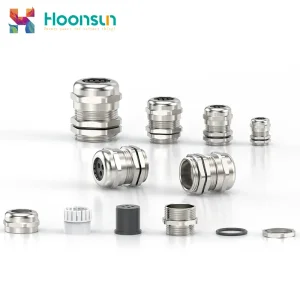
Featured Industrial 1/2" & Armored Cable Glands (Batch 1)
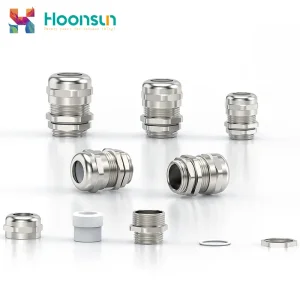
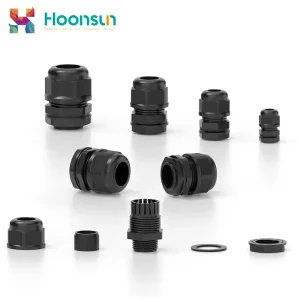
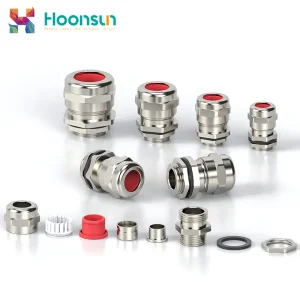
Precision-machined high-performance cable gland systems engineered for extreme thermal endurance, marine corrosion resistance, and dual IP68/UL certified compliance.
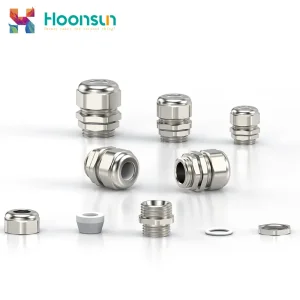
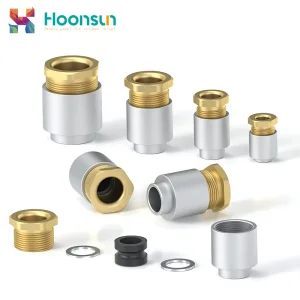
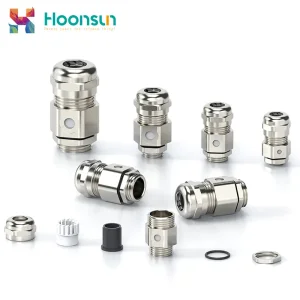
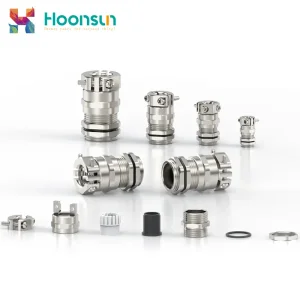
Global Macro Status: The Strategic Criticality of 1/2" Cable Glands
Evaluating commercial dynamics, standard interchangeability (1/2" NPT vs. M20 vs. PG13.5), and global engineering procurement paradigms.
In modern electrical containment, modular automation, and high-voltage transmission architectures, the 1/2" cable gland (most universally standardized under the American National Standard Taper Pipe Thread — 1/2" NPT, as well as its European direct equivalent Metric M20×1.5 and legacy German PG13.5 / PG16) represents the single most widely consumed conduit fitting size on Earth. It serves as the primary ingress barrier for cables possessing outer sheath diameters spanning from 6.0 mm to 12.0 mm (0.24" to 0.47"), which constitutes over 62% of all industrial sensor, servo feedback, 3-phase small-motor supply, and automation bus wiring deployed across global commercial projects.
Historically viewed as passive commodity components, cable glands have transitioned into mission-critical structural engineering units. The proliferation of multi-megawatt Photovoltaic (PV) utility arrays, offshore floating wind farms, hyperscale cloud data center power distribution blocks, and EV (Electric Vehicle) battery containment systems has intensified the thermal, mechanical, and galvanic demands placed on these 1/2-inch ingress assemblies. International engineering specifications strictly mandate adherence to IEC 62444 (Cable glands for electrical installations), UL 514B (Conduit, Tubing, and Cable Fittings), EN 60529 (Ingress Protection IP66/IP68/IP69K), and hazardous environment certifications like ATEX / IECEx (EN 60079-0/1/7). Failure of an ingress gland does not merely induce moisture saturation; it catalyzes catastrophic phase-to-ground flashovers, volatile atmospheric ignition, or irreversible electrolytic damage to multi-million-dollar power converters.
Ecosystem Competitiveness: The Yueqing Manufacturing Paradigm
How vertical integration, raw brass extrusion clusters, and automated continuous machining establish unprecedented cost-to-quality ratios.
Localized Supply Chain Clustering
Operating out of Liushi Town (Yueqing, Zhejiang) — universally celebrated as China's Electrical Capital — manufacturers operate within an ultra-dense, self-contained 15-kilometer radius. Raw high-tensile brass ingots (HPb59-1, CW614N, CuZn39Pb3), virgin Polyamide PA66 chips, and specialized fluororubber/EPDM vulcanization plants sit directly upstream, slashing logistics turnaround times from weeks to minutes.
- Raw Ingot Supply: Direct metallurgical smelter linkage
- Plating Facilities: In-district automated nickel & tin bath plating
- Tooling Cycle: Custom mold EDM machining in under 72 hours
Automated CNC High-Speed Turning
Modern Chinese factories replace manual multi-spindle screw machines with computer-controlled Swiss-type turning centers running 24/7. This guarantees dimensional thread concentricity within ±0.015 mm tolerance thresholds. Cap nut knurling, sealing claw chamfering, and internal pressure rings are produced in a unified setup, mitigating human fixturing error and ensuring zero burr contamination.
- Cpk Process Capability: ≥ 1.45 on critical thread diameters
- Surface Roughness (Ra): Maintained below 0.8 μm for O-ring glands
- Throughput Capacity: > 500,000 units per month per automated cell
Quality Assurance & In-House Labs
Pioneering facilities don't outsource validation. Factory premises house accredited laboratories equipped with cyclic salt spray fog cabinets (ASTM B117), hydrostatic pressure test vessels (submersion up to 100 meters water depth for IP68 verification), universal tensile testers for cable pull-out clamping force (IEC 62444 Class A/B), and spectral analyzers for RoHS hazardous element quantification.
- Salt Fog Resistance: Standard 720h without red corrosion
- Hydrostatic Testing: 10 Bar continuous immersion validation
- Glow Wire Testing: 850°C / 960°C flammability testing for nylon
Material Science & Engineering Selection Matrix
Optimizing material metallurgy, elastomer elastomeric degradation, and thread geometry for field installations.
Selecting the optimal 1/2" cable gland requires balancing corrosive exposure, galvanic potentials, operational vibration spectra, and thermal cycles. A mismatch between the enclosure alloy (e.g., Cast Aluminum) and the gland body (e.g., Raw Brass) in a maritime splash-zone environment induces severe galvanic corrosion, eroding the ground path and compromising environmental sealing integrity.
| Gland Material Class | Alloy / Polymer Grade | Elastomeric Seal Compound | Operational Temp Range | Ingress Rating | Key Strengths & Industry Fit | Vulnerability / Watchouts |
|---|---|---|---|---|---|---|
| Nickel-Plated Brass | CW614N / HPb59-1 (CuZn39Pb3) | NBR (Nitrile) / EPDM | -40°C to +100°C | IP68 (5 Bar) / IP69K | Superior mechanical torque, cost-effective, high electrical continuity for EMC shielding. Standard for automation. | Avoid in concentrated acidic or ammonia-rich coastal environments without thick (>12μm) nickel plating. |
| Stainless Steel 304 | AISI 304 / EN 1.4301 | Silicone / Viton (FKM) | -50°C to +180°C | IP68 (10 Bar) / IP69K | Resistant to oxidation, moderate acid/alkali washdown. Ideal for industrial breweries, dairy, and machinery. | Subject to pitting corrosion in direct chloride/marine environments; galling during assembly requires anti-seize paste. |
| Stainless Steel 316L | AISI 316L / EN 1.4404 (Mo > 2%) | Fluororubber (FKM) / FFKM | -60°C to +200°C | IP68 / IP69K Subsea | Ultimate resistance to marine splash zones, offshore wind, subsea umbilical pods, and chemical processing plants. | Higher tooling cost and raw material premium; necessitates specialized carbide tooling during CNC manufacturing. |
| Reinforced Nylon | Polyamide PA66 (25% Glass Filled) | Chloroprene (Neoprene) | -40°C to +100°C (UL94-V0) | IP68 (Hermetic) | Zero galvanic reaction, lightweight, immune to rust, high dielectric insulation, low unit cost for junction boxes. | Susceptible to UV degradation without carbon black stabilizers; lower mechanical crush resistance vs metal. |
| Marine Armored (BW/CW) | Marine Naval Brass CZ112 | Lead Sheath / Neoprene Cone | -40°C to +120°C | IP66 / IP68 Dual | Integrated clamping rings for Steel Wire Armored (SWA) and braided cables; handles earth fault currents safely. | Multi-part assembly requires precision torqueing; incorrect cone alignment compromises armoring earth connection. |
Elastomer Dynamics: The environmental integrity of a 1/2" cable gland relies primarily on its elastomeric sealing ring. While standard Nitrile Butadiene Rubber (NBR) provides excellent oil, grease, and hydrocarbon resistance, it experiences rapid cross-link degradation when exposed to high ozone levels or continuous temperatures exceeding 100°C. For photovoltaic inverters, battery storage enclosures, and engine bay bulkheads, forward-looking engineers specify Hydrogenated NBR (HNBR) or Fluorocarbon Elastomer (Viton/FKM), which retain dynamic elasticity across a broad thermal range (-40°C to +200°C) without taking permanent compression set.
Localized Industrial Use Cases & Field Engineering
Where 1/2" cable gland solutions deliver critical environmental barriers across high-reliability operating sectors.
1. Utility-Scale Photovoltaic & Energy Storage (BESS)
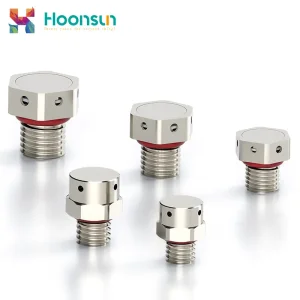
In solar combiner boxes and Megawatt-scale Battery Energy Storage Systems (BESS), 1/2" breathable vent cable glands prevent internal vacuum condensation. Solar enclosures experience extreme thermal cycling (+65°C daytime operating temps dropping to -10°C at night), causing internal negative pressure that draws ambient humidity past traditional seals.
- Solution: Cable glands integrated with hydrophobic/oleophobic ePTFE membranes
- Performance: Continuous air permeability (120-300 ml/min/cm² @ 70 mbar) with IP68 liquid barrier
- Outcome: Complete elimination of internal condensation, short-circuit arcs, and PCB corrosion
2. Electric Mobility & Megawatt Charging Stations
Electric commercial vehicles, pantograph quick-chargers, and liquid-cooled 480kW+ DC fast charging dispensers require gland solutions that handle high electromagnetic fields (EMF) and prevent coolant infiltration into control harnesses.
- Solution: 1/2" NPT EMC brass glands featuring 360° beryllium-copper grounding spring fingers
- Performance: Low transfer impedance (< 10 mΩ/m) up to 100 MHz, attenuating EMI/RFI noise
- Outcome: Reliable communication across CAN bus, Ethernet, and battery management links
3. Industrial Robotics, AMRs & Machine Tooling
Continuous torsion, dynamic bending stress, and aggressive cutting oil exposure on 6-axis articulated robot wrists will cause unreinforced glands to loosen, fraying cable jackets and leading to water entry.
- Solution: Double-lock cable glands combined with spiral anti-bend strain relief boots
- Performance: Exceeds IEC 62444 pull-out resistance Class B (>150 N retention for 10 mm cables)
- Outcome: Protection against flexural fatiguing and seal breach during rapid robotic cycling
Global Enterprise Sourcing Protocols: Navigating Audits & Compliance
Critical inspection parameters, non-negotiable international documentation, and supply chain risk governance.
Procurement teams for Tier-1 multinational engineering conglomerates (such as Siemens, ABB, Schneider Electric, and Emerson) do not evaluate suppliers based on low FOB quotes alone. They implement thorough supplier risk management frameworks centered around E-E-A-T principles (Experience, Expertise, Authoritativeness, and Trustworthiness), demanding complete material traceability, automated process validation, and documented regulatory compliance:
1. Material Test Reports (MTR 3.1)
Zero tolerance for unverified scrap brass or low-purity scrap metal. Certified factories supply genuine EN 10204 Type 3.1 Inspection Certificates for every heat batch. Optical Emission Spectrometry verifies copper content (57.0% - 59.0%), lead limits complying with RoHS exemptions (under 4.0% for copper alloys, moving toward lead-free alloys like CuZn42), and the absence of forbidden cadmium, mercury, or hexavalent chromium.
2. Thread Verification via Optical Gauging
Manual thread gauge verification (Go/No-Go plug and ring gauges) leaves room for operator oversight during high-speed production runs. Leading China manufacturers deploy automated Laser Optical Sorting machines that inspect every 1/2" NPT or M20 unit at rates of 300 parts per minute, checking thread pitch diameter, lead error, flank angle, and seal recess concentricity with zero defects.
3. OEM/ODM Rapid Customization Tooling
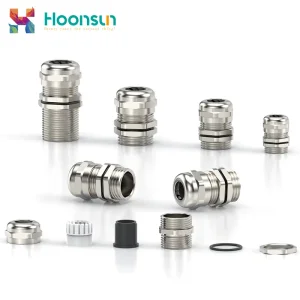
Modern international projects often require bespoke solutions: extended thread lengths (15mm to 30mm) for thick-walled cast explosion-proof enclosures, multi-hole silicone inserts to route 4×4mm sensor wires through a single 1/2" entry, or specialized PVD corrosion coatings. Yueqing's rapid mold machining enables custom tooling samples in 7-10 days, followed by mass production validation within 20 days.
Technological Horizons: Smart Glands, Liquid Cooling & Lead-Free Directives
Anticipating regulatory updates, smart sensor integration, and high-density liquid thermal connection requirements.
The next decade will drive three major evolutionary shifts in cable gland technology:
1. Transition to Lead-Free Brass (Eco-Brass / CW724R): The European Union's ongoing review of the RoHS Directive (Exemption 6c) and California Proposition 65 regulations are pushing the electrical connector sector away from traditional leaded brass alloys (HPb59-1). China's forward-looking factories have already mastered the CNC machining of silicon-brass and bismuth-doped brass (lead content < 0.1%). These materials present machining challenges due to higher abrasive wear on tools, but they safeguard global market compliance for products targeted through 2035.
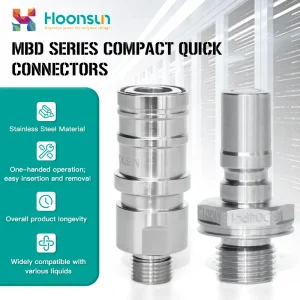
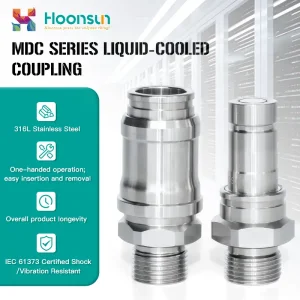
2. Hybrid Liquid Cooling Quick-Disconnect Connectors: Driven by high-density AI supercomputing servers (such as NVIDIA NVLink architectures consuming 120kW+ per rack) and high-power EV charging liquid loops, cable gland manufacturers are integrating hydraulic conduits with low-voltage signal monitoring within unified, leak-free quick-disconnect connector housings.
3. Sensor-Integrated "Smart" Gland Systems: Integrating micro-thin piezo-resistive sensor rings directly within the elastomeric claw mechanism enables continuous digital monitoring of clamping torque retention, internal enclosure temperature, and humidity saturation. These smart glands transmit diagnostic telemetry over IO-Link or wireless protocols, alerting maintenance teams before seal degradation leads to catastrophic water ingress.
Frequently Asked Technical Questions: Sourcing 1/2" Cable Glands
Targeted solutions addressing mechanical tolerances, thread compatibility, torque specs, and regulatory standards.
What is the difference between 1/2" NPT, M20×1.5, and PG13.5 cable glands?
While all three sizes accommodate comparable cable outer diameter ranges (typically 6.0 mm to 12.0 mm), their thread geometry is fundamentally different:
- 1/2" NPT (National Pipe Taper): Features a 60° thread angle with a 1:16 taper ratio. It creates a mechanical seal through flank interference along the tapered threads. It is the dominant standard across the United States, Canada, and Saudi Aramco / oil & gas projects.
- Metric M20×1.5: A straight (parallel) cylindrical thread with a 60° flank angle, an outside diameter of 20.0 mm, and a 1.5 mm pitch. It relies on an O-ring or flat washer compressed against the enclosure face to achieve an IP68 seal. It is the universal standard across Europe, China, and IEC-governed territories.
- PG13.5: An older German Panzergewinde standard with an 80° flank angle and a 20.4 mm outer diameter. Widely used in legacy European machinery, though increasingly superseded by M20 under EN 50262 / EN 62444.
They cannot be cross-threaded without stripping threads or causing catastrophic seal failure; appropriate thread adapters or step-down reducers must be utilized.
What does IP68 rating realistically mean for a 1/2" cable gland?
Under IEC 60529, an IP68 rating signifies that the assembly is completely dust-tight (First digit "6") and protected against continuous immersion in water under conditions agreed upon between user and manufacturer (Second digit "8").
Unlike IP67 (which specifies immersion at a depth of 1 meter for only 30 minutes), true industrial-grade IP68 cable glands manufactured by leading Chinese facilities are tested for continuous submersion at 5 Bar (equivalent to 50 meters water depth) or 10 Bar (100 meters) for 24 to 72 hours. Crucially, this rating is only achieved when the cable's outer diameter sits precisely within the gland's certified clamping envelope (e.g., 6–12 mm) and the cap nut is tightened to the recommended torque using a calibrated torque wrench.
How do you calculate the correct tightening torque for metal vs. nylon cable glands?
Tightening torque varies based on body material, elastomer shore hardness, and cable sheath composition. Over-torquing crushes the internal conductors, inducing cold flow (creep) of the insulation, while under-torquing leads to cable pull-out and water leakage:
- Nylon PA66 (1/2" NPT / M20): Recommended tightening torque for the body into the threaded enclosure entry is 3.5 to 5.0 Nm; the dome sealing nut requires 2.5 to 3.5 Nm.
- Nickel-Plated Brass (1/2" NPT / M20): Enclosure entry torque is 8.0 to 12.0 Nm; cap nut torque is 6.0 to 8.5 Nm.
- Stainless Steel 316L: Enclosure entry torque can reach 12.0 to 15.0 Nm; cap nut torque is 8.0 to 10.0 Nm. Always apply an approved anti-galling lubricant on stainless steel threads to prevent thread cold welding during installation.
When should an EMC shielded cable gland be used instead of a standard metal gland?
Standard metal cable glands provide mechanical retention and environmental sealing, but their internal rubber grommet electrically isolates the incoming cable's braided shield from the metal enclosure wall.
An EMC (Electromagnetic Compatibility) Cable Gland incorporates an internal 360-degree radial spring claw or brass grounding tape that directly bites into the stripped cable braid. This path creates a low-impedance ground bonding path that diverts high-frequency electromagnetic interference, harmonics, and radio frequency interference (RFI) harmlessly to the grounded chassis. EMC glands are mandatory in Variable Frequency Drive (VFD) motor connections, wind turbine converter controllers, and industrial robotics utilizing high-precision analog fieldbus circuits.
What certifications are required to import cable glands into North America and the EU?
Compliance documentation depends on the target geography and operating environment:
- North American Market: Requires UL 514B Listing or Component Recognition (UL File number) and cULus / CSA C22.2 No. 18.3 certification for conduit, tubing, and cable fittings. If deployed in hazardous (classified) locations, certification under UL 2225 / ISA 12.12.01 (Class I, Div 1 & 2, Groups A, B, C, D) is mandatory.
- European Union Market: Requires the CE Mark, compliance with the Low Voltage Directive (LVD 2014/35/EU), and third-party testing reports confirming adherence to EN 62444. Materials must strictly comply with RoHS 3 (EU 2015/863) and REACH SVHC Candidate List thresholds. For explosive atmospheres, an ATEX Directive 2014/34/EU certificate (e.g., Ex d flameproof or Ex e increased safety) issued by an accredited Notified Body (like TÜV, DEKRA, or Baseefa) is non-negotiable.
How does the breathable cable gland prevent condensation in outdoor junction boxes?
In outdoor environments, ambient diurnal temperature swings create significant pressure differentials between the inside of an airtight enclosure and the outside environment. When the enclosure cools, an internal vacuum forms (negative pressure), pulling moisture in through tiny microscopic gaps in gaskets or connectors. Once inside, this moisture condenses on colder metal surfaces, pooling water at the bottom of the enclosure.
A Breathable Cable Gland incorporates an integrated, micro-porous expanded Polytetrafluoroethylene (ePTFE) membrane inside the gland body. The membrane pore diameter is approximately 0.2 microns — small enough to block liquid water droplets and dust (maintaining IP68 / IP69K), yet large enough to allow air and moisture vapor molecules to freely equalize pressure continuously. This provides passive pressure compensation that eliminates condensation build-up without requiring separate drilled ventilation plugs.
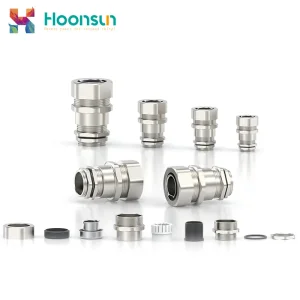
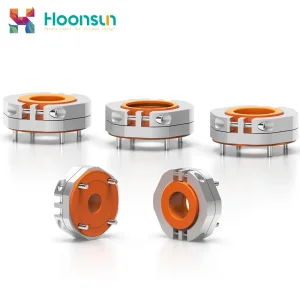
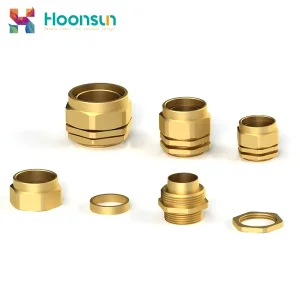
Featured Industrial 1/2" & Armored Cable Glands (Batch 2)
Heavy-duty stainless hose adaptors, hazardous-area vent plugs, multi-conductor pass-throughs, and extended-length solutions.
Accelerate Your Global Sourcing Audits & Custom Cable Gland Tooling
Connect directly with our Yueqing engineering and metallurgic testing teams. Receive comprehensive CAD dimensional drawings, free evaluation samples, and full ISO/UL/CE compliance documentation within 24 business hours.