
Flagship 12mm & Specialized Ingress Protection Components
Engineered for rigorous industrial performance. Each component features precision thread calibration, high-grade sealing inserts, and multi-standard compliance (IP68, UL, REACH, CE) direct from tier-one Yueqing facilities.
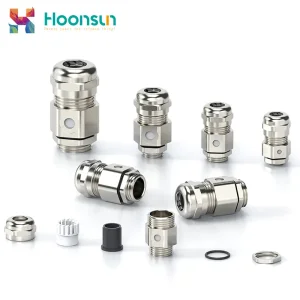
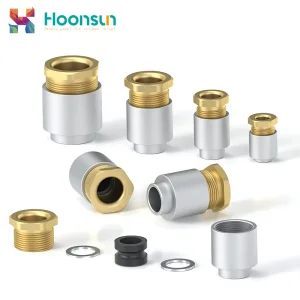
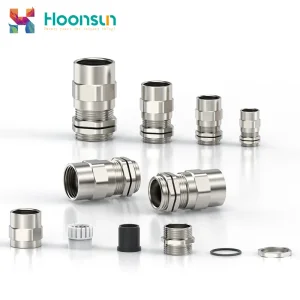
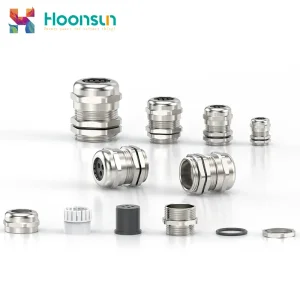
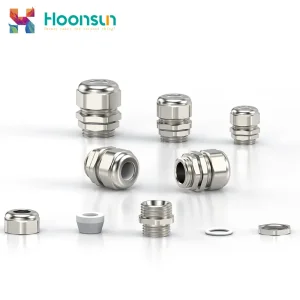
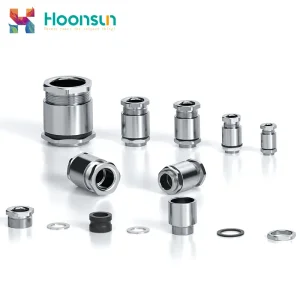
The Strategic Rise of 12mm Cable Glands in Next-Gen Micro-Enclosure Architectures
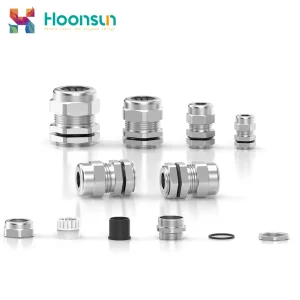
In modern electrical engineering, miniaturization is not merely an aesthetic design exercise—it is a functional requirement across decentralized automation, sensor robotics, high-density solar junction boxes, and electric powertrain control modules. Within this architectural paradigm, the 12mm cable gland (commonly engineered under metric thread designation M12 × 1.5 or equivalent compact PG/NPT profiles) represents the critical mechanical boundary where environmental sealing, mechanical strain relief, and electromagnetic compatibility (EMC) intersect in an ultra-compact footprint.
Historically considered a commodity fastener, the 12mm cable gland has undergone massive structural evolution. As industrial systems migrate toward IP67, IP68 (continuous immersion under hydrostatic head pressure), and IP69K (high-pressure, high-temperature washdown) operating environments, micro-sealing systems face intense mechanical challenges. Accommodating outer cable diameters (OD) between 2.5mm and 6.5mm within a limited 12mm bore demands stringent thread pitch uniformity, advanced polymer compound stability, and precise radial compressive distribution from the clamping cage to avoid conductor deformation or insulation breach.
Engineering Authority Insight: Leading Chinese manufacturers have moved far beyond basic brass turning. Top-tier factories operating in specialized clusters like Yueqing, Zhejiang, now deploy 7-axis Swiss CNC automatic screw lathes and dual-shot elastomer co-molding. This enables dimensional tolerances of ±0.015mm, guaranteeing hermetic sealing without causing core pinching in delicate Ethernet, RS-485, and CAN-bus signal wiring.
Global Market Drivers & Enterprise Procurement Requirements
Procurement teams at multinational OEMs no longer evaluate suppliers solely on piece-part costs. Rigorous supply chain due diligence now scrutinizes material traceability, automated tolerance stability, and environmental longevity.
EMC 360° Continuous Grounding
High-frequency switching inverter environments (VFDs, photovoltaic optimizers, and EV fast-chargers) produce severe stray electromagnetic interference. Modern 12mm brass and stainless cable glands feature integrated phosphor bronze or beryllium copper contact springs providing low-impedance 360-degree shield bonding up to 1 GHz.
- Transfer impedance: < 10 mΩ/m at 100 MHz
- Triaxial test certified to EN 50597
Breathable Membrane Integration
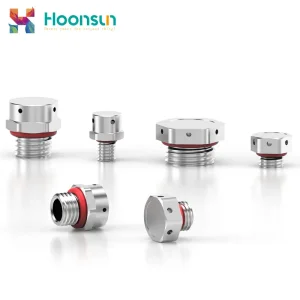
Outdoor sealed junction boxes face rapid internal pressure shifts caused by ambient thermal cycles, leading to moisture aspiration past static O-rings. Integrating ePTFE hydrophobic and oleophobic membranes into 12mm vent plugs and breathable glands equalizes differential pressure while barring water entry.
- Airflow rates up to 300 ml/min @ 70 mbar
- Water intrusion pressure (WEP) > 60 kPa
RoHS, REACH & Conflict Mineral Audits
Global buyers mandate comprehensive laboratory ICP-OES validation to guarantee compliance with EU RoHS Directive 2011/65/EU (and amendment 2015/863). For metal fittings, adherence to Lead Exemption 6(c) (allowing up to 4% lead in copper alloys) and transitions toward lead-free brass (CW724R/ECO BRASS) are essential.
- Full SVHC substance declaration lists
- XRF routine factory screening on incoming bars
China Factory 4.0: Supply Chain Resilience & Yueqing Cluster Dominance
How geographical manufacturing density, automated production routing, and vertically integrated raw material processing provide unprecedented scale, rapid customization, and defect-free throughput.
Over the past two decades, China’s industrial ecosystem—specifically anchored within the Yueqing municipal cluster in Zhejiang Province—has evolved into the world's most consolidated supply chain for low-voltage electrical apparatus and mechanical connection hardware. The core competitive advantage of this cluster is not low labor costs; it is unrivaled supply chain density.
1. The Sub-Hour Component Ecosystem
Within a 15-kilometer radius in Liushi, an OEM facility has direct access to high-purity brass bar extrusion foundries, specialized electroplating workshops (nickel plating, galvanic tinning, passivated zinc), custom fluorosilicone seal molding presses, and hardened tool-and-die specialists. What takes European or North American facilities weeks to prototype—such as an elongated M12 thread length to accommodate thick casting enclosures—is turned, sampled, plated, and dimensionally inspected in China within 72 hours.
2. Transition to Lights-Out Swiss Precision Machining
China Factory 4.0 centers on automated mechanical consistency. Premier cable gland producers have phased out manual single-axis lathes in favor of high-throughput Swiss-type CNC machines equipped with automated bar feeders and broken-tool laser detection. Threads are rolled rather than cut, creating compressive surface stress that enhances tensile load resistance by over 30% while eliminating micro-burrs that could sever fine-gauge jacket insulation during tightening.
3. Real-Time Vision Inspection & Traceability
To maintain zero-PPM defect levels for automotive and renewable energy clients, advanced Chinese manufacturers employ multi-camera telecentric optical sorting tables. Finished 12mm cable gland bodies, locknuts, and elastomeric grommets pass through glass rotary turntables at rates exceeding 400 parts per minute, validating critical dimensions including thread pitch diameter, inner bore concentricity, chamfer angles, and O-ring groove depth.
Vertically Integrated Tooling
In-house mold design and EDM wire-cutting facilities reduce tool fabrication cycles from 45 days to under 12 days for custom multi-hole inserts or unusual thread pitches.
Buffer Stock & ERP Visibility
Standard configurations of M12 nickel-plated brass and polyamide fittings are maintained in high volume, permitting dispatch within 48 hours for expedited assembly lines.
International Accreditation
Factory testing laboratories equipped with automated hydrostatic pressure tanks, salt-spray chambers (ASTM B117), and universal tensile test rigs deliver certified lab documentation.
Comprehensive 12mm Material & Performance Selection Matrix
Selecting the ideal gland construction depends on chemical exposure, temperature extremes, mechanical impact resistance, and electromagnetic requirements.
| Material Classification | Common Base Alloy / Resin | Sealing Insert Compound | Thermal Operating Range | Ingress Rating | Primary Industrial Sector |
|---|---|---|---|---|---|
| Nickel-Plated Brass | CuZn39Pb3 (CW614N) / Eco-Brass | NBR (Nitrile) / EPDM | -40°C to +100°C | IP68 (5 Bar) | Machinery, Automation, Sensors |
| Stainless Steel 304 | AISI 304 (1.4301) | Silicone / EPDM | -40°C to +120°C | IP68 / IP69K | Outdoor Energy, Chemical Systems |
| Marine Stainless 316L | AISI 316L (1.4404) Mo-alloyed | FKM (Viton) / Silicone | -40°C to +180°C | IP68 (10 Bar) | Offshore Wind, Maritime, Coastal Sensors |
| Engineered Polyamide | PA66 V0 Flame Retardant | Modified EPDM / TPE | -40°C to +100°C | IP68 | HVAC, Junction Enclosures, Lighting |
| High-Temperature Brass | CuZn39Pb3 + Heat Passivation | Fluoroelastomer (FKM) | -20°C to +200°C | IP68 | Furnace Control, Engine Bays, Foundry |
Critical Dimensions & Thread Sizing Dynamics
Standard 12mm cable glands are defined primarily by the M12 × 1.5 thread profile (12mm nominal major thread diameter with a 1.5mm pitch). For panel installations, the recommended mounting hole diameter is Ø12.3mm (+0.2 / -0.0 mm) to ensure clearance without allowing radial play that could compromise the front sealing O-ring. Standard thread length (L) ranges between 5.0mm (for stamped sheet metal enclosures) and 10.0mm–15.0mm (extended thread length for heavy cast aluminum, iron, or thick polymer walls).
Mission-Critical Deployment Scenarios for 12mm Micro-Glands
Examining field-tested performance requirements across high-growth industrial sectors where component failure results in severe operational downtime.
Vision Systems & Industrial Robotics
On high-speed collaborative robotic arms (cobots) and automated optical inspection cameras, cables experience continuous torsional flexing and cyclic acceleration. 12mm spiral strain-relief cable glands with integrated anti-kink flex protectors prevent sharp bending radii (< 5× cable OD), eliminating fatigue fractures in sensitive GigE Vision and industrial Ethernet lines.
EV Battery Management (BMS)
Battery packs require hermetic entry for low-voltage sensor harnesses monitoring individual cell temperatures and voltages. 12mm stainless or plated brass glands configured with flame-retardant UL94-V0 EPDM inserts withstand electrolyte exposure, glycol coolant contact, and extreme structural road vibration.
Solar Micro-Inverters & String Optimizers
Mounted directly beneath photovoltaic modules, micro-inverters endure intense UV radiation and ambient temperatures exceeding 70°C. 12mm breathable cable glands relieve internal pressure build-up while blocking ingress from torrential rain and high-pressure cleaning routines.
Marine & Offshore Navigational Sensors
Salt spray, constant moisture, and submerged hull penetrations require high-grade AISI 316L stainless steel M12 glands. Using dual clamping seals (TJ-type clamping architecture), they ensure positive mechanical retention against wave impact and hydro-acoustic forces.
Data Center Liquid Cooling telemetry
As AI data compute nodes transition to direct-to-chip and immersion liquid cooling, telemetry lines passing into fluid manifolds require micro-glands that remain stable in synthetic dielectric fluids and dielectric oils without elastomer swelling.
Rigorous Testing Standards & Ingress Validation
Quality compliance requires verifiable third-party testing according to international electro-technical standards. Reputable Chinese factories subject every batch to destructive and environmental durability tests.
IEC 60529 Ingress Testing
IP68 Hydrostatic Test: Components are torqued onto calibrated test enclosures with specified cable diameters, submerged under 5 bars of water pressure (equivalent to a 50-meter water column) for 72 consecutive hours. Zero moisture ingress is verified using anhydrous cobalt chloride paper inside the test chamber.
EN 62444 Retention & Pull-Out
Type A / Type B Retention: Glands must maintain mechanical anchorage when subjected to sustained axial tensile loads without slippage exceeding 2mm. For an M12 gland with a 3.0mm–6.5mm clamping range, an axial tensile load of 50N to 80N is maintained for 60 seconds with simultaneous cyclic side-load bending.
Salt Spray Corrosion (ISO 9227)
Nickel-plated brass glands undergo neutral salt spray (NSS) testing for 96 to 240 hours, while marine-grade 316L stainless steel assemblies run for over 1,000 hours in continuous 5% NaCl aerosol fog at 35°C without showing white zinc rust or red base corrosion pitting.
Frequently Asked Technical Questions
Key technical and sourcing considerations for electrical engineers, system architects, and global procurement managers qualifying Chinese manufacturing partners.
What constitutes the exact clamping range of a standard M12 cable gland?
How does thread pitch differ between M12 metric and PG7 or 1/4" NPT fittings?
What tightening torque is recommended for installing 12mm cable glands?
When should an engineer specify 316L stainless steel over nickel-plated brass?
Can 12mm cable glands maintain IP68 ratings under sub-zero thermal cycling?
How do Chinese factories handle OEM custom thread lengths or special knurling?
Specialized Heavy-Duty, Marine & Fluid Ingress Products
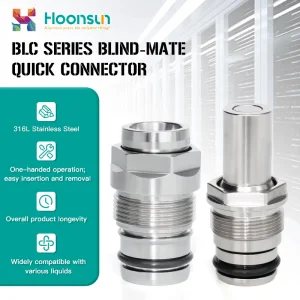
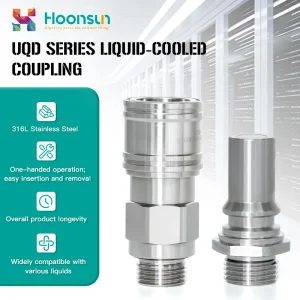
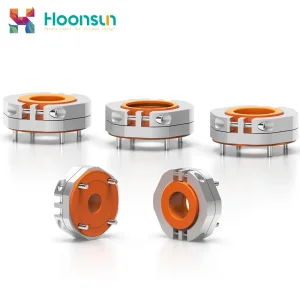
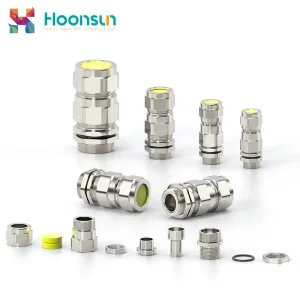
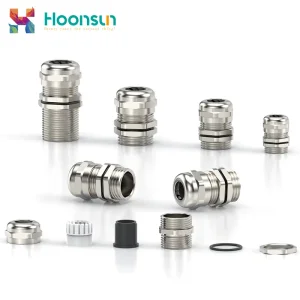
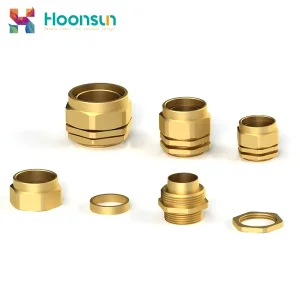
Complementing our core 12mm portfolio: Explosion-proof glands, liquid cooling quick-disconnect couplings, and stainless steel venting hardware engineered for demanding industrial enclosures.
Summary: Factory Audit Checklist for Overseas Buyers
Ensure your tier-one supplier selection meets international engineering standards. Follow this straightforward framework during your factory audits in Zhejiang or Guangdong.
1. Raw Material Metallurgy
Request full spectrographic mill test certificates (MTC) per batch of brass (verifying copper content ≥ 58% and controlled lead within RoHS limits) or stainless steel (verifying molybdenum ≥ 2.0% for marine 316L).
2. Plating Thickness Audits
Verify that nickel electroplating thickness achieves a minimum of 5 to 8 micrometers (μm) using calibrated X-ray fluorescence (XRF) coating thickness gauges to ensure durability against field corrosion.
3. Polymer Origin & Quality
Confirm the source of raw resin granules for nylon cable gland injection (e.g., virgin PA66 from recognized chemical suppliers) rather than re-ground scrap resin, preserving tensile strength and UL94-V0 flammability ratings.