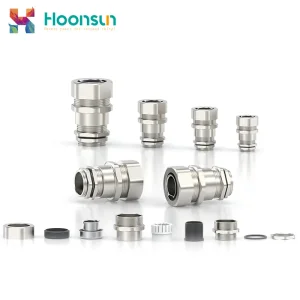
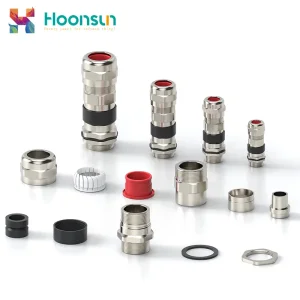
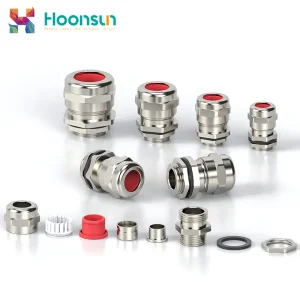
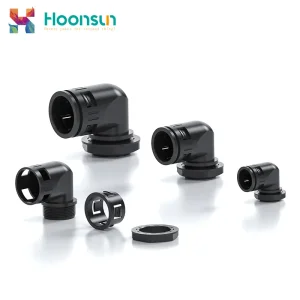
High-Performance 16 Sq Mm & Heavy-Duty Cable Gland Selection
Engineered for mission-critical electrical containment, mechanical strain relief, and harsh environmental immersion. Fully certified to CE, UL, and ATEX standards.
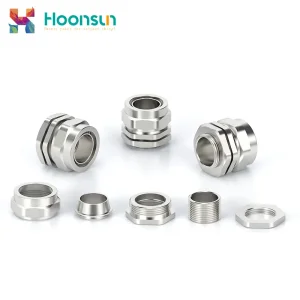
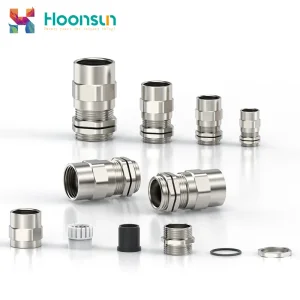
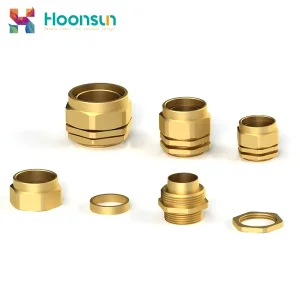
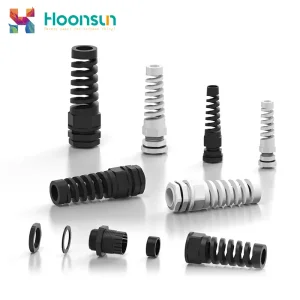
The Critical Role of 16 Sq Mm Cable Gland Systems in Modern Infrastructure
Bridging low-voltage distribution, renewable energy collection, and hazardous area industrial safety through precise mechanical engineering.
In contemporary electrical infrastructure, the 16 sq mm (16mm²) cable represents one of the most widely deployed cross-sectional conductor ratings globally. Serving as the operational workhorse for three-phase motor feeds, photovoltaic combiner box outputs, commercial EV fast-charging distribution, and heavy-duty marine switchgear, 16mm² copper conductors routinely carry continuous currents ranging from 70A to over 105A depending on installation thermodynamics and insulation materials (such as XLPE, EPR, or PVC).
However, an electrical circuit is only as reliable as its physical entry point. The cable gland is not merely a mechanical fastener; it is an active mechanical, thermal, and electrical protection barrier. When securing a 16 sq mm cable, electrical engineers encounter unique physical dynamics: the overall outside diameter (OD) can vary dramatically from 9.5 mm for single-core unarmoured flexible DC lines up to 28.0 mm for multi-core Steel Wire Armoured (SWA) or Steel Tape Armoured (STA) mains cables.
China's premier manufacturing ecosystem, spearheaded by advanced production clusters in Liushi, Yueqing (Zhejiang Province), has evolved from producing rudimentary hardware to engineering sophisticated, high-tolerance cable glands certified under IEC/EN 62444, UL 514B, and ATEX/IECEx regimes. As multinational EPC contractors and OEMs look to optimize their Total Cost of Ownership (TCO), partnering directly with specialized Chinese factories offers a distinct competitive advantage: precision CNC-machined components, rapid bespoke thread prototyping, and uncompromised metallurgical consistency.
Dimensional & Mechanical Selection Matrix for 16 mm² Cable Architectures
Correlating conductor configuration, cable outer diameter (OD), entry thread standards, and mechanical clamping forces.
Because "16 sq mm" designates solely the cross-sectional area of the internal conductive core, specifying the correct cable gland requires a systematic review of the cable's external geometry and armor architecture. The following matrix illustrates the standard configurations deployed across international industrial installations:
| Cable Architecture | Typical Cable OD Range | Recommended Entry Thread | Gland Type Classification | Sealing Insert Material | Impact / Retention Rating |
|---|---|---|---|---|---|
| 1-Core 16mm² Unarmoured (PV1-F, H07RN-F, THHN) | 8.5 mm – 13.0 mm | M20 x 1.5 / NPT 1/2" | A2 Industrial / Double Seal | NBR / Modified Silicone (-40°C to +120°C) | EN 62444 Class B (Retention > 450 N) |
| 3-Core 16mm² Non-Armoured (YY, CY, H07RN-F VFD) | 18.0 mm – 23.5 mm | M25 x 1.5 / M32 x 1.5 / NPT 3/4" | A2 / EMC Shielded 360° | Chloroprene / Low-Smoke Halogen-Free | EN 62444 Class A (Impact 7 Joules) |
| 4-Core 16mm² SWA Armoured (BS 5467, IEC 60502-1) | 21.5 mm – 27.0 mm (Bedding: ~17mm) | M25 x 1.5 / M32 x 1.5 / NPT 1" | CW / BW / E1W Armoured | Double Compression EPDM Inner/Outer | BS 6121 Part 1 / Fault Current Grounded |
| 5-Core 16mm² Heavy Trailing (Rubber H07RN-F / PUR) | 25.0 mm – 31.0 mm | M32 x 1.5 / PG29 / NPT 1-1/4" | Double Lock / Anti-Bending | Viton (FKM) / High Mechanical Neoprene | Impact 20 Joules (IK10 Mechanical Envelope) |
| 4-Core 16mm² Screened Marine (JIS C3410, NEK 606) | 20.0 mm – 25.5 mm (Braid Shielded) | M25 x 1.5 / M32 x 1.5 / G 1" | TJ Marine / Ex d IIC Gb | Flameproof Silicone Compounded Insert | DNV-GL / ABS Marine Vibration Certified |
China Factory Supply Chain Advantages in Liushi, Yueqing
Why tier-1 global engineering firms source critical cable glands directly from China’s premier electrical component capital.
Vertically Integrated Raw Metallurgy
Operating directly within the Wenzhou-Yueqing industrial base allows continuous access to certified raw materials: high-tensile CW614N/CW617N brass, low-carbon SS304 and marine-grade SS316L, and virgin Polyamide 66 (UL94-V0). Direct foundry partnerships eliminate middleman markups and ensure complete chemical traceability via EN 10204 3.1 inspection certificates.
Automated Multi-Axis CNC Precision
State-of-the-art Chinese manufacturing facilities deploy multi-spindle automatic lathes and dual-turret CNC centers. Threads across all international topologies—including Metric (ISO 68-1), PG (DIN 40430), NPT (ANSI/ASME B1.20.1), and G/BSPP (ISO 228)—are cut with pitch tolerances within ±0.01 mm, eliminating thread binding and galvanic galling during field installation.
Rapid Tooling & Bespoke Customization
Unlike Western catalog distributors burdened by protracted lead times, leading Chinese suppliers execute custom engineering iterations—including lengthened entry threads for thick blast-proof enclosures, custom clamping inserts for oval profile cables, and integrated EMC ground rings—with sample turnarounds in 7 to 10 working days.
Localized Support & Global Compliance Frameworks
De-risking procurement: navigating international directives, independent laboratory verification, and localized technical documentation.
For global engineering firms, low cost without verifiable compliance represents unacceptable commercial and operational risk. Premier Chinese factories maintain complete alignment with international standards, supplying comprehensive documentation packages with every consignment:
1. Ingress Protection (IEC 60529: IP68 / IP69K)
Our 16 sq mm cable glands undergo continuous hydrostatic immersion testing at depths up to 50 meters (5 bar / 0.5 MPa) for 72 hours. For food processing, sanitation, and marine deck equipment, IP69K testing subjects the gland to high-pressure thermal wash-downs (100 bar at 80°C from four directional nozzles), guaranteeing zero moisture intrusion into delicate termination junction boxes.
2. Hazardous Area Explosion-Proof Mandates (ATEX / IECEx)
In petrochemical plants, grain processing facilities, and offshore gas rigs, glands installed on 16 sq mm power lines must contain potential internal deflagrations. Our flameproof (Ex d IIC Gb) and increased safety (Ex e IIC Gb) series are certified under ATEX Directive 2014/34/EU and the IECEx international scheme, featuring precision flame-path threads and non-combustible compounding seals.
3. North American Approvals (UL 514B / CSA C22.2)
UL Listing ensures compliance with the National Electrical Code (NEC). Our products undergo rigorous mechanical pull-out tests (applying over 200 lbs of longitudinal tension without slip) and environmental chamber conditioning (-40°C freeze followed by immediate dynamic impact testing without brittle structural fracture).
Localized Engineering Applications for 16 Sq Mm Cable Glands
Analyzing high-stress operating environments across high-growth international sectors.
Battery Energy Storage Systems (BESS)
Securing 1500V DC interconnect cables between lithium iron phosphate (LFP) rack modules and central Power Conversion Systems (PCS). Demands UL94-V0 flame-retardant polyamide or nickel-plated brass with silicone seals resistant to high ambient temperatures and rapid thermal cycling.
Mega-Watt EV DC Fast Chargers
Liquid-cooled and high-amperage 16mm² auxiliary power feeds within DC fast-charging kiosks require 360° EMC shielding to prevent electromagnetic pulse (EMP) interference with sensitive billing microcontrollers and CAN-bus telemetry systems.
Offshore Wind Substation Platforms
Exposed to relentless North Sea and South China Sea salt-mist fog. Incorporates Marine Grade SS316L glands with specialized TJ-clamping cages that absorb continuous multi-axial wave vibrations while isolating cable armoring from the enclosure to avert galvanic pitting.
Heavy Industrial Robotics & Automation
Six-axis articulating arms and gantry conveyors running 16 sq mm servo lines rely on anti-bending spiral nylon glands to distribute mechanical flexural stress, preventing copper fatigue, localized overheating, and cable mantle cracking.
Emerging Trends Reshaping the Global Cable Gland Industry
Technological, regulatory, and sustainability shifts driving future cable entry architectures.
The industrial cable gland sector is experiencing a technological evolution spurred by green manufacturing imperatives, electrification, and intelligent plant monitoring:
1. Lead-Free Metallurgy (EU RoHS & REACH Compliance)
Traditional free-cutting brass (such as CuZn39Pb3) utilizes up to 3% lead to facilitate high-speed machining. With impending regulatory tightening under EU RoHS exemptions (Exemption 6c), tier-1 Chinese factories are pioneering the high-speed CNC turning of lead-free silicon-brass and eco-brass alloys (lead content < 0.1%), ensuring complete global market access without environmental penalties.
2. Wide-Bandgap (SiC/GaN) Power Electronics Demanding Ultra-Low EMC Impedance
The adoption of Silicon Carbide (SiC) inverters operates switching frequencies exceeding 100 kHz, creating extreme electromagnetic interference (EMI). Standard shielding methods fail at these frequencies. Advanced 16 sq mm cable glands now integrate concentric 360-degree beryllium copper spring fingers that maintain contact resistance below 2 milliohms across gigahertz bandwidths.
3. Smart Cable Glands with Embedded Telemetry
In unattended offshore substations and remote pipeline pumping stations, cable failure due to terminal block overheating or micro-ingress is disastrous. Prototype next-generation glands feature embedded passive RFID and SAW (Surface Acoustic Wave) temperature and moisture sensors, enabling predictive maintenance without external wiring.
Engineering Questions & Procurement Considerations
Direct technical answers addressing real-world design dilemmas, torque values, and specification challenges.
What is the exact entry thread size required for a standard 4-core 16 sq mm SWA cable?
How does tightening torque directly impact the IP68 rating on a 16mm² cable gland?
What are the operational differences between BW and CW type cable glands?
When must stainless steel (SS316L) be chosen over nickel-plated brass?
How can overseas buyers verify the metallurgical authenticity of Chinese factory shipments?
Precision Stainless, Conduit & Armoured Gland Solutions
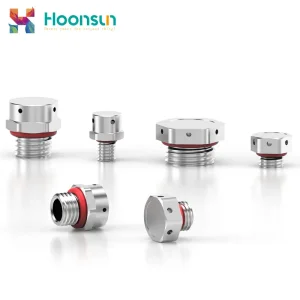
Heavy industrial conduit adapters, pressure-equalizing breathers, and explosion-rated termination hardware direct from China factory floors.