Precision Engineering Catalog
Industrial Connection Components Portfolio (Series I)
Engineered for high mechanical vibration stability, certified IP68 atmospheric sealing, and corrosive industrial environments.
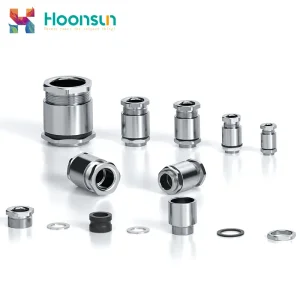
IP68 Marine Cable Gland TJ Clamping Type - UL Certified Offshore
Explore Specifications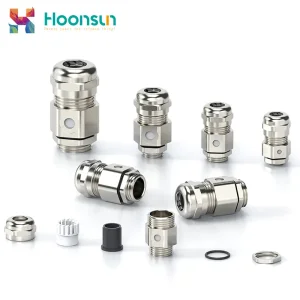
Breathable Cable Gland Type IP68 & REACH Certified Solutions
Explore Specifications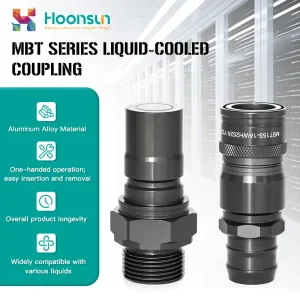
MBT15S-1AWH252N / MBT15P-1AMG082N Specialized Connector
Explore Specifications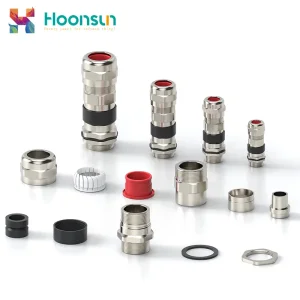
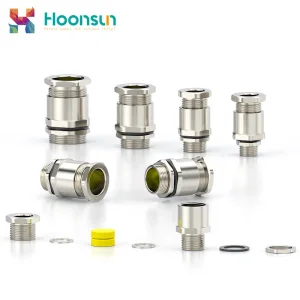
Double-Sealed Armored Explosion-Proof Cable Gland IP68 Certified
Explore Specifications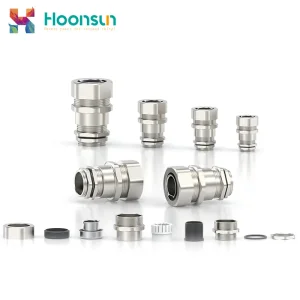
304/316L Stainless Steel Waterproof Hose Cable Gland Joints
Explore Specifications
IP68 Marine Cable Gland TH Standard Type Reliable Waterproof Joint
Explore Specifications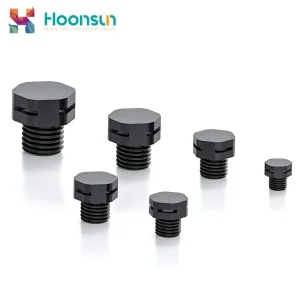
Nylon Vent Plug with Waterproof IP68 and UL Certification
Explore Specifications
Technical Whitepaper
The Global Engineering Paradigm of 16mm SY Cable Glands
A rigorous review of structural design, galvanic isolation, low-impedance EMC screening, and hermetic integrity across critical electrical control networks.
IP68 / IP69K
Certified Ingress Protection Rating
360°
Integral EMC Screen Shielding Contact
50 Nm+
High-Tensile Pull-Out Retention Limit
-40°C to +120°C
Thermal Operating Boundary (NBR/Silicone)
The Anatomy of SY Flexible Cables
SY cables (flexible instrumentation and control cables featuring a galvanized steel wire braid (GSWB) sandwiched between an inner PVC sheath and an outer transparent PVC layer) present unique termination challenges. Unlike static Steel Wire Armoured (SWA) cables requiring heavy mechanical cones, or CY cables with thin tinned copper screens, 16mm SY systems demand mechanical grounding that secures the high-tensile braid while preventing localized sheath severance.
Dual-Sealing Hydrophobic Sealing
A true industrial 16mm SY cable gland must integrate a multi-tiered sealing matrix. The primary inner elastomeric compression seal (engineered from high-grade Nitrile Butadiene Rubber or fluoropolymer compounds) acts directly on the inner jacket, isolating internal conductor cores from volatile hydrocarbons and moisture ingress. The secondary outer seal compresses onto the outer transparent jacket, mitigating capillary fluid travel along the braided matrix.
Electromagnetic Compatibility (EMC)
Modern variable frequency drives (VFDs) and high-speed robotic servo networks produce extreme high-frequency common-mode noise. 16mm SY brass glands incorporate internal iris springs or mechanical clamping tapers that ensure uninterrupted 360-degree contact with the steel wire braid. This low-impedance grounding path safely dissipates stray induced eddy currents and preserves operational signal integrity across sensitive industrial buses.
Technical Specification Reference
Material Performance & Environmental Fit Matrix
Comprehensive metallurgical and polymer comparison for specifying 16mm termination glands within complex engineering environments.
| Material Variant | Substrate Composition | Tensile / Mechanical Class | Corrosion & Chemical Resistance | Primary Industrial Sector |
|---|---|---|---|---|
| Nickel-Plated Brass (CW614N) | CuZn39Pb3 with 5-8µm Ni layer | Class A Industrial (Heavy Duty) | Moderate; high resistance to lubricants and dry oils | Robotics, CNC Machining Centers, Conveyor Systems |
| AISI 304 Stainless Steel | 1.4301 Austenitic Cr-Ni Steel | Class A+ (Exceptional Shear Proof) | High; resistant to cleaning detergents, non-saline wash-down | Automated Packaging, Breweries, General Cleanrooms |
| AISI 316L Marine Stainless | 1.4404 Low Carbon Cr-Ni-Mo Steel | Class A+ (Extreme Shock Resistant) | Ultra-High; resists chloride pitting, salt fog, severe acid | Offshore Oil & Gas, Marine Propulsion, Coastal Subsea |
| Polyamide PA66 (Reinforced) | UL94 V-0 Halogen-Free Engineered Resin | Class B Structural (Lightweight) | Inert to oxidation; susceptible to concentrated solvents | Solar PV Combiners, Low-Vibration Telecom Cabinets |
Industry Intelligence
Global Market Footprint, Field Applications & Macro Trends
Analyzing the migration from traditional rigid conduits toward high-flexibility braided terminations within rapid-cycle automation ecosystems.
Automated Gigafactories & Battery Plants
In high-throughput battery cell assembly facilities, motion axes execute continuous cycle operations under constant mechanical vibration. 16mm SY cables provide the required torsional flexion, but the cable entry point is traditionally a structural failure point. Industrial glands featuring integrated anti-vibration lock rings and continuous braid clamp cones prevent strain transfers to the internal terminal blocks, reducing critical downtime.
Severe Outdoor & Marine Operations
Salt aerosol acceleration in port logistics, wind power yaw drives, and offshore oil processing accelerates galvanic corrosion between dissimilar metals. HOONSUN's proprietary electroplating processes guarantee nickel barrier coatings exceeding 1,000 hours of continuous neutral salt spray (ASTM B117) exposure. This guarantees operational security against pitting, localized delamination, and seal hardening.
Trend: Smart Terminations & Sustainability
As the European Union and North American regulatory bodies tighten environmental sustainability guidelines, the industrial connector industry is pivoting away from leaded brass chemistries toward CW510L compliant eco-brass alloys. Concurrently, technical roadmaps anticipate integrated condition monitoring — where sensorized sealing cartridges report clamping degradation and moisture bypass before insulation failure occurs.
Macro Solutions
End-to-End Turnkey Systems for System Integrators
Beyond individual discrete components: engineered containment, pressure stabilization, and explosion-rated safety topologies.
Explosion Hazard Zone Decoupling
Integration of ATEX / IECEx certified double-compression barrier glands within Ex d (Flameproof) and Ex e (Increased Safety) enclosures. These assemblies prevent volatile gas transmission through the interstitial voids of the braided 16mm SY cable core via field-injected thermosetting resin compounds.
Thermal & Internal Pressure Equilibrium
Enclosures exposed to diurnal temperature fluctuations experience localized vacuum formation, drawing ambient moisture past dynamic seal lips. By deploying specialized breathable hydrophobic vent plugs alongside 16mm cable entries, the internal housing pressure remains equilibrated, preserving continuous IP68 integrity.
Continuous Hybrid Liquid-Cooling Loops
As megawatt-class fast chargers and high-density computing racks adopt direct-to-chip liquid cooling, hybrid power feeds share common enclosure penetrations. HOONSUN’s integrated product portfolio matches leak-free quick-disconnect dry break fluid couplers with industrial cable glands, providing cohesive procurement paths.
Direct Engineering Support
Frequently Asked Technical & Sourcing Questions
Targeted technical specifications and installation best practices for project engineers, procurement specialists, and control panel technicians.
What is the explicit operational difference between terminating SY vs CY cable?
SY cable utilizes a braided high-tensile galvanized steel wire mesh designed predominantly for mechanical impact mitigation and abrasion resistance. CY cable features a flexible tinned copper wire braid optimized exclusively for electromagnetic shielding. Terminating a 16mm SY cable requires internal clamping mechanics engineered to bite securely into the steel wire without shearing the braid strands, whereas CY terminations focus purely on continuous low-impedance electrical contact rings.
Can standard IP68 brass glands maintain watertight integrity on transparent SY jackets?
Standard smooth-bore glands often experience creep over time when clamping directly onto soft transparent PVC outer sheaths under fluctuating thermal conditions. A dedicated 16mm SY cable gland must incorporate a controlled-compression seal paired with a separate mechanical braid clamp cone. This guarantees that environmental sealing forces remain completely decoupled from mechanical cable retention forces.
How does thread choice (Metric M16 vs PG11 vs 3/8" NPT) influence ingress integrity?
Parallel threads (Metric ISO 68-1 and PG DIN 40430) require an elastomeric O-ring or flat sealing washer placed firmly against a flat, perpendicular enclosure entry face to achieve IP68/IP69K sealing. Tapered NPT threads (ANSI/ASME B1.20.1) establish sealing along the thread flanks themselves via mechanical wedge action, which often necessitates approved thread sealant pastes in extreme pressure environments.
What testing procedures are mandatory for verifying IP68 compliance in China?
Under GB/T 4208 and IEC 60529 standards, IP68 testing requires sample submersion to a customer- or catalog-specified depth (typically 5 meters to 50 meters of head pressure) for a duration of up to 72 continuous hours. Testing must be performed on fully assembled cables torqued to specified values, followed by internal electrical insulation resistance and dielectric breakdown validation.
Precision Engineering Catalog
Industrial Connection Components Portfolio (Series II)
Comprehensive termination solutions: metal strain-relief joints, venting hardware, and flexible pipe unions.
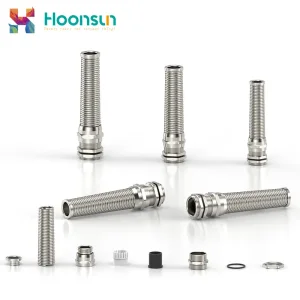
Metal Anti-Bending Cable Gland IP68 UL Certified Spiral Guard
Explore Specifications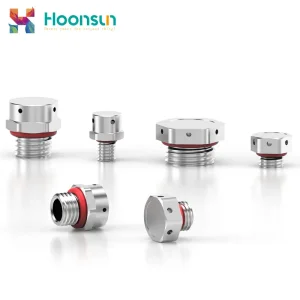
Stainless Steel Vent Plug IP68 - Reliable Enclosure Pressure Balance
Explore Specifications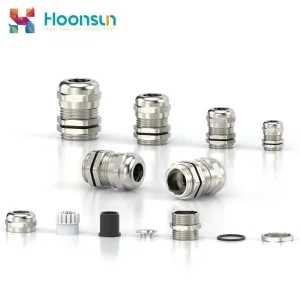
IP68 Waterproof Metal Shielded Cable Joint - EMC & EMI/RFI Shielding
Explore Specifications
Nylon Vent Plug IP68 Waterproof UL Certified for Harsh Environments
Explore Specifications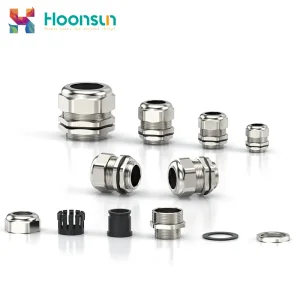
Metal Cable Gland Strengthened Type - Heavy Duty UL IP68 Clamping
Explore Specifications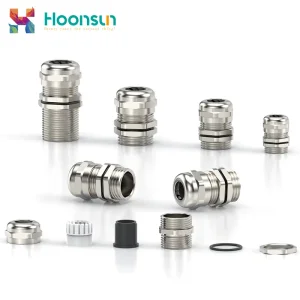
Metal Cable Gland Extended Length Type - Thick Enclosure Entry Joint
Explore Specifications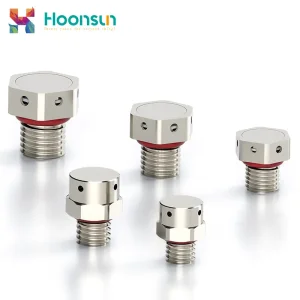
IP68 Metal Vent Plug - UL Certified Electrical Cabinet Breather Unit
Explore Specifications