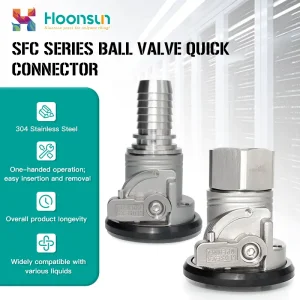
Primary Industrial & Explosion-Proof Cable Glands
Engineered to international hazardous-area compliance standards, featuring hermetic elastomer sealing, multi-hole configurations, and precision thread pitch tolerances.
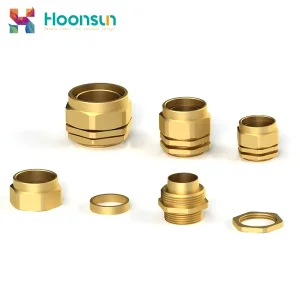
China BWL Cable Gland - IP68 & UL Certified Superior Explosion-Proof Performance
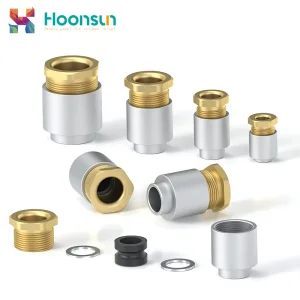
China IP68 Marine Cable Gland TH Standard Type - Waterproof Marine Solutions
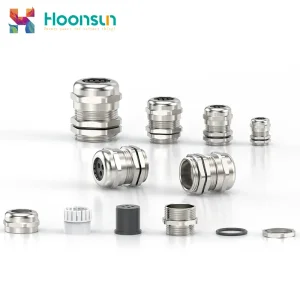
China Metal Multi-Hole Cable Gland with IP68 and UL Certificate
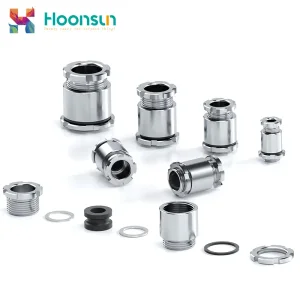
China Factory IP68 & UL Certified Marine Cable Gland JIS Standard Type
China IP68 Marine Cable Gland TH Standard Type - Reliable Waterproof Solutions
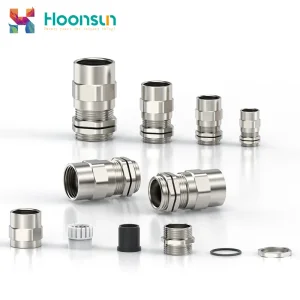
China Metal Tubular Cable Gland - IP68 Rated, UL Listed for Industrial Units
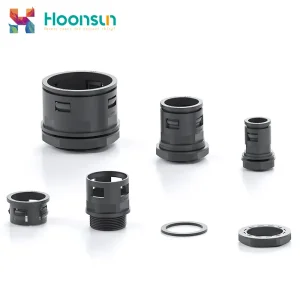
China Nylon Union for Flexible Pipe with IP68 and UL Protection Rating
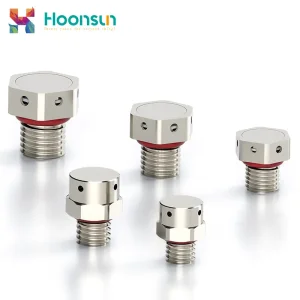
China IP68 Metal Vent Plug - UL Certified Solution for Electrical Enclosures
Global Industrial Landscape for Hazardous Area Cable Glands
Analyzing critical safety imperatives across chemical processing plants, offshore mega-structures, LNG terminals, and hydrogen infrastructure.
The Macro Transition to Zero-Leak Enclosures
Global process engineering standards have shifted decisively away from passive sealing systems toward active mechanical barrier technologies. In high-volatility environments containing Group IIC gases (such as hydrogen and acetylene), standard industrial connectors risk acting as ignition paths.
Modern explosion-proof cable glands must withstand internal deflagrations without propagating hot gases, sparks, or thermal flashovers into the surrounding hazardous atmosphere, satisfying stringent IEC 60079-0 and IEC 60079-1 requirements.
Procurement Economics & Project Risk
Major Engineering, Procurement, and Construction (EPC) consortiums operating in North America, the Middle East, and Western Europe face compounding downtime penalties. A single gland failure in an offshore subsea junction box or cracking furnace can cause outages running into hundreds of thousands of dollars per hour.
Global buyers prioritize manufacturers capable of providing end-to-end traceability, comprehensive raw-material test reports (EN 10204 3.1), and dual-certified (Ex d / Ex e) inventories that eliminate site-level installation errors.
New Energy & Decarbonization Mandates
The rapid expansion of utility-scale Battery Energy Storage Systems (BESS), offshore wind converter substations, and green hydrogen electrolyzer facilities introduces complex environmental stresses. These facilities combine high DC operating voltages with explosive gas generation risks.
Explosion-proof cable glands must now incorporate advanced electromagnetic compatibility (EMC) attenuation rings, extreme thermal cycling resistance (-60°C to +140°C), and resistance to fluorinated liquid coolants and ozone degradation.
China Factory Efficiency & Supply-Chain Synergies
How state-of-the-art Yueqing precision machining hubs integrate multi-axis automation, localized metallurgy, and streamlined quality audits to outperform legacy Western manufacturing models.
Advanced Swiss-Type Multi-Axis CNC Machining
The manufacturing architecture of leading Chinese cable gland producers is anchored in ultra-high-speed, multi-spindle Swiss-type CNC centers. Unlike traditional low-speed multi-stage lathe processing, Swiss CNC turn-milling enables the simultaneous execution of outer knurling, flamepath surface micro-polishing (Ra ≤ 0.8μm), and internal armor taper cutting within a single chucking cycle.
- Dimensional Repeatability: Strict thread tolerance execution adhering to ISO 965-1 (6g/6H) and ANSI/ASME B1.20.1 NPT gauging criteria.
- Automated Vision Metrology: 100% in-line optical thread profiling checking pitch diameter, flank angles, and crest chamfers automatically.
- Zero Workpiece Contamination: Automated washing, chip ejection, and dry ultrasonic degreasing guaranteeing particulate-free elastomeric seal seating.
Clustered Metallurgy & Vertical Supply Density
Operating inside the world's most dense electrical equipment industrial cluster (Liushi, Yueqing) affords Chinese manufacturers an unassailable efficiency differential. Ingot smelting, certified chemical testing, precision nickel electroplating, high-vacuum elastomeric injection moulding, and sub-assembly kitting operate within a tightly integrated supply radius.
- Lead-Time Compression: Standard production cycles for custom Metric/NPT runs reduced from the Western average of 14-16 weeks down to 10-18 business days.
- Material Grade Assurances: In-house Optical Emission Spectrometry (OES) verifying alloy integrity for CW614N/CW617N brass, 304, 316L, and dual-phase 2205 stainless steels.
- Tooling Autonomy: Dedicated tool-and-die shops capable of altering armor cone geometries and barrier chamber sleeves within 48 hours for bespoke EPC specifications.
Explosion-Proof Mechanics & Material Selection Science
Comprehensive breakdown of flamepath gap physics, compound barrier chambers, and material endurance under corrosive industrial degradation.
Flameproof 'Ex d' Gap Dissipation
The foundational physics of an Ex d cable gland relies upon the mechanical flamepath. When an internal electrical spark triggers a gas ignition inside an explosion-proof housing, the resultant high-pressure explosion fronts are channeled across precision-machined threaded and cylindrical joints.
By enforcing flamepath lengths exceeding 5 fully engaged threads and micro-gaps tighter than 0.15mm, the exiting hot combustion gases are thermally quenched below the auto-ignition threshold of the surrounding ambient atmosphere.
Cold-Flow & Cable Migration Defense
Industrial electrical cables operating in high-vibration and fluctuating temperature regimes suffer from insulation "cold-flow"—a permanent deformation of inner elastomeric or PVC beddings under sustained radial compression.
Modern explosion-proof glands prevent cold-flow through compensating displacement seal designs. These seals provide continuous radial tension via engineered mechanical stops, preventing cable slippage, strain concentration, and premature barrier breakdown.
Universal Armor Clamping Systems
Global operations deploy a broad variety of cable armoring: Steel Wire Armor (SWA), Steel Tape Armor (STA), Braided Wire Armor, and Aluminum Wire Armor (AWA). High-performance glands utilize universal reversible armor clamping cones.
This design allows field technicians to transition between tape and wire armor simply by reversing the internal clamping cone, delivering low-resistance earthing paths (<0.1Ω) while preventing mechanical pull-out under heavy tensile loads.
| Alloy / Polymer Grade | Yield Strength (MPa) | Operating Temperature | Corrosion Mechanism Defense | Recommended Industrial Zones | Compliance Rating |
|---|---|---|---|---|---|
| Nickel-Plated Brass (CW614N) | ≥ 350 MPa | -60°C to +130°C | Atmospheric oxidation, industrial sulfur, dilute alkalis | Refineries, heavy manufacturing, onshore substations | ATEX / IECEx Ex d/e |
| AISI 316L Stainless Steel | ≥ 480 MPa | -60°C to +180°C | Chloride pitting, salt spray, hydrogen sulfide (sour gas) | Offshore FPSO, subsea manifolds, marine shipbuilding | UL 2225 / IECEx Zone 1 |
| Polyamide PA66 (Flame Retardant) | ≥ 80 MPa | -40°C to +100°C | Electrochemical non-conductivity, water immersion, UV | Control instrumentation, solar arrays, chemical dosing | Ex e / Ex tb (Dust) |
| Fluoroelastomer (FKM / Viton) | Elastomeric Seal | -25°C to +200°C | Hydrocarbon solvents, synthetic hydraulic fluids, ozone | Aviation fuel handling, engine bay enclosures, high-heat pumps | IP68 / IP69K Hermetic |
Localized High-Stakes Industrial Applications
Engineered for extreme performance across global marine, heavy chemical, mining, and robotic installations.
Offshore Oil Platforms & FPSO
Permanent exposure to hyper-saline ocean atmospheres, high-pressure salt fog, and relentless mechanical vibration requires 316L stainless steel explosion-proof glands equipped with internal deluge seals and extreme IP68 submersion depth ratings.
Chemical & Petrochemical Plants
Downstream cracking towers and polymer synthesis reactors release aggressive volatile organic compounds (VOCs) and benzene rings. Our chemical-grade glands deploy Viton seals that resist swelling, softening, or embrittlement over decades of service.
Underground Mining & Tunnels
Methane accumulation (firedamp) combined with heavy, abrasive coal dust clouds demands ruggedized Ex d Class I Group A/B/C/D certified heavy-brass hardware with high mechanical impact resistance ratings (IK10) exceeding 20 Joules.
Robotics & Automated Paint Booths
Automotive spray-finishing rooms contain aerosolized flammable solvent vapors. Glands mounted on 6-axis articulated robots provide constant dynamic flexing strain relief, integrated grounding, and flexible metal conduit interfaces.
International Regulatory Compliance & Certifications
Bridging the regulatory divide across European Union ATEX directives, global IECEx schemes, and North American NEC 500/505 Class and Zone mandates.
ATEX Directive 2014/34/EU
Mandatory for all equipment intended for use in potentially explosive atmospheres throughout the European Economic Area. Cable glands must bear the CE mark, the distinctive hexagon Ex logo, and precise coding denoting equipment group (II), category (2G/1D), protection modes (Ex db, Ex eb, Ex ta), and gas group compatibility (IIC/IIIC).
The Global IECEx Scheme
The International Electrotechnical Commission System for Certification to Standards Relating to Equipment for Use in Explosive Atmospheres provides borderless mutual recognition. IECEx Certificates of Conformity (CoC) verify that test results are accepted across Australia, Brazil, China, the UK, and international EPC procurement hubs.
UL 2225 & NEC 500/505 Mandates
North American installations adhere strictly to the National Electrical Code. Cable glands serving Class I, Division 1 and Zone 1 locations must satisfy UL 2225 explosion containment, mechanical pull-out tests, and hydrostatic pressure testing without seal rupture. Thread engagement requires specialized ANSI NPT taper geometry.
Engineering Audit & Supplier Due Diligence Checklist
A rigorous framework for procurement managers, project engineers, and quality assurance inspectors evaluating Chinese explosion-proof gland manufacturers.
1. Material Authenticity & Traceability
Never rely on standard mill certificates alone. Require in-factory spark spectrometry or portable XRF (X-ray fluorescence) alloy verification. Ensure that brass elements guarantee lead content below restricted thresholds (RoHS 3 compliant) and that austenitic stainless steels contain verified molybdenum concentrations (>2.0% for 316L) to eliminate pitting risks.
2. Thread Form & Pitch Precision
Thread mismatch is the leading cause of field installation failures in international projects. Audit whether the supplier maintains certified Go/No-Go plug and ring gauges calibrated against master international standards (ISO 1502 for Metric; ANSI/ASME B1.20.1 for NPT). Verify chamfer depth, pitch diameter, and surface smoothness.
3. Hydrostatic & Tensile Proof Testing
Inspect factory batch testing procedures. A tier-1 supplier must demonstrate automated cyclical hydrostatic immersion testing (simulating IP68 submersion to 50 meters depth for 7 continuous days) alongside cable axial retention testing exceeding 1.5 times the pull-out force criteria dictated by IEC 62444 standard schedules.
Emerging Technology Trends Shaping Hazardous Sealing
From smart sensor-integrated enclosures to rapid-cure barrier compounds, discover the innovations redefining cable entry technology.
Liquid Resin Barrier System Upgrades
Traditional barrier glands relied on multi-part putty epoxies that required manual mixing, knead consistency, and prolonged 24-hour cure times, creating major bottlenecks on fast-track construction sites. Next-generation liquid injection resin cartridges achieve gas-tight sealing in under 15 minutes, with zero void pockets around individual conductors.
IIoT Sensor-Embedded Gland Assemblies
With predictive maintenance becoming central to Industry 4.0 paradigms, smart cable glands are emerging with embedded micro-thermal sensors and moisture-ingress detectors. These non-intrusive elements monitor termination temperature spikes and vapor leakage without compromising the mechanical integrity of the flameproof joint.
Eco-Passivated & Nickel-Free Plating
As international environmental regulations tighten regarding heavy metals and hexavalent chromium leaching, manufacturers are deploying advanced trivalent chrome and nickel-phosphorus electroless conversion coatings. These treatments provide over 1,000 hours of neutral salt spray (ASTM B117) resistance without heavy metal contamination.
Frequently Asked Questions on Explosion-Proof Glands
In-depth technical and operational answers to the most common queries raised by international electrical engineers and procurement specialists.
What is the core engineering difference between Ex d and Ex e cable glands?
When does international code legally mandate the use of a barrier cable gland?
How do you calculate proper thread engagement and prevent galvanic corrosion between differing metals?
What are the distinct torque specifications for tightening explosion-proof cap nuts?
Can Metric threaded cable glands be used in NPT threaded entries using adapters?
Heavy-Duty, EMC & Specialized Termination Glands
Complete product portfolio covering stainless steel hose fittings, single compression units, shielded joints, and marine-grade JIS terminations.
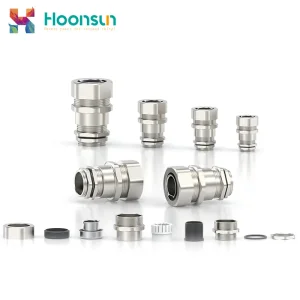
China 304/316L Stainless Steel Hose Cable Gland - Waterproof Hose Connectors
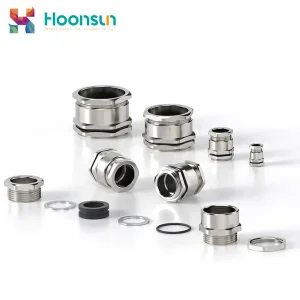
China Single Compression Type Cable Gland Rated IP68 & UL Listed
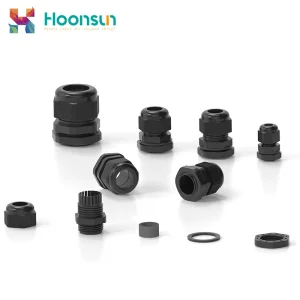
China Nylon Cable Gland IP68 Certified - Reliable Industrial Sealing
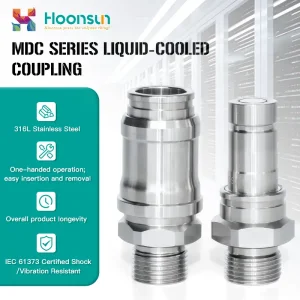
China MDC06S-1SMG042N-MDC06P-1SMG042N Manufacturer Precision Connectors
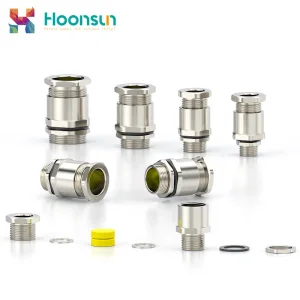
China EX4 Explosion-Proof Marine Cable Gland Rated IP68 & UL Listed
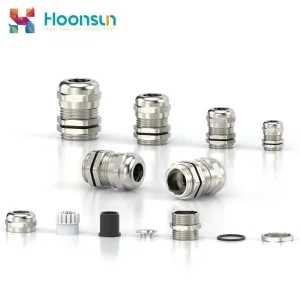
China IP68 Waterproof Metal Shielded Cable Joint for EMC & EMI/RFI Protection
China IP68 Marine Cable Gland JIS Standard Type Certified for Offshore Use