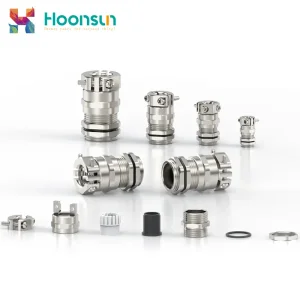
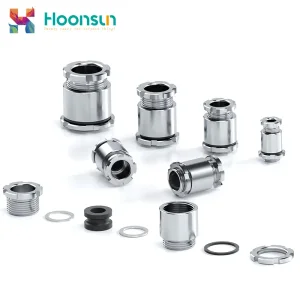
Featured Industrial & Hazardous Location Cable Gland Hardware
Direct from manufacturing lines: High-integrity cable gland seals and pressure-balancing breather vents built for mission-critical hazardous environments, marine plants, and offshore rigs.
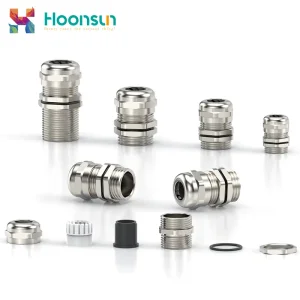
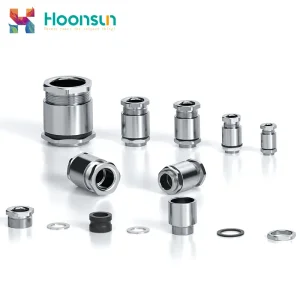
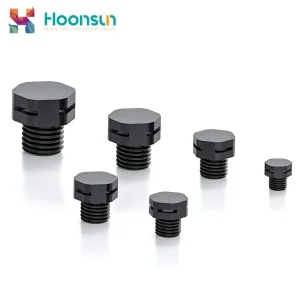
Hazardous Area Cable Glands: Global Industry Dynamics & Evolution
Understanding how macro industrial shifts toward clean hydrogen, liquefied natural gas (LNG), offshore wind, and chemical process safety dictate next-generation explosion-proof cable management.
Ex d & Ex e Barrier Evolution
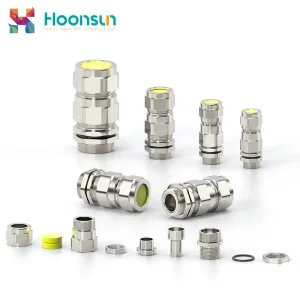
Traditional non-barrier cable glands fail when gas migrates through stranded conductors. The industry is rapidly adopting rapid-curing elastomeric resin barrier glands that isolate hazardous atmospheres in Zone 1/21 environments without multi-day cure times, reducing maintenance overhead in chemical processing units.
Corrosion Resilience for Green Off-Shore
As offshore wind farms and marine energy substations face C5-M extreme marine corrosive categories, the global supply chain has shifted toward high-grade AISI 316L stainless steel and electro-less nickel-plated brass finishes resistant to continuous salt fog, cyclic wave splashing, and high UV radiation.
EMC 360° Shielding Demands
Modern automated hazardous setups, variable frequency drives (VFDs), and precision SCADA sensor networks demand high-order electromagnetic compatibility. Integrated cone-and-ring mechanical shield termination ensures low-impedance ground bonding and total signal immunity in volatile processing zones.
Global EPC Procurement Criteria & Technical Matrix
International engineering contractors demand uncompromising traceability, mill test certificates (MTR), and deterministic mechanical seal performance. Select the optimal gland configuration for your plant design envelope.
| Gland Type / Series | Material Composition | Protection Rating | Certification Benchmarks | Thread Geometries | Primary Industrial Use Case |
|---|---|---|---|---|---|
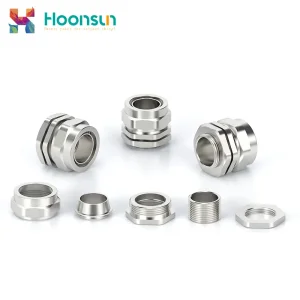
| Explosion-Proof EX3 Gland | Brass / SS316L / Nickel Brass | IP68 / Flameproof Ex d | UL Listed / ATEX / IECEx | Metric (M20-M90), NPT (1/2"-3") | Refineries, Offshore Drilling, Gas Compression |
| Marine Grade TJ Clamping | Naval Brass / Stainless Steel | IP68 / Submersible | UL / Marine Classification | Metric, PG, JIS Flanged | Commercial Shipbuilding, FPSO Decks, Harbors |
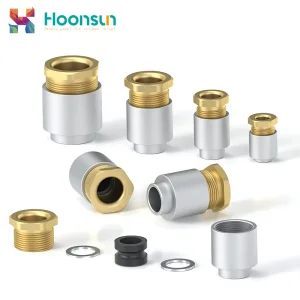
| BW Industrial Armour Gland | CW614N Nickel-Plated Brass | IP66 / IP68 | BS 6121 / EN 62444 / UL | Metric, NPT, PG Threads | Single Wire Armoured (SWA) Cable Infrastructure |
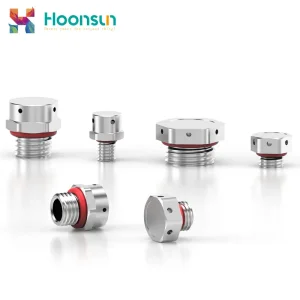
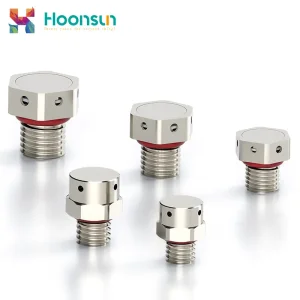
| Pressure Vent Breather Plugs | SS304 / SS316 / PA66 Polymer | IP68 Waterproof Membrane | UL Recognized Component | M12x1.5 up to M40, PG Sizes | Condensation Equalization in Ex e Enclosures |
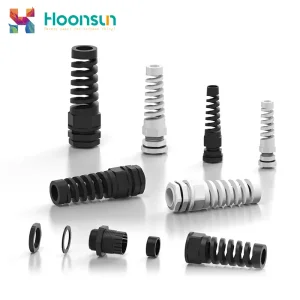
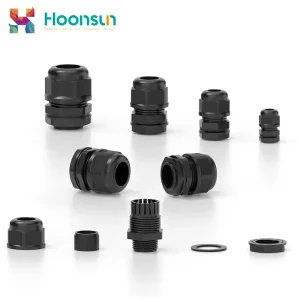
| Reinforced Nylon Polyamide | UL 94 V-0 Flame-Retardant PA66 | IP68 (5 Bar Dynamic) | UL / CE / RoHS Compliant | Metric, PG, NPT, G (BSPP) | Solar Farm Junctions, Automated Control Centers |
Macro-Industry Integrated Cable Management Architectures
Engineered for extreme operating envelopes where standard consumer or light-commercial components represent hazardous ignition risks or cost-prohibitive downtime.
Petrochemical & Refinery Complexes
Processing units handling volatile hydrocarbons require gas-tight isolation. Our double-locking metal glands and EX3 certified clamp seals withstand thermal cycling from -60°C to +180°C, providing mechanical pull-out retention far exceeding Class 1, Div 1 criteria.
Hydrogen Generation & Battery ESS
Hydrogen molecules penetrate standard seals due to micro-porosity. Hoonsun deploys specialized hydrogen-rated fluoroelastomer (FKM/FFKM) sealing rings combined with metal vent plugs to balance pressure differentials in high-density ESS modular enclosures.
Offshore Floating Production (FPSO)
Salt atmosphere, constant vibrational harmonics, and heavy wave impact demand our JIS and TH marine clamping assemblies. Dual sealing on the inner sheath and external cable armour blocks salt moisture from penetrating the junction box interior.
Localized Global Compliance & Factory Assurance
Direct oversight from Yueqing, Zhejiang: Where 80+ engineering specialists run automated precision CNC machining, optical thread sorting, and rigorous batch pressure testing under ISO 9001:2015 frameworks.
Rigorous Traceability
Each batch features laser-etched heat codes and certificate tracking, backed by material test reports (EN 10204 Type 3.1) verify brass lead content and stainless alloy percentages.
100% In-House Machining
We eliminate trading-company markups and unmonitored subcontracting. Every gland body, locknut, and compression claw is turned on our proprietary multi-axis CNC machines.
Global Regulatory Porting
Fast-track OEM deliveries with comprehensive documentation covering UL 514B, CE low voltage directives, RoHS compliance, REACH declarations, and marine registry paperwork.
Multilingual Engineering Support
Our application engineering team provides technical drawings, CAD files, torque specifications, and cable dimension calculations directly to project designers in flawless English.
Technology Roadmap: Next-Gen Sealing & Liquid Cooling Synergy
Anticipating the converging demands of extreme thermal density, data center modularization, and electrified mobility in explosive atmospheres.
Integrated Liquid Cooling Terminations
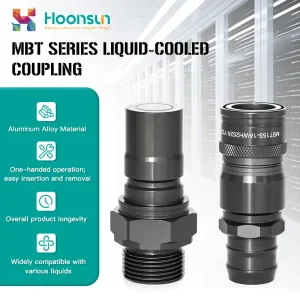
With high-power EV charging parks and AI edge data compute containers entering hazardous or flammable dust environments, Hoonsun is developing dual-channel glands that house both power cabling and leak-free liquid coolant lines in unified IP68 housings.
Smart IoT Micro-Breather Plugs
Next-generation vent plugs are being engineered with wireless micro-sensors that monitor dew point, cavity pressure, and volatile gas presence inside sealed explosion-proof cabinets, alerting operators via industrial LoRaWAN networks before seal failure occurs.
Bio-Based Polymers & Low-Carbon Alloys
Aligning with Scope 3 decarbonization mandates across global EPC conglomerates, Hoonsun is piloting certified circular brass scrap loops and ultra-durable bio-derived PA66 polymers that reduce embedded manufacturing carbon footprint by up to 38%.
Frequently Asked Engineering & Procurement Questions
Practical insights on thread geometry, flameproof vs. increased safety classifications, and ingress protection under real environmental stresses.
Q: What is the fundamental difference between Ex d and Ex e cable gland designs?
Ex d (flameproof) glands are built to withstand internal gas explosions within an enclosure without allowing hot escaping gases or flames to ignite surrounding atmospheric mixtures. They feature robust mechanical flame paths and often resin barrier compounds. Ex e (increased safety) designs focus on preventing excessive temperatures, sparks, or arcs from occurring within non-sparking equipment, relying on resilient elastomer sealing rings and certified IP ingress protection.
Q: Why are metal vent breather plugs necessary in IP68-rated hazardous electrical enclosures?
When electrical cabinets undergo cyclic temperature variations (day-to-night thermal swings or load fluctuations), internal air expands and contracts. This generates a vacuum suction effect that pulls ambient moisture through cable gland gaskets and microscopic seams. IP68 metal vent plugs incorporate hydrophobic, oleophobic ePTFE membranes that allow continuous air diffusion to equalize pressure while blocking water, oil, and dust ingress.
Q: How do I determine whether to specify Metric, NPT, or PG thread configurations?
Thread standard is dictated by destination market regulation and enclosure tapping. Metric (ISO 60079) with 1.5mm pitch is globally standard across Europe, Asia, and modern offshore installations. NPT (National Pipe Taper) is required for North American NEC/CEC classified locations where thread interference achieves mechanical sealing. PG (Panzergewinde) remains common in legacy European control equipment and specific German machine tool designs.
Q: What steps ensure cable glands maintain their certified IP68 water immersion rating over time?
Certification integrity relies on three factors: (1) Exact cable outer diameter verification against the gland clamping claw range, (2) strict adherence to manufacturer tightening torque on the outer dome nut using calibrated torque wrenches, and (3) selecting the correct entry thread washer (neoprene or fiber) appropriate for enclosure wall thickness and surface flatness.
Explore Additional Specialized Sealing & Clamping Hardware
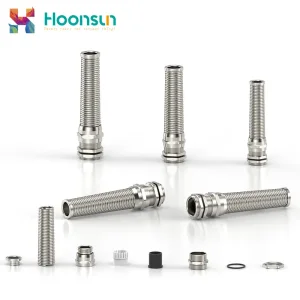
Explore our stainless steel vent plugs, flexible conduit anti-bending joints, double-locking high-vibration glands, and JIS marine-certified components.