
High-Performance M20s & Industrial Cable Termination Systems
Direct factory-machined metallic and engineered polymer cable glands designed for harsh environments, critical mechanical retention, and hermetic sealing across high-voltage and instrumentation cabling.
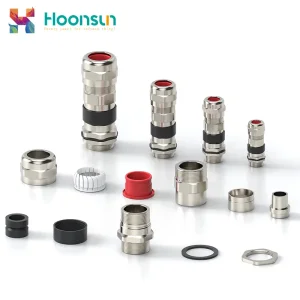
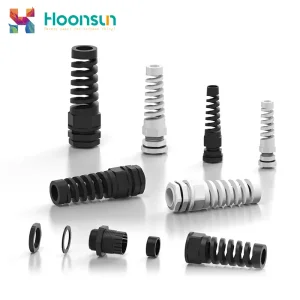
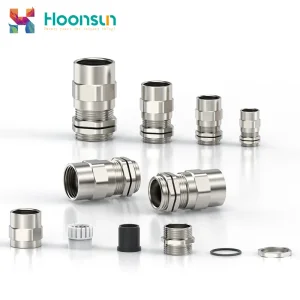
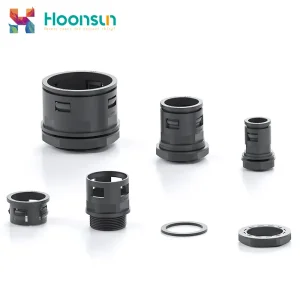
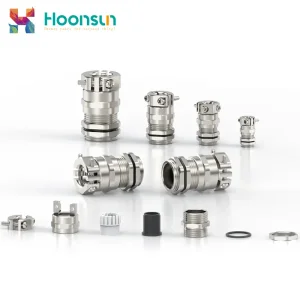
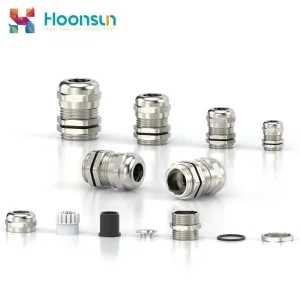
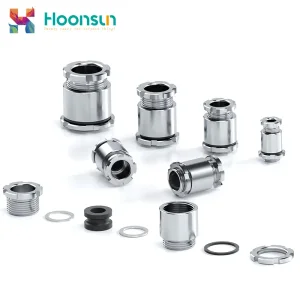
The Engineering Architecture of Metric M20 & M20s Cable Glands
Deciphering entry thread geometries, reduced clamping architectures, elastomer mechanics, and mechanical pull-out dynamics under IEC 62444 and UL 514B compliance frameworks.
What Defines the "M20s" Cable Gland?
In electrical engineering nomenclature, the designation M20s distinguishes a specialized compact variant within the standard Metric M20 envelope. While both conform to the nominal 20mm major diameter with a standardized 1.5mm pitch (ISO 965 metric profile), the "s" suffix specifies either a Short entry thread projection (typically 5mm to 6mm for thin-wall cast enclosures and sheet metal control panels) or a Small/reduced internal bore.
Standard M20 glands typically clamp outer cable diameters ranging between 6.0mm and 12.0mm. Conversely, an M20s gland incorporates a reduced elastomeric seal insert and tailored collet claw fingers engineered to compress tightly around smaller conductor sheaths from 3.0mm to 8.5mm without pinching or eccentric deformation, guaranteeing strict adherence to EN 62444 Type A strain relief requirements.
- Thread Specification: M20 × 1.5 ISO Metric (6g/6H class fit)
- Entry Thread Lengths: Standard (8–10mm), Extended (15mm), Short/M20s (5–6mm)
- Reduced Clamping Range: Optimized for 3.0–8.5mm multicore signal cables
Precision Multi-Component Assembly
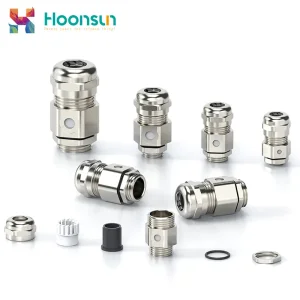
Industrial reliability hinges on the symbiotic mechanical action of 6 core internal components, engineered with sub-millimeter concentricity:
1. Gland Body: High-integrity hex stock turned on multi-axis CNC machines with precision-cut metric entry threads and chamfered entries to prevent cable sheath chafing during insertion.
2. Compression Cap Nut: Features progressive internal threading that transforms rotational tightening torque into uniform axial force against the internal clamping mechanism.
3. Collet Clamping Claw: Segmented polymer fingers (Polyamide 66 with anti-creep stabilizers) that flex inward uniformly along a calibrated 15-degree taper.
4. Elastomer Sealing Insert: Formulated from high-density NBR, EPDM, or extreme-temperature Fluorosilicone with annular sealing ribs for gas-tight compression.
5. Interfacial O-Ring: Flat or radial recess O-ring seating flush against the enclosure boss to block high-pressure moisture wash-down (IP69K).
6. Flanged Locknut: Integrated counter-teeth to pierce painted enclosure surfaces and ensure uninterrupted earth ground continuity.
Metallurgy & Polymer Material Science
Selecting appropriate raw material alloys prevents catastrophic galvanic corrosion, stress cracking, and dielectric breakdown across operating lifecycles:
CW614N / HPb59-1 Brass: High-tensile, lead-stabilized brass alloy exhibiting superior machinability, coated with 5–8 microns of electro-plated nickel. Delivers robust mechanical resistance against impact (IK08/IK10 rating) and long-term chemical resilience against industrial lubricants and coolants.
AISI 304 & 316L Stainless Steel: For subsea, chemical processing, pharmaceutical, and washdown environments. 316L contains 2–3% molybdenum, providing high resistance to pitting and crevice corrosion in chloride-heavy marine atmospheres.
Polyamide PA66 (Halogen-Free): High-grade virgin polymer compounded with 30% glass fiber reinforcement, certified to UL 94 V-0 flame retardancy, low smoke toxicity, and UV stabilization for 25-year outdoor photovoltaic installations.
| Gland Variant & Size | Body Material | Clamping Range (OD) | Ingress Rating | Operating Temp Range | Impact Resistance | Primary Industrial Use-Case |
|---|---|---|---|---|---|---|
| M20s Standard Metal | Nickel-Plated Brass (CW614N) | 3.0 mm – 8.5 mm | IP68 (10 bar / 30m) | -40°C to +100°C (NBR) -60°C to +180°C (Silicone) |
IK10 (20 Joules) | PLC Control Cabinets, Factory Automation, Motor Terminals |
| M20 Standard Metal | Nickel-Plated Brass (CW617N) | 6.0 mm – 12.0 mm | IP68 / IP69K | -40°C to +100°C | IK10 (20 Joules) | Pumps, Compressors, Distribution Boxes, Solar Inverters |
| M20s High-Grade Stainless | AISI 316L Stainless Steel | 4.0 mm – 9.0 mm | IP68 / IP69K | -50°C to +150°C (FKM) | IK10+ (Severe Duty) | Offshore Platforms, Marine Shipbuilding, Chemical Washdown |
| M20s Polyamide (Nylon) | Virgin PA66 (UL 94 V-0) | 3.0 mm – 8.0 mm | IP68 (5 bar) | -40°C to +100°C | IK08 (5 Joules) | Telecommunications, EV Charging Stations, Rooftop PV Arrays |
| M20s EMC Shielded | Brass + CuBe Spring | 5.0 mm – 10.0 mm | IP68 | -40°C to +110°C | IK10 | VFD Motor Leads, Servo Drives, Robotics Control Lines |
| M20 Double Seal Ex d / Ex e | Nickel-Plated Brass / SS | Outer: 9–14mm / Inner: 6–10mm | IP66 / IP68 | -60°C to +130°C | IK10 (Explosion Enclosure) | Zone 1, Zone 21 Hazardous Locations, LNG Terminals, Oil Refineries |
Engineering Tip: Torquing Dynamics & The "Solar Pumping" Phenomenon
Achieving true IP68 submersible performance depends entirely on precise application torque. Over-torquing the cap nut crushes the outer jacket and causes cold-flow polymer creep within the cable sheath, creating a leak path over time. Under-torquing leaves microscopic voids between the elastomer ribbing and the cable circumference. Furthermore, outdoor junction boxes undergo daily thermal expansion and cooling ("solar breathing"), which induces negative internal vacuum pressures up to 200 mbar. Without precision radial clamping or integrated breathable vent membranes, this vacuum pulls atmospheric humidity past ill-fitted seals, causing internal condensation and PCB short circuits.
Why Chinese Factories Lead Global M20s Cable Gland Manufacturing
An objective examination of Yueqing's specialized electrical cluster, high-speed multi-axis CNC automation, raw material integration, and rigorous quality engineering that powers global supply chains.
Yueqing Hyper-Clustered Ecosystem
Situated in Zhejiang province, Liushi, Yueqing is the undisputed "Electrical Appliance Capital of China." This hyper-dense industrial geography features over 1,500 specialized component manufacturers within a 15-kilometer radius. Raw bar extrusion facilities, dedicated toolmakers, mold-making machine shops, automated surface finishing lines, and certified test laboratories operate synchronously.
For international buyers, this clustering translates to rapid prototyping turnaround (from CAD to physical metal sample in 72 hours), zero logistical friction for raw sub-assemblies, and unmatched resilience against macroeconomic supply chain disruptions.
Swiss-Style CNC Machining
Modern Chinese tier-1 cable gland factories have graduated far beyond legacy cam-driven lathes. Facilities now deploy banks of synchronized multi-axis Swiss-type sliding headstock CNC automatic turning centers (such as Tsugami and Star platforms) that perform outer thread turning, internal counter-boring, chamfering, and parting in a single clamping cycle.
This automated machining achieves high dimensional repeatability, holding metric thread pitch diameters within strict 6g tolerances (±0.015mm), eliminating burrs, and guaranteeing flawless cap nut engagement even in robotic automated assembly lines.
Metallurgical & Environmental Compliance
Leading Chinese exporters maintain strict raw material control to meet stringent global environmental directives. Factory-operated direct-reading spectrometers verify brass ingot chemistry before casting, ensuring lead content remains strictly compliant with the EU RoHS 2.0 exemption allowances (Directive 2011/65/EU Annex III Exemption 6c) and REACH Regulation (EC) No 1907/2006 for Substances of Very High Concern (SVHC).
Surface plating utilizes automated, trivalent chromium-passivated electrolytic nickel lines, yielding continuous, non-porous coatings that endure salt fog exposure while maintaining conductivity.
Full-Spectrum Automated QC Testing
Quality assurance protocols in leading Chinese facilities are built on automated verification. In-line Automated Optical Inspection (AOI) sorting machines utilize high-resolution digital cameras to verify 100% of finished parts for thread continuity, concentricity, seal seat presence, and surface blemishes at speeds exceeding 300 parts per minute.
In-house laboratories subject production batch samples to rigorous destruction testing: digital torque wrenches determine thread stripping limits, pneumatic hydrostatic chambers test 5–10 bar water submersion, and mechanical tensiometers confirm cable pull-out retention forces.
Emerging Trends & Macro-Industry Engineering Solutions
How the global surge in electrification, hyperscale AI compute infrastructure, and extreme-environment renewable assets is revolutionizing cable ingress requirements.
1. EV Powertrains & High-Power DC Fast Charging
The rapid transition to 800V and 1000V electric vehicle architectures introduces extreme electrical noise, rapid current surges, and tight packaging constraints. Modern EV power distribution units (PDUs), battery packs, and 480kW ultra-fast DC charging dispensers require specialized M20s cable gland designs.
Key innovations include integrated 360-degree radial spring ground contacts that clamp down on braided copper cable shields. This configuration provides low transfer impedance (<10 mΩ) to eliminate Electromagnetic Interference (EMI) that could corrupt CAN-bus and Ethernet sensor networks. Additionally, specialized flame-retardant silicone seals resist thermal spikes up to +180°C during continuous heavy fast-charging sessions.
2. AI Hyperscale Datacenters & Liquid Cooling Loops
The deployment of multi-megawatt AI GPU compute clusters (consuming up to 100kW per server rack) has made direct-to-chip and immersion liquid cooling mandatory. Traditional air-cooled enclosures are being replaced by closed-loop dielectric fluid or water-glycol coolant distribution units (CDUs).
This paradigm shift demands cable entries that act as total fluid containment barriers. M20s hermetically sealed cable glands and integrated quick-disconnect couplings prevent capillary coolant wicking along power cables, resisting synthetic polyalphaolefin (PAO) and fluorochemical coolants while eliminating vapor leakage into adjacent electrical power trays.
3. 1500V Solar PV & BESS Energy Storage Infrastructure
Photovoltaic utility plants operating at 1500V DC require cable glands capable of withstanding intense UV radiation, wide temperature fluctuations (-40°C to +85°C), and cyclic ozone exposure over 30-year operational lifetimes. Battery Energy Storage Systems (BESS) installed in containerized outdoor formats present severe fire and thermal runaway risks.
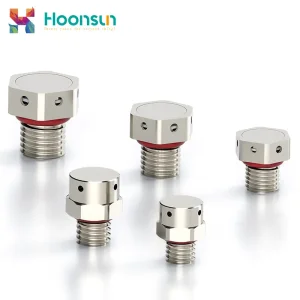
Modern M20s installations incorporate breathable vent membranes (utilizing micro-porous ePTFE) integrated directly into the gland body. These membranes maintain continuous bidirectional air circulation (equalizing internal/external pressure differentials) while completely repelling water, dust, and particulate matter, preventing premature seal dry-rot and electrical flashover.
Localized Application Scenarios: Where Failure Is Unacceptable
Real-world engineering deployments illustrating how China-manufactured M20s gland solutions protect mission-critical equipment under severe environmental stresses.
Offshore Wind & Marine Vessels (JIS Standard)
On offshore wind substations in the North Sea and Bohai Bay, glands operate in salt-laden coastal fog (C5-M marine corrosivity category). Unprotected brass experiences rapid dezincification, while low-grade polymers suffer embrittlement.
Solution: HOONSUN's JIS F8801 marine-grade cable glands machined from electro-passivated brass or 316L stainless steel, coupled with flame-resistant chloroprene grommets. Glands undergo 1,000 hours of continuous ASTM B117 salt fog testing without localized galvanic corrosion, ensuring hermetic sealing in offshore turbine nacelles and deck machinery.
High-Dynamics Industrial Robotics
Six-axis industrial articulated arms and Autonomous Mobile Robots (AMRs) subject signal and power lines to continuous torsional twisting, rapid acceleration, and tight bend radii across millions of duty cycles.
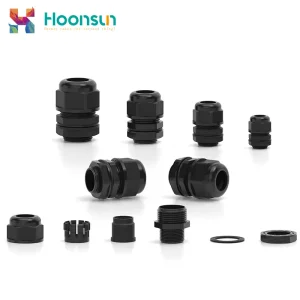
Solution: M20s Nylon Anti-Bending Spiral Glands (UL-certified PA66). The extended spiral tail dissipates localized bending stresses across a wider radius, preventing sharp-edge conductor kinking. The precision-molded internal claw provides continuous strain relief exceeding 150N without pinching internal optical fibers or signal shielding.
Petrochemical & Hazardous Explosive Zones
Petroleum refineries, grain silos, and chemical storage depots contain volatile hydrocarbon gases and combustible dust clouds (Zone 1, Zone 2, Zone 21, and Zone 22 classifications).
Solution: Double-Sealed Flameproof (Ex d) and Increased Safety (Ex e) M20 cable glands. These units feature heavy-duty metallic wall construction designed to withstand internal explosion pressures, prevent flame propagation through the thread interface, and clamp both inner and outer sheaths around steel-wire armored (SWA) or braided cables.
Rail Transit Rolling Stock (EN 45545-2)
High-speed rail, intercity trains, and metro rolling stock expose cable entries on under-car bogies to continuous ballast impacts, heavy vibration shock (IEC 61373 Category 1 Class B), and strict fire-smoke-toxicity standards.
Solution: Metallic tubular glands with special anti-vibration locking nuts and halogen-free, low-toxicity silicone rubber sealing inserts fully certified to European standard EN 45545-2 Hazard Level HL3. These assemblies resist loosening under dynamic vibration while ensuring zero toxic gas emission in transit tunnels.
Global Enterprise Sourcing Blueprint: Calculating Total Cost of Ownership (TCO)
Why Tier-1 international purchasing managers prioritize metallurgical validation, automated batch audits, and certified sealing integrity over low initial purchase costs.
The Hidden Cost of Low-Tier Sourcing
In high-reliability industrial panels, the initial purchase price of a cable gland represents less than 0.5% of the total system cost. However, a single gland failure can result in catastrophic downtime, moisture ingress onto multi-thousand-dollar Variable Frequency Drives (VFDs), short circuits in battery storage enclosures, or multi-million-dollar warranty recalls.
Substandard glands frequently exhibit non-uniform thread pitch (causing binding in the field), brittle regrind polymers that crack under UV radiation, and low-density rubber inserts that suffer compression set within 12 months. Calculating Total Cost of Ownership (TCO) reveals that factory-verified, CE & UL certified components provide the lowest lifetime risk profile.
Factory Audit Checklist for Global Buyers
Before qualifying a Chinese cable gland manufacturing partner, international procurement teams should audit three operational pillars:
1. Tooling & Mold Maintenance: Confirm that injection molds for collet claws and elastomer seals run on hardened tool steels (such as H13 or S136) with documented cavity maintenance logs to prevent flashing and dimensional drift.
2. In-House Plating Controls: Verify thickness gauges (X-ray fluorescence) for nickel plating layers (guaranteeing minimum 5µm thickness) and salt-fog test chambers on-site.
3. Batch Lot Traceability: Ensure raw material heats (brass bars and resin pellets) are barcoded and tied directly to final production lot numbers for full downstream traceability in compliance with ISO 9001:2015.
OEM Customization Capabilities
Standard off-the-shelf catalog parts cannot solve every unique enclosure geometry. Leading Chinese manufacturers like HOONSUN offer flexible OEM engineering adaptations:
- Custom Entry Thread Lengths: Extension up to 25mm for thick thermal insulation panels, or reduction to 5mm for compact junction boxes.
- Hybrid Multi-Hole Inserts: Multi-bore silicone grommets allowing 2, 4, or 6 individual sensor conductors to pass through a single M20s knockout.
- Flat Cable Profiles: Rectangular opening inserts engineered specifically for solar ribbon cables and industrial flat pendant lines.
- Custom Anodizing & Colors: RAL colors for nylon glands and specialty surface treatments for branded OEM identification.
Advanced Conduit Unions, Breathable Vents & Compression Glands
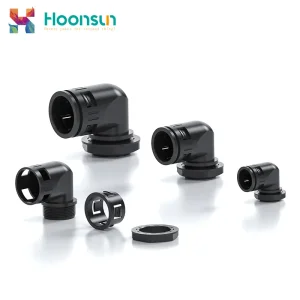
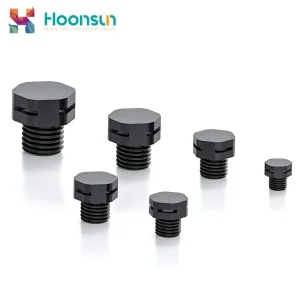
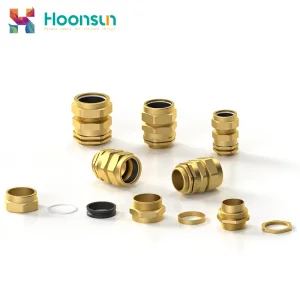
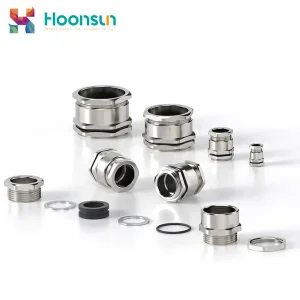
Explore our specialized range of right-angle elbows, breathable vent plugs, CW explosion-proof joints, and split cable glands engineered for specialized installation requirements.
Frequently Asked Questions: M20s Cable Glands & Factory Sourcing
In-depth engineering answers addressing thread standards, hazardous ratings, sealing longevity, and supplier qualification criteria for industrial purchasing authorities.
What is the exact technical difference between an M20 and an M20s cable gland? +
While both glands share the standard ISO Metric 20mm outer thread diameter with a 1.5mm thread pitch (M20 × 1.5), the "s" designation stands for Small / Short. Specifically, an M20s gland features a reduced clamping range (typically 3.0mm to 8.5mm outer diameter) paired with a smaller internal elastomeric sealing grommet, compared to the standard M20 clamping range of 6.0mm to 12.0mm. Additionally, M20s variants often carry a shorter entry thread projection (5mm to 6mm) optimized for compact thin-wall enclosures, reducing internal clearance intrusion.
What do IP68 and IP69K ratings guarantee under IEC 60529 testing conditions? +
An IP68 rating signifies that the cable gland is completely dust-tight (6) and protected against prolonged continuous submersion in water (8) under agreed manufacturer conditions. HOONSUN certifies its IP68 glands at 5 Bar to 10 Bar pressure (equivalent to 50–100 meters submersion depth) for 72 hours. IP69K (per DIN 40050-9 / ISO 20653) evaluates protection against high-pressure, high-temperature washdowns: 100 bar (1,450 psi) water spray at +80°C delivered at close angles (0°, 30°, 60°, 90°) while the test target rotates. This is essential for food processing, pharmaceutical, and construction vehicle applications.
How does an EMC shielded cable gland maintain electrical contact with the cable braid? +
HOONSUN's EMC shielded glands integrate an internal 360-degree radial iris contact spring machined from high-elasticity beryllium copper (CuBe) or stainless steel. When the cap nut is torqued, this contact spring contracts uniformly around the stripped outer metal braid of the cable. This ensures low transfer impedance (<10 mΩ) across high frequency bands (10 MHz to 1 GHz), safely diverting unwanted electromagnetic interference (EMI) and radio frequency interference (RFI) to the metallic chassis enclosure through the gland threads.
When should engineers specify CW614N Brass vs. AISI 316L Stainless Steel? +
Nickel-Plated CW614N Brass is the industrial gold standard for mechanical automation, machine tools, general industrial enclosures, and switchgear due to its structural strength, cost-efficiency, and resistance to oils and cutting fluids. However, in environments with high concentrations of chlorides (such as offshore wind platforms, coastal marine installations, and fertilizer chemical plants), electroplated nickel can develop microscopic pinholes leading to galvanic corrosion. In these severe applications, AISI 316L Stainless Steel is required, as its 2–3% molybdenum composition provides immunity against pitting, stress corrosion cracking, and aggressive acid washdowns.
What are the differences between Ex d, Ex e, and CW type explosion-proof cable glands? +
Under ATEX Directive 2014/34/EU and the international IECEx system:
• Ex d (Flameproof): Built with robust metallic walls capable of containing an internal explosion without igniting external explosive gas atmospheres (Zone 1/21).
• Ex e (Increased Safety): Engineered with elevated safety margins against high operating temperatures, electrical arcs, and sparks.
• CW Glands: Single-seal industrial glands featuring an integrated mechanical armor cone and clamping ring designed to securely grip the steel wire armor (SWA) or aluminum braid of armored cables, providing robust mechanical pull-out retention and earth continuity while sealing the outer cable sheath against water ingress.
Why is the integration of an ePTFE breathable vent plug beneficial for electrical enclosures? +
Hermetically sealed outdoor enclosures experience internal pressure differentials as solar heating during the day causes air inside to expand, while rapid cooling at night creates a vacuum of up to 200 mbar. This vacuum creates a siphon effect that draws external humidity past even tightly torqued gaskets. An ePTFE membrane vent plug features microscopic pores (0.2 microns) that are hundreds of times smaller than water droplets, completely blocking liquid water and dust (IP68) while allowing gaseous water vapor and air to breathe freely. This equalizes pressure and permanently prevents internal condensation.
Can HOONSUN supply custom thread standards such as NPT, PG, or G (BSPP)? +
Yes. Although Metric threads (M12 through M100) dominate global industrial designs, HOONSUN regularly machines custom batches with American National Pipe Taper threads (NPT 3/8" through NPT 3"), German Panzergewinde threads (PG7 through PG48), and British Standard Pipe Parallel threads (G 1/2" through G 2"). Custom pitch dimensions, extended entry lengths (up to 30mm), and internal thread reduction adapters can be engineered to client CAD specifications.
What documentation and certifications are provided for global supply chain verification? +
Every shipment is accompanied by complete regulatory and quality documentation: CE Declaration of Conformity (Low Voltage Directive), UL Certification test records, IP68/IP69K ingress test reports from accredited laboratories (TÜV / SGS), Material Test Certificates (MTC / EN 10204 Type 3.1) showing brass/steel chemical composition, and certified RoHS 2.0 / REACH SVHC compliance laboratory declarations.
Request Your Customized Technical Catalog & Sample Kits
Collaborate directly with HOONSUN's Yueqing engineering team. Provide your cable outer diameter specs, thread configurations, and operating environment requirements to receive certified 2D/3D CAD drawings and rapid testing samples.