
High-Integrity Cable Glands & Liquid Connectors (Part I)
Engineered for high-vibration equipment, submersible marine housings, explosive atmosphere containment, and critical thermal loops.
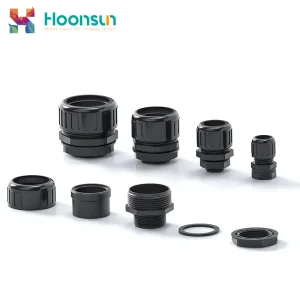
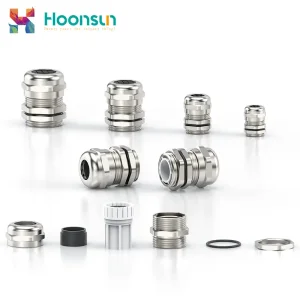
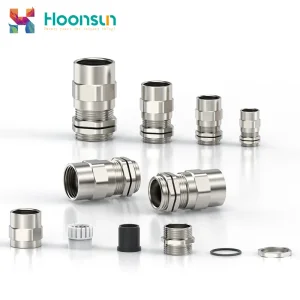
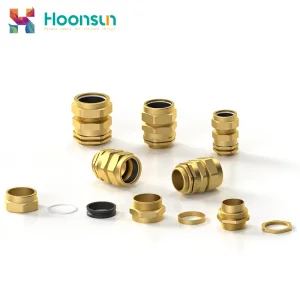
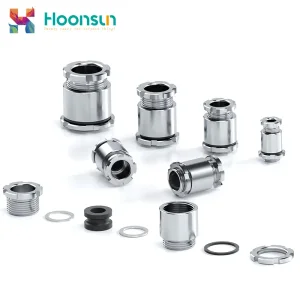
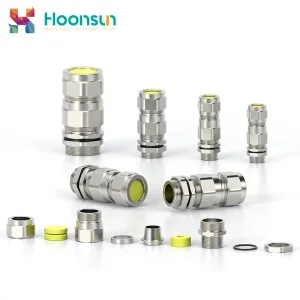
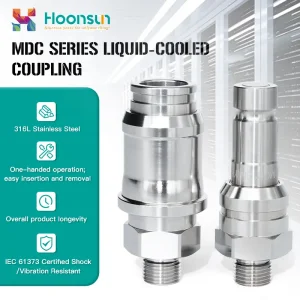
Global Industrial Status & Sourcing Realities for Nickel Brass Cable Glands
Why modern electro-mechanical engineering procurement is shifting directly to Chinese high-precision manufacturers to eliminate single-point supply chain bottlenecks.
In the contemporary international landscape of industrial automation, electrified transportation, renewable power distribution, and hazardous offshore extraction, mechanical enclosure penetrations represent a mission-critical failure vector. Historically viewed as secondary passive components, cable glands have transitioned into sophisticated electro-mechanical assemblies responsible for three non-negotiable operational requirements: maintaining continuous hermetic environmental sealing (rated up to IP68/IP69K under severe hydrostatic heads), ensuring mechanical tensile strain relief to prevent conductor pull-out (under EN 62444 Class A and B parameters), and providing circumferential 360-degree electromagnetic compatibility (EMC) shielding against high-frequency electromagnetic interference (EMI).
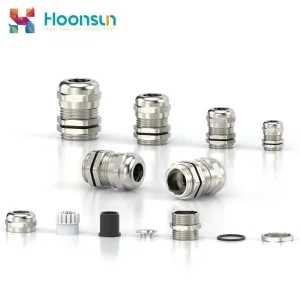
China has emerged as the unequivocal global focal point for precision manufacturing of nickel-plated brass cable glands. Within the specialized manufacturing clusters of Yueqing, Zhejiang—widely recognized as China's electrical engineering epicenter—producers such as Zhejiang Hongxiang Connector Co., Ltd. (operating globally under the HOONSUN brand since 2006) have consolidated vertical integration across raw metallurgy forging, multi-axis automated CNC turning, robotic electroplating, elastomeric compounding, and third-party laboratory verification. This structural centralization circumvents the margin stacking and logistics latency characteristic of European and North American brand resellers, offering direct Original Equipment Manufacturers (OEMs), engineering procurement contractors (EPCs), and switchgear panel builders direct access to internationally certified components at unprecedented scale.
Furthermore, international raw material commodity fluctuations in copper and nickel markets require agile, high-capacity production systems capable of maintaining stable batch-to-batch chemical tolerances. Leading Chinese manufacturers leverage standardized high-grade CW614N (CuZn39Pb3) brass ingots, mitigating micro-porosity and grain boundary embrittlement that otherwise cause hairline cracking during pneumatic torque tightening in high-vibration applications.
Metallurgical Precision, Nickel Passivation, and Elastomeric Dynamics
An in-depth analysis of chemical substrate composition, corrosion barrier kinetics, and polymer seal behavior under prolonged environmental stress.
CuZn39Pb3 (CW614N) Brass Substrate
The gland body, locknut, and internal pressure rings are machined from European-standard CW614N brass alloy, containing 57.0% to 59.0% Copper, 3.5% Lead for micro-lubrication during precision thread turning, and Zinc balance. This microstructure achieves high shear modulus, robust tensile yield strength (>440 MPa), and dimensional stability across wide temperature swings (-40°C to +120°C), preventing the thread galling and thread strip common in low-copper alternative alloys.
5–12 µm Electroless Nickel Plating
Raw brass reacts with airborne pollutants to produce copper oxide and verdigris. Our process applies a continuous, uniform 5 to 12 µm high-phosphorus electroless nickel plating across external and internal threads. This deposition delivers exceptional barrier passivity against galvanic corrosion, industrial sulfur atmospheres, and salt-fog exposure exceeding 1,000 hours per ASTM B117 standards, while maintaining surface conductivity for low-impedance ground bonding.
Elastomeric Compounds (NBR / EPDM / FKM)
The sealing insert is the heart of ingress integrity. Standard configurations utilize high-grade Nitrile Butadiene Rubber (NBR) for general oil, water, and fuel immersion. For aggressive ozone, UV exposure, and broad thermal extremes (-40°C to +150°C), peroxide-cured EPDM is deployed. In extreme chemical and hydrocarbon environments, custom fluorocarbon (FKM / Viton) seals prevent compression set and plasticizer leaching under constant pressure.
The Physics of IP68 Submersion and IP69K Thermal Shock Washdown
True IP68 compliance is not an abstract static metric; it is defined by IEC 60529 as continuous immersion in water under designated hydrostatic pressure heads (HOONSUN rates standard lines to 5 bar / 50 meters water head for 72 hours). Achieving this requires optimized radial compression geometry on the clamping collet claws. When the cap nut is torqued, the segmented claws uniformly collapse the elastomeric seal around the outer cable jacket without puncturing the polymer insulation or causing cold flow distortion over extended deployment cycles.
For sanitary washdown and automotive applications, IP69K testing subjects the nickel-plated brass assembly to 100 bar (1,450 psi) water spray at 80°C from varying rotational angles (0°, 30°, 60°, 90°) at close proximity (100–150 mm). The rigidity of the CW614N nickel-plated shell completely eliminates the thermal deflection observed in unreinforced polyamide glands, guaranteeing that enclosure interior components remain totally dry.
360° EMC Shielding Architecture for High-Frequency Noise Attenuation
Preventing system-level inverter noise, harmonic spikes, and radio frequency interference in modern automation networks.
Transfer Impedance and Shield Termination Mechanics
Modern Variable Frequency Drives (VFDs), electric vehicle charging stations, and servo drives generate high-speed switching frequencies (PWM) that induce transient electromagnetic noise across adjacent control cables. Traditional grounding methods (such as pigtail braid twists) introduce substantial parasitic inductance, severely degrading shielding effectiveness at frequencies above 10 MHz.
Our EMC-rated nickel-plated brass cable glands incorporate an integrated beryllium-copper or phosphor-bronze circumferential spring cage. When the outer jacket is stripped and the gland is fastened, this spring cage establishes a low-resistance, continuous 360-degree bonding plane directly to the stripped copper braided shield. This delivers exceptionally low transfer impedance (<10 mΩ/m at 100 MHz) and screening attenuation exceeding 65 dB up to 1 GHz, ensuring complete compliance with the EU EMC Directive 2014/30/EU and IEC 61000-6-2 immunity standards.
EMC Performance Benchmark
- Shield Contact Type: 360° Spring Contact Collet
- Transfer Impedance: < 5 mΩ/m @ 10 MHz
- Screening Attenuation: > 75 dB @ 100 MHz
- Contact Material: Beryllium Copper / CuBe2
- Applicable Cable Types: CY, SY, Steel Braid, Foil Screen
Engineering Solutions Across Global Critical Infrastructure
Field-proven deployment across utility-scale energy storage, maritime fleets, hazardous oil processing, and electrified rolling stock.
Clean Energy & Battery Storage
Utility-scale Battery Energy Storage Systems (BESS) experience massive DC currents and thermal cycling. Nickel brass cable glands provide fire-resistant penetrations, gas-tight IP68 barriers against electrolyte vapors, and integrated liquid-cooled quick couplings for high-voltage inverter cabinets.
Marine Platforms & Offshore Wind
Offshore environments present airborne sodium chloride, torrential wave impact, and constant UV radiation. JIS-standard and TH-type marine brass glands resist dezincification corrosion, securing power transmission down-tower from offshore wind nacelles to inter-array substations.
Explosion-Proof & Hazardous Zones
For refinery distillation units, LNG storage, and chemical processing, CW and EX-series glands provide flameproof Ex-d and increased-safety Ex-e containment. Heavy nickel brass construction mechanically withstands internal blast overpressures without flame path propagation.
Rail Transit & Automated Motion
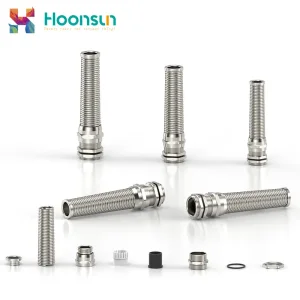
Rapid acceleration and continuous dynamic vibrations on rolling stock bogies and robotic articulated arms demand rigorous pull-out resistance. Our specialized anti-bending spiral brass glands ensure continuous flex life and harmonic shock resistance compliant with EN 50155.
Material Engineering Selection Matrix: Nickel Brass vs. Alternatives
A rigorous comparative analysis to guide technical procurement directors, project consultants, and system integrators.
| Evaluation Parameter | Nickel-Plated Brass (HOONSUN) | Stainless Steel (AISI 316L) | Polyamide (PA66 / Nylon) | Die-Cast Aluminum Alloy |
|---|---|---|---|---|
| Tensile Strength / Yield | > 440 MPa (High Rigidity) | > 520 MPa (Very High) | > 75 MPa (Low Elastic Limit) | > 210 MPa (Moderate) |
| Atmospheric Corrosion Resistance | Excellent (Passivated Ni-Barrier) | Exceptional (Passivated Cr2O3) | Unaffected by Water; Degraded by UV | Prone to Galvanic & Pitting Attack |
| EMC Attenuation Capability | > 65 dB (Native Low-Z Path) | > 50 dB (Higher bulk resistivity) | 0 dB (Requires internal metal ring) | > 55 dB (Surface oxidation degrades) |
| Operating Temperature Envelope | -40°C to +120°C (up to 180°C FKM) | -60°C to +200°C | -40°C to +100°C (Creep above 80°C) | -40°C to +130°C |
| Thread Mechanical Integrity | Superior Galling Resistance | Prone to Galling / Cold Welding | Low Strip Torque Threshold | Brittle Thread Stripping Risk |
| Total Cost of Ownership (TCO) | Optimal Balance (Cost / Durability) | Very High Cost Premium | Lowest Initial / Frequent Field Failure | Moderate Cost / Limited Life in Saline |
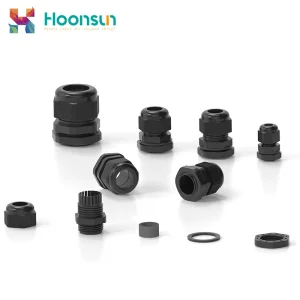
Engineering Summary: While stainless steel 316L remains mandatory for aggressive chemical bath immersion and ultra-clean pharmaceutical CIP washdowns, nickel-plated brass represents the gold standard for over 85% of mission-critical industrial, marine, switchgear, and energy installations. It provides identical ingress ratings, superior machinability and galling resistance, superior electromagnetic shielding attenuation due to higher electrical conductivity, and substantial procurement savings over exotic austenitic alloys.
Worldwide Thread Harmonization & Factory Inspection Discipline
Full spectrum compliance spanning European Metric, legacy German PG, American NPT, and British Standard Pipe specifications.
Full Thread Compatibility Portfolio
We machine threads to microscopic 6g/6H tolerances: ISO Metric (M12 to M100 x 1.5 pitch per EN 60423), German Panzergewinde (PG7 through PG48 per DIN 40430), American National Pipe Taper (NPT 3/8" through NPT 4" per ANSI/ASME B1.20.1), and British Gas Pipe (G/BSPP per ISO 228-1). Custom thread reach lengths are machined for extra-thick cast enclosure walls.
UL 514B & International Approvals
Product lines maintain rigorous third-party certifications including Underwriters Laboratories (UL 514B Standard for Conduit, Tubing, and Cable Fittings under File listing), CE marking for the Low Voltage Directive 2014/35/EU, full compliance with EU RoHS 3 (Directive 2011/65/EU and amendment 2015/863), and SVHC compliance under EU REACH regulation (EC 1907/2006).
100% In-House Factory Quality Control
At our Liushi facility, quality control does not depend on random sampling. CNC operations utilize automated optical profile projectors to verify pitch and flank angles. Every production batch undergoes hydrostatic IP68 immersion pressure testing, torque-to-yield verification, and clamping pull-out force benchmarking using automated tensile test benches.
Technological Roadmap: The Next Era of Cable Gland Engineering
Pioneering lead-free metallurgical alloys, smart IoT condition monitoring, and integrated fluid-electrical penetrations.
Transition to Eco-Friendly Lead-Free Brass
As international environmental regulations tighten regarding RoHS Exemption 6(c) (allowing up to 4% lead in copper alloys), HOONSUN is already validating lead-free brass formulations such as CW724R (CuZn21Si3P) and silicon-alloyed ecobrass. These new compositions deliver equivalent machinability and fracture toughness without toxic heavy metal content, ensuring long-term future-proof compliance for global OEMs.
IoT Condition Monitoring & Smart Sensing
For uncrewed offshore wind installations and deep-mining control enclosures, next-generation glands are incorporating micro-thin piezoelectric strain sensors and fiber-optic humidity probes directly into the elastomeric insert. This permits real-time telemetry of internal seal decompression, seal aging, and water trace ingress prior to dielectric flashover failures.
Hybrid Power & Liquid Cooling Integration
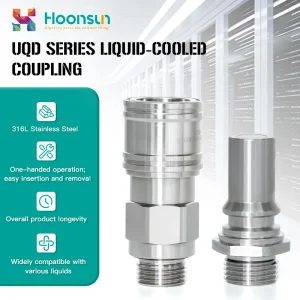
As megawatt ultra-fast EV charging dispensers (MCS standard) and hyper-scale artificial intelligence data centers scale heat dissipation requirements, enclosure entries are transitioning to hybrid configurations. We are unifying nickel brass mechanical strain containment with leak-free liquid cooling quick couplings (such as our UQD series) in co-engineered penetration flanges.
Frequently Asked Questions: Technical Engineering & Sourcing
Direct, unambiguous engineering answers addressing real-world specification, torque verification, and environmental ratings.
How do you differentiate between standard IP68 and genuine marine-grade IP68?
Why is nickel plating critical on brass in coastal marine environments?
What is the proper method to terminate an EMC shielded cable?
Can metric nickel brass cable glands be adapted to NPT or PG knockouts?
What tightening torque should be applied during installation?
What is the minimum order quantity (MOQ) and lead time for custom OEM threads?
High-Integrity Cable Glands & Liquid Connectors (Part II)
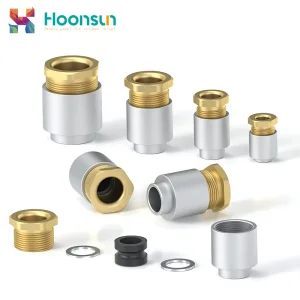
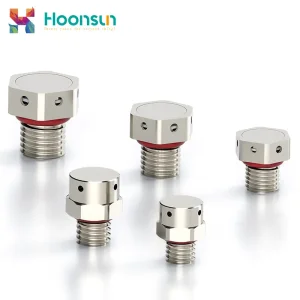
Specialized shielding joints, marine armor terminations, pressure compensation vent plugs, and anti-bending assemblies.
Accelerate Your Global Engineering Procurement
Partner directly with Zhejiang Hongxiang Connector Co., Ltd. (HOONSUN). Gain immediate access to 3D CAD step files, verified UL/CE compliance certificates, custom thread prototyping, and competitive tier-one direct factory pricing for your upcoming commercial or industrial builds.