
Primary Industrial 1/2in & M20 Cable Gland Solutions
Explore UL-certified, IP68 rated direct-entry, anti-bending, hazardous explosion-proof, and marine-clamping joints direct from China's premier Yueqing manufacturing ecosystem.
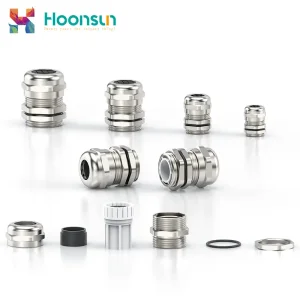
China Metal Cable Gland Direct Type with IP68 and UL Factories, Factory
View Specifications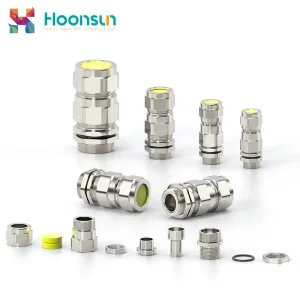
China IP68 and UL Certified Explosion-Proof Cable Clamp Sealing Joint EX3 Manufacturer, Factories
View Specifications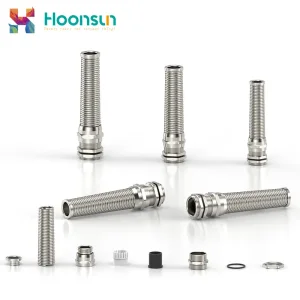
China China Metal Anti-Bending Cable Gland IP68 UL Certified - Top Suppliers from Factory for Superior Protection Supplier, Suppliers
View Specifications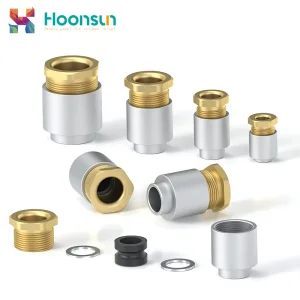
China IP68 Marine Cable Gland TH Standard Type - Reliable Waterproof Solutions from China Suppliers & Factory Manufacturers, Factories
View Specifications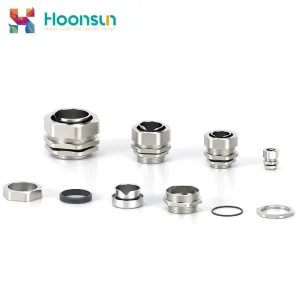
China China Nickel-Plated Brass Hose Cable Gland - Reliable Supplier and Trusted Factory for Industrial Solutions Supplier, Factories
View Specifications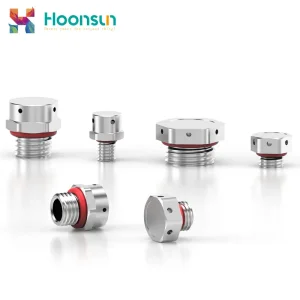
China Stainless Steel Vent Plug with IP68 | Reliable Pressure Balance | China Suppliers & Factory Manufacturers, Factories
View Specifications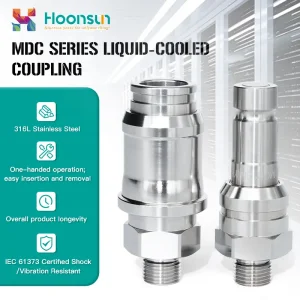
China MDC04S-1SMG012N-MDC04P-1SMG012N Manufacturer, Supplier
View Specifications
China Metal Anti-Bending Cable Gland IP68 UL Certified - Quality Assurance from China Suppliers and Factory Factories, Factory
View Specifications1/2-Inch Cable Gland Architecture: Standardization & Sealing Dynamics
A rigorous examination of the global 1/2" (half-inch) mechanical cable entry profile across North American NPT, European Metric (M20), and British Standard Conduit / Pipe formats.
In the domain of critical electrical terminations, instrumentation integration, and heavy automation enclaves, the 1/2-inch cable gland represents the single most ubiquitous standard connection interface globally. Designated predominantly as 1/2" NPT (National Pipe Tapered) in North America under ANSI/ASME B1.20.1, or frequently paralleled with M20 × 1.5 metric fittings under IEC 62444 and G 1/2 (BSPP) parallel pipe threads, this form factor serves as the mechanical backbone for protecting low-to-medium voltage conductor bundles, sensor runs, and industrial Ethernet links against severe ingress.
China's elite manufacturing plants—anchored predominantly in the precision electrical clusters of Liushi, Yueqing (Zhejiang)—have transformed the production of 1/2" cable glands from basic repetitive turning into advanced cyber-physical engineering. Through the synergy of high-speed Swiss-type multi-axis CNC machines, continuous spectrographic brass analysis, and automated optical inspection (AOI), Chinese tier-one factories ensure that every 1/2in interface meets the merciless requirements of UL 514B, IEC 60529 (IP68/IP69K), and ATEX/IECEx explosion-proof containment.
Critical Engineering Insight: Tapered NPT 1/2" vs Parallel M20 / G 1/2 Sealing Mechanics
Specifiers must note that an NPT 1/2" gland relies on flank-to-flank thread interference accompanied by a 1°47' taper to achieve root sealing, whereas an M20 or G 1/2" parallel thread relies completely on an elastomeric O-ring or flat sealing washer compressed against the enclosure boss. Interchanging these without thread adapters permanently compromises enclosure explosion-proof ratings (UL 1203/IEC 60079-1) and breaks IP68 hydrostatic guarantees.
Technical Comparison Matrix: 1/2-Inch Cable Gland Mechanical Variants
| Thread Classification | Nominal Major Dia. | Thread Pitch / TPI | Typical Clamping Range | Sealing Architecture | Primary Regulatory Standard |
|---|---|---|---|---|---|
| 1/2" NPT (Tapered) | 21.223 mm (0.835") | 14 TPI (1.814 mm) | 6.0 – 12.0 mm (Standard) 3.0 – 9.0 mm (Reduced) |
Tapered Thread Contact + Internal Chloroprene / NBR Bushing | UL 514B / CSA C22.2 |
| M20 × 1.5 (Metric Metric Eq.) | 20.000 mm (0.787") | 1.500 mm pitch | 6.0 – 12.0 mm (Standard) 10.0 – 14.0 mm (Extended) |
Radial O-Ring at Periphery + Linear Compression Claw | EN / IEC 62444 |
| G 1/2" (BSPP Parallel) | 20.955 mm (0.825") | 14 TPI (55° Whitworth) | 6.5 – 12.0 mm | Face-sealing NBR/Silicone washer against planar entry | BS 6121 / ISO 228 |
| PG 13.5 (German Industrial) | 20.400 mm (0.803") | 18 TPI (1.411 mm) | 6.0 – 12.0 mm | Outer chamfer O-ring with claw engagement | DIN 40430 / Legacy IEC |
Localized Engineering Application Scenarios for 1/2" Glands
How leading global projects specify and configure Chinese-manufactured 1/2" entries under intense physical, thermal, and chemical stress regimes.
Renewable Energy & BESS
In large-scale solar arrays and Battery Energy Storage Systems (BESS), 1/2" NPT nickel-plated brass and UV-stabilized PA66 glands protect balance-of-system (BOS) combiner enclosures. They maintain continuous IP68 integrity across extreme thermal differentials (-40°C to +105°C), mitigating condensation through pressure-balancing ePTFE breathable membranes.
Offshore, Marine & Shipbuilding
Naval architecture and floating offshore wind units deploy Marine TJ and TH clamping-type glands manufactured from CW614N/CW617N naval brass or AISI 316L stainless steel. Engineered to counter galvanic pitting and chloride cracking, they securely ground metallic armoring (SWA, AWA, or braided screens) while resisting 10-bar hydrostatic pressure.
AI Data Centers & Fluid Cooling
As hyperscale compute clusters transition to direct-to-chip (D2C) and immersion liquid cooling, specialized 1/2in glands and companion quick-disconnect couplings (e.g., UQD series) prevent dielectric coolant seepage. Fluorosilicone (FVMQ) and FKM (Viton) sealing inserts ensure absolute chemical resistance against synthetic hydrocarbon fluids.
Hazardous Hydrocarbon Processing
In refining cracking units and chemical metering skids, 1/2" NPT explosion-proof cable joints conform to Class I, Division 1 & 2 and ATEX Zone 1/21 requirements. Utilizing cold-pour barrier resin chambers or precision flamepath brass spigots, they halt the transmission of internal arc-flash flames through electrical conduits.
Robotics & Dynamic Articulation
Six-axis industrial robots and automated guided vehicles (AGVs) impose severe bending stress on peripheral connections. 1/2in anti-bending glands featuring spiral spiral strain-relief sleeves absorb repetitive cyclic flexing (exceeding 500,000 cycles), isolating the core conductors from sheath fatigue and copper work-hardening.
Rail Rolling Stock & Trackside Signaling
Compliant with EN 45545-2 (HL3 fire and smoke safety) and IEC 61373 vibration tests, specialized 1/2" metal glands withstand the harsh under-carriage ballast impact, continuous harmonic vibration, and oil mists prevalent along trans-continental high-speed rail networks.
China's Manufacturing Hub: The Liushi Cluster & Metallurgical Superiority
Unveiling the operational matrix of China's world-leading electrical component corridor and how automated economies of scale drive unmatched supply reliability.
Vertical Cluster Density
Situated in Liushi, Yueqing, tier-one factories benefit from an end-to-end component ecosystem within a 5-kilometer radius. Raw bar-stock extruders, specialized toolmakers, electroplaters, elastomer moulders, and certified testing laboratories operate in continuous coordination, reducing lead times from months to days.
Multi-Axis CNC Precision
Modern Chinese manufacturing utilizes computerized automatic turning centers equipped with live tooling. Gland bodies, entry threads, and locknuts are machined in single-clamping operations, preserving thread runout tolerances under 0.02 mm and eliminating burrs that cause micro-tears in elastomeric seals.
Metallurgical Integrity
Factories enforce incoming chemical spectroscopy verification for CW614N (CuZn39Pb3), HPb59-1 leaded brass, and AISI 304/316L stainless steel. Automated nickel plating guarantees micro-crack-free coatings of 5 to 8 microns, successfully passing 1,000-hour neutral salt-spray (NSS) ASTM B117 tests.
Agile Rapid Customization
Direct factory engineering eliminates third-party markups and miscommunications. Whether requiring non-standard thread pitch lengths (e.g., 15mm extra-long NPT threads for thick cast-aluminum enclosures), customized clamping cones for specialized armored cables, or custom brand laser-marking, production lines pivot within 48 hours.
Technology Roadmap: Next-Generation Cable Gland Innovations
How cutting-edge research in polymer dynamics, smart condition monitoring, and electromagnetic shielding is reshaping the 1/2" mechanical entry interface.
360° Dynamic EMC/EMI Shielding
With variable frequency drives (VFDs) and high-power EV charging modules radiating massive high-frequency noise, 1/2" cable glands incorporate patented spring-loaded beryllium copper or stainless steel grounding contacts. These maintain continuous low-impedance 360° screen termination, attenuating interference across 100 kHz to 1 GHz bands.
Smart IoT Condition Monitoring
The industrial roadmap points toward intelligent cable glands embedded with micro-piezoelectric torque sensors and passive RFID moisture transponders. These enable wireless thermal scanning and early water-ingress alerting during plant turnarounds without necessitating physical enclosure teardowns.
Advanced Polymer Nanocomposites
Next-generation non-metallic 1/2" glands utilize PA66 reinforced with graphene nanoplatelets and halogen-free phosphorus retardants. This elevates continuous thermal endurance to +130°C, meets UL94-V0 flammability thresholds, and boosts mechanical impact ratings to IK10 at sub-zero temperatures (-50°C).
Quality Verification Protocols: Sourcing from Tier-1 Chinese Factories
A systematic blueprint for international procurement engineers qualifying 1/2in cable gland manufacturers across China.
1. Thread Conformity Auditing
Verification with calibrated Go / No-Go thread ring gauges (Class 2A/2B for ANSI B1.20.1 NPT and 6g/6H for ISO Metric). Ensuring thread pitch diameter, crest truncation, and taper angle eliminate binding or slack fits during automated field assembly.
2. Hydrostatic IP68 & IP69K Testing
Testing under continuous water immersion at depths of 5 to 50 meters (0.5 to 5.0 bar) for up to 72 hours, alongside high-pressure, high-temperature steam washdowns (80°C at 100 bar per DIN 40050-9) to validate zero water ingress.
3. Mechanical Cable Retention Test
Executing tensile pull-out tests according to IEC 62444 Class A & B criteria. A 1/2" gland must hold a steady pull force exceeding 200–350 Newtons without sheath displacement, slippage, or deformation of the internal rubber bushing.
Specialized Industrial 1/2in & High-Performance Cable Entries
Explore multi-hole, high-temperature stainless steel, right-angle, breathable, and advanced liquid cooling connectivity solutions engineered for extreme operational environments.
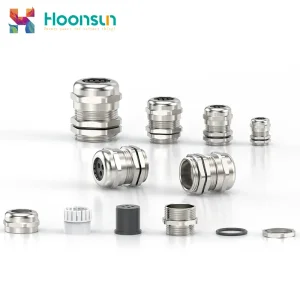
China Metal Multi-Hole Cable Gland with IP68 and UL certificate Manufacturers, Supplier
View Specifications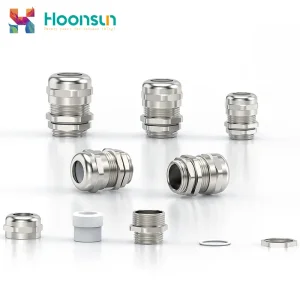
China High Temperature Resistant Metal Cable Gland - China Suppliers & Factory - UL & IP68 Certified - 316 Stainless Steel Manufacturer, Factory
View Specifications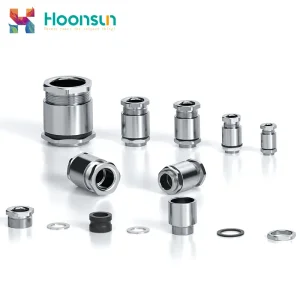
China IP68 Marine Cable Gland TJ Clamping Type - Certified by UL, China Factory & Suppliers for Offshore Use Manufacturer, Suppliers
View Specifications
China Metal Cable Gland Direct Type IP68 with UL Certification - Trusted China Suppliers & Factory Manufacturers, Factory
View Specifications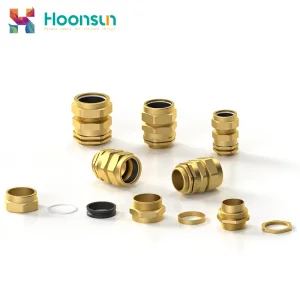
China Explosion-Proof Cable Clamp Sealing Joint CW - IP68, UL Certified | Reliable Manufacturer & Supplier from China Factory Manufacturers, Suppliers
View Specifications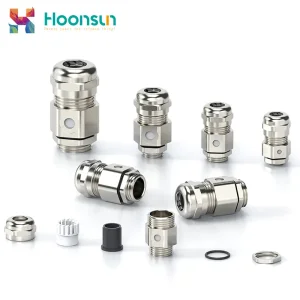
China Breathable Cable Gland Type IP68 & REACH Certified - Trusted China Suppliers & Factory for Pressure Balance Solutions Suppliers, Factories
View Specifications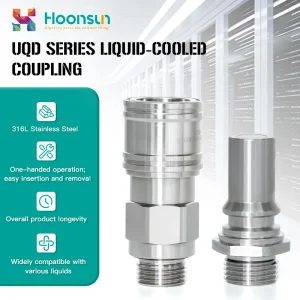
China UQD08S Liquid-Cooled Quick Coupling - China Factory Supplier for Reliable Fluid Connection Solutions Factories, Factory
View Specifications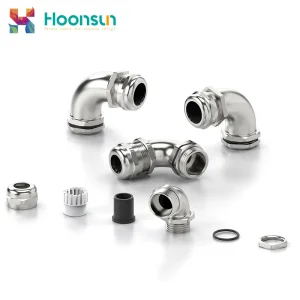
China IP68 Right Angle 90° Cable Gland - Corrosion-Resistant Cable Management by China Suppliers and Factory Manufacturer, Manufacturers
View SpecificationsFrequently Asked Engineering & Sourcing Questions (FAQ)
In-depth responses resolving real-world design, sizing, certification, and procurement challenges for 1/2" cable gland configurations.