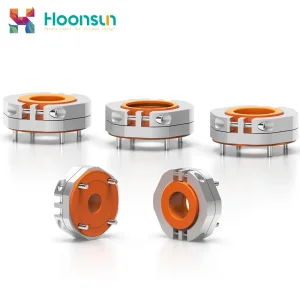
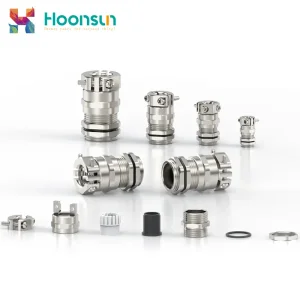
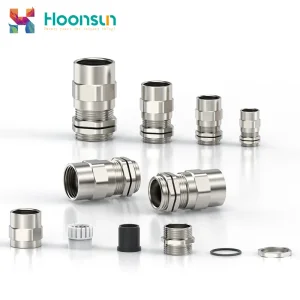
Precision-Engineered 20mm & Marine-Grade Glands
Dual IP68/UL certified connection joints featuring continuous ingress protection, enhanced anti-bending spirals, and certified explosion-proof terminations.
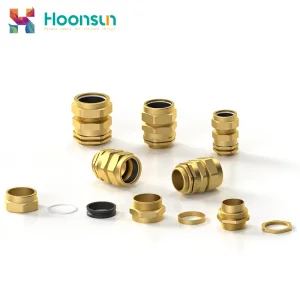
The Strategic Role of 20mm Cable Glands in Critical Infrastructure
A detailed analysis of mechanical clamping tolerances, galvanic compatibility, elastomeric degradation vectors, and modern industrial requirements.
Standard Metric M20×1.5 Architecture
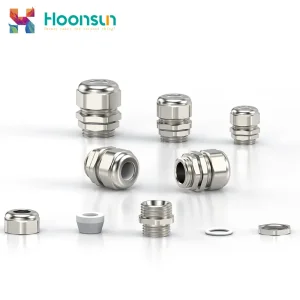
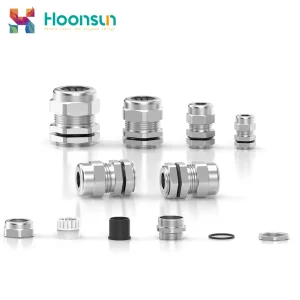
The 20mm cable gland represents the world's most ubiquitous interconnect interface across modular control panels, explosion-proof terminal boxes, and automation drive housings. Accommodating standard cable clamping envelopes typically spanning outer diameters from 6.0mm to 13.0mm, engineering an M20 thread requires micrometer-level precision on thread lead, pitch, and undercut execution to eliminate micro-channelling along the enclosure chassis.
Hermetic IP68/IP69K Ingress Dynamics
True continuous submersion protection under IEC/EN 60529 necessitates an engineering approach that goes far beyond static O-ring selection. Under hydrostatic pressure (tested at 5 bar for 30 minutes to multi-week operational thresholds), the elastomeric inner seal must displace uniformly without biting into or cold-flowing the cable jacket. This maintains an equilibrium clamping pressure of 1.5 to 2.5 MPa across extreme thermal gradients.
EMC Shielding & Armored Clamping
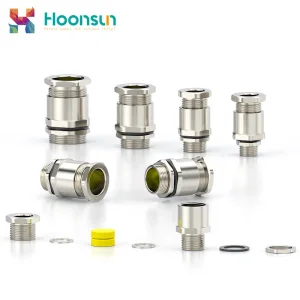
In high-frequency inverter drive circuits and marine offshore networks, 20mm cable glands often double as 360-degree low-impedance grounding terminations. Utilizing internal cone rings and stainless steel iris springs, our CW and double-lock variants secure steel wire armor (SWA), aluminum wire armor (AWA), and braided copper screens with contact resistance held below 2 milliohms, preventing parasitic interference.
Global Corporate Procurement Criteria & Material Matrix
Evaluating total lifecycle cost, metallurgical endurance, and flammability classifications across critical operating environments.
| Material Category | Alloy / Polymer Grade | Ingress Rating | Operating Temperature | Corrosion & Chemical Resistance | Recommended Applications |
|---|---|---|---|---|---|
| Nickel-Plated Brass | CW614N / CW617N (HPb59-1) | IP68 (10 Bar) | -40°C to +120°C (NBR/Silicone) | High (Salt Spray >480h per ASTM B117) | General industrial automation, switchgear cabinets, EV infrastructure |
| Austenitic Stainless Steel | AISI 304 / AISI 316L (1.4404) | IP68 / IP69K | -60°C to +200°C (Silicone/FKM) | Superior (Chloride, acidic washdowns, marine splash) | Offshore rigs, chemical processing, pharmaceutical, marine vessels |
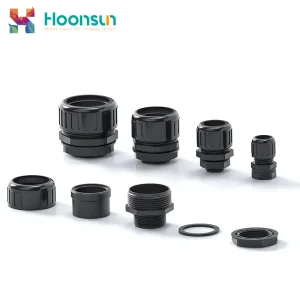
| High-Grade Polyamide | PA66 GF25 / UL 94 V-0 Grade | IP68 (5 Bar) | -40°C to +100°C | Immune to galvanic corrosion; UV stabilized | Solar combiner boxes, outdoor telecom enclosures, HVAC equipment |
| Marine Clamping TJ Type | Naval Brass / CuZn39Pb3 | IP68 Submersible | -40°C to +110°C | Extreme seawater spray & tidal resistance | Shipbuilding deck wiring, subsea junction manifolds, port cranes |
Global EPC & OEM Sourcing Shifts
International procurement directors are actively migrating away from tier-3 assemblers to vertically integrated Chinese manufacturing hubs. The priority is clear: supply chain traceability, verifiable EN 10204 3.1 chemical analysis certificates, automated ISO 228/DIN 13 thread checking, and reliable factory pricing without intermediate trader markups.
Mitigating Cold-Flow & Thermal Creep
A key challenge in continuous 20mm cable entries is polymer cold-flow under constant radial stress. Hoonsun’s multi-layered elastomeric inserts combine precise Shore A durometers with anti-extrusion back-up rings, preventing pressure loss and jacket deformation during high-amperage heating cycles.
Macro-Industry Solutions & Engineered Reliability
Deployment architectures tailored to the stringent environmental parameters of offshore, industrial, clean tech, and heavy-hazard operations.
Marine & Offshore
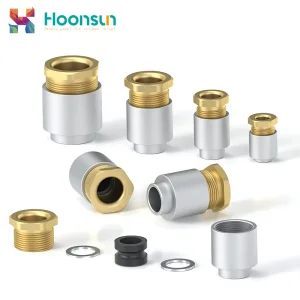
Featuring TJ-series clamping and specialized marine brass alloys that resist aggressive chloride pitting. Engineered to absorb rolling hull vibrations and hydrodynamic wash while maintaining flame retardancy.
EV & Clean Energy
Customized 20mm entries with specialized silicone sealing inserts for extreme thermal cycling in battery management systems (BMS), high-power fast charging stations, and grid-scale ESS containers.
Robotics & Motion
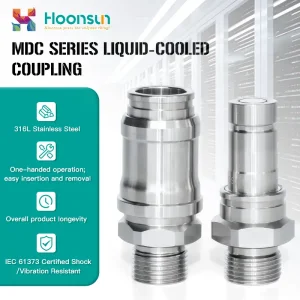
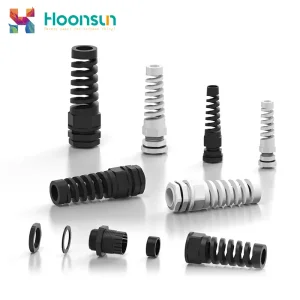
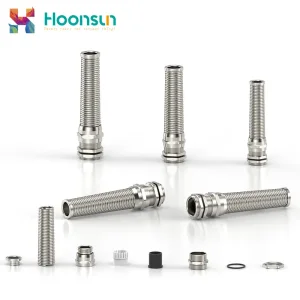
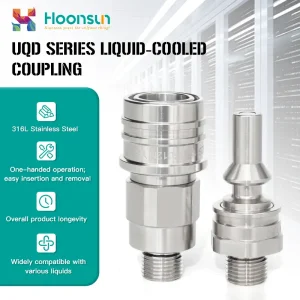
Anti-bending spiral relief collars that prevent catastrophic core fracture at minimum bend radii. Coupled with liquid cooling quick-couplings for compact automated machine tool applications.
Explosion-Proof CW Series
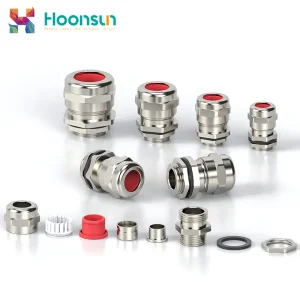
Dual-certified explosion-proof cable clamp sealing joints engineered for hazardous locations in refineries, grain elevators, and chemical metering skids, preventing flame transmission along conduit paths.
Localized Support, Testing Protocols & Regulatory Conformance
How Chinese direct manufacturing aligns with global regulatory codes, client qualification audits, and technical compliance.
UL & CE Certification Architecture
Every 20mm gland produced adheres strictly to UL 514B pull-out tests, torque limit verifications, and CE Low Voltage Directive requirements. Detailed qualification files and test certificates are provided per batch, speeding up third-party site audits.
RoHS, REACH & Conflict Mineral Audits
Modern sustainability standards require complete visibility into raw material supplies. We ensure total compliance with EU RoHS 2.0 (lead exemptions 6c properly audited) and SVHC-free formulations under EU REACH regulations, documented on clear certificates of compliance.
Dedicated Engineering Support
Direct access to experienced cable gland design engineers. Our English-speaking technical specialists assist with thread pitch adjustments, non-standard seal geometries, custom laser markings, and accelerated sample production.
Technology Roadmap: Next-Generation Cable Gland Innovation
Advancing connection solutions for higher voltages, smart sensor arrays, bio-compatible polymers, and modular installations.
Integrated Smart Diagnostic Glands
Developing micro-sensor embedded gland bodies that monitor internal cavity humidity, thermal rise, and clamping pressure degradation in real time. This delivers early warning alerts for preventative maintenance on offshore wind towers and remote sub-stations.
Halogen-Free Extreme Elastomers
Pioneering fluorosilicone and specialized ethylene propylene diene monomer compounds that resist high-pressure hydrogen, cryogenic cooling fluids, and continuous high-temperature exposure without losing elastomeric memory.
Automated Rapid-Snap Clamping
Developing tool-less, multi-diameter ratcheting glands designed specifically for large-scale solar array fields and high-volume modular data centers, reducing total on-site installation labor hours by up to 60%.
Frequently Asked Questions: 20mm Cable Glands
In-depth answers addressing thread pitch, mechanical strain relief, hazardous area ratings, and factory production standards.
What is the standard pitch and clearance hole diameter for a 20mm metric cable gland?
How does a 20mm double lock or armored cable gland terminate the cable shield?
Can 20mm nickel-plated brass cable glands be used in marine and offshore platforms?
What tightening torque is required to achieve a verified IP68 seal on an M20 gland?
What OEM customisation capabilities are supported by Chinese factory direct operations?
Heavy-Duty, Flanged & High-Temperature Termination Joints
Factory-direct supply lines supporting global distributors, panel assemblers, and plant engineers with dependable industrial connectivity.