
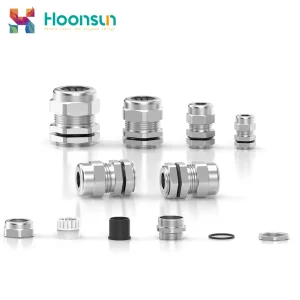
China Stainless Steel Cable Gland IP68 Waterproof UL Certified for Corrosion Resistance
Explore our certified array of stainless steel, nickel-plated brass, and engineering polymer 32mm cable glands, custom-configured for rugged industrial automation, marine, and hazardous locations.
China Stainless Steel Cable Gland IP68 Waterproof UL Certified for Corrosion Resistance
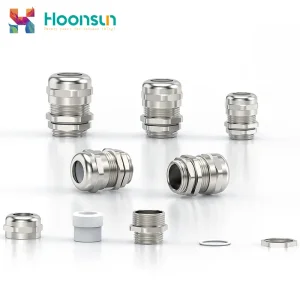
China NGS High Temperature Resistance Metal Cable Gland with UL and IP68
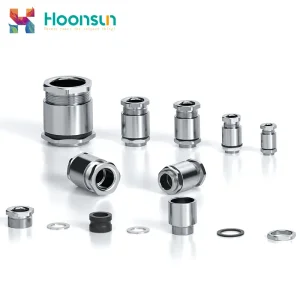
China IP68 & UL Marine Cable Gland TJ Clamping Type for Offshore Applications
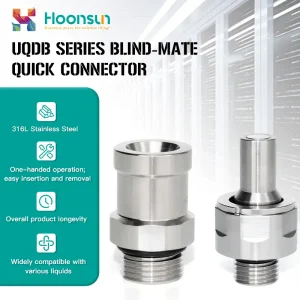
China Heavy-Duty Connection Series UQDB04S-1SMU082N / UQDB04P-1SMU062N
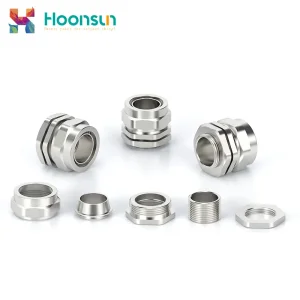
China Industrial BW Cable Gland - Waterproof IP68, UL Certified Armor Clamping
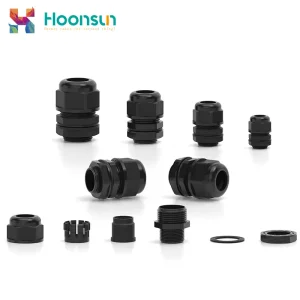
China Modular Nylon Split Cable Gland IP68 - Durable Retrofit Ingress Protection
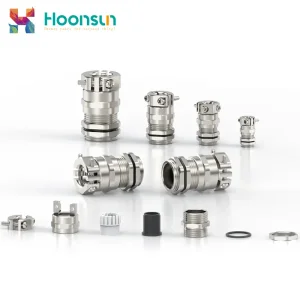
China Heavy Metal Cable Gland Double Lock Type IP68 for Industrial High-Strain Use
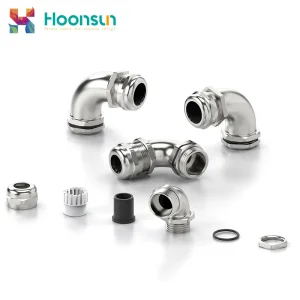
China IP68 & UL Right Angle 90° Cable Gland for Confined Cabinet Cable Routing
A rigorous examination of volumetric displacement, mechanical retention dynamics, thermodynamic seal integrity, and structural reliability across global mission-critical infrastructure.
In modern industrial electrification, control engineering, and heavy mechanical infrastructure, the 32mm cable gland—commonly embodied under the Metric M32×1.5 standard, and cross-functionally correlated with imperial PG21, PG29, and 1-inch NPT conduits—represents the critical convergence point between heavy signal routing and primary power distribution. As currents exceed 63A to 125A and multi-conductor control assemblies increase in conductor core cross-sections, selecting a nominal 32mm interface is not simply a matter of dimensional clearance. It is an intricate multidisciplinary calculation involving mechanical pull-out force (Category A retention per IEC 62444), dynamic ingress protection (IP68 immersion under hydrostatic loads and IP69K high-pressure thermal jet washdown), and galvanic compatibility.
As premier manufacturers situated in Yueqing, China—the world’s undisputed epicenter for advanced low- and medium-voltage electrical hardware—our production facilities approach the 32mm cable gland not as a passive accessory, but as an active safety barrier. A catastrophic breach in sealing integrity at the 32mm junction allows particulate intrusion, vapor capillary action, and moisture migration directly into variable frequency drives (VFDs), renewable photovoltaic inverters, marine distribution panels, and hazardous explosive atmospheres (ATEX/IECEx Zones 1 and 21). This whitepaper deconstructs the physical, metallurgical, and supply-chain dimensions governing China’s preeminent role in global 32mm cable gland manufacturing.
| Dimensional Standard | Thread Spec (OD / Pitch) | Standard Clamping Range | Torque Value (Nm) | Ingress Rating | Predominant Materials |
|---|---|---|---|---|---|
| Metric M32 Standard | M32 × 1.5 mm (32.0mm OD) | 15.0 mm – 21.0 mm | 12.0 – 15.0 Nm | IP68 (5 bar) / IP69K | CW614N Brass, SS304, SS316L, PA66 |
| Metric M32 Expanded (Wide) | M32 × 1.5 mm (32.0mm OD) | 18.0 mm – 25.0 mm | 14.0 – 18.0 Nm | IP68 (10 bar) | Nickel-Plated Brass, 316L Stainless |
| PG Equivalent (PG21) | 28.3 mm OD / 18 TPI | 13.0 mm – 18.0 mm | 10.0 – 12.0 Nm | IP68 | Polyamide PA66 (UL 94 V-0), Brass |
| PG Equivalent (PG29) | 37.0 mm OD / 16 TPI | 18.0 mm – 25.0 mm | 15.0 – 20.0 Nm | IP68 / NEMA 4X | Nickel-Plated Brass, Marine Bronze |
| NPT Equivalent (1" NPT) | 33.4 mm OD / 11.5 TPI Tapered | 18.0 mm – 24.0 mm | Direct Taper Seal + 15 Nm | IP66 / NEMA 4X, 6P | Stainless Steel 316L, CW614N Brass |
Our proprietary compression geometry distributes radial pressure uniformly along 18mm of axial cable contact. Utilizing vulcanized EPDM, chloroprene, or fluoroelastomer (FKM), compression maintains equilibrium without inducing irreversible cable jacket creep or cold-flow displacement.
Engineered with interlocking segmented collet claws manufactured from virgin PA66-V0 polymers. When torque is applied to the domed cap nut, the fingers telescope inward along a 15-degree taper, delivering exceptional pull-out resistance surpassing 450 Newtons without shearing delicate braided shielding.
For variable frequency drives and harmonic-rich environments, our 32mm EMC metallic glands feature an integrated beryllium-copper or phosphor-bronze spring ring. It establishes low-impedance electrical continuity (<2.5 mΩ) between the braided cable screen and the equipment chassis, attenuating RFI/EMI across 10 MHz to 1 GHz.
How international regulatory frameworks, energy transition projects, and automation architectures are reshaping demand for standardized 32mm cable terminations.
The global industrial ecosystem is undergoing an unprecedented transition driven by distributed clean energy generation, industrial Internet of Things (IIoT) edge architectures, and high-density DC power infrastructure. Historically, the global landscape was fragmented: North American markets strictly mandated rigid metal conduit and NPT tapered threads under NEC/CEC specifications, European heavy industry adhered to the legacy German Panzergewinde (PG) standard (specifically DIN 46320), while marine sectors utilized bespoke British Standard or JIS configurations. Today, global harmonization is crystallizing around IEC 62444 and EN 50262 metric standards, elevating the M32 cable gland to premier global status.
Industrial procurement data indicates that 32mm terminations represent approximately 18.4% of total industrial gland value worldwide, second only to M20/M25 sizes. This disproportionate value share is driven by the fact that 32mm glands handle primary high-amperage feeds (e.g., 4-core 16mm² to 35mm² cables) where a termination failure triggers catastrophic machinery shutdowns or severe arc-flash fire events. In regions like Western Europe, the Middle East, and North America, multinational EPCs (Engineering, Procurement, and Construction contractors) are actively retiring legacy PG21/PG29 installations during brownfield modernizations, replacing them with high-spec M32 glands that carry global dual-certifications (UL 514B for North America and CE/ATEX for Europe).
Under strict EU Ecodesign directives, industrial plants are swapping standard motors for IE4/IE5 super-premium efficiency systems. These motors demand robust 32mm glanding capable of accommodating heavy-gauge, double-insulated variable speed drive cables without jacket distortion.
Battery Energy Storage Systems (BESS) installed across Texas, California, and Ontario are deploying thousands of M32 and 1-inch NPT nickel-plated brass glands per megawatt container to seal 1500V DC interconnect lines against harsh seasonal climatic thermal cycling.
From the mega-scale solar fields of the UAE and Saudi Arabia to offshore crude processing platforms, M32 explosion-proof Ex d/Ex e dual-certified glands provide ultraviolet radiation resistance and hydrocarbon barrier integrity in ambient temperatures reaching 55°C.
Rapid transit locomotives and traction converters across China, South Korea, and Southeast Asia mandate EN 45545-2 HL3 fire/smoke compliant 32mm metal cable glands designed to withstand relentless vibration spectra (Category 1, Class B per IEC 61373).
Why Yueqing and China’s coastal manufacturing belt deliver unmatched precision engineering, metallurgical cost efficiency, and global supply security.
For more than two decades, the global supply line for industrial cable glands has steadily concentrated within China, specifically centered in Liushi Town, Yueqing City—recognized internationally as "China's Electrical Capital." What started in the early 2000s as basic contract machining has matured into a hyper-automated, vertically integrated advanced manufacturing ecosystem. The global dominance of Chinese 32mm cable gland manufacturing is not grounded merely in low-cost labor; on the contrary, modern facilities have transitioned to lights-out CNC machining, multi-axis Swiss automatic turning centers, automated robotic assembly, and optical vision inspection lines.
This localized industrial concentration creates an extraordinary supply chain velocity that cannot be replicated elsewhere. Within a five-kilometer radius, our facility accesses ultra-pure metallurgical extrusion mills (certified CW614N/CW617N brass bars, AISI 304 and marine-grade 316L stainless billets), specialized automated tooling manufacturers, chemical passivation laboratories, high-speed nickel/tin electroplating plants, and precision polymer injection moulders specializing in flame-retardant polyamide compounds (PA66 with 25% glass-fiber reinforcement). This localized density reduces supply chain lead times from months to mere days, providing international customers with unparalleled surge-capacity resilience.
Our workshops employ multi-spindle CNC turning centers operating at tolerances within ±0.01mm. This guarantees flawless M32×1.5 thread pitch engagement, eliminating thread galling, cross-threading, and loose locknut vibrations under high mechanical shock conditions.
Every brass 32mm gland undergoes electrolytic multi-stage nickel plating exceeding 8 to 12 microns in thickness, followed by specialized passivation. The resulting barrier withstands over 1,000 hours of continuous neutral salt spray testing (ASTM B117) without substrate oxidation.
Finished cable gland components are fed through high-speed telecentric optical sorting tables. High-resolution CCD cameras verify inner seal concentricity, cap nut thread lead, and O-ring groove depth, ensuring defect rates lower than 25 PPM for high-volume automated OEM panel lines.
Specific environmental challenge matrices and field-proven engineering implementations across five demanding industrial sectors.
Challenge: Heavy thermal cycling (-30°C to +85°C) combined with high solar UV radiation in desert installations causes standard rubber seals to embrace micro-cracking and loss of seal compression elasticity.
Solution: HOONSUN 32mm nickel-plated brass cable glands utilizing specialized silicone/FKM internal seal rings. The wide 18–25mm clamping range accepts thick cross-linked polyethylene (XLPE) DC feeder lines, guaranteeing IP68 ingress integrity across 25 years of field life.
Challenge: Constant atmospheric salinity, marine humidity, and structural vibration at heights exceeding 100 meters above sea level create severe pitting corrosion and thread binding on ordinary metal fittings.
Solution: Deployment of Marine TJ Clamping Type and Stainless Steel 316L 32mm glands with dual elastomeric seals. The mechanical clamping cage isolates vibrational loads, preventing cable pull-out while meeting IP68 water submersion limits up to 50 meters depth.
Challenge: Daily high-pressure washdowns with caustic cleaning agents (sodium hydroxide, peracetic acid) destroy protective coatings and harbor bacterial growth within exposed thread crevices.
Solution: Hygienic-design M32 stainless steel 316L cable glands featuring smooth external profiles (Ra < 0.8 μm), food-grade blue EPDM seals compliant with FDA 21 CFR 177.2600, and fully certified IP69K thermal washdown resistance at 100 bar pressure.
Challenge: Megawatt-level dynamic EV charging stations (MCS) pass continuous high current through 32mm cable conduits, generating localized thermal spikes and requiring robust integrated liquid cooling connector seals.
Solution: Hybrid metal cable gland connectors engineered with integrated secondary coolant channel seals and thermal dissipation rings, ensuring that localized conductor heat does not degrade adjacent outer jacket weather seals.
Challenge: Presence of flammable methane, propane, and hydrogen vapors in ATEX Zone 1/Zone 21 classifications requires cable entries to act as explosion-proof flame-paths.
Solution: HOONSUN EX4 Series Explosion-Proof M32 Cable Glands. Incorporating compound barrier potting chambers or heavy-duty flameproof elastomeric seals designed to quench internal ignitions and prevent flame propagation across enclosures.
Anticipating the technological horizon: smart sensing glands, hydrogen-ready metallurgy, and sustainable circular engineering.
The cable gland industry is transitioning from purely passive mechanical hardware to intelligent, sensor-integrated diagnostic nodes within smart industrial grids. As equipment operators demand predictive maintenance capabilities to eradicate unscheduled downtime, the next generation of 32mm cable glands incorporates embedded micro-sensing technology. The strategic engineering roadmap at our research labs focuses on four primary innovation vectors:
Integration of miniature passive RFID/NFC chips and piezoelectric pressure-transducers inside the 32mm gland body. Technicians can scan the gland with handheld devices to read installation torque history, localized operating temperature, and internal moisture presence without opening the enclosure.
With global investments pouring into green hydrogen electrolysis facilities, standard brass and low-grade stainless steels suffer from hydrogen-induced embrittlement. We are qualifying ultra-dense 316Ti and Super Duplex alloys with tailored surface chemistry to eliminate micro-pore hydrogen cracking.
Advancing our nylon product line toward fully bio-derived Polyamide compounds derived from renewable castor oil feedstocks. These engineering polymers maintain UL94-V0 flammability ratings and high tensile impact resistance at -40°C while reducing carbon production emissions by over 45%.
R&D engineering has patented toolless quick-lock 32mm termination mechanisms. Utilizing pre-tensioned stainless spring clips, field installers can lock armored and non-armored cables into junction boxes in less than 5 seconds, reducing plant commissioning labor costs by up to 60%.
Eliminating sourcing risk through comprehensive third-party certification portfolios and English-speaking technical support engineers.
A primary friction point for international engineering teams sourcing components from China has traditionally been documentation compliance, material traceability, and cross-border engineering dialogue. HOONSUN (Zhejiang Hongxiang Connector Co., Ltd.) neutralizes this risk through an institutionalized quality assurance infrastructure built specifically for multinational Fortune 500 OEMs and engineering distributors. Every production lot of 32mm cable glands is fully traceable to original raw material mill test certificates (MTRs) according to EN 10204 3.1 standards, ensuring verifiable chemical composition (copper purity, lead thresholds under RoHS exemption 6c, and absence of SVHC substances under EU REACH Regulation 1907/2006).
Our in-house environmental test laboratory operates accredited test equipment capable of conducting full-spectrum product qualification under one roof: IPX8 submersion chambers simulating 50-meter hydrostatic water heads for 72 hours, high-pressure steam washdown carousels for IP69K verification, calibrated tensile pulling fixtures up to 10 kN for IEC 62444 pull-out resistance tests, and -50°C to +150°C programmable thermal shock chambers. International buyers work directly with English-speaking mechanical application engineers who assist with custom entry thread lengths, bespoke hole drilling in multi-cable inserts, and full CAD model exchange (STEP, IGES, SolidWorks) within 24 hours of inquiry.
Every order can be supplied with lot-specific certificates of compliance, RoHS 3 and REACH SVHC declarations, salt spray corrosion test reports, and third-party CE and UL certification verification documents.
We provide full turnkey OEM support: laser engraving your brand logo and part numbering on cap nut hex faces, custom colored anodizing or powder coating, and specialized retail barcoded blister packaging.
Have non-standard conduit threads or multi-hole diameter requirements? Our tooling and engineering division delivers rapid 3D printed samples and precision CNC-machined physical prototypes within 48 to 72 hours.
In-depth technical answers addressing the critical mechanical, electrical, and commercial parameters encountered by global procurement managers and electrical design engineers.
While frequently grouped together in procurement catalogs for medium-heavy power cabling, these standards are mechanically and geometrically non-interchangeable:
Proper torque is critical: under-torquing leads to moisture ingress and failed pull-out retention, while over-torquing permanently crushes internal rubber seals and deforms outer cable insulation, precipitating premature dielectric breakdown.
For standard HOONSUN nickel-plated brass M32 cable glands (clamping 15–21 mm), the recommended torque for the cap nut (compression nut) is between 12.0 Nm and 15.0 Nm. For the body into a threaded enclosure, apply 15.0 Nm to 18.0 Nm. When installing into clearance holes using an M32 brass locknut on painted sheet steel or stainless enclosures, torque the locknut to 15.0 Nm to guarantee electrical bonding and sufficient compression of the interface O-ring. Always use a calibrated torque wrench in mission-critical applications.
Nickel-plated brass (CW614N) provides outstanding cost-to-performance characteristics, superior mechanical strength, and excellent shielding conductivity across 85% of industrial environments. However, Stainless Steel 316L (EN 1.4404) must be strictly specified under the following conditions:
Under standard IEC 60529, IP68 denotes continuous protection against dust ingress (Level 6) and protection against continuous submersion in water under conditions agreed between customer and manufacturer (Level 8). HOONSUN standard 32mm metal glands are rated for 5 bar hydrostatic pressure (approx. 50 meters water head) for 72 hours.
Conversely, IP69K (defined by DIN 40050-9 and ISO 20653) is a dynamic thermal-mechanical blast test. It tests the gland’s ability to resist high-pressure steam and water jets delivered at a rate of 14–16 liters/minute, pressures between 80 to 100 bar (8,000–10,000 kPa), and temperatures of +80°C from four angles (0°, 30°, 60°, and 90°). An ordinary IP68 gland can easily fail an IP69K test if the elastomeric seal is pushed inward by the concentrated dynamic water stream. We engineer specific IP69K-certified glands with backed mechanical support rings for food processing and mobile mining equipment.
No. Standard commercial or industrial IP68 cable glands—whether brass or nylon—must never be installed on equipment operating in classified hazardous areas (ATEX/IECEx Zones 1, 2, 21, or 22; or Class I/II, Division 1/2 under NEC 500). Hazardous areas require specialized explosion-proof cable glands carrying certified markings (e.g., Ex d for flameproof enclosures, Ex e for increased safety, or Ex ta for combustible dust protection).
Explosion-proof 32mm glands feature heavier body walls, longer precision-machined flame-path threads (minimum 5 full thread engagements), specialized non-combustible elastomeric compound seals, or internal resin barrier potting chambers (such as our EX4 series) designed to isolate electrical arcs and quench escaping gas ignitions.
Variable frequency drive (VFD) power cables generate substantial high-frequency common-mode noise and electromagnetic interference. For 32mm entries, standard pigtail grounding wires are strictly unacceptable due to high high-frequency impedance. Instead, specify an EMC Metal Cable Gland with 360-degree circumferential contact.
Our EMC glands utilize an integrated, spring-loaded phosphor-bronze contact finger ring. When the gland is assembled, the outer PVC jacket is stripped back 15mm, and the contact fingers firmly compress directly onto the braided copper screen, achieving a continuous 360-degree low-impedance bond directly to the metal enclosure frame. This provides shielding effectiveness exceeding 65 dB at 100 MHz, mitigating high-frequency bearing currents and eliminating intermittent sensor communications corruption.
As a direct manufacturer based in Yueqing, we offer flexible terms for global industrial distributors and equipment OEMs:
Standard industrial Nitrile (NBR) rubber seals undergo glass transition and embrittlement around -20°C, causing catastrophic seal failure when subjected to wind loads or mechanical shock. For arctic, rail, and high-altitude wind projects, HOONSUN provides specialized Cold-Climate Cable Gland Packages.
These configurations replace standard NBR seals with specialized low-temperature fluoro-silicone or peroxide-cured EPDM compounds certified for continuous operation from -50°C to +130°C. Additionally, the outer metal components are machined from low-lead CW614N or stainless 316L, avoiding brittle crystalline fracture, and are fully compliant with the stringent impact requirements of IEC 62444 Category 8 at -40°C.
Browse our precision-manufactured multi-hole, tubular, breathable, and marine explosion-proof cable glands engineered for international infrastructure standards.
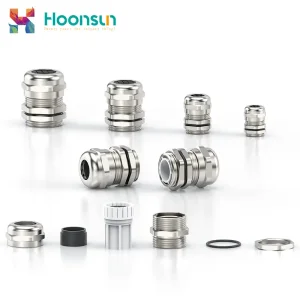
China Metal Cable Gland Direct Type IP68 with UL Certification
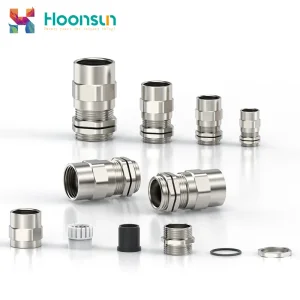
China Metal Tubular Cable Gland with IP68 Ingress Protection and UL Listing
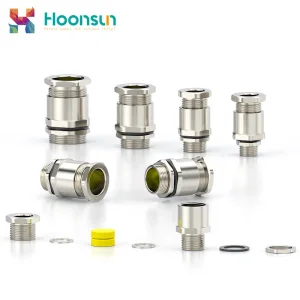
China Explosion-Proof Marine Cable Gland EX4 - IP68 & UL Listed Flameproof
China IP68 and UL Certified Marine Cable Gland TJ Clamping Type
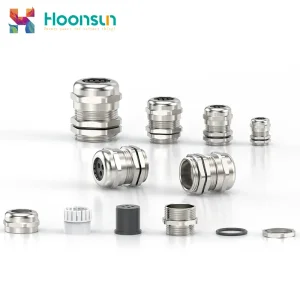
China Metal Multi-Hole Cable Gland - IP68 Certified for Multiple Line Routing
China Metal Multi-Hole Cable Gland with IP68 and UL Certificate
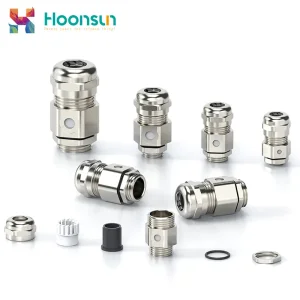
China Breathable Cable Gland Type IP68 & REACH Pressure Balance Membrane
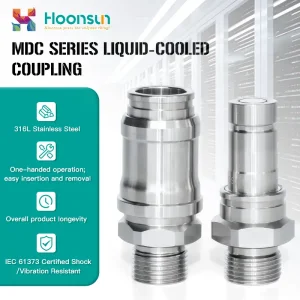
China MDC Series Heavy-Duty Connector MDC06S-1SMG042N / MDC06P-1SMG042N