
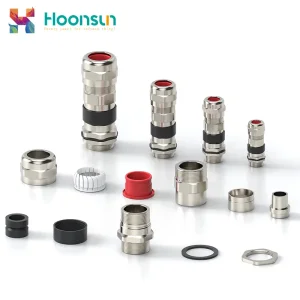
Featured Hazardous Area Assemblies
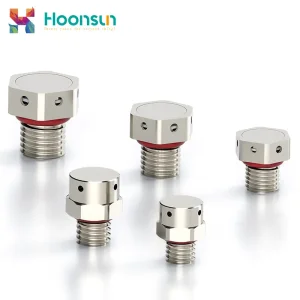
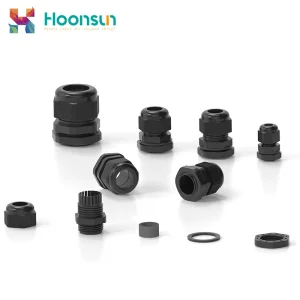
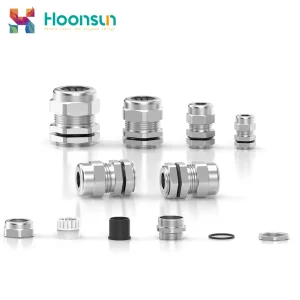
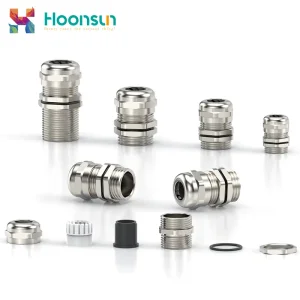
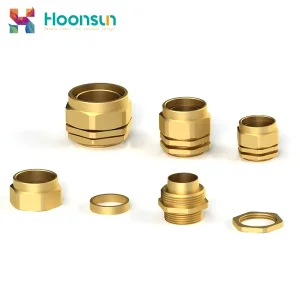
Certified Hazardous Area Cable Glands & Industrial Sealing Lines
Explore our standard production lines engineered for harsh and hazardous locations. Every unit undergoes multi-stage coordinate measurement, pneumatic pressure verification, and destructive retention validation before dispatch.
IP68 & UL Certified Metal Vent Plug for Electrical Cabinets
Explore Specification
Nylon Cable Gland IP68 Certified Sealing System (PA66 Engineered)
Explore Specification
Stainless Steel 316L Cable Gland (IP68 Waterproof, UL Certified)
Explore Specification
Marine Grade Stainless Steel Sealing Cable Gland
Explore Specification
Extended Length Metal Cable Gland (UL & IP68 Heavy Duty)
Explore Specification
Industrial Grade Nylon Strain Relief Gland (UL Listed)
Explore Specification
BWL Heavy-Duty Armored Cable Gland (Harsh Environment IP68)
Explore Specification
Engineering Whitepaper
Hazardous Area Cable Glands: Physics of Sealing & Flamepath Containment
In explosive atmospheres containing hydrogen, acetylene, or volatile hydrocarbon vapors, cable entries represent critical safety boundaries. As an established China hazardous area cable glands manufacturer, we engineer systems that prevent flame transmission, withstand mechanical shock loads, and neutralize internal explosion overpressures up to 30 bar.
100%
Spark-Free Precision Turning
IP68
Continuous Submersion 50m / 7d
IK10
Impact Mechanical Energy Tested
±0.005mm
Flamepath Micro-Tolerance Control
Ex d Flameproof Containment
Compliant with IEC/EN 60079-1 standards, our Ex d assemblies maintain rigorously calibrated threaded and cylindrical flame paths. If an ignition event occurs inside the enclosure, the cooling path reduces escaping gas temperatures below the auto-ignition threshold of ambient gas groups IIA, IIB, and IIC (including Hydrogen).
Ex e Increased Safety Sealing
Engineered per IEC/EN 60079-7, Ex e entries eliminate arcs, sparks, and localized hot spots. We utilize high-grade vulcanized neoprene, fluorosilicone, and peroxide-cured EPDM compression sleeves that maintain elastomeric elasticity across continuous -60°C to +140°C temperature cycles without creep or compression set.
Ex tb Combustible Dust Barriers
Designed for Zone 20, 21, and 22 environments governed by IEC/EN 60079-31. Multi-lip sealing rings create an impenetrable barrier against fine grain dust, pulverized coal, and chemical powders, eliminating catastrophic thermal insulation and secondary dust cloud ignition hazards.
| Classification | Protection Concept | Applicable Standards | Typical Gas/Dust Groups | Sealing Technology |
|---|---|---|---|---|
| Ex d (Flameproof) | Internal explosion containment without external propagation | IEC/EN 60079-1, UL 1203 | Group IIA, IIB, IIC (Hydrogen / Acetylene) | Threaded flamepath (5+ full threads) + elastomeric displacement / resin barrier |
| Ex e (Increased Safety) | Prevention of high temperatures, arcs, and electrical ignition | IEC/EN 60079-7, ISA 60079-7 | Zone 1 & Zone 2 (All non-sparking circuits) | Dual-ring mechanical clamping + anti-loosening serrated entry washers |
| Ex ta / tb / tc | Dust ignition-proof ingress barrier | IEC/EN 60079-31, UL 60079-31 | Group IIIA (Fibers), IIIB (Non-conductive), IIIC (Conductive) | IP66 / IP68 silicone O-rings with sub-micron surface finish clamping |
| Class I, Div 1 & 2 | North American explosion mitigation | UL 2225, UL 514B, CSA C22.2 | Class I (Groups A, B, C, D); Class II (E, F, G) | Direct mechanical armor clamping + epoxy compound barrier potting |
Smart Manufacturing
China Factory 4.0: Supply Chain Resilience & Micrometric Precision
Headquartered in Liushi, Yueqing—China’s epicenter of industrial electrical automation—our manufacturing infrastructure combines vertically integrated raw material supply, robotic multi-axis CNC Swiss machining, and 100% optical quality inspection. We eliminate sub-supplier dependencies to provide unmatched lead time stability and batch repeatability.
Multi-Axis Swiss CNC Machining
Our temperature-controlled workshops run high-speed multi-axis turn-mill machining centers. Gland bodies, entry components, and locknuts are turned from continuous bar stock in a single setup, achieving concentricity tolerances within ±0.005mm for flawless thread engagement.
Automated Optical Inspection (AOI)
100% of external threads (Metric ISO 965, NPT ANSI/ASME B1.20.1, PG DIN 40430, BSPP G) pass automated machine-vision sorting systems to verify pitch diameter, flank angle, and thread depth, guaranteeing zero cross-threading during field installation.
In-House Chemical & Plating Lines
Equipped with fully automated, closed-loop electroplating lines. We deliver nickel plating thicknesses from 8μm to 15μm on CW614N/CW617N brass components, providing verified resistance exceeding 1,000 hours in neutral salt spray testing per ASTM B117.
Batch Material Traceability (3.1 MTR)
Every production heat of raw brass, stainless steel 304/316L, and polymer elastomer is chemically verified by optical emission spectrometry (OES) and tagged with a digital QR code, linking directly to EN 10204 Type 3.1 Inspection Certificates.
Sector Deployment
Macro-Industry Solutions: Where Field Failure Is Catastrophic
From deepwater floating production storage and offloading (FPSO) vessels to high-volume green hydrogen electrolysis units, cable entry failure means unscheduled shutdowns or catastrophic safety incidents. Our product configurations match specific environmental stress profiles.
Offshore LNG & FPSO Marine
Environmental Challenge: Constant C5-M marine exposure, dynamic salt spray, wave slap, high vibration, and DTS01 deluge conditions.
Engineering Solution: Marine-grade 316L stainless steel and corrosion-resistant naval brass, dual certified Ex d / Ex e, utilizing armored cone clamps for Steel Wire Armor (SWA) and Braided cable with 360° low-impedance EMC bonding.
Hydrogen Generation & Syngas
Environmental Challenge: Molecular hydrogen leakage (Group IIC gas with a low Minimum Ignition Energy of 0.017 mJ) and hydrogen embrittlement risk.
Engineering Solution: Resin compound barrier glands (epoxy potting) that create a zero-void gas-tight hermetic seal around individual cable conductors, preventing gas migration through cable interstices.
Petrochemical Refineries
Environmental Challenge: Aromatic hydrocarbons, caustic vapors, hydrogen sulfide (H2S), and wide thermal swings across distillation columns.
Engineering Solution: Fluorocarbon (Viton / FKM) seal inserts impervious to hydrocarbon oils and aggressive solvents, paired with high-temperature internal flame barriers rated up to +180°C.
Mining & Heavy Aggregate Silos
Environmental Challenge: Zone 20/21 explosive coal and grain dust layers, severe rock mechanical impacts, and high-pressure hose-down cleaning.
Engineering Solution: Heavy-duty nickel-plated brass BW and CW series, tested to IK10 mechanical impact (20 Joules), maintaining IP68 at 5 bar water pressure to withstand daily industrial jet wash routines.
Regulatory Assurance
Global Compliance: Bridging European ATEX / IECEx & North American NEC
Navigating divergent international safety codes is a major risk for engineering procurement construction (EPC) contractors. HOONSUN manufactures cable glands certified under harmonized schemes, enabling multinational OEM skid manufacturers to use a single bill of materials across global installations.
European ATEX Directive 2014/34/EU
Type Examination certified under EN 60079-0, EN 60079-1, and EN 60079-7 for Category 2G and 2D equipment. Fully approved for unrestricted deployment across European Union member states and offshore economic zones.
IECEx International Scheme
Compliant with global International Electrotechnical Commission standards. Supported by online certificates of conformity (CoC), allowing seamless customs clearance and regulatory acceptance across Australia, Southeast Asia, South America, and the Middle East.
UL 2225 & NEC 500 / 505 / CEC
UL-listed explosion-proof fittings tested for Class I, Division 1 and Zone 1 locations per American National Standards (ANSI/UL 2225). Incorporates NPT tapered threads with calibrated L1 and L2 gauges to ensure gas-tight enclosure sealing.
Procurement Analysis
Total Cost of Ownership (TCO) & Global Procurement Strategy
While cable glands typically represent under 1.5% of an industrial plant's electrical budget, an uncertified or incorrectly sized gland failure can trigger shutdowns running into hundreds of thousands of dollars per day. Sourcing factory-direct from HOONSUN optimizes lifecycle efficiency without sacrificing safety margins.
Direct Factory Advantage
Eliminate middleman markups from European and American distribution brands. We manufacture on custom automated CNC lines, delivering 25% to 40% cost savings on project BOMs while maintaining identical mechanical tolerances and certification parameters.
Rapid Tooling & Custom Entries
Encountering irregular thick enclosure walls, proprietary shielded servo cables, or unusual thread pitches (PG to Metric / NPT to G adaptors)? Our in-house engineering delivers 3D CAD modeling within 24 hours and physical prototype production within 5 to 7 working days.
Full Documentation Support
Every shipment arrives with comprehensive documentation packages: EN 10204 3.1 Material Test Reports, Declaration of Conformity (DoC), salt spray test certificates, torque assembly data sheets, and multi-language installation manuals.
Innovation Horizon
Technology Roadmap (2025–2030): Next-Gen Hazardous Area Sealing
As heavy industry embraces autonomous electrification, clean hydrogen vectors, and automated subsea equipment, cable entry engineering is undergoing transformative material and digital shifts. HOONSUN is actively developing the next generation of smart hazardous area connectors.
Smart Condition Monitoring
Integrating embedded passive RFID and micro-piezoelectric sensors within the gland clamping ring. These monitor internal cable clamping tension, ambient temperature, and seal degradation over time, feeding predictive maintenance data into DCS systems via wireless LoRaWAN interfaces.
Ultra-High Temperature FFKM Seals
Developing proprietary perfluoroelastomer (FFKM) composite seals capable of continuous operation from -60°C to +260°C. These provide near-universal chemical inertness against concentrated sour gases (H2S), chlorine derivatives, and high-pressure supercritical steam.
Composite Lightweight Ex Polymers
Formulating carbon-nanotube-reinforced polyamide composites that achieve ATEX anti-static surface resistivity (< 10^9 Ω) with IK09 impact resistance, cutting connector weight by up to 65% for offshore floating wind nacelles and electric aviation ground equipment.
Technical Reference
Hazardous Area Cable Glands: Engineering Q&A
Detailed technical guidance for electrical design engineers, plant instrumentation managers, and EPC procurement specialists.
What is the fundamental difference between Ex d (flameproof) and Ex e (increased safety) cable glands?
Ex d (Flameproof, IEC 60079-1) design assumes that flammable gas can enter the enclosure and an internal explosion may occur. The cable gland must withstand this internal explosive pressure (typically up to 30-40 bar) while cooling escaping combustion gases through long, finely-machined flamepaths so they cannot ignite the surrounding atmosphere. In contrast, Ex e (Increased Safety, IEC 60079-7) applies to equipment that produces no arcs, sparks, or dangerous temperatures under normal or defined abnormal operation. Ex e cable glands focus on high-reliability IP66/IP68 environmental ingress barriers, high-integrity mechanical cable retention, and thermal stability to prevent spark initiation altogether.
When is a barrier compound (epoxy resin) cable gland mandatory instead of an elastomeric seal?
Under IEC 60079-14 guidelines, a compound barrier gland (e.g., HOONSUN Barrier Series) is mandatory when all three conditions are met: (1) The enclosure is classified as Ex d flameproof, (2) The installation is in a Zone 1 hazardous area, and (3) The cable construction is not filled, meaning gas can migrate along individual conductor strands ("gas migration through cable core"), or the enclosure volume exceeds 2 liters in IIC gas environments. The barrier compound fills every interstice between conductors, creating a 100% solid, gas-tight seal that blocks internal explosions from propagating through the cable's interior.
How do you ensure galvanic corrosion protection between cable armor and the gland body?
Galvanic corrosion occurs when dissimilar metals contact each other in the presence of an electrolyte like marine salt spray. When clamping Steel Wire Armor (SWA) or Steel Tape Armor (STA), we utilize high-purity CW614N brass with 8–12μm heavy nickel plating, or marine-grade 316L stainless steel. The clamping cones are carefully matched to the electrochemical potential of galvanized steel to prevent accelerated sacrificial oxidation. Additionally, our dual-sealed glands feature outer sheath compression rings that block moisture from reaching the armor clamping zone entirely.
What thread types are available, and how does thread engagement ensure flamepath compliance?
We machine all standard international industrial thread formats: Metric ISO 965 (M12 to M110 with 1.5mm pitch), NPT per ANSI/ASME B1.20.1 (1/4" to 4"), PG per DIN 40430, and G (BSPP) per ISO 228. For Ex d flameproof enclosures, IEC 60079-1 dictates a minimum of 5 full threads of continuous engagement with a minimum axial flamepath length of 8mm for metric entries, and at least 5 threads engaged for tapered NPT entries. We strictly calibrate every batch using high-precision Go/No-Go plug and ring gauges to guarantee this compliance.
Can HOONSUN cable glands operate in extreme sub-zero arctic or cryogenic environments?
Yes. Standard glands with standard chloroprene/neoprene seals are typically rated from -20°C to +80°C. For arctic and cryogenic applications, we engineer specialized low-temperature configurations using specially compounded fluorosilicone or peroxide-cured synthetic elastomers, certified for continuous operation down to -60°C. The metal bodies (stainless steel 316L or CW614N brass) retain structural impact strength (IK10) without brittle fracture risk at these cryogenic limits.
How does EMC shielding work on HOONSUN marine and hazardous area cable glands?
Variable Frequency Drives (VFDs) and high-speed communication cables in hazardous locations generate severe electromagnetic interference (EMI). Our EMC-compliant hazardous area cable glands incorporate a 360° phosphor bronze or stainless steel conical grounding ring. When the gland is tightened, the ring evenly contacts the cable's copper braid or steel armor around its full circumference, creating a low-impedance ground path to the enclosure wall with minimal transfer impedance (< 100 mΩ/m at 30 MHz).
Ancillary & Specialty Lines
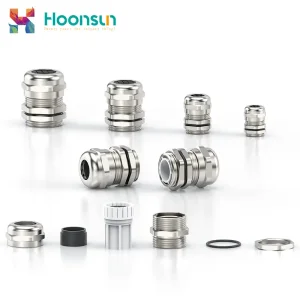
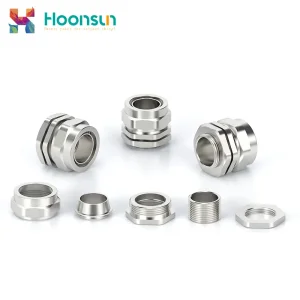
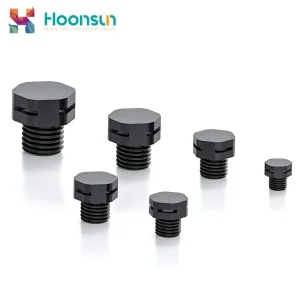
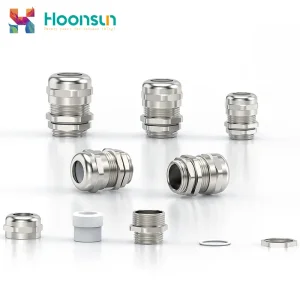
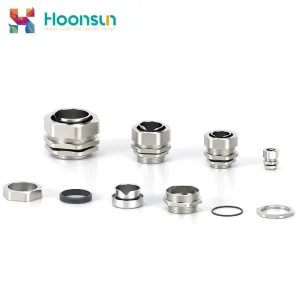
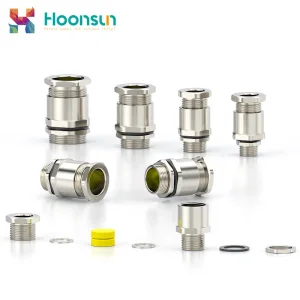
High-Temperature, Flexible Hose & Specialty Enclosure Connectors
Complete your hazardous and harsh-environment project BOM with certified direct-type, high-temperature, flexible conduit entries, and pressure-equalizing ventilation plugs. Fully compatible with global metric and imperial enclosure cutouts.
IP68 Nylon Cable Gland Factory Sealing Solution for Electrical Panels
Explore Specification
Direct Type IP68 Metal Cable Gland (UL Certified Industrial)
Explore Specification
China BW Cable Gland (Waterproof IP68, Explosion-Proof, UL)
Explore Specification
IP68 Waterproof Nylon Vent Plug for Enclosure Breathability
Explore Specification
NGS High Temperature Resistant Metal Gland (UL, IP68)
Explore Specification
Nickel-Plated Brass Flexible Conduit & Hose Cable Gland
Explore Specification
Explosion-Proof Marine Cable Gland EX4 (IP68, UL Listed)
Explore Specification
IP68 Metal Vent Plug (UL Certified Pressure Equalizer)
Explore SpecificationAccelerate Your Hazardous Area Infrastructure Projects
Connect directly with HOONSUN’s senior connection application engineers. Receive customized 2D/3D CAD dimensional models, comprehensive certification packages (ATEX / IECEx / UL), and firm project volume pricing within 24 business hours.