High-Performance Armoured & Industrial Cable Glands
Manufactured under ISO 9001, UL, and CE standards for heavy-duty industrial terminations, harsh ambient environments, and mission-critical reliability.
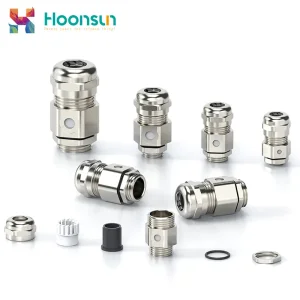
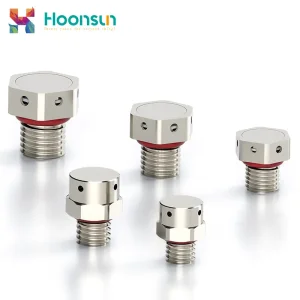
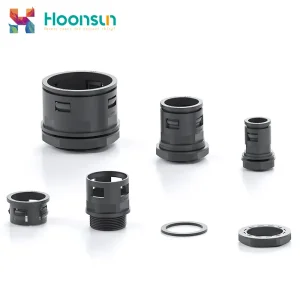
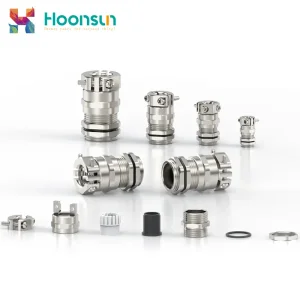
The Engineering Authority Behind Size Chart 324
Decoding the standardized technical parameters, international compliance mechanisms, and supply chain continuity of Chinese industrial armoured cable terminations.
Understanding the Industry Benchmark: "Armoured Cable Gland Size Chart 324"
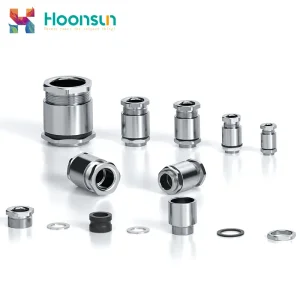
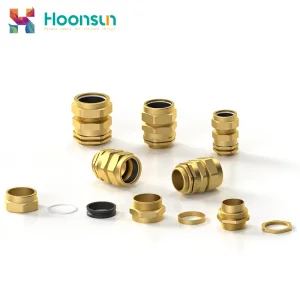
In heavy industrial engineering, marine electrification, petrochemical plants, and large-scale mining operations, an armoured cable gland is fundamentally responsible for electrical bonding, mechanical strain relief, and high-pressure hermetic ingress isolation. The designation Size Chart 324 represents an elite engineering cross-reference standard adopted by top Chinese manufacturers and verified suppliers. It bridges international cable dimensions (BS 5467, IEC 60502, SANS 1507) with standard Metric (M20 to M100) and NPT conduit interfaces, precisely matching inner sheath diameters, steel wire armour (SWA), steel tape armour (STA), and outer jacket profiles.
Manufactured by specialists such as Zhejiang Hongxiang Connector Co., Ltd. (HOONSUN), these terminations integrate dual-compression internal displacement sleeves, precision-machined conical clamping rings, and elastomeric seals capable of withstanding extreme environmental shifts. With the rapid evolution of semantic search algorithms and E-E-A-T qualification parameters, procurement teams, MEP project directors, and systems integrators require unambiguous physical verification metrics rather than surface-level supplier claims.
Armoured Cable Gland Technical Size Chart 324 Reference Matrix
Comprehensive inner bed, outer sheath, armour clamping wire diameter, and torque reference data under BS 6121 & IEC 62444.
| Gland Ref / Size | Metric Thread (D1) | Alternative NPT | Inner Sheath / Bedding Min-Max (mm) | Outer Jacket Min-Max (mm) | Armour Wire Acceptance (SWA) | Tightening Torque (Nm) | Ingress Rating |
|---|---|---|---|---|---|---|---|
| 324-M20SS | M20 × 1.5 | 1/2" NPT | 3.2 – 8.0 | 6.1 – 13.2 | 0.90 – 1.25 mm | 32.5 | IP68 (10 bar) |
| 324-M20S | M20 × 1.5 | 1/2" NPT | 6.5 – 11.5 | 9.5 – 15.9 | 0.90 – 1.25 mm | 35.0 | IP68 (10 bar) |
| 324-M20 | M20 × 1.5 | 1/2" NPT | 8.4 – 14.0 | 12.5 – 20.9 | 0.90 – 1.25 mm | 40.0 | IP68 (10 bar) |
| 324-M25 | M25 × 1.5 | 3/4" NPT | 11.1 – 20.0 | 18.2 – 26.2 | 1.25 – 1.60 mm | 55.0 | IP68 (10 bar) |
| 324-M32 | M32 × 1.5 | 1" NPT | 17.0 – 26.3 | 23.7 – 33.9 | 1.60 – 2.00 mm | 65.0 | IP68 (10 bar) |
| 324-M40 | M40 × 1.5 | 1-1/4" NPT | 23.5 – 32.2 | 27.9 – 40.4 | 1.60 – 2.00 mm | 85.0 | IP68 (10 bar) |
| 324-M50 | M50 × 1.5 | 2" NPT | 35.6 – 44.1 | 40.4 – 53.1 | 2.00 – 2.50 mm | 120.0 | IP68 (10 bar) |
| 324-M63 | M63 × 1.5 | 2-1/2" NPT | 47.2 – 56.0 | 54.6 – 65.9 | 2.50 mm | 145.0 | IP68 (10 bar) |
| 324-M75 | M75 × 1.5 | 3" NPT | 59.0 – 68.0 | 66.7 – 78.5 | 2.50 – 3.15 mm | 180.0 | IP68 (10 bar) |
*Note: Size Chart 324 applies to CW/E1W single and double-compression configurations. For aluminium wire armour (AWA) non-magnetic requirements, single-core cables must utilize non-magnetic brass (CW614N/CW617N) or 316L stainless steel bodies to eliminate eddy current overheating.
Addressing Global Supply Dynamics & Procurement Complexities
How Tier-1 EPC contractors, international panel builders, and multinational utilities mitigate technical risk when sourcing cable gland assemblies from China.
Material Traceability & Batch Purity
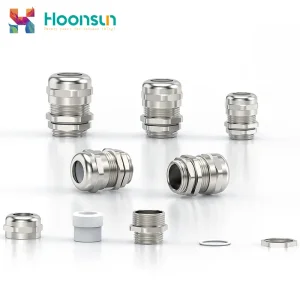
Global operators cannot afford alloy dezincification or stress corrosion cracking. Chinese suppliers compliant with Chart 324 enforce Mill Test Certificates (EN 10204 3.1) across lead-reduced brass (CuZn39Pb3), 304, and 316L stainless steel, preventing embrittlement under cyclic loading.
Harmonized Thread Standards
Multi-regional engineering setups face mismatch issues between European Metric (EN 60423), British Imperial PG (DIN 40430), and North American NPT (ANSI/ASME B1.20.1). Sourcing through Chart 324 standardizes entry threads, thread depths, and pitch integrity to avoid thread shearing during field installation.
Cost Optimization vs. Failure Risk
Cable glands represent less than 2% of the capital expenditure in an industrial installation, yet account for over 35% of post-commissioning ingress and earthing faults. Enterprise buyers prioritize audited manufacturers with in-house CNC machining over secondary broker markets.
Macro Industry Solutions Powered by Chart 324 Standard
Engineered connection reliability where equipment downtime translates directly into catastrophic operational loss.
Offshore & Marine
Designed to combat saltwater oxidation and continuous vibration. TJ clamping double-lock mechanisms guarantee low earth return resistance and zero chloride water penetration into junction housings.
Renewable Energy
Deployed across wind turbine nacelles, utility-scale photovoltaic inverters, and battery storage systems (BESS), managing severe thermal expansion and continuous high-density cyclic current loads.
High-Density Data Centers
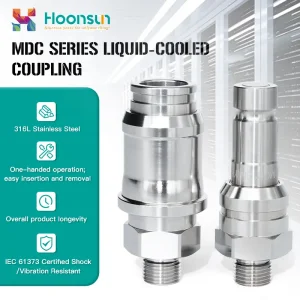
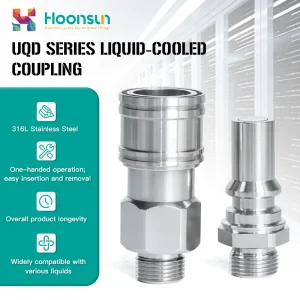
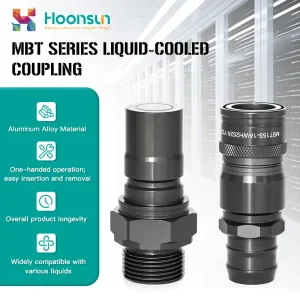
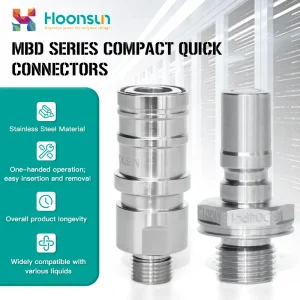
Thermal management loops demand quick disconnect liquid cooling interfaces and non-magnetic stainless glands that isolate electromagnetic interference (EMC) while maintaining positive pressure seals.
Heavy Machinery & Robotics
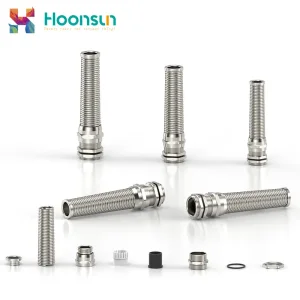
Metal hose unions and anti-bending spiral relief glands safeguard motion-driven multi-core cables against continuous flexing stress, oil spray, metal shavings, and mechanical shear forces.
Technical Roadmap & The Future of Armoured Terminations
How smart manufacturing, AI optical sorting, and advanced metallurgic engineering are transforming China's connector ecosystem.
Smart Sensors & IoT Glands
Development of integrated fiber optic temperature monitoring and dielectric degradation sensing embedded within the cable gland body, warning asset managers of localized heating prior to electrical arc-flash incidents.
Halogen-Free Polymer Formulations
Transition toward Low Smoke Zero Halogen (LSZH) elastomeric seals and bio-derived engineering polyamides that maintain UL 94 V-0 flame ratings and retain elasticity down to -60°C in polar LNG terminals.
Zero-Lead Metallurgical Mandates
Ahead of evolving RoHS and REACH guidelines, manufacturers are introducing advanced silicon brass alloys and proprietary diamond-like carbon (DLC) surface treatments, completely bypassing lead-assisted machining.
Global Industrial Landscape & Localized Compliance Framework
Navigating cross-border electrical certifications and standard harmonization across major international markets.
Regional Harmonization Requirements
Procuring armoured cable glands requires precise adherence to localized safety frameworks. While Chinese manufacturing clusters in Liushi, Yueqing have automated production to deliver remarkable dimensional repeatability, compliance verification rests on authoritative third-party testing:
- European Union (CE, ATEX, IECEx): Terminations must comply with EN 62444 for mechanical retention, continuous thermal endurance, and impact resistance. Hazardous deployments mandate ATEX Zone 1/2 (gas) and Zone 21/22 (dust) certification.
- North America (UL 514B / CSA C22.2): Strict requirements for pull-out retention, grounding continuity, and NPT tapered dryseal threads capable of enduring explosive internal pressures without flame propagation.
- Middle East & Tropical Regions: Solar radiation (UV) weathering according to ISO 4892-2, high ambient operating thresholds up to +120°C, and IP68 water immersion at depths exceeding 10 meters for submersible pumping stations.
HOONSUN Quality Assurance & Factory Testing Protocols
At Zhejiang Hongxiang Connector Co., Ltd., every production run of Chart 324 cable glands undergoes rigorous multi-stage verification: optical thread gauging, hydrostatic leak testing under 1.0 MPa pressure, salt spray exposure tests exceeding 1,000 hours for nickel-plated brass and marine-grade stainless components, and tensile pull-out verification ensuring cable armour retention complies fully with BS 6121 Type CW standards.
Frequently Asked Questions on Armoured Cable Gland Chart 324
Authoritative engineering answers for electrical designers, system specifiers, and procurement officers.
What is the distinction between CW and E1W armoured cable glands?
CW type cable glands provide a single outer seal that clamps down on the external protective jacket of the armoured cable while mechanically gripping the steel wire armour (SWA). E1W type cable glands provide a double-compression seal: an inner elastomeric displacement seal that seals directly around the cable's bedding sheath, and a separate outer seal for the external jacket, preventing gas and moisture transmission along cable interstices.
How does Size Chart 324 ensure proper earth continuity?
Armoured cables utilize their steel or aluminium wire layer as a circuit protective conductor (CPC). Chart 324 components incorporate precision-tapered metallic armour cones and clamping rings designed to bite through surface oxidation, achieving earth fault loop impedance thresholds below 0.1 ohms in compliance with BS 7671 regulations.
Can brass cable glands be directly installed on aluminum enclosures?
Direct contact between bare brass and aluminum causes severe galvanic corrosion due to electrochemical potential differences. When terminating into aluminum enclosures, engineers must specify nickel-plated brass or stainless steel (316L) cable glands accompanied by non-conductive, non-hygroscopic gaskets or specialized barrier washers.
What torque guidelines apply when tightening Chart 324 glands?
Over-tightening distorts internal sealing rings (cold flow effect), permanently damaging internal cable insulation. Under-tightening compromises IP68 hydrostatic barriers and mechanical pull-out strength. Always reference manufacturer torque values (ranging from 32.5 Nm on M20 to 180 Nm on M75) verified via calibrated torque wrenches.
Specialized Connection, Venting & Industrial Assemblies
Explore high-temperature, explosion-proof, marine, and advanced liquid cooling termination hardware from HOONSUN.