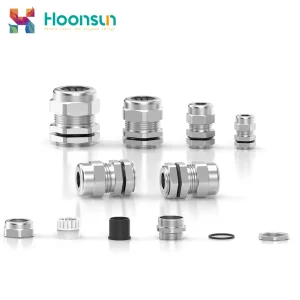
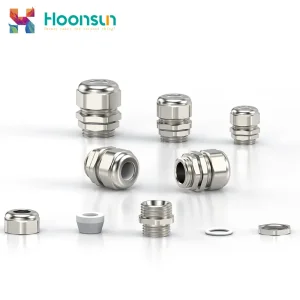
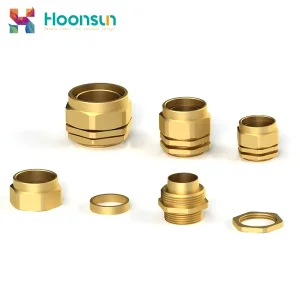
High-Performance Ingress & Armoured Protection Series
Direct factory supply engineered for harsh operating environments, heavy physical strain, and fluid-critical cooling applications. Every fitting is precision-machined in our Yueqing manufacturing hub.
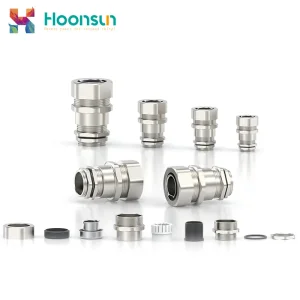
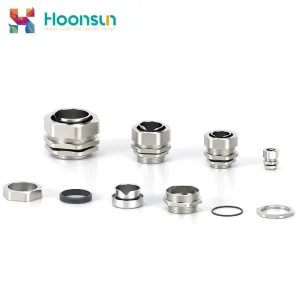
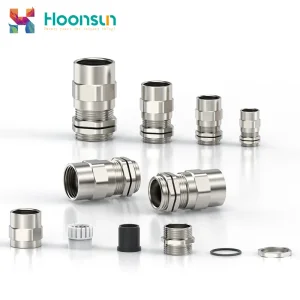
The Commercial and Technical Paradigm of Fitting Armoured Cable Glands
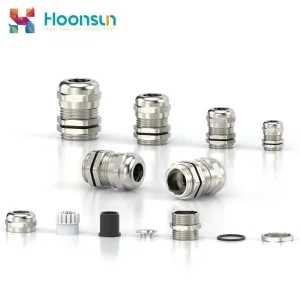
Armoured cable glands represent the critical mechanical and electrical interface between heavy transmission cables and electrical enclosures. Across global energy, maritime, and automation infrastructures, the requirement for robust metallic armour retention and hermetic environmental sealing has transformed the standard cable gland from a passive hardware part into an actively engineered safety component.
Mechanical Armour Retention
Armoured cables—utilizing Steel Wire Armour (SWA), Aluminium Wire Armour (AWA), Steel Tape Armour (STA), or braided metallic shielding—require clamping mechanisms capable of withstanding severe tensile forces. Precision-machined cone and clamping ring assemblies prevent cable pull-out under extreme dynamic tension, satisfying Class A and Class B mechanical pullout parameters per BS EN 62444.
- Clamping Force: Exceeds 90% of cable tensile rupture load
- Armour Compatibility: SWA, AWA, STA, and SWB braid
- Retention Method: Dual taper-cone displacement
Low-Impedance Earth Continuity
In heavy industrial switchgear and substation networks, armour termination serves as the primary return path for electrical fault currents. High-integrity nickel-plated brass and stainless steel gland bodies ensure minimal electrical resistance between armour wires and the enclosure chassis, guaranteeing rapid trip times for earth leakage circuit breakers and preventing localized arcing.
- Earth Fault Rating: Tested up to 43.5kA for 1.0 second
- Contact Surface: 360-degree circumferential contact
- Bonding Accessories: Serrated brass earth tags & locknuts
Dual-Barrier Hydrophobic Sealing
Environmental degradation of internal cable bedding is the root cause of conductor oxidation and insulation breakdown. Leading fitting armoured cable glands employ dual-seal architectures: an inner elastomeric displacement seal that hermetically compresses against the inner cable sheath, coupled with an outer displacement seal preventing salt spray, mud, and water ingress through the armour matrix.
- Ingress Rating: IP66, IP67, IP68 (50m continuous immersion)
- Polymer Matrix: High-grade Neoprene, Silicone, or Viton
- High-Pressure Wash: Verified against IP69K thermal jets
Engineering Perspective: Cold Flow Mitigation in Heavy Cabling
A frequent cause of cable connection failure in heavy manufacturing plants is the "cold flow" or viscoelastic creep of polymer inner sheaths under sustained radial pressure. HOONSUN's precision-engineered gland designs utilize compensating diaphragm seals and controlled-displacement clamping geometries that exert uniform circumferential containment without cutting into inner polymeric bedding, preserving conductor dielectric insulation over decades of service.
Global Technological Trends Reshaping Cable Entry Engineering
The worldwide transition toward renewable electrification, dense data infrastructure, and robotic manufacturing has catalyzed unprecedented demand for high-reliability, climate-resilient cable gland systems.
Offshore Wind & Subsea Electrification
Offshore wind nacelles and floating substations operate under relentless chloride-rich salt spray, extreme vibration, and ultraviolet radiation. The industry has shifted rapidly from standard electro-plated metals toward 316L austenitic stainless steel and thick nickel-plated marine brass glands capable of passing 1,000-hour ASTM B117 salt fog testing without pit corrosion.
AI Data Centers & Liquid Cooling Loops
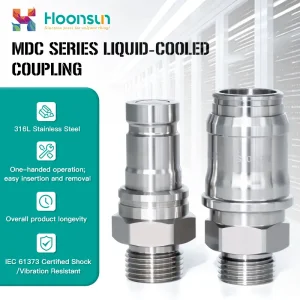
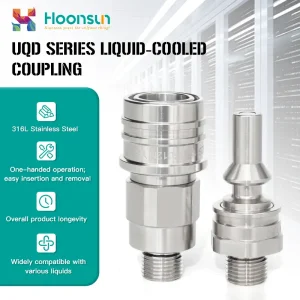
Hyperscale computing clusters and AI training infrastructure operate at extreme thermal densities, driving the convergence of electrical distribution with liquid-cooling distribution units (CDUs). Connectors such as HOONSUN's quick-disconnect couplings (UQD and MDC series) are now co-specified alongside IP68 armoured power entries to deliver complete zero-leakage enclosures.
Decarbonization & Green Hydrogen Facilities
Electrolyzer manufacturing and hydrogen compression skids introduce volatile gas classification risks (Zone 1 / Zone 21 Ex d IIC). Fitting armoured glands engineered with flameproof displacement paths and barrier compound resin prevent explosive gases from migrating through interstitial cable air paths between classified and unclassified plant zones.
Dynamic Robotics & Flexible Conduits
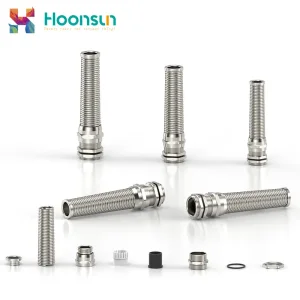
Automated production cells and multi-axis articulated robots subject cable bundles to repetitive torsional fatigue. Tubular metal hose glands and anti-bending spiral terminations prevent localized shear stress at the junction entry, tripling the operational flex-life of armored control and servo feedback cabling.
Localized Engineering Solutions Across Continental Markets
Industrial connection requirements differ significantly across global jurisdictions. Understanding local wiring standards, thread profiles, and hazardous atmosphere categorizations is imperative for engineering procurement success.
North America: NEC & CEC Compliance
In the United States and Canada, electrical systems adhere to NFPA 70 (NEC) and CSA C22.1. Industrial facilities predominantly utilize National Pipe Taper (NPT) threads per ANSI/ASME B1.20.1 to establish 5 engaged threads for flameproof containment. Armoured constructions (Teck90, MC-HL, and interlocked aluminium armour) require UL 514B listed fittings that provide continuous bonding and dry-location/wet-location sealing.
- Thread Standard: NPT (1/2" through 4")
- Listing: UL 514B / CSA C22.2 No. 18.3
- Classifications: Class I, Div 1 & 2; Class II, Div 1 & 2
Europe & UK: EN 62444 & ATEX Directives
European and British infrastructure demands ISO 965-1 metric coarse pitch threads (1.5mm pitch standard) and conformity with BS EN 62444. In hazardous offshore or chemical environments, equipment must satisfy ATEX Directive 2014/34/EU and IECEx schemes, specifying Ex d (flameproof), Ex e (increased safety), and Ex ta (dust ignition protection) with strict impact testing at -40°C.
- Thread Standard: Metric ISO M12 to M100 (1.5mm pitch)
- Certification: CE, ATEX, IECEx, RoHS
- Protection Concept: Ex db IIC Gb / Ex eb IIC Gb
Middle East & GCC: Desert Marine Conditions
Deployments across Saudi Arabia, UAE, and Qatar encounter severe ambient temperatures (+55°C), intensive solar UV radiation, and abrasive windborne sand. HOONSUN's specialized high-temperature nickel-plated brass and fluoropolymer seal packages resist polymer hardening and maintain IP68 hermetic sealing across high diurnal thermal cycling in desalination, oil refining, and solar fields.
- Operational Range: -40°C to +150°C continuous
- Corrosion Rating: High-purity nickel plating (>12µm)
- Exhibition Presence: Middle East Energy (Stand H8.B55)
Material Engineering & Application Selection Matrix
Evaluating structural metallurgy, elastomeric polymer selection, and thread geometry guarantees optimum total cost of ownership and absolute electrical safety across all operating environments.
| Classification | Alloy / Polymer Grade | Ingress Rating | Armour Clamping Mechanism | Primary Industrial Sector | Critical Engineering Advantages |
|---|---|---|---|---|---|
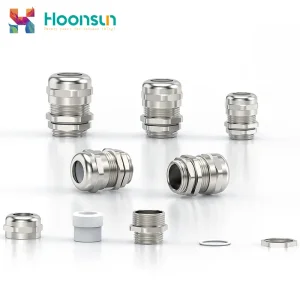
| Heavy Armoured SWA/AWA | CW614N Nickel-Plated Brass | IP68 (5 bar / 50m) | Universal 3-Piece Taper Cone & Clamp Ring | Heavy Substations, Industrial Motors | Exceptional fault-current handling; prevents galvanic mismatch between steel/brass. |
| Marine Grade Armoured | Austenitic 316L Stainless Steel | IP68 / IP69K | TJ-Type Wedge Compression Ring | Shipbuilding, Offshore Wind, Desalination | Extreme molybdenum-enhanced resistance against pitting and crevice corrosion. |
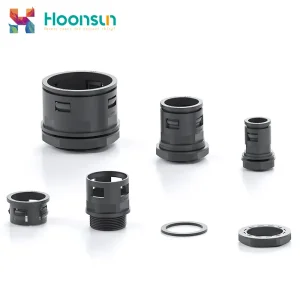
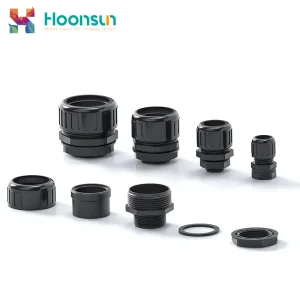
| Corrugated Conduit Gland | Polyamide PA66 (UL94 V-0) | IP68 | Snap-in Annular Claw Ring | Control Panels, Solar Trackers, HVAC | Zero-halogen, non-conductive safety; fast toolless push-in conduit assembly. |
| EMC Shielded Metal Joint | CW617N Brass with Spring Shield | IP68 | 360° Phosphor Bronze Contact Ring | VFD Drives, Robotics, Servo Motion | Continuous low-impedance attenuation (>75dB at 100MHz) against EMI/RFI noise. |
| High-Temperature Series | CW614N Brass / Silicone or FKM | IP68 | Radial Collet Ring Compression | Glass Furnaces, Foundries, Turbines | Continuous operating threshold up to +200°C without elastomer embrittlement. |
| Liquid Cooling Fast Coupling | AISI 303 / 316 / Brass | Zero Leakage / Flush Face | Push-to-Connect Dual Shut-Off Ball Valve | AI Server Racks, EV Battery Packs, ESS | Ultra-low pressure drop; zero spillage during hot-swappable module maintenance. |
Technology Roadmap: The Next Decade in Ingress & Connection Science
As industrial connectivity merges with smart facility monitoring and ultra-high-voltage transmission, Zhejiang Hongxiang Connector Co., Ltd. (HOONSUN) continues to invest in next-generation material science and telemetry-enabled connection prototypes.
Phase I: Adaptive Single-Cone Geometries (2025–2027)
Transitioning multi-part clamping architectures into precision reversible cones that accept both steel wire (SWA) and metallic tape/braid (STA/SWB) without replacing internal rings, reducing field installation human error by over 60%.
Phase II: Integrated Sensing & Thermal Telemetry (2027–2029)
Embedding passive RFID and surface acoustic wave (SAW) micro-sensors within the gland body to transmit real-time contact temperature and vibration metrics directly to supervisory SCADA networks.
Phase III: Low-Carbon Metallurgy & Bio-Polymers (2029–2032)
Implementing closed-loop recycling for high-copper brass alloys and adopting non-petroleum bio-based polyamide resins with UL94 V-0 flame ratings to lower embedded product carbon footprints across EPC infrastructure projects.
Manufacturing Quality Architecture in Yueqing
Operating from Liushi Town, Yueqing—recognized globally as China’s premier electrical engineering manufacturing center—HOONSUN unites high-precision CNC automatic lathes, in-house optical thread inspection, and automated assembly cells.
With more than 80 qualified machinists, technicians, and international sales engineers, every production lot undergoes 100% thread gauge verification and sample water immersion pressure testing before packing for export shipment.
Direct Technical Access: OEM/ODM customization requests receive direct technical support from our engineering team, with 3D CAD modeling, material certification sheets, and physical samples dispatched via global courier.
Macro Industrial Solutions for EPC Contractors & Switchgear OEMs
Procuring cable connection hardware across multi-million dollar engineering, procurement, and construction (EPC) projects requires consistency, certification traceability, and absolute supply chain resilience.
Project Standardization Packages
Eliminate installation errors on massive construction job sites by deploying pre-packaged cable gland sets complete with matching high-conductivity brass locknuts, chloroprene sealing washers, serrated tooth earth tags, and zero-halogen LSF PVC shrouds. Standardizing part sets cuts onsite electrical installation labor by up to 25%.
OEM Private-Label & Custom Sizing
We partner directly with multinational electrical cabinet manufacturers, automation robot brands, and inverter producers. Our CNC workshops provide custom extended thread lengths for thick composite gland plates, bespoke clamping ranges for hybrid power/fiber cables, custom logo laser engraving, and custom barcode packaging.
Comprehensive Document Traceability
Every export shipment is backed by comprehensive quality dossiers: 3.1 Mill Test Certificates verifying brass and stainless steel alloy composition, third-party UL and CE laboratory test reports, IP68 5-bar hydrostatic test logs, and RoHS/REACH chemical compliance declarations.
Frequently Asked Questions on Fitting Armoured Cable Glands
In-depth technical answers addressing installation mechanics, material selection, and regulatory parameters encountered during electrical project design and supplier qualification.
What is the functional difference between single-seal (BW) and double-seal (CW/E1W) armoured cable glands?
Single-seal (often classified as BW type) glands provide mechanical retention and electrical continuity for the cable armour, but do not contain an elastomeric inner sealing ring to isolate the cable's internal bedding from moisture. They are restricted to indoor, dry switchgear installations. In contrast, double-seal glands (such as CW and E1W types) employ an inner elastomeric displacement seal that compresses around the inner cable bedding, and an outer environmental seal that seals against the outer jacket, delivering IP66/IP68 protection for outdoor, wet, and marine environments.
How does an engineer choose between nickel-plated brass and 316L stainless steel cable glands?
Nickel-plated brass (typically CW614N/CZ121 alloy) is the standard for over 85% of commercial, power generation, and industrial automation applications due to its excellent mechanical strength, superior electrical conductivity for earth fault dissipation, and cost efficiency. However, in environments with high concentrations of atmospheric chlorides (offshore drilling platforms, coastal wind towers), acidic vapors (chemical processing), or stringent sanitary washdowns (pharmaceutical and food plants), 316L stainless steel is required due to its molybdenum content, which prevents pitting and stress-corrosion cracking.
Why is tightening torque critical to preserving the stated IP68 rating?
An IP68 rating indicates water resistance under specific hydrostatic pressure (e.g., 5 bar for 30 minutes). If the gland cap nut is under-torqued, the elastomeric seal cannot achieve sufficient radial compression against the cable jacket to close micro-interstices. Conversely, excessive torque can deform the elastomer or cause shear failure of the cable jacket and inner insulation (cold flow deformation). Always adhere to the recommended torque specifications (expressed in N·m) detailed on HOONSUN technical product datasheets.
Can Metric threaded cable glands be used in NPT threaded enclosure entries?
Direct insertion of a parallel Metric (M) thread into a tapered National Pipe Taper (NPT) thread hole is strictly prohibited by both IEC and NEC codes. Metric threads possess a parallel 60° profile with consistent pitch, whereas NPT threads taper at 1°47' (3/4" taper per foot). Forcing a mismatch will strip the threads and invalidate explosion-proof and ingress safety ratings. When crossing standards, an approved, certified thread adaptor or reducer (e.g., Male NPT to Female Metric) manufactured from identical metallurgical alloys must be employed.
What measures guarantee earth continuity when terminating Aluminium Wire Armoured (AWA) single-core cables?
Single-core power cables utilize non-magnetic Aluminium Wire Armour (AWA) rather than steel (SWA) to prevent magnetic heating induced by eddy currents. When terminating AWA cables, the gland clamping cones and rings must be precision-engineered to accommodate aluminium wire diameters without gouging, and the connection components must maintain galvanic compatibility or include dielectric barrier plating to prevent galvanic corrosion between dissimilar metals (aluminium and copper/brass).
Specialized Armoured & Hazardous Connection Fittings
Browse our specialized solutions encompassing anti-bending strain relief, EMI/RFI shielding, liquid-cooling quick couplers, and hazardous-area BWL explosion-proof terminations.