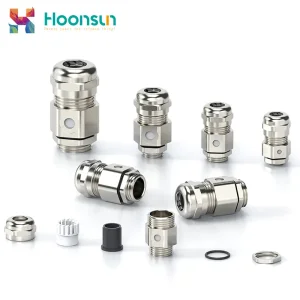
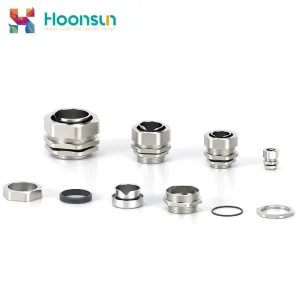
High-Integrity Marine Cable Gland Portfolio (Part 1)
Engineered for high hydrostatic burst pressures, severe mechanical pull-out strain relief, and galvanic isolation across shipboard bulkheads, deck machinery, and subsea terminal enclosures.
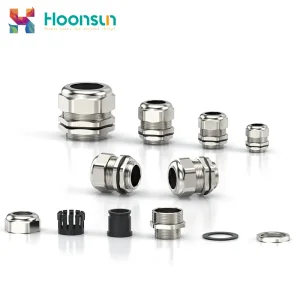
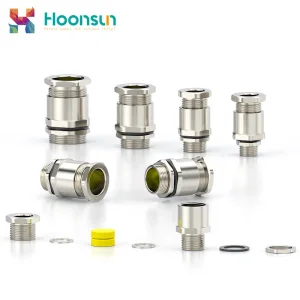
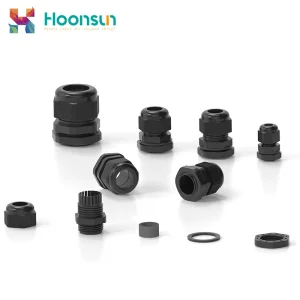
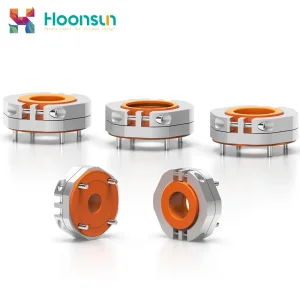
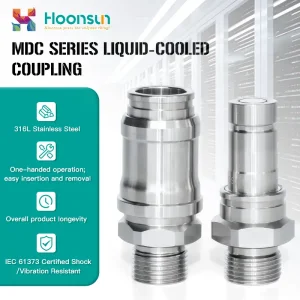
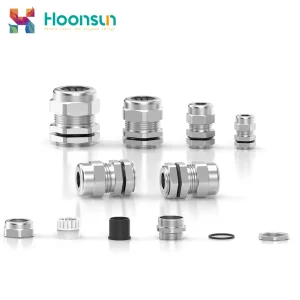
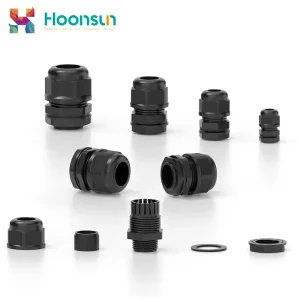
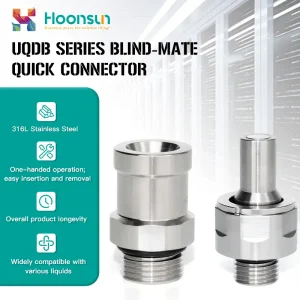
Critical Cable Entry Infrastructure for Marine & Offshore Electrification
Modern naval architecture, deep-water offshore wind substations, and floating production storage and offloading (FPSO) vessels demand zero-compromise sealing boundaries against high hydrostatic pressures, galvanic salinity, and mechanical vibration harmonic resonance.
Naval & Commercial Shipbuilding (IMO / SOLAS)
Bulkhead and deck penetrations represent catastrophic points of failure during fire propagation or compartment flooding. Our marine cable glands integrate intumescent elastomer barriers and flame-tight metallic labyrinths that comply with SOLAS Chapter II-1/II-2 fire-test standards.
- JIS F8801 / F8802 and DIN 89280 compliant forms
- A60 fire-rated bulkhead sealing compatibility
- Hydrostatic barrier retention up to 2.5 MPa burst limit
Offshore Wind Platforms & Converter Substations
Exporting high-voltage alternating current (HVAC) and direct current (HVDC) power demands 360-degree circumferential braided wire armor (SWA/AWA) bonding to extinguish electromagnetic interference (EMI) while resisting severe salt fog atmospheres exceeding 1,000 hours per ASTM B117.
- Low-impedance ground cone termination (< 2 mΩ)
- High-chloride pitting resistance in 316L / Duplex stainless
- Dynamic wave-slap vibration dampening seals
LNG Carriers & Arctic-Class Cryogenic Vessels
Extreme temperature fluctuation between cargo holds (-163°C) and exposed deck stations (-50°C to +45°C) leads to polymer embrittlement. Our bespoke formulations utilize low-temperature chloroprene and fluorosilicone sealing rings to prevent hydrocarbon gas migration.
- Operating thermal span: -60°C to +130°C continuous
- Explosion-proof Ex d IIC / Ex e II flame paths
- Zero cold-flow deformation under clamping torque
Engineering Imperative: In marine electrical distribution, cable glands cannot be treated as passive hardware. A single gasket failure at an unsealed deck motor or subsea sonar distribution box compromises entire multi-megawatt propulsion buses or risks gas ignition across dangerous zone-classified machinery compartments.
Global Supply Chain Status: Strategic Sourcing from China's Precision Epicenter
Over 70% of global industrial cable entries originate from Zhejiang Province. HOONSUN leverages integrated non-ferrous casting, ultra-precision multi-axis Swiss CNC turning, automated plating lines, and strict metallurgical verification.
Direct Factory Economics
By eliminating multiple tiers of intermediary trading companies, European, Asian, and American EPC contractors gain a 30% to 45% cost advantage without compromising alloy traceability or tensile clamping ratings.
CNC Micron-Level Precision
Threads machined to class 6g/6H metric and class 2A/2B NPT fits ensure effortless site torque application, zero cross-threading risk on high-vibration deck winches, and repeatable sealing face compression.
Scalable Mass Production
With high-speed automated injection moulding for polyamide PA66 units and automated bar loaders feeding 80+ CNC machine centers, we maintain buffer stocks exceeding 500,000 standard marine units for rapid retrofit mobilization.
Complete Material Heat Traceability
Every batch of marine brass (HPb59-1 / CuZn39Pb3) and austenitic stainless steel (304 / 316L) is delivered with raw material EN 10204 Type 3.1 mill test certificates documenting exact chemical composition and tensile limits.
Material Metallurgy & Marine Environmental Performance Specification
Selecting the correct marine cable gland requires balancing galvanic compatibility with shipboard hull metals, chemical resilience against hydraulic and fuel oils, and long-term ingress protection under continuous salt spray immersion.
| Gland Series / Alloy | Ingress Rating | Marine Class Standard | Thread Geometries | Armor Shielding Type | Ideal Marine Application Area |
|---|---|---|---|---|---|
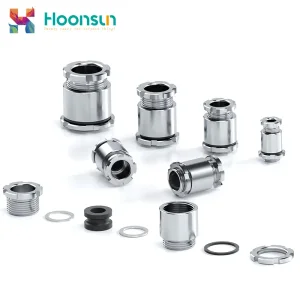
| TJ Marine Brass (Nickel Plated) | IP68 (5 bar) | JIS F8801 / DIN 89280 | M18 - M100 / G 1/2" - G 3" | Steel Wire / Bronze Braid Clamping | Deck winches, capstans, navigation radar masts, propulsion controls |
| AISI 316L Stainless Steel | IP68 / IP69K | IEC 62444 / EN 60079 | Metric (M12-M110) / NPT (1/4"-4") | 360° Low-Resistance Earthing Ring | Exposed offshore jacket substations, chemical parcel tankers, sonar domes |
| Ex4 Flameproof Barrier Series | IP66 / IP68 | ATEX / IECEx Ex d / Ex e | Metric / NPT / ISO 7/1 | Armored (SWA, STA) + Epoxy Barrier | LNG pump rooms, FPSO moonpools, hazardous battery compartments |
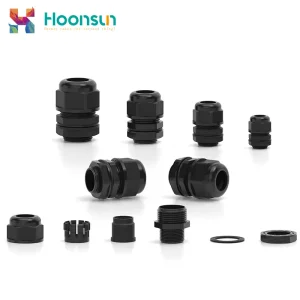
| Reinforced Marine Nylon PA66 | IP68 | UL 514B / DNV Type Approval | Metric / PG / NPT / Gas G | Non-armored flexible power / instrumentation | Interior cabin distribution, bridge instrumentation consoles, HVAC plant |
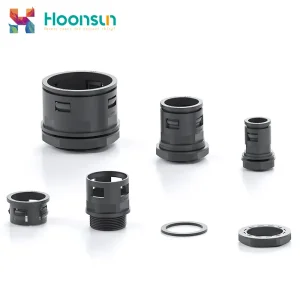
| Nickel-Plated Brass Flexible Conduit | IP65 - IP67 | EN 61386 Machinery Standard | Metric M16 - M63 / PG9 - PG48 | Interlocked metallic conduit clamping | Articulated steering gear rooms, marine crane booms, engine gantry systems |
Global Class Society Compliance & Shipyard Field Assurance
Marine electrical systems operate under the scrutiny of major classification societies. Our manufacturing protocols adhere to the rigorous verification standards required by maritime inspectors and naval procurement authorities worldwide.
Classification Society Alignment
Product architecture is formulated to satisfy documentation and testing criteria equivalent to DNV, ABS (American Bureau of Shipping), Lloyd's Register (LR), Bureau Veritas (BV), and China Classification Society (CCS) guidelines.
- Flame propagation resistance per IEC 60332-1
- Mechanical pull-out retention Type A and Type B per IEC 62444
- Submersion testing up to 50 meters depth for subsea junction boxes
UL & CE Marking Harmonization
Both standard and custom cable gland models carry North American UL certification under UL 514B for electrical conduit hardware and CE Low Voltage Directive (LVD) and RoHS 2.0 / REACH hazardous substance elimination compliance.
- Zero restricted phthalates or hazardous cadmium plating
- Passivated trivalent chromium surface treatments
- UL94 V-0 and V-2 self-extinguishing polymer ratings
Localized Global Delivery Support
With localized project hubs supporting drydock centers in Singapore, Rotterdam, Busan, Dubai, and Houston, we provide urgent replacement glands, custom-cut thread adaptors, and reducer bushes within expedited logistical windows.
- Rapid air-freight emergency response dispatch
- Customized kitting with bulkheads, O-rings, and locknuts
- Direct engineering access for CAD drawing verification
Real-World Deployment in Extreme Marine Operations
Explore how HOONSUN marine cable glands perform across demanding offshore engineering contexts where environmental isolation and system uptime are critical.
Offshore Wind Tower Hubs
Installed inside nacelles and tower transition pieces subjected to continuous wave motion and heavy condensation. Our breathable and membrane glands equalize internal pressure while blocking micro-droplet moisture ingress.
FPSO Topside Processing Modules
Subjected to combustible crude gases and sour H2S vapors. We supply Ex4 certified barrier glands featuring solid resin compound damming to isolate power feeds to high-pressure injection pumps.
Polar Research & Ice-Breakers
Navigating sub-zero pack ice where exterior temperatures drop to -50°C. Specially cross-linked silicone seals ensure elasticity without micro-cracking, maintaining IP68 integrity against driving sleet.
Subsea ROVs & Trenchers
Operating at ocean depths under severe external hydrostatic loading. Strengthened brass and 316L gland assemblies protect hydraulic valve telemetry and high-bandwidth fiber optic video feeds from water ingress.
Engineering Roadmap 2026-2030: Next-Generation Marine Sealing Solutions
Anticipating the transition toward high-voltage shipboard electrification, autonomous vessels, and hydrogen propulsion systems, HOONSUN is engineering advanced cable connection technologies.
Smart IoT Monitoring Glands
Integrating miniature embedded thermal sensors and micro-hygrometric indicators directly into the gland cap nut to wirelessly transmit early warnings of seal failure or terminal overheating.
Bio-Polymer Matrices
Transitioning from petroleum-derived PA66 to high-strength bio-based polyamides with identical UL94 V-0 flame ratings and enhanced resistance to ultraviolet ocean exposure.
Liquid Hydrogen Marine Glands
Developing hermetic metallic seal glands capable of handling non-leaking containment at ultra-deep cryogenic temperatures (-253°C) for green hydrogen cargo transports.
Ultra-High-Voltage (UHV) DC Glands
Custom shielding and corona-resistant stress-cone geometries designed for >66kV floating offshore wind inter-array cables and subsea DC hub tie-ins.
Frequently Asked Questions by Marine Engineers & Procurement Specialists
Comprehensive engineering clarifications addressing thread standards, galvanic isolation, hazardous ratings, and installation torque calculations.
How does JIS F8801 / F8802 differ from European DIN 89280 marine glands?
JIS standard glands (common across Japanese and Korean shipyards) utilize specialized Japanese marine pipe threads with distinct taper sealing rings and armor clamping cones designed for basket-weave cable armor. DIN 89280 employs standard metric threads (M18 to M100) with heavier wall thickness. HOONSUN manufactures both specifications with class-approved dimensional accuracy.
What measures are taken to prevent galvanic corrosion between brass glands and aluminum enclosures?
When mounting nickel-plated brass or bronze glands onto marine aluminum alloy bulkheads or terminal enclosures, galvanic electrolytic action can rapidly corrode the aluminum. We supply high-dielectric insulating non-hygroscopic washers and specialized PTFE sleeves to electrically isolate the gland body from the panel wall.
When must an Ex d barrier cable gland be used instead of a standard elastomeric seal gland?
In accordance with IEC 60079-14 marine hazardous area installations, an epoxy resin barrier gland (such as our Ex4 series) is mandatory if the marine cable does not possess a gas-tight extruded filler bedding, if the zone requires Ex d flameproof enclosure containment, or if the installation is in Zone 1 / Class I, Division 1 areas with combustible gas volumes exceeding 2 liters.
How is EMC continuity achieved on steel wire armored (SWA) or bronze braided marine cables?
Our marine glands feature a precision-machined internal cone and clamping ring mechanism. When tightened, the cable armor wires are flared over the 360-degree conductive brass cone, creating a continuous low-resistance bonding path (<0.002 ohms) from the cable shield directly to the vessel's equipotential grounding hull ground plane.
What is the maximum hydrostatic depth rating for HOONSUN IP68 cable glands?
Standard catalog IP68 metal cable glands are tested at 5 bar (50 meters equivalent water head) for 30 minutes per IEC 60529. For deep-sea ROV and subsea applications, we provide custom engineered assemblies tested up to 25 bar (250 meters) utilizing dual radial elastomer O-rings and backup anti-extrusion rings.
Can you manufacture custom threads and non-standard clamping spans for retrofit drydocking?
Yes. As an integrated manufacturer with on-site tooling and CNC operations, we routinely machine custom thread lengths (up to 50mm extended threads for thick composite vessel walls), custom pitches (e.g. PG to NPT conversion adapters), and multi-hole elastomer inserts for grouped instrumentation lines within 5 to 7 working days.
Specialty Marine Cable Seals & Conduit Unions (Part 2)
Complete your vessel installation with specialized flexible pipe unions, split retrofit glands, pressure-equalizing breathers, and metallic hose connectors engineered for harsh marine deployment.