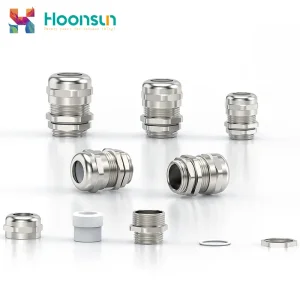
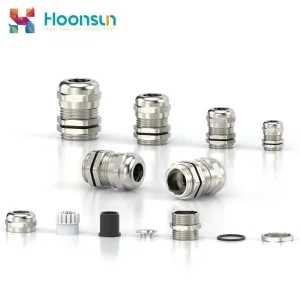
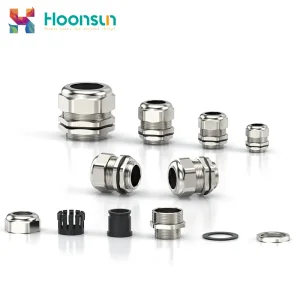
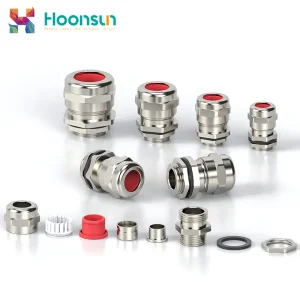
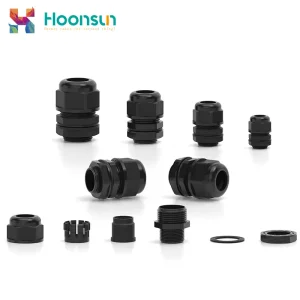
Precision Engineering Series: Pg 13.5 & High-Performance Glands
Explore UL-certified, IP68-sealed cable management solutions engineered for harsh industrial enclosures, machinery, and automation hubs.
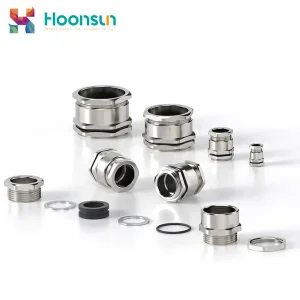
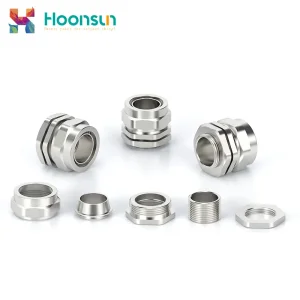
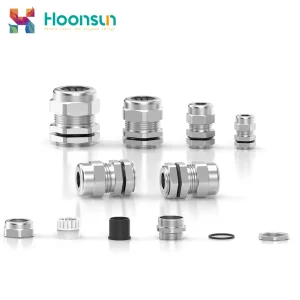
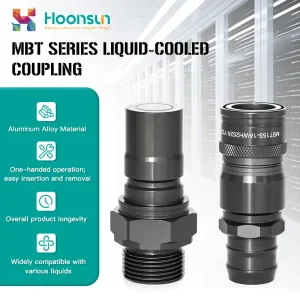
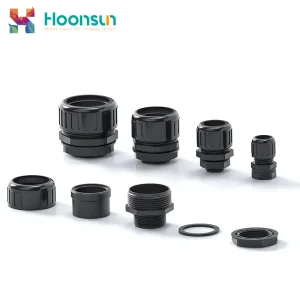
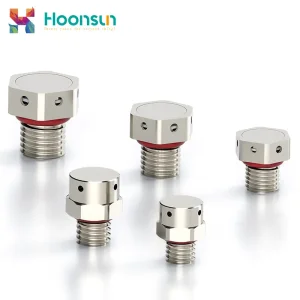
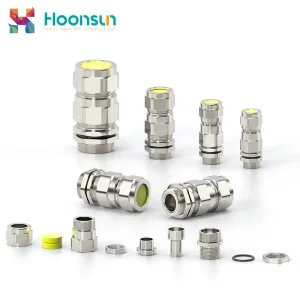
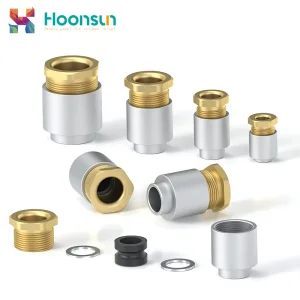
The Engineering Evolution of Pg 13.5 Cable Glands
Deciphering the dimensional tolerances, mechanical torque resistance, and elastomeric compression principles governed by DIN 40430 and IEC 62444.
DIN 40430 Thread Geometry
The Pg 13.5 standard features an 80-degree thread flank angle and an outer diameter nominal dimension of 20.4 mm with a 1.411 mm pitch. Our manufacturing ensures thread tolerances within ISO 965 Class 6g accuracy, eliminating cross-threading and ensuring structural rigidity under continuous harmonic vibration.
Radial Ingress Sealing (IP68/IP69K)
Utilizing high-elasticity NBR, EPDM, and fluorocarbon (FKM) vulcanized inserts, our Pg 13.5 cable glands execute progressive radial compression. Under a 3.5 to 5.0 Nm cap tightening torque, the seal provides an uninterrupted seal tested to resist continuous submersion up to 5 bar (50 meters) for 30 days.
Strain Relief & Clamping Integrity
Incorporating optimized polyamide PA66 split-claw collets, our cable glands deliver Type A strain relief compliance per EN 50262. They prevent dynamic tensile load transfer onto inner electrical cores, resisting longitudinal pull-out forces exceeding 150 Newtons without sheath displacement.
| Nominal Thread | Outer Diameter (mm) | Clamping Range (Standard) | Clamping Range (Reduced) | Max Tightening Torque | Protection Rating |
|---|---|---|---|---|---|
| Pg 13.5 (Nickel-Plated Brass) | 20.40 mm | 6.0 mm – 12.0 mm | 5.0 mm – 9.0 mm | 5.0 N·m | IP68 / 5 Bar |
| Pg 13.5 (Polyamide PA66) | 20.40 mm | 6.0 mm – 11.5 mm | 4.0 mm – 8.0 mm | 3.5 N·m | IP68 / UL 94 V-0 |
| Pg 13.5 (AISI 316L Stainless Steel) | 20.40 mm | 6.5 mm – 12.0 mm | 5.0 mm – 10.0 mm | 7.5 N·m | IP69K / Salt Spray 1000h |
Global Procurement Demands & Industrial Scenarios
How international Tier-1 EPC contractors, machine builders, and system integrators address supply vulnerabilities through verified component resilience.
Supply Redundancy
Global supply chains require secondary supplier qualification with dual-sourcing architectures. OEM buyers demand factory-direct access to eliminate intermediary margins, lower inventory runout risks, and secure locked bill-of-materials (BOM).
Traceability & Auditing
Procurement teams prioritize compliance with RoHS, REACH, CE, and UL 514B directives. Full metallurgical lot traceability, raw material mill test certificates (MTR), and spectral batch analysis are mandatory for critical infrastructure builds.
Renewable Resilience
Utility-scale solar farms and wind turbine nacelles demand Pg 13.5 glands with extreme UV resistance (UL 746C f1 rated) and resistance to desert thermal cycling (-40°C to +120°C) without micro-cracking or polymer embrittlement.
Total Cost of Ownership
Field maintenance costs far exceed unit purchase costs. Engineering teams select precision-machined glands that eliminate water ingress callbacks, galvanic corrosion, and seal dry-rot, optimizing life-cycle reliability across 20+ year plant lifespans.
China Factory 4.0: Resilient Supply Ecosystems & Scale
Combining automated CNC multi-spindle turning, digital MES control, and integrated cluster logistics in Yueqing, Zhejiang.
Precision Automated CNC Machining
Operating multi-axis Swiss-type CNC centers and automated cold-forging production lines. Every metal gland body and cap undergoes computer-controlled thread cutting with tolerance verifications down to ±0.015 mm, assuring flawless assembly compatibility.
MES & Optical Quality Inspection
Our intelligent workshop utilizes automated machine vision sorting to check thread engagement, deburring quality, and O-ring positioning at up to 300 parts per minute. Defective parts are pneumatically rejected, guaranteeing near-zero PPM defect rates.
Vertical Supply Integration
Located in the heart of Liushi, Yueqing, our factory leverages immediate access to raw metallurgical billets, specialized eco-friendly nickel plating baths, and high-purity polymer compounding, drastically reducing production lead times for large OEM orders.
Frequently Asked Questions (FAQ) for Engineering Buyers
Authoritative technical guidance addressing dimensions, international conversions, material integrity, and regulatory certifications.
What are the exact dimensional characteristics of a Pg 13.5 thread?
A Pg 13.5 thread conforms to the German DIN 40430 standard. It features a major thread diameter of 20.4 mm, a minor diameter of 19.0 mm, a pitch of 1.411 mm (equivalent to 18 threads per inch), and an 80-degree flank angle. It differs distinctly from metric threads (e.g., M20x1.5), requiring precise enclosure cutouts of 20.5 mm to 21.0 mm.
Can Pg 13.5 cable glands be directly substituted with Metric M20 glands?
While the outer dimensions of Pg 13.5 (20.4 mm) and M20 (20.0 mm) appear close, their thread pitches and profiles are incompatible. Direct threading is impossible without damage. However, when using unthreaded clearance clearance holes, an M20 gland can often replace a Pg 13.5 gland using appropriate locknuts and sealing washers, or via specialized brass thread adapters.
Which body material should be selected: Brass, Stainless Steel, or Nylon?
Nickel-plated brass is optimal for industrial machinery requiring high mechanical shock resilience, wide temperature stability, and EMC ground shielding. Stainless steel (AISI 304 or 316L) is necessary for food, beverage, chemical, and offshore environments with severe chloride attack. Polyamide PA66 is the cost-effective, non-conductive solution for standard junction boxes and control panels.
How is continuous IP68 ingress protection guaranteed under field conditions?
IP68 integrity relies on three interdependent engineering parameters: matching the actual outside diameter (OD) of the cable to the gland's specified clamping range, applying the calibrated cap torque using a calibrated tool, and ensuring flat enclosure contact with an undamaged NBR/FKM O-ring seated in the undercut thread groove.
Advanced Harsh-Environment Cable Management Solutions
Heavy-duty, explosion-proof, EMC-shielded, and thermal-dissipating cable joints direct from the manufacturing floor.