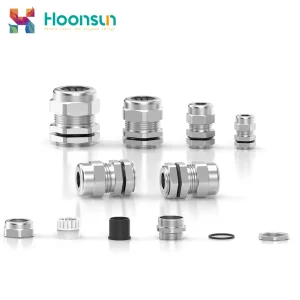
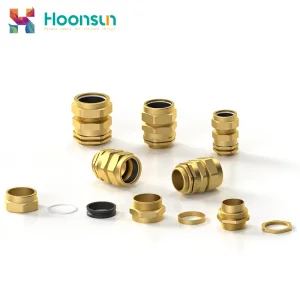
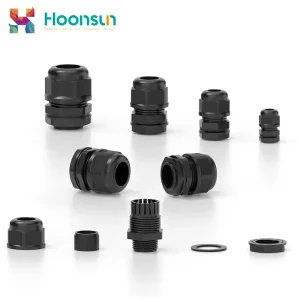
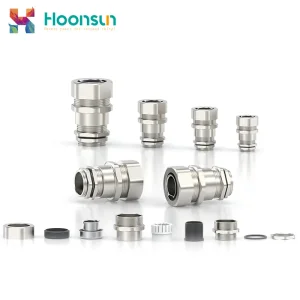
Engineered Hazardous Area Ingress Protection Systems (Part I)
Precision-machined metal and polymer assemblies tested to international explosion-proof, marine, and dual-certified standards.
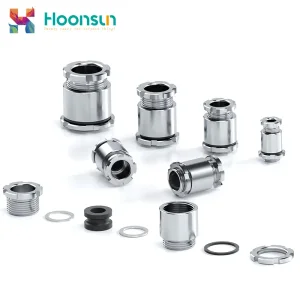
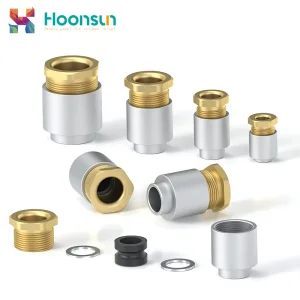
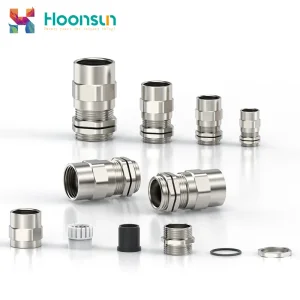
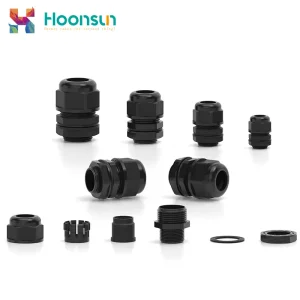
The Global Industrial Landscape for Hazardous Area Cable Glands
Navigating explosive atmospheres (ATEX, IECEx, NEC 500/505) under heightened energy transition demands and stricter environmental mandates.
Stringent Ex d & Ex e Harmonization
Global EPCs operate across varied regional jurisdictions, requiring cable glands that bridge North American Class/Division (NEC 500) systems with Zone-based ATEX and IECEx frameworks. Glands must guarantee continuous dissipation of ignition energies and eliminate flame propagation along containment paths.
The convergence of offshore floating production (FPSO), hydrogen transport, and petrochemical revamps necessitates multi-certified enclosures capable of surviving corrosive chloride concentrations and mechanical thermal expansions without degrading sealing elastomers.
Material Innovation Under Hostile Chemistry
Standard brass alloys are progressively yielding to electropolished 316L austenitic stainless steel and high-spec CuZn39Pb3 brass coated with electroless nickel or hot-dip tin plating. The objective is mitigation of stress corrosion cracking (SCC) induced by hydrogen sulfide (sour gas) and coastal salt fogs.
Internally, fluorocarbon (FKM) and silicone elastomeric seals have displaced traditional vulcanized nitriles to handle expanded thermal bands (-60°C to +140°C), resisting compression set under long-duration torque loadings.
Electrification & Data Center Infrastructure
Battery energy storage systems (BESS), utility-scale battery banks, and hazardous liquid cooling lines in compute facilities are generating entirely new containment criteria. The generation of volatile off-gassing during thermal runaways dictates explosion-proof pressure integrity within DC cable transit enclosures.
Simultaneously, cable architectures incorporate high-density power conductors paired with delicate signal fiber optics, driving procurement towards dual-seal cable glands with integrated strain relief and 360° low-impedance EMC shielding.
The Strategic Efficiency of China's Cable Gland Manufacturing Ecosystem
How clustered supply loops in Yueqing, Zhejiang, combined with advanced multi-axis CNC automation, produce measurable cost and lead-time advantages for overseas buyers.
Vertical Supply Density (Liushi Ecosystem)
Situated in the heart of China’s electrical component manufacturing center, our operations minimize logistic frictions. Raw bar stock extrusion, precision casting, high-tolerance CNC lathe threading, surface nickel-plating, and injection molding of polyamide bodies occur within a localized radius.
This geographic concentration reduces raw material freight lag, shields procurement from global logistical shocks, and allows on-demand shifts between standard metric pitches and non-standard imperial threads.
Precision Multi-Axis Automated Machining
Modern hazardous area glands demand tight dimensional tolerances to maintain flamepath clearance (gap ≤ 0.15mm per IEC 60079-1). Our plant leverages multi-spindle automatic lathes and computerized thread milling to ensure entry thread engagement integrity across Metric, PG, NPT, and BSPP (G) profiles.
Eliminating human variability in machining prevents galling on stainless steel threads and maintains uniform compression rings that preserve IP68/IP69K sealing ratings across all production lots.
In-House Compliance Testing Laboratories
Rather than relying on third-party batch validations, our testing facilities execute rigorous hydrostatic pressure tests (up to 20 bar continuous immersion), pneumatic burst verifications, tensile pull-out tests, and thermal cycling shock testing directly on factory floor samples.
This rigorous internal verification guarantees that the certifications stamped on the hardware (CE, UL, RoHS, ATEX/IECEx standards) represent physical capability in critical service environments.
Hazardous Area Cable Gland Selection & Specification Matrix
Use this engineering matrix to evaluate mechanical, ingress, and chemical compatibilities prior to final procurement.
| Gland Series / Profile | Base Metallurgy / Polymers | Explosion Protection Concept | Certified Ingress Rating | Primary Industrial Use Case |
|---|---|---|---|---|
| Armored Heavy Duty (CW/E1W) | CW614N Brass / Electroless Nickel Plating | Ex d (Flameproof) & Ex e (Increased Safety) | IP66 / IP68 (10 bar, 30 min) | Offshore drilling rigs, refineries, armored SWA/AWA cable entries |
| Marine Grade (JIS / TH / TJ) | Marine Brass / 304 or 316L Stainless Steel | Ex e, Flame Retardant, High Salt Resistant | IP68 (Continuous Submersion) | Shipbuilding, commercial docks, marine propulsion wiring enclosures |
| Engineered Nylon PA66 Split | Polyamide PA66 (UL 94 V-0 Self-extinguishing) | Non-sparking / Increased Safety (Safe Areas/Zone 2) | IP68 / NEMA 4X / NEMA 6 | Pre-terminated cabling, control consoles, telecom outdoor cabinets |
| Flexible Metallic Conduit Gland | Nickel-Plated Brass / Zinc Alloy | Mechanical Containment & Earthing Continuity | IP65 to IP67 | Industrial robotic arms, servo articulation, heavy automated machinery |
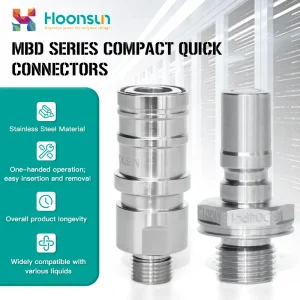
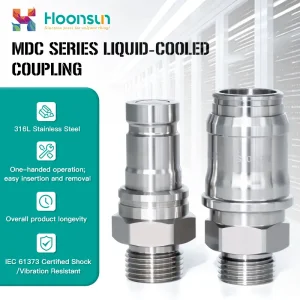
| Direct-Lock Liquid Cooling Couplers | Passivated 304/316L Stainless Steel / Anodized Al | Zero-Drip High Pressure Fluidic Sealing | Hermetic / Leak-Free Quick Coupling | Data center server immersion loops, high-voltage EV battery manifolds |
High-Stress Field Deployments & Mission-Critical Applications
Engineered to prevent catastrophic ingress, maintain ground path integrity, and isolate internal explosive ignition.
Upstream & Midstream Hydrocarbons
Deployed on offshore platforms, production wellheads, and LNG gasification plants where methane and hydrogen sulfide risks demand Ex d flameproof barrier glands capable of withstanding external internal explosion forces without structural rupture.
Marine Vessels & Offshore Substations
Naval architecture and wind farm converter stations depend on our JIS and TH marine-certified glands to protect power lines from continuous corrosive sea salt spray, high humidity, and extreme hydrodynamic washdown pressures (IP68/IP69K).
Modern Mining & Heavy Slurry Plants
Subterranean coal mines, processing crushers, and mineral beneficiation equipment rely on robust armored cable sealing rings (CW series) to prevent combustible coal dust from entering motor terminal enclosures despite heavy kinetic vibration.
EV Powertrain & Cleanroom Manufacturing
From lithium gigafactories to liquid-cooled EV fast chargers, specialized fluoropolymer-sealed cable glands and MDC/MBD quick couplings eliminate coolant leaks and isolate battery cell chambers against environmental dust and thermal spikes.
Market Evolution & Corporate Procurement Requirements
Key trends reshaping hazardous area hardware specifications through 2030 and beyond.
Compound Material Engineering
Traditional single-elastomer seal rings are being replaced by composite dual-durometer compounds combining outer chemical barriers with high-elasticity inner cores. This configuration maintains clamping force during sudden freeze-thaw cycles without cold-flow displacement.
Supply Chain Traceability
International procurement teams require verifiable raw material heat numbers, 3.1 Mill Test Certificates (EN 10204), and RoHS/REACH compliance documentation for every machined brass or stainless steel batch to pass third-party ESG and engineering audits.
Standardized Modular Inventory
To reduce SKU bloat across multinational engineering projects, buyers are standardizing on universal glands featuring swappable armor clamping cones and multi-entry sealing inserts that accept both braided (CY/SY) and steel wire armor (SWA) cables.
Frequently Asked Technical & Procurement Questions
Engineered answers covering flamepaths, metallurgy, thread engagement, and international compliance standards.
What is the fundamental engineering difference between Ex d and Ex e cable glands?
How does thread form selection (Metric vs NPT vs PG vs G) impact explosion protection integrity?
Why is IP68 performance contingent on installation torque and outer sheath measurement?
When should 316L stainless steel be chosen over nickel-plated brass in marine installations?
What documentation and inspection protocols accompany export volume shipments?
Specialized Hazardous Area & Industrial Cable Glands (Part II)
Direct-from-factory solutions for harsh, corrosive, marine, and explosion-classified electrical transit points.