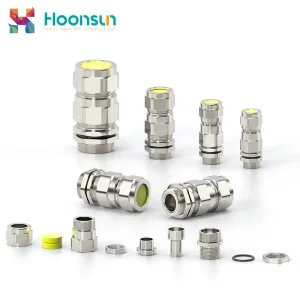
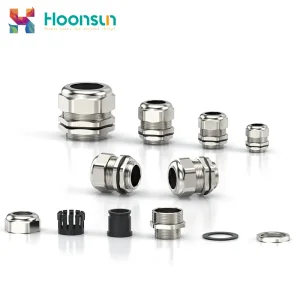
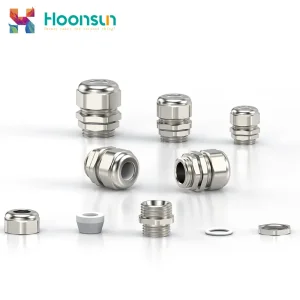
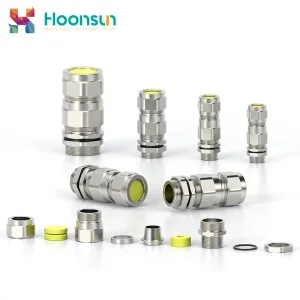
Primary Metal Hose Cable Gland Solutions for Norway
Engineered for high-integrity conduit-to-enclosure transitions, corrosion resilience, and certified IP68 ingress protection against North Sea maritime environments.
Industrial Reality: The Norwegian Sector & Global Operational Demands
A rigorous examination of electrical cable routing, mechanical conduit anchoring, and the harsh metallurgical challenges along the Norwegian continental shelf.
The industrial ecosystem in Norway operates under some of the most unforgiving engineering conditions on earth. Driven by high-value sectors such as offshore energy exploration (Equinor and tier-one EPC contractors), deep-sea aquaculture, electric maritime propulsion, and land-based process automation, the technical standards for electrical enclosures and flexible conduit containment leave zero margin for component failure. In particular, the deployment of metal hose cable glands (flexible conduit connectors) is not merely a question of electrical continuity, but an essential barrier against extreme ambient moisture, airborne sodium chlorides, sub-zero embrittlement, and persistent high-amplitude dynamic vibration.
Material Selection Realities: Marine-Grade 316L Stainless Steel vs. Nickel-Plated Brass
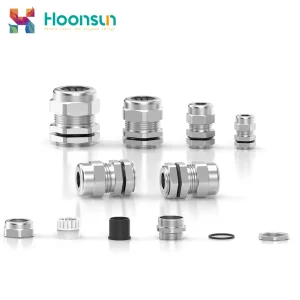
Off the coast of Bergen, Stavanger, and Hammerfest, atmospheric corrosion severity regularly hits ISO 12944 category C5-M or CX (Extreme Marine). Conventional industrial fittings fabricated from standard zinc alloy or run-of-the-mill brass exhibit rapid dezincification and localized pitting corrosion under repetitive salt spray fog. For Norwegian projects, our precision Chinese manufacturing facilities strictly utilize AISI 316L (EN 1.4404) Austenitic Stainless Steel with a minimum 2-3% Molybdenum content to resist pitting and crevice corrosion in chloride-heavy wash-down areas. Furthermore, for onshore substations, tunnel ventilation controls, and indoor automation skids, our heavy-gauge CuZn39Pb3 brass coated with a uniform 10-15 µm electrolytic nickel plate provides superior electromagnetic compatibility (EMC) attenuation alongside structural resistance to mechanical impacts.
Offshore O&G & Maritime Rigging
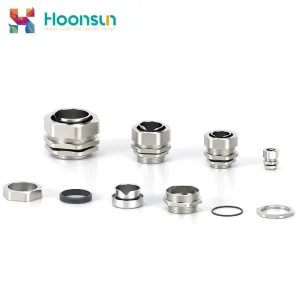
Norway's NORSOK standards necessitate electrical glands with verifiable pull-out clamping for braided conduits. Metal hose cable glands must ensure structural conduit containment during North Sea wave vibration without compromising IP68 gas-tight ingress.
Electrified Fjords & Green Vessels
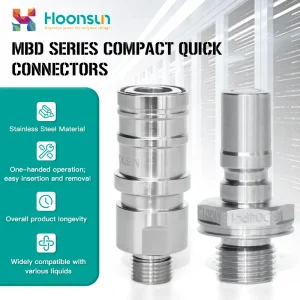
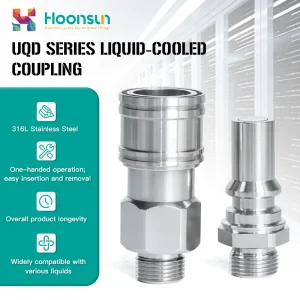
With Norway pioneering fully electric car ferries and zero-emission aquaculture support catamarans, quick liquid cooling disconnects and flame-retardant conduit glands protect high-C-rate battery banks against thermal runaways and glycol leakage.
Sub-Zero Process Automation
Arctic wind farms in northern Finnmark face temperatures plunging below -40°C. Our specially formulated fluorosilicone and modified NBR internal compression sleeves prevent cracking, maintaining elasticity and dynamic strain relief year-round.
The Chinese Factory Advantage: Scale, CNC Precision & Rapid Supply Chains
How direct manufacturing in Yueqing, Zhejiang delivers cost efficiency, metallurgical precision, and agile OEM customization to Nordic procurement teams.
Global supply chain volatility has made traditional European distributors costly and sluggish, with lead times on specialized stainless steel glands often exceeding 16 to 24 weeks. By sourcing directly from a dedicated manufacturer like HOONSUN (Zhejiang Hongxiang Connector Co., Ltd.), Norwegian buyers eliminate intermediary margins while securing certified engineering components directly from the factory floor.
Engineering Specifications: Metric vs. PG vs. NPT Thread Standards
A frequent friction point for Norwegian engineers importing equipment is thread mismatch. European machinery typically relies on ISO Metric (EN 60423) or historic German PG (DIN 40430) threads, whereas specialized offshore skid modules engineered to American standards call for ANSI/ASME B1.20.1 NPT taper threads. Our direct CNC threading capabilities ensure precise pitch, crest, and root tolerances across all thread standards, avoiding galling and field failure.
| Thread System | Standard Pitch / Taper | Key Industrial Applications in Norway | Standard Ingress Rating | Recommended Body Material |
|---|---|---|---|---|
| ISO Metric (M12-M100) | 1.5mm standard pitch (fine) | Nordic Marine Switchboards, EV Charging Infrastructure, OEM Automation Cabinets | IP68 (5 Bar, 30 min) | Nickel-Plated Brass / AISI 316L |
| NPT (1/4" to 4") | 1° 47' taper angle | Offshore Oil & Gas Skids, Petrochemical Refineries, Explosion-Proof EX Enclosures | IP66 / IP68 (with O-ring) | AISI 316L / Marine Brass |
| PG (PG7 to PG48) | 80° flank angle (DIN 40430) | Legacy Machinery Maintenance, European Heavy Machine Tools, Port Cranes | IP68 (Waterproof) | Nickel-Plated Brass |
| G Thread (BSPP) | 55° Whitworth thread (parallel) | Marine Hydraulic Systems, Liquid Cooling Chiller Coupling, Subsea Heat Exchangers | IP68 / Leak-Free Seal | AISI 316L / Brass |
Need Custom Drawings, 3D STEP Files, or Direct Samples for Norway?
Our bilingual senior application engineers will review your electrical schematics, conduit outer diameter tolerances, and operating temperatures to specify the exact metal hose cable gland configuration.
Send Inquiry Now →Technical FAQ: Metal Hose Cable Gland Procurement for Norway
Critical engineering considerations, testing protocols, and compliance checkpoints for procurement managers.
How do HOONSUN metal hose cable glands maintain IP68 sealing on corrugated flexible conduits?
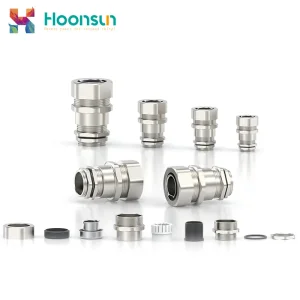
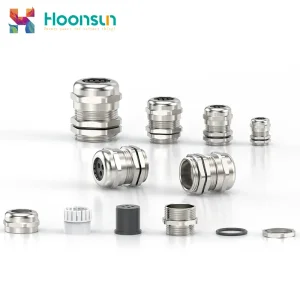
Flexible metallic conduits present spiral or ringed corrugations that render standard flat compression grommets ineffective. Our metal hose cable glands incorporate a precision-tapered internal brass or stainless ferrule sleeve combined with a secondary elastomeric compression ring. When the cap nut is torqued, the ferrule threads deep into the conduit convolution, creating a mechanical lock against pull-out forces (up to Category A in EN 62444), while the outer O-ring seal compresses against the external sheath, guaranteeing water-tight submersion up to 50 meters (5 bar).
Why is 316L preferred over standard 304 stainless steel in Norwegian aquaculture and maritime projects?
Norwegian fjords possess brackish and hyper-saline waters with elevated biological activity. AISI 304 stainless steel contains 18% chromium and 8% nickel, but lacks molybdenum, making it susceptible to pitting in standing saltwater where the Pitting Resistance Equivalent Number (PREN) drops below acceptable levels. AISI 316L includes 2.0-3.0% Molybdenum and maintains a carbon content under 0.03%, virtually eliminating intergranular carbide precipitation during welding and ensuring passive layer stability in continuous marine wash-down operations.
How does China factory direct-sourcing simplify Norwegian CE, RoHS, and REACH verification?
Norway is bound by EEA regulations, requiring strict conformity with EU directives including the Low Voltage Directive 2014/35/EU, RoHS 2011/65/EU (and amendment 2015/863), and REACH chemical safety standards. HOONSUN provides direct third-party lab inspection reports (SGS/TÜV), material mill certificates (EN 10204 3.1), and certificate declarations per production batch, bypassing intermediary uncertainties.
What are the standard lead times and shipping methods to Norwegian logistics hubs like Oslo and Bergen?
Standard catalog configurations (Metric M16-M63 in Nickel-plated brass and 304 stainless) maintain buffer stock in Yueqing, allowing dispatch within 3 to 7 working days. Custom CNC fabrications or special thread lengths typically require 15 to 20 days. Shipments to Norway can be dispatched via air freight (DAP Oslo Airport in 5-7 days) for urgent maintenance turnarounds, or regular sea freight (FCL/LCL to Port of Oslo or Bergen in approximately 32-38 days).
Complete Heavy-Duty Cable Gland Portfolio for Norway Projects
Explore our full range of explosion-proof sealing joints, high-temperature glands, strengthened metal fittings, and engineered quick couplings.