
High-Integrity Liquid Cooling Connectors for Australian Deployments
Engineered to eliminate dielectric and water-glycol leakage in mission-critical thermal circuits, featuring ultra-low pressure drop and robust double shut-off mechanisms.
The Australian Thermal Management Revolution: AI Compute, Mining & Grid Storage
Australia’s harsh climatic envelope and rapid electrification demand fluid connectors engineered for unmatched thermal efficiency, zero downtime, and complete environmental resilience.
Hyperscale Cloud & Sovereign AI Racks
With massive data corridor expansions across Sydney (Eastern Creek, Alexandria) and Melbourne (Port Melbourne, Tullamarine), power densities routinely exceed 40 kW to 100 kW per rack. Air-cooling mechanisms are hitting physical limitations. Direct-to-chip (D2C) cold plates and rear-door heat exchangers mandate dry-break quick-disconnect couplings capable of 100% leak containment near high-voltage busbars and delicate silicon architectures.
Megawatt Grid-Scale BESS Enclosures
Australia is installing world-leading Battery Energy Storage Systems (BESS) along the National Electricity Market (NEM)—from the Waratah Super Battery to South Australia’s Hornsdale reserve. Liquid cooling ensures uniform cell temperatures, preventing thermal runaway in ambient temperatures that frequently surpass 48°C. Connectors must withstand high glycol flow rates with zero galvanic corrosion over 15 to 25-year operational lifespans.
Decarbonized Heavy Haulage in the Pilbara
Mining giants including BHP, Rio Tinto, and Fortescue are replacing diesel haul trucks with megawatt-scale electric and hydrogen fuel-cell powertrains. In WA’s Pilbara region, intense mechanical shock, severe vibration, and fine red iron oxide dust present catastrophic failure risks. Specialized liquid cooling couplings maintain invertor and battery pack thermal stability under non-stop, severe-duty duty cycles.
Precision Fluid Mechanics: Eliminating Resistance & Fluid Ingress
A deep engineering dive into our fluid dynamic profiles, internal valve configurations, and metallurgical safeguards designed to maximize Coefficient of Flow (Cv) while minimizing system pumping power.
Flat-Face Non-Spill Valve Architecture
In direct liquid cooling loops containing Propylene Glycol-Water (PGW) mixtures or dielectric hydrocarbons, accidental spillage during module hot-swapping introduces severe fire hazards, short circuits, or costly fluid contamination. Our connectors incorporate precision-machined flat-face flush valves. During disconnect, the male probe and female receptacle seals disengage synchronously, preventing fluid retention within the mating cavity. Residual spillage is measured at virtually 0.000 to 0.005 ml per disconnect cycle, fully meeting the Open Compute Project (OCP) UQD specifications.
Furthermore, our internal spring-loaded poppets undergo computational fluid dynamics (CFD) modeling to establish laminar internal flow channels. By smoothing fluid transition boundaries and eliminating dead zones, turbulence is prevented, minimizing pressure drop across multi-rack manifolds and substantially reducing the overall electrical parasitic load on building chillers and pumping stations.
Elastomeric Integrity & Outback Ambient Tolerance
Connector longevity in Australian field environments hinges heavily on polymer compound selection. Standard commercial nitriles harden and crack under continuous high-temperature exposure combined with aggressive organic rust inhibitors used in modern coolants.
- Medical/Nuclear-Grade EPDM: Tailored specifically for deionized water and PGW solutions up to 135°C, offering near-zero compression set.
- Fluoroelastomer (FKM / Viton®): Impervious to synthetic dielectric fluids and hydrocarbon solvents used in immersion cooling tanks.
- Low-Friction PTFE Backing Rings: Defend primary O-rings from micro-extrusion under dynamic working pressures reaching up to 16 bar (232 psi).
- Helium Mass Spectrometry Testing: Every individual batch undergoes pressurized envelope leak verification with strict 1 × 10⁻⁶ mbar·l/s acceptance limits.
| Series Standard | Body Material | Nominal Bore | Working Pressure | Compatible Coolants | Target Australian Application |
|---|---|---|---|---|---|
| UQD Standard (OCP) | Stainless Steel 316L / Hard-Anodized AL | UQD02, UQD04, UQD08 | Up to 16 Bar (232 PSI) | PGW (50/50), DI Water, Novec | Hyperscale Cloud & AI Superclusters |
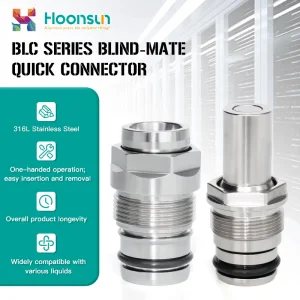
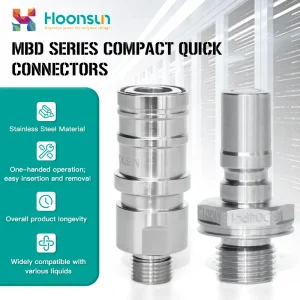
| Blind Mate Rack (BLC/MBD) | EN AW-6061-T6 / Passivated 304 | 4mm to 12mm ID | Up to 12 Bar (174 PSI) | Water-Glycol, Dielectric Esters | Modular Server Chassis & Blade Trays |
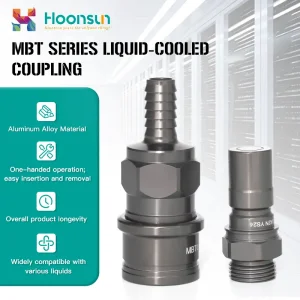
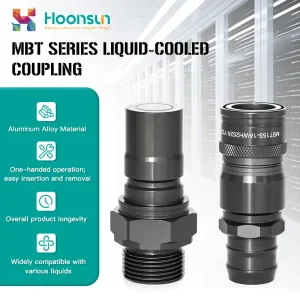
| Heavy Duty High Flow (MBT) | High-Tensile Brass / SS316 | 8mm to 25mm ID | Up to 25 Bar (362 PSI) | Industrial Coolants, Mineral Oils | Utility BESS & Grid Inverters |
| Extreme Ruggedized (SFC) | Nickel-Chromium Plated Marine Brass | 10mm to 32mm ID | Up to 30 Bar (435 PSI) | Synthetic Lubricants, Glycol Mix | Off-Highway EV Haul Fleets & Port Cranes |
Australian Standards Alignment & Localization Safeguards
Ensuring end-to-end operational safety through strict conformance with Australian and international engineering standards, backed by local logistical responsiveness.
AS/NZS 60529 & Ingress Protection
Whether installed in dusty open-cut mines in Newman or coastal battery installations in Newcastle, our connectors maintain IP68 and IP69K sealing ratings when coupled, preventing particulate intrusion, corrosive sea salt mist, and pressurized wash-down jets from compromising mechanical locking rings.
AS 3000 Electrical Proximity Clearance
Australia’s Wiring Rules (AS/NZS 3000) demand rigorous physical segregation or fail-safe mitigation between conductive fluids and electrical busway systems. Our zero-spill flush face design satisfies critical hazard reduction audits, enabling engineers to install coolant lines directly adjacent to 48V/400V power rails with full engineering sign-off.
Metallurgical Traceability & RoHS/REACH
Every fitting is manufactured under ISO 9001:2015 and ISO 14001 certified production matrices. Material test certificates (EN 10204 3.1) verify precise 316L chemical composition (Mo ≥ 2.0%) to prevent pitting corrosion caused by aggressive chemical biocides utilized in industrial Australian closed-loop chillers.
Precision Chinese Manufacturing: Scale, Speed, and Direct Factory Agility
Combining Yueqing’s world-renowned precision machining cluster with automated quality inspection to deliver significant cost advantages and guaranteed rapid delivery to Australian ports.
Vertical Integration in Liushi, Yueqing
Operating from China’s foremost electrical and mechanical manufacturing center in Liushi, Yueqing, our factory features end-to-end vertical integration:
- Over 120 multi-axis CNC Swiss lathes executing turning tolerances within ±0.005 mm.
- Proprietary cleanroom assembly lines preventing micro-debris contamination inside sealing chambers.
- Integrated automated optical inspection (AOI) to verify internal seal seat geometries prior to packaging.
- Direct procurement of certified raw alloy stock minimizing middleman markups.
Streamlined Logistics to Australian Entry Ports
We maintain reliable supply routes delivering to key infrastructure projects across Australia:
- Direct sea-freight corridors via Ningbo/Shanghai to Sydney (Port Botany), Melbourne, Brisbane, and Fremantle.
- Express 3 to 5-day air-courier dispatch for emergency engineering prototypes and urgent site maintenance.
- Customized OEM barcoding, serialization, and batch labeling matching Australian warehouse ERP requirements.
- 30% to 45% total cost reduction compared to legacy European and North American connector brands.
Emerging Industry Trends Shaping Thermal Infrastructure
Analyzing key technological shifts: from direct-to-chip transition and immersion cooling adoption to megawatt EV fast-charging requirements across oceanic commercial sectors.
Transition from Air to Liquid in Tier-3/4 Centers
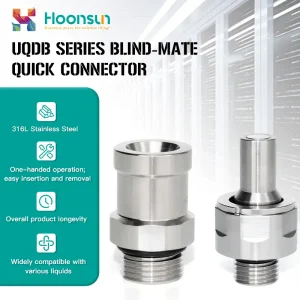
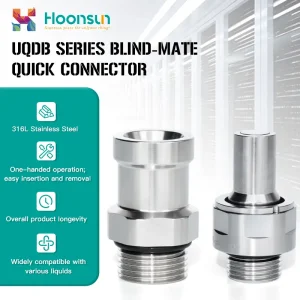
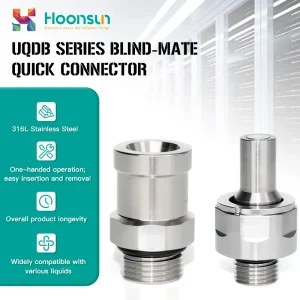
With computational demands from Generative AI, machine learning training clusters, and big-data analytics accelerating, typical thermal dissipation per server rack in Sydney and Melbourne now exceeds the thermal capacity of ambient air. Fluid loops require standardized blind-mate quick disconnects (such as OCP-compliant UQD and UQDB form factors) to facilitate hot-swapping server sleds without draining manifold circuits.
Single-Phase & Two-Phase Immersion Cooling
Australian data center operators are evaluating single-phase immersion cooling to reduce Power Usage Effectiveness (PUE) below 1.15 in hot climates. Connectors utilized in these environments must prove absolute chemical inertness when immersed continuously in synthetic fluorochemical or polyalphaolefin (PAO) fluids without causing plasticizer leaching or seal embrittlement.
Megawatt Fast Charging (MCS) for Transport
Electrification of interstate freight corridors (Hume Highway, Pacific Highway) requires ultra-fast Megawatt Charging Systems (MCS) operating up to 3.75 MW (1250V / 3000A). The charging cables and contact pins generate intense localized Joule heating, necessitating active liquid-cooled connectors capable of handling high cyclic mating wear and rough daily treatment.
Frequently Asked Questions for Australian Engineers & Buyers
Comprehensive engineering clarifications addressing fluid compatibility, mechanical tolerances, certification, and procurement lead times for Australian projects.
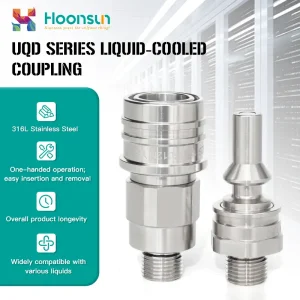
Our UQD series (including UQD02, UQD04, and UQD08) strictly adheres to the physical envelope, flow coefficient (Cv), and connection force guidelines specified by the OCP Community. This guarantees complete intermateability with universal server chassis manifolds, cold plates, and compute sleds supplied by tier-one OEM server manufacturers.
For closed-loop energy storage systems operating on water-glycol (typically 50/50 ethylene or propylene glycol with organic corrosion inhibitors), we recommend our peroxide-cured EPDM seals. They exhibit superior resistance against embrittlement across continuous thermal cycles ranging from sub-zero outback nights (-5°C) up to internal fluid temperatures reaching +90°C.
Yes. Our heavy-duty MBT and SFC series utilize dual-locking ball mechanisms with reinforced detent sleeves and safety collar latches. They are validated against ISO 16750-3 severe vibration standards and undergo multi-axis shaker table stress testing up to 20G to ensure continuous latch engagement without fluid micro-weeping.
Because we maintain our own Swiss CNC machining workshop, we can customize thread interfaces (Metric, BSPP/G, NPT, SAE/ORB), body dimensions, and custom manifold block attachments. Prototype engineering drawings can be prepared within 48 hours, with physical samples completed in 7 to 10 days for Australian engineering evaluation.
Standard catalog parts are kept in safety stock for fast dispatch within 3 to 5 business days. Custom OEM production runs typically require 2 to 3 weeks. Air freight delivery to Sydney, Melbourne, Brisbane, or Perth takes approximately 4 to 6 business days, while standard sea freight containers arrive in 14 to 20 days.
Every delivery includes comprehensive QA documentation: EN 10204 3.1 Material Test Reports (verifying 316L, Brass, or 6061-T6 alloy composition), RoHS and REACH compliance letters, pressure proof test records, and individual helium mass spectrometer leak test certificates.
Engineered Quick-Disconnect & Coupling Solutions
Explore our full range of precision fluid fittings, dry-break couplings, and blind mate connectors trusted across demanding commercial and industrial fluid management circuits.
Build Reliable, Leak-Free Thermal Infrastructure with HOONSUN
Consult with our senior application engineers to obtain 2D/3D CAD models, fluid compatibility matrices, flow rate vs. pressure drop curves, and direct wholesale pricing tailored to your Australian project.
Send Inquiry Now