Material Science & Hydraulic Engineering
Fluid Dynamics, Anti-Corrosion Metallurgy, and Non-Spill Valving Architectures
In high-density liquid cooling loops, fluid integrity is non-negotiable. The introduction of even a single droplet of coolant onto a high-voltage backplane or multi-chip module can trigger cataclysmic short circuits, rack downtime, and multimillion-peso operational losses. As an authoritative manufacturer supplying international OEMs and local integrators in Colombia, we focus on four core mechanical paradigms:
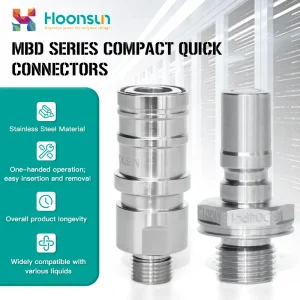
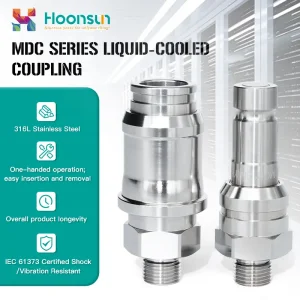
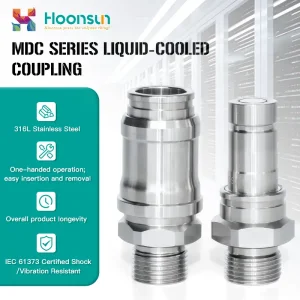
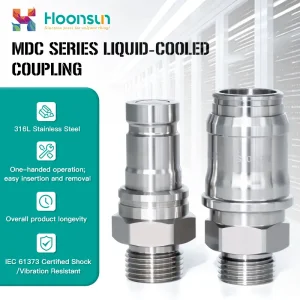
1. Flat-Face Dry-Break Valving Mechanics: Traditional poppet or ball valves trap fluid within dead volumes, spilling small droplets upon disconnection. Our connectors utilize precision-ground flat-face flush valving. When connected, the matching faces wipe flush, allowing fluid passages to open with near-zero air inclusion (<0.05 ml) and disengage with less than 0.025 ml of fluid release, well within OCP UQD Class 1 requirements.
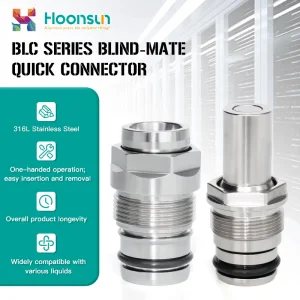
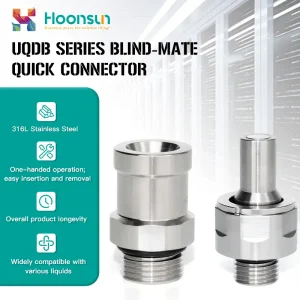
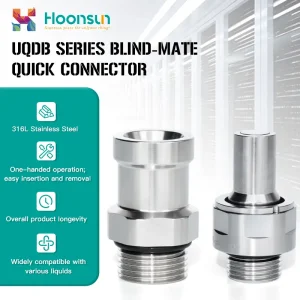
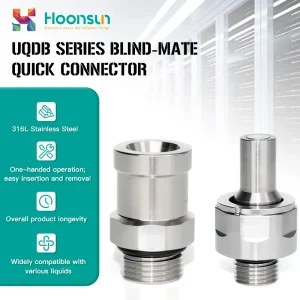
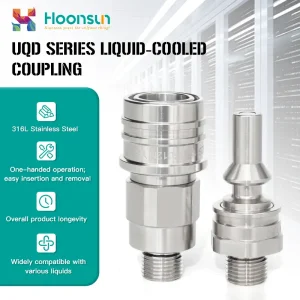
2. Tribology and Metallurgical Compatibility: In liquid loops cycling Propylene Glycol-Water (PGW 25/75 or 50/50), galvanic corrosion represents a critical failure mode if dissimilar metals share an electrolyte. We manufacture our connector shells in lead-free Brass CW617N with electroless nickel plating (ENP 15-20µm) or ultra-high-grade Stainless Steel (AISI 316L / 1.4404). This prevents galvanic couples with aluminum cold plates or copper micro-channels while providing immunity against atmospheric oxidation in Colombia's coastal industrial regions (Cartagena, Barranquilla).
3. Advanced Elastomer Chemistry: Seal longevity dictates system maintenance cycles. We integrate peroxide-cured EPDM (Ethylene Propylene Diene Monomer) engineered specifically for low swelling in water-glycol solutions, retaining elasticity from -40°C to +135°C. For dielectric fluids (fluorinated liquids, synthetic hydrocarbons) utilized in two-phase and single-phase immersion cooling, specialized fluoroelastomer (FKM / Viton®) compound formulations are implemented to ensure zero plasticizer leaching.
4. Hydraulic Flow Coefficient ($C_v$) Optimization: Every millibar of pressure drop across a quick-disconnect coupling forces the coolant distribution unit (CDU) pumps to work harder, consuming precious auxiliary power and reducing total loop flow rates. Our flow paths feature CFD-modeled streamlined internal geometries that eliminate turbulent eddy formation, maintaining high flow velocities ($C_v$ ratings exceeding 1.8 on nominal 1/4" lines) while ensuring laminar entry into CPU/GPU cold plates.