
High-Integrity Explosion Proof Glands for Uruguay Industrial Infrastructure
Precision-engineered brass and stainless steel terminal fittings tested to strict IECEx, ATEX, and UL safety standards for continuous duty under harsh South American environmental conditions.
Operating Parameters & Industrial Demand in the Uruguayan Market
Understanding how Uruguay’s decarbonized power grid, expanding forestry-cellulose plants, and coastal maritime terminals dictate explosion-proof sealing requirements.
The Oriental Republic of Uruguay represents one of Latin America's most technologically progressive, stable, and ecologically regulated industrial sectors. With over 95% of its electricity generated via renewable sources (wind, hydro, solar, and biomass co-generation), Uruguay’s industrial electrification is characterized by rigorous standards of process automation and environmental stewardship. Crucially, the country is home to multi-billion-dollar cellulose investments—notably the UPM Paso de los Toros and Montes del Plata megamills—alongside state-run energy assets such as the ANCAP (Administración Nacional de Combustibles, Alcohol y Portland) La Teja oil refinery in Montevideo, extensive maritime logistics facilities along the Río de la Plata and Uruguay River, and groundbreaking synthetic green hydrogen ventures.
Operating in this environment presents complex, multi-variable electrical enclosure challenges. Coastal marine atmospheres from Montevideo to Nueva Palmira deliver dense saline salt spray, escalating electrochemical galvanic corrosion across exposed junction boxes. Inland cellulose production exposes electrical infrastructure to caustic sodium hydroxide, chlorine dioxide, and aggressive sulfur dioxide vapors within recovery boiler facilities. Concurrently, Uruguay's strategic green hydrogen programs (e.g., the Kahirós heavy transport project and the Tambor e-fuels initiative) introduce low-molecular-weight Hydrogen (Group IIC gas), characterized by extreme diffusion rates, wide explosive limits (4% to 75% in air), and high flame transmission velocities. Standard commercial cable glands fail quickly under these severe criteria; only certified flameproof (Ex d) and increased safety (Ex e) cable glands engineered with specialized elastomers and metallurgies can safeguard uptime and regulatory compliance.
Pulp & Paper Megamills
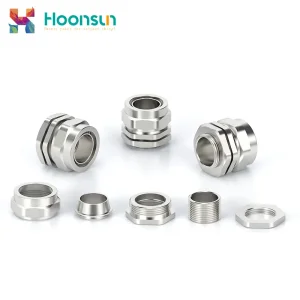
Bleaching towers, woodchip digestors, and black liquor recovery systems require 316L stainless steel glands resilient against humid acid environments, hot caustic washes, and Class I, Zone 1 corrosive vapor classifications.
Green H2 & PtX Facilities
Hydrogen production via high-capacity PEM/Alkaline electrolyzers requires Group IIC certified barrier glands with custom cold-cure resins to prevent internal hydrogen transmission through individual cable conductor strands.
Petrochemical & Bunkering
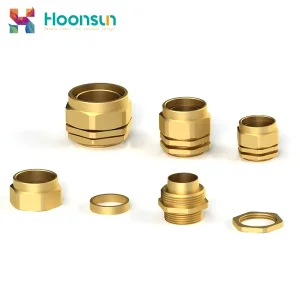
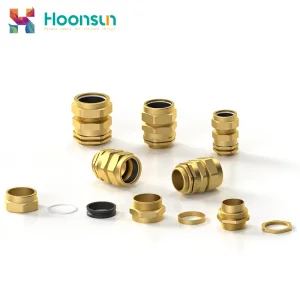
ANCAP La Teja refinery and Montevideo bunkering piers demand nickel-plated brass CW/E1WF dual-seal glands providing solid armor retention, short-circuit earth fault grounding, and IP68 hermetic ingress control.
Engineering Decision Matrix: Cable Gland Selection for Hazardous Zones
Evaluating mechanical retention, ingress barrier performance, flame path thermodynamics, and elastomer compound compatibility for Southern Cone tenders.
| Gland Series | Protection Category | Body Material | Ingress & Temp | Armor Clamping Scope | Target Uruguayan Applications |
|---|---|---|---|---|---|
| EX-BW / BWL Series | Ex d / Ex e / Ex tb | CW614N Nickel-Plated Brass / SS316 | IP66 / IP68 (5 bar) -60°C to +130°C |
Steel Wire Armor (SWA), Single outer seal clamping | Dry-area industrial switchgear, motor control panels in clean processing plants. |
| EX-CW / CWL Series | Ex d IIC / Ex e II | Naval Brass (CuZn39Pb3) / SS316L | IP68 / IP69K -50°C to +120°C |
Captive armor cone for SWA, Aluminum, and Pliable Wire | ANCAP bulk fuel terminals, port crane gantry power distribution, pump stations. |
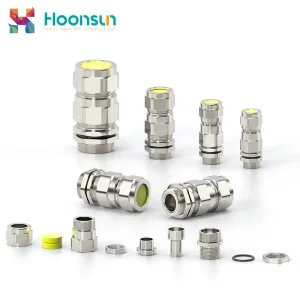
| EX-E1WF Double-Seal | Ex d IIC Gb / Ex e IIC | Marine Grade 316L Stainless Steel | IP68 (10 bar / 100m) -60°C to +140°C |
Dual elastomeric seals (Inner gas sheath + Outer moisture jacket) | Kraft pulp recovery digestors, wastewater chlorination rooms, offshore platforms. |
| Barrier Compound Series | Ex d IIC T6 / Ex tb | Marine Brass / 316L SS | Hermetic Gas Barrier -60°C to +130°C |
Liquid-resin barrier displacing air interstitial channels within braided cable | Green hydrogen compression manifolds, methanol synthesis skids, Zone 0 boundaries. |
| Polyamide PA66 Ex Series | Ex e II / Ex tb IIIC | High-Grade PA66-V0 UV-Stabilized | IP68 -40°C to +100°C |
Unarmored instrumentation, solar PV cable routing | Utility-scale solar farms in Salto and Paysandú; agricultural instrumentation. |
Understanding Flame Path Dynamics and Elastomeric Seal Resilience
In accordance with IEC/EN 60079-1 (Flameproof Enclosures "d"), explosion-proof cable glands engineered by our Yueqing manufacturing facility utilize continuous precision-machined threaded joints that operate as thermodynamic flame-arresting pathways. In the event of internal gaseous combustion inside an explosion-proof panel, the burning gas escapes across the precisely measured thread pitch clearance (L/gap ratio). The heat energy is swiftly conducted into the metal mass of the gland, reducing the gas temperature below the auto-ignition threshold of the external Uruguayan ambient atmosphere (such as Ethylene Group IIB or Hydrogen Group IIC).
Furthermore, standard nitrile (NBR) seal compounds degrade and lose viscoelastic properties under aggressive UV-A/UV-B index levels prevalent in rural Uruguay or during thermal cycling near steam turbines. We configure all mission-critical glands with fluoroelastomer (FKM/Viton) or cross-linked silicone seal sleeves, offering proven resistance to hydrocarbon dissolution, ozone degradation, and continuous operating temperatures reaching +140°C.
China Factory 4.0: Manufacturing Prowess Serving South America
Leveraging Yueqing’s world-class electrical component cluster to provide exceptional mechanical precision, rapid OEM tooling, and cost-optimized supply chain logistics.
Multi-Axis CNC Machining
Over 80 automated Swiss-type and 5-axis CNC machining centers operate with tolerance bands within ±0.015mm, guaranteeing uniform thread profiles (Metric, NPT, PG, G/BSPP) and leak-free metal-to-metal armor interfaces.
100% In-House Batch Quality Control
Every production batch undergoing export to Uruguay is subjected to helium mass spectrometer leak detection, hydrostatic immersion testing at 1.0 MPa (100-meter head equivalent), and spectral alloy composition validation.
Direct Factory Cost Reductions
By purchasing direct from our Liushi Town manufacturing plant, EPC engineering contractors and distributors eliminate European brand markups, lowering procurement expenditures by 30% to 45% with shorter lead times.
Regulatory Compliance: UNIT, IECEx, and MERCOSUR Frameworks
Ensuring frictionless project approvals and customs clearance through Uruguay’s standard body (UNIT) and international safety certification harmonization.
Uruguayan electrical codes are developed in alignment with the Instituto Uruguayo de Normas Técnicas (UNIT), which predominantly adopts the IEC 60079 family of standards for explosive atmospheres (UNIT-IEC 60079-0, UNIT-IEC 60079-1, UNIT-IEC 60079-7, and UNIT-IEC 60079-14). In large-scale capital investments funded by international consortiums or overseen by state entities like UTE (Administración Nacional de Usinas y Trasmisiones Eléctricas) and ANCAP, dual certification under the international IECEx system and European ATEX directive is standard practice.
Because Uruguay is a member of the MERCOSUR economic bloc, electrical products are subject to regional technical regulations (Resoluciones GMC). While Brazil enforces mandatory INMETRO markings, Uruguay frequently accepts certified test reports from ILAC-accredited laboratories proving compliance with IEC standards. We support our Uruguayan partners with comprehensive technical dossiers including:
- Full Test Certificates: IECEx CoC (Certificate of Conformity), ATEX EU Type-Examination Certificates, and UL Listing records.
- Material Traceability: EN 10204 Type 3.1 mill test certificates certifying specific copper, nickel, zinc, and 316L chemical compositions.
- Custom Thread Specifications: Standard Metric ISO 965 threads, American NPT (ANSI/ASME B1.20.1), and British Standard Conduit/Gas threads commonly requested on retrofit machinery.
- Logistical Excellence: Expedited ocean freight routes from Ningbo/Shanghai ports directly to the Port of Montevideo, supported by complete bilingual (Spanish/English) documentation, HS classification (8547.40), and commercial invoices.
Engineering FAQ: Explosion Proof Glands in Uruguay
Expert answers addressing the practical installation, compliance, and material selection questions encountered by Southern Cone engineers.
How do we select between CW and BW cable glands for projects in Uruguay?
The core distinction centers on environmental protection. BW glands clamp the cable's internal armor for mechanical retention and electrical grounding, but lack an external sealing shroud, making them suitable only for dry, indoor control cabinets. In contrast, CW glands provide a dual mechanism: an internal armor clamping cone plus an external elastomeric compression seal over the outer cable jacket. In coastal or humid locations like Montevideo or Fray Bentos, CW or E1WF glands are essential to achieve IP66/IP68 protection.
Can HOONSUN supply Barrier Cable Glands for green hydrogen projects?
Yes. Group IIC hazardous areas containing hydrogen require barrier-type cable glands where individual insulated conductors are potted within an approved rapid-curing two-part epoxy resin. This fills the internal air voids of the cable, preventing pressurized hydrogen from migrating through the cable core into non-hazardous control equipment.
What metal grade is advised for the UPM/Montes del Plata pulp facilities?
We advise Marine Grade 316L (AISI 316L / 1.4404) stainless steel for any installations near digesters, wash presses, recovery boilers, or chlorine dioxide treatment areas. For standard non-acid utility rooms, our high-mass nickel-plated brass (surface plating thickness ≥ 5μm) provides dependable anti-tarnish and anti-galling performance.
What is the typical shipping lead time from China to Montevideo?
Standard catalog configurations (M20 to M75, NPT 1/2" to 3") are maintained in ready inventory for rapid packing within 5 business days. Direct maritime shipping to the Port of Montevideo takes roughly 32 to 38 calendar days via major container lines. For urgent shutdown overhauls, express air dispatch (DDP) takes roughly 6 to 9 working days.
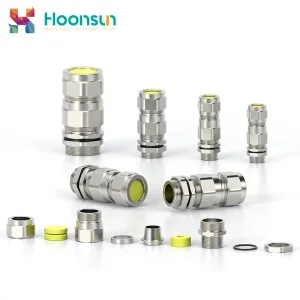
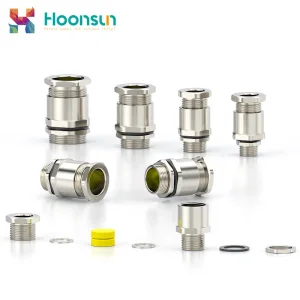
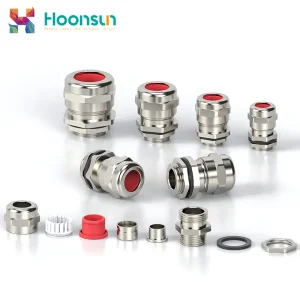
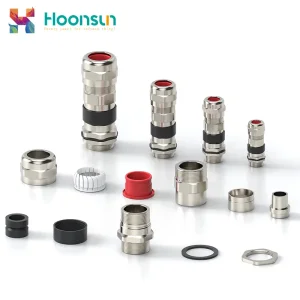
Specialized Hazardous Area & Industrial Cable Glands for Uruguay
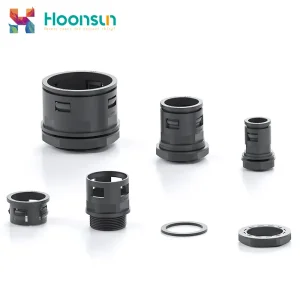
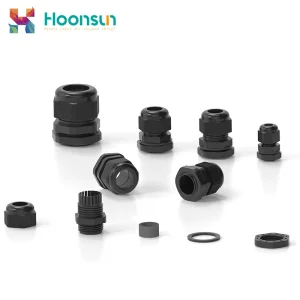
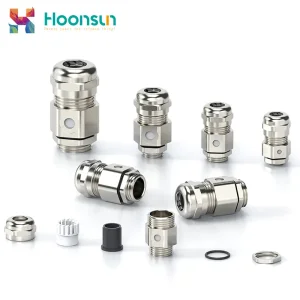
Complete certified connectivity catalog spanning marine-grade unions, double-sealed armored joints, flexible conduit adaptors, and pressure-equalizing breathers.
Consult with Certified Cable Entry Engineers Today
Whether you require complete project bill-of-materials quotes, customized thread adapters, or comprehensive compliance certificates for engineering bids in Uruguay, our direct technical team is prepared to assist.
Send Inquiry Now