
High-Spec Explosion-Proof Gland Program for North African Installations
Pre-qualified flameproof cable glands manufactured according to strict IEC 60079-0/1 standards and IP68 continuous immersion tolerances, engineered for the aggressive dust and saline environments of Moroccan megaprojects.
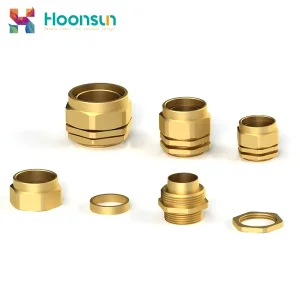
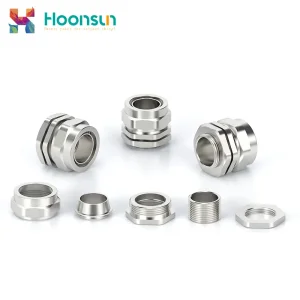
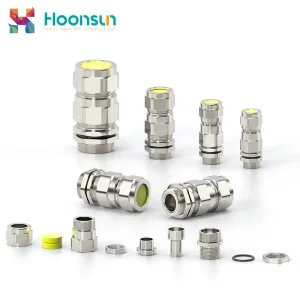
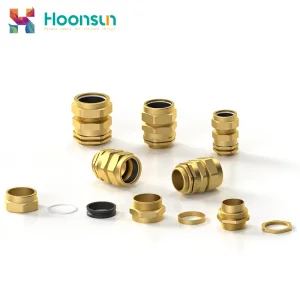
Explosion-Proof Cable Gland Infrastructure: Bridging China's High-Tech Production with Morocco's Industrial Renaissance
An engineering analysis of flamepath containment, environmental sealing in high-salinity phosphate processing, and supply chain resilience between Chinese manufacturing hubs and Kingdom of Morocco infrastructure.
1. The Industrial Renaissance of Morocco: A High-Stakes Operational Landscape
The Kingdom of Morocco has definitively shifted from an agrarian and light assembly economy into North Africa's preeminent advanced manufacturing and green industrial powerhouse. Driven by the strategic vision of HM King Mohammed VI, Morocco has catalyzed massive infrastructure investments spanning the Jorf Lasfar phosphate processing nexus, the Tangier Automotive & Aerospace Corridors, the Tanger-Med port complex, and world-scale clean energy generation such as the Noor Ouarzazate Concentrated Solar Power (CSP) and extensive wind corridors in Tarfaya and Midelt.
In hazardous industrial operations, electrical safety is non-negotiable. Industrial explosion hazards across Morocco are characterized by extreme operational dualities. At the Jorf Lasfar and Safi facilities operated by OCP Group (Office Chérifien des Phosphates), atmospheres contain both flammable gaseous emissions (such as hydrogen, ammonia, and sulfur dioxide) and hyper-abrasive, combustible phosphate/fertilizer dust clouds (Zone 20, 21, and 22 under IECEx classifications). Concurrently, coastal facilities contend with aggressive Atlantic and Mediterranean maritime salt atmospheres classified under ISO 12944 as C5-M (Very High Marine Corrosivity). Standard commercial glands succumb to pitting corrosion, thread seizure, and elastomer seal embrittlement within months. Hence, Morocco’s engineering contractors and procurement teams increasingly specify explosion-proof cable glands engineered to dual Ex d (Flameproof) and Ex e (Increased Safety) criteria, with IP68 continuous submersion ratings and certified pull-out mechanical retention.
2. Global Explosion Protection Paradigms: The Critical Transition to Harmonized IECEx / ATEX Systems
Globally, the oil & gas, chemical processing, maritime shipbuilding, and green hydrogen sectors are undergoing a profound harmonization of electrical explosion safety standards. Legacy American National Standards Institute (ANSI) / National Electrical Code (NEC 500/505) standards are actively reconciling with the International Electrotechnical Commission’s IEC 60079 series. This technical convergence impacts explosion-proof cable gland design significantly:
Flameproof (Ex d) architecture dictates that should a volatile gas-air mixture penetrate an electrical enclosure or junction box and ignite, the gland must withstand the peak internal deflagration pressure (often exceeding 30 bar hydrostatically) while extinguishing hot exiting flame gases along precision-machined threaded flamepaths. The interstitial gap between the gland body and enclosure must not exceed microscopic flamepath clearance tolerances (typically under 0.15 mm depending on gas group IIC or IIB). Increased Safety (Ex e) standards prevent any localized arcing, sparks, or excessive surface temperature rise that could ignite the external volatile atmosphere. Consequently, global EPCs no longer treat cable glands as simple mechanical hardware; they are certified safety barrier devices vital to Plant Functional Safety (SIL ratings) and operational continuity.
3. China's Precision Manufacturing Super-Cluster: Scale, Metallurgy, and Cost-Efficiency
China—headquartered by the precision electrical machining clusters of Liushi and Yueqing in Zhejiang Province—has evolved into the world's most consolidated, vertically integrated engineering hub for hazardous-area cable entry systems. Unlike fragmented European or North American manufacturing supply chains where brass extrusion, CNC lathing, elastomeric compound formulation, and third-party laboratory certification are split across disconnected geographies, Yueqing brings the entire lifecycle into a tight, hyper-efficient ecosystem.
Chinese factories utilize high-throughput multi-axis CNC Swiss-type automatic turning centers capable of holding mechanical thread tolerances to within ±0.01 mm across million-unit production runs. The metallurgical input utilizes premium continuous-cast CW614N/CW617N brass (CuZn39Pb3) and cold-formed marine AISI 316L austenitic stainless steel with elevated molybdenum content (2.0–2.5%) for supreme resistance against chloride pitting. Furthermore, Chinese automated electro-deposition lines apply uniform nickel plating (5–12 microns) that easily clears 1,000-hour ASTM B117 neutral salt spray tests. This integrated industrial density translates to a 30% to 50% total cost of ownership (TCO) advantage over legacy Western brands like Hawke or CMP, without sacrificing third-party compliance, metallurgical traceability, or batch-to-batch repeatability.
Explosion-Proof Cable Gland Architecture: Technical Selection Guide
Cross-referencing protective methodologies, ingress parameters, metallurgical substrates, and designated deployment zones across Moroccan industrial sectors.
| Gland Series / Architecture | Protection Concept | Certified Gas / Dust Groups | Primary Metallurgy | Ingress Rating | Target Moroccan Sector |
|---|---|---|---|---|---|
| BWL / BW Series Single Seal, Mechanical Wire Clamping |
Ex d IIC / Ex e II | Gas: IIA, IIB, IIC Dust: IIIA, IIIB, IIIC |
Nickel-Plated Brass (CW614N) | IP66 / IP68 (5 bar) | OCP Mining Conveyors & Phosphogypsum Handling |
| CW Series Dual Seal Environmental / Armour |
Ex d IIC / Ex e II / Ex ta | Gas: IIA, IIB, IIC Dust: IIIA, IIIB, IIIC |
Nickel-Plated Brass / SS316L | IP68 (10 bar, 24h) | Chemical Refining, Jorf Lasfar Industrial Zone |
| EX3 / EX5 Series Heavy-Duty Clamping Sealing Joint |
Ex d IIC / Ex tb | Gas: IIB, IIC Dust: IIIC (Combustible) |
Stainless Steel 316L | IP68 Submersible | Offshore Bunkering & Tanger-Med Port Cranes |
| EX4 Marine Series TJ Clamping Naval Architecture |
Ex e II / Marine Shock | Gas: IIA, IIB Dust: IIIA, IIIB |
Marine Naval Brass (CW602N) | IP67 / IP68 | Naval Dry Docks & Offshore Wind Substations |
| Double-Sealed Armoured Internal Barrier + Outer Sheath Seal |
Dual Ex d / Ex e | Gas: IIC (Hydrogen Ready) Dust: IIIC |
AISI 316L Stainless Steel | IP68 (NEMA 4X / 6P) | Guelmim-Oued Noun Green Hydrogen & Ammonia Plants |
Engineered Deployment Scenarios Across Morocco’s Mega-Corridors
Precision-matched explosion protection addressing the specific ambient, chemical, and physical stresses of Morocco's core economic sectors.
1. OCP Phosphate & Fertilizer Complexes (Jorf Lasfar & Benguerir)
Phosphate rock processing generates highly abrasive, fine apatite and fluorapatite dust along with aggressive phosphoric, nitric, and sulfuric acid fumes. Our double-sealed stainless steel 316L cable glands prevent combustible dust ingress into motor terminal boxes while fluorocarbon (FKM/Viton) seals eliminate vapor-induced swelling, maintaining flamepath integrity under continuous high temperatures.
2. Utility-Scale Solar & Desert Hybrid Projects (Noor Ouarzazate & Midelt)
In the Drâa-Tafilalet and Atlas plateau regions, cable entries must endure daily thermal swings from -5°C to +52°C, combined with high UV index values and intense sandstorm (sirocco) abrasion. Our UV-stabilized, IP68 nickel-plated brass and silicone-sealed glands guarantee 25+ years of zero dust ingress into centralized inverter stations, combiner boxes, and molten salt storage facilities.
3. Green Hydrogen & Power-to-X Projects (Guelmim-Oued Noun)
Morocco's emerging gigawatt-scale green hydrogen and green ammonia pipelines involve Gas Group IIC hazards, where hydrogen's small molecular size and low minimum ignition energy (0.017 mJ) necessitate barrier-type explosion-proof cable glands. Our epoxy compound-barrier glands provide a zero-leakage, gas-tight potting plug across individual cable conductors, preventing hydrogen gas migration through cable interstices.
4. Maritime Bunkering & Port Infrastructure (Tanger-Med Port)
As the largest container transshipment hub in the Mediterranean, Tanger-Med's quayside cranes, LNG bunkering vessels, and fuel tank farms operate in continuous C5-M marine exposure. Our EX4 and EX3 marine-certified glands utilize high-tensile brass and specialized corrosion passivations that prevent galvanic cell degradation when connected to galvanized steel wire armoured (SWA) power cabling.
5. Kenitra & Casablanca Automotive Megasites (Stellantis, Renault & Supply Chains)
High-volume automotive paint booths and volatile solvent mixing facilities present strict Zone 1 explosion protection mandates. Our lightweight PA66 and nickel-plated brass Ex e / Ex d connectors deliver rapid installation torque repeatability, robust EMI/EMC shielding attenuation, and resistance to synthetic industrial lacquers and cleaning agents.
6. National Grid Modernization & Pumping Sub-Stations (ONEE Infrastructure)
The Office National de l'Electricité et de l'Eau Potable (ONEE) requires electrical junction boxes and high-voltage feed lines capable of resisting severe underground mechanical vibration, heavy tensile pull-out, and soil moisture saturation. Our BW and CW clamping systems provide mechanical retention up to 120% of cable tensile limit without pinching internal copper conductors.
Global Enterprise Sourcing Criteria: Auditing Chinese Factory Floor Competencies
How international EPC contractors, European panel builders, and Moroccan project developers de-risk high-volume cable gland procurement via rigorous factory certification.
Standardization and Third-Party Compliance Architecture
When international procurement teams audit a Tier-1 Chinese cable gland factory, compliance verification extends far beyond basic CE paperwork. Certified manufacturers must present third-party type examination certificates issued by recognized Notified Bodies (such as TÜV Rheinland, DEKRA, Baseefa, or UL Solutions) verifying compliance with:
• IEC 60079-0 / EN 60079-0: Hazardous Areas – General Requirements (thermal endurance, mechanical impact up to 7 Joules, surface resistance).
• IEC 60079-1 / EN 60079-1: Flameproof Enclosures "d" (flamepath length, gap tolerances, explosion pressure without dynamic rupture).
• IEC 60079-7 / EN 60079-7: Increased Safety "e" (dielectric insulation, terminal pull-out forces, IP sealing reliability).
• IEC 60529: Ingress Protection Verification (IP66, IP67, IP68 tested at 5 to 10 bar water column for continuous submersion).
• EN 10204 3.1 Certification: Complete chemical and mechanical mill test traceability for raw brass billets and stainless steel coils, guaranteeing zero scrap inclusion or brittle alloys.
Logistical Synergy: Chinese Factories to Casablanca, Tanger-Med, and Agadir
Sourcing directly from Yueqing’s advanced production hubs offers unprecedented delivery speed. With container freight connections linking Ningbo-Zhoushan Port and Shanghai Port directly to Tanger-Med in under 26 transit days, Moroccan industrial contractors avoid bloated European distributor markups while securing project-specific custom gland lengths, non-standard metric/NPT thread pitches, and pre-packaged assembly kits labeled according to project electrical schedules.
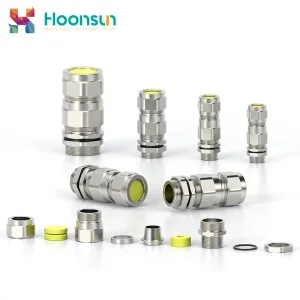
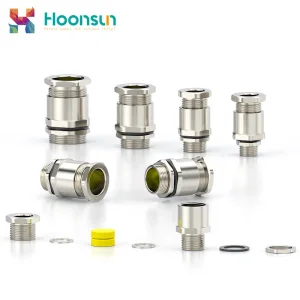
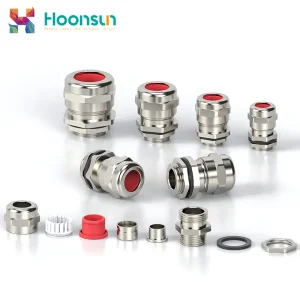
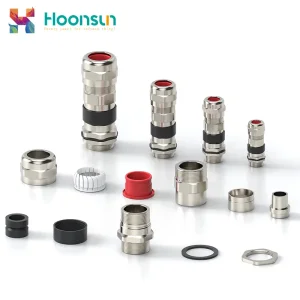
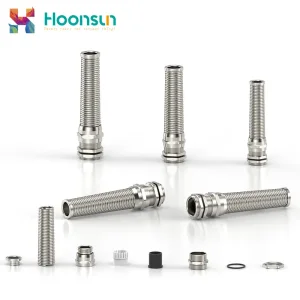
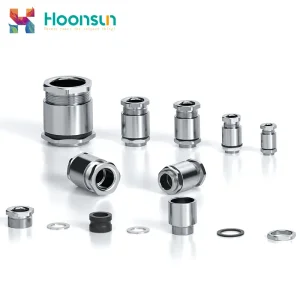
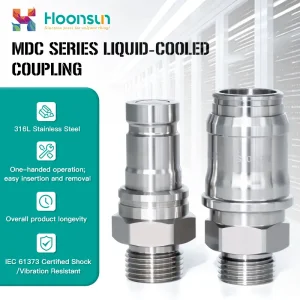
Certified Industrial & Explosion-Proof Cable Gland Inventory
Explore our complete catalog of certified flameproof, marine-grade, anti-bending, and high-clamping sealing components engineered for worldwide export and local Moroccan site deployment.
Emerging Technological Trends in Explosion-Proof Ingress Engineering
Addressing next-generation industrial demands: compound barrier resins, composite seals, EMC/RFI interference suppression, and high-pressure hydrogen confinement.
1. Next-Gen Resin Compound Barrier Cartridges
Traditional elastomeric compression seals can suffer from cable "cold flow" phenomena, where the continuous radial pressure of the rubber seal gradually displaces the PVC/XLPE inner cable sheath, leading to flamepath gaps. Rapid-curing two-part epoxy barrier glands eliminate cold-flow completely by filling all voids around uninsulated conductors, creating a monolithic flameproof plug certified for Gas Group IIC atmospheres.
2. Deluge Proofing & Coastal Submersion Sealing
In response to extreme cyclonic rains and high-pressure chemical wash-downs, modern glands feature dynamic integrated 'O'-ring face seals and outer boot covers. Certified to Shell Offshore DTS-01 deluge testing protocols, these systems prevent water ingress even when flooded under saline water following a high-impact explosion shockwave.
3. 360° EMC / RFI Shielding Integration
With variable frequency drives (VFDs) and digital fieldbuses dominating automated Moroccan mining facilities, electrical noise can cause false trips. Chinese advanced cable glands now incorporate 360-degree phosphor bronze or stainless steel ground springs that clamp cable braiding with zero resistance, attenuating high-frequency electromagnetic interference up to 80 dB.
Explosion-Proof Cable Gland Procurement & Engineering FAQ
In-depth responses addressing technical specifications, Moroccan regulatory standards, threading conversions, and testing procedures for engineers and procurement teams.
What is the critical technical distinction between Ex d and Ex e cable glands in Moroccan industrial facilities?
How do Chinese factories ensure thread compliance between Metric (ISO) and NPT standards for Moroccan switchgear?
Why is cable "cold flow" a hazard, and how is it addressed in heavy-armoured Moroccan mining cables?
What regulatory customs documentation (DUM) and standards certificates are required when importing to Morocco?
Can Chinese explosion-proof cable glands withstand the high UV and temperature fluctuations of southern Morocco?
What tightening torque protocols must EPC contractors observe during gland termination?
Accelerate Your Moroccan Project with Factory-Direct Engineering
Whether you are outfitting an OCP chemical plant expansion in Jorf Lasfar, a solar field in Midelt, or offshore equipment at Tanger-Med, our technical team provides full certificate dossiers, customized CAD drawings, and factory-direct volume pricing within 24 hours.
Send Inquiry Now – Connect with Lead Engineers